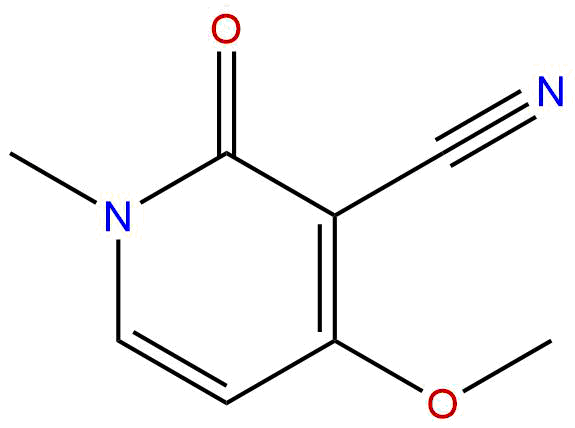


Product name: Ricinine
Synonym name: Recinine; Ricinin
Catalogue No.: BP4984
Cas No.: 524-40-3
Formula: C8H8N2O2
Mol Weight: 164.164
Botanical Source:
Type of Compound: Alkaloids
Purity: 95%~99%
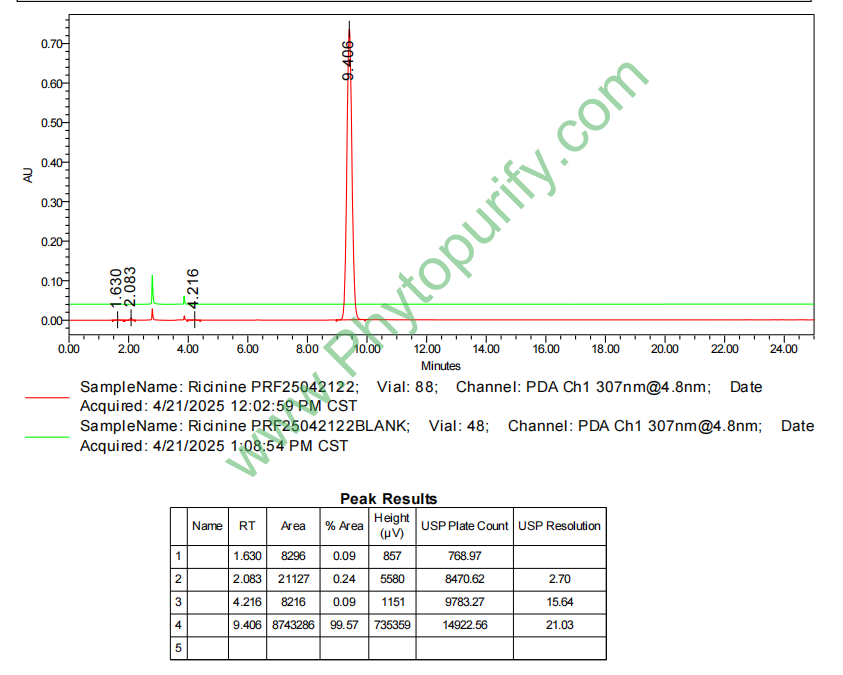
Analysis Method: HPLC-DAD or/and HPLC-ELSD
Identification Method: Mass, NMR
Packing: Brown vial or HDPE plastic bottle
Storage: Store in a well closed container, protected from air and light. Put into refrigerate or freeze for long term storage.
Whenever possible, you should prepare and use solutions on the same day. However, if you need to make up stock solutions in advance, we recommend that you store the solution as aliquots in tightly sealed vials at -20℃. Generally, these will be useable for up to two weeks.
The product could be supplied from milligrams to grams
Inquire for bulk scale.
For Reference Standard and R&D, Not for Human Use Directly.
HPLC of Ricinine
Storage conditions:Short-term storage at 2~8℃, long-term storage at -20 ~ -80℃
55.0200
.3227
.3228
14.3450
2.8505
13.1476
High
31.3778
2.5298
Yes
No
Yes
No
Yes
Yes
0.3
Yes
Yes
Yes
No
Ricinine, also known as 3-cyano-4-methoxy-N-methyl-2-pyridone, is a naturally occurring alkaloid mainly derived from the Euphorbiaceae plant Ricinine(Ricinus communis L. Separated from the seeds, leaves, and root bark of the plant. As another important secondary metabolite in castor, besides ricin, ricinine has long been widely studied by natural product chemists and pharmacologists due to its unique chemical structure and diverse biological activities. Although ricin toxin is notorious for its extremely high toxicity, ricinine has relatively low toxicity and exhibits multiple potential pharmacological effects, particularly in liver protection, neural regulation, and signal pathway regulation, demonstrating important research value.
In recent years, with the in-depth exploration of active ingredients in natural products, the research focus of ricinine has gradually shifted from early toxicity identification to exploring its therapeutic potential. Research has shown that ricinine exhibits significant hepatoprotective effects in a model of acute liver injury induced by carbon tetrachloride (CCl ₄), and its mechanism may be related to antioxidant, anti-inflammatory, and inhibition of liver cell apoptosis. More notably, ricinine has been identified as a selective inhibitor of casein kinase 1 alpha (CK1 alpha), a discovery closely linking it to the classical Wnt signaling pathway. CK1 α is a key negative regulator in the Wnt/β - catenin signaling pathway, and its inhibition can lead to the stability and nuclear translocation of β - catenin, thereby activating the transcription of downstream target genes. This mechanism of action not only provides a new perspective for understanding the biological effects of ricinine, but also opens up new possibilities for its application in regenerative medicine, anti fibrosis, and certain neurodegenerative diseases.
However, the pharmacological activity of ricinine is not singular. The cyanide group contained in its structure endows it with potential neurotoxicity, and related studies suggest that it may induce seizures or excitotoxicity by affecting neurotransmitter systems such as gamma aminobutyric acid type A receptor (GABRA1), voltage-gated sodium channels (SCN1A, SCN9A), calcium channels (CACNA1A), and N-methyl-D-aspartate receptors (GRIN1, GRIN2B). This "double-edged sword" characteristic - that is, it may exert a protective effect at low doses, but exhibit toxicity at high doses or under specific conditions - makes the pharmacological evaluation and safety window definition of ricinine particularly critical.
This review aims to systematically review the chemical and physicochemical properties, plant sources and extraction processes, pharmacological activities, molecular mechanisms, pharmacokinetic characteristics, and pharmacological prospects of ricinine, in order to provide comprehensive and in-depth academic references for the modern drug development of this ancient natural product.
The chemical structure of ricinoline belongs to pyridone alkaloids, with a core skeleton of 2-pyridone and a cyano group (- CN) connected to the C-3 position, a methoxy group (- OCH ∝) connected to the C-4 position, and a methyl group (- CH3) substituted at the N-1 position. Its molecular formula is C ₈ H ₈ N ₂ O ₂, and its molecular weight is 164.1640 g/mol. This structure endows ricinine with unique chemical properties and biological activity. The presence of cyanide groups gives them a certain electrophilicity, which may participate in covalent modifications or coordinate with metal ions, while the pyridone ring provides the basis for π - π stacking or hydrogen bonding interactions with various biological targets.
From the perspective of physical and chemical properties, the lipid water partition coefficient (LogP) of ricinoline is 0.3227, indicating its moderate lipophilicity. It can maintain a certain solubility in the aqueous phase and penetrate biofilms. Its water solubility (LogS) is 14.3450 mg/mL, indicating good water solubility, which provides favorable conditions for its absorption and distribution in vivo. The topological polar surface area (TPSA) is 55.0200 Å ², which is lower than the commonly believed passive diffusion threshold (about 140 Å ²), indicating that ricinine has good oral absorption potential.
It is worth noting that the blood-brain barrier (BBB) penetration ability of ricinine has been evaluated as "high". This characteristic is closely related to its relatively small molecular weight, moderate lipid solubility, and lower polar surface area. High BBB penetration implies that ricinine can directly act on the central nervous system (CNS), which explains the source of its neurotoxicity and suggests its potential application in the treatment of CNS diseases. However, this also places higher demands on the safety of drugs, as any non-specific effects on CNS targets may lead to adverse reactions.
In terms of safety prediction, the hERG inhibition assessment result is' no ', indicating that the risk of castor alkaloids causing cardiac QT interval prolongation at therapeutic concentrations is low. The Ames test result is 0.3, and it is generally believed that when this value is less than 0.5, the risk of genetic toxicity is low. These preliminary pharmacological parameters indicate that ricinoline has a relatively good safety profile in the early stages of drug development, but further validation through systematic in vitro and in vivo experiments is still needed.
The main natural source of ricinine is castor oil(Ricinus communis L.), This plant is widely distributed in tropical and subtropical regions around the world, and is cultivated in both northern and southern provinces of China. The entire plant of castor contains ricinine, but the highest content is found in the seeds, usually ranging from 0.1% to 0.5% of dry weight. In addition, castor leaves, stem bark, and roots also contain a certain amount of ricinine, and its content varies with different growth stages, locations, and environmental conditions.
From the perspective of chemical taxonomy, ricinoline is not unique to the genus Ricinus, but is found in other Euphorbiaceae plants such as Jatropha curcas(Jatropha curcas)It has also been found in some Convolvulaceae plants, but castor is still the main commercial and research source. Due to the coexistence of ricinine and ricin toxin in castor seeds, and the extremely high toxicity of ricin toxin, strict safety precautions must be taken when extracting ricinine to avoid cross contamination and aerosol exposure.
The traditional method for extracting ricinine mainly relies on solvent extraction and acid-base treatment. Due to the weak alkalinity of ricinine, dilute acid (such as 0.5% hydrochloric acid or sulfuric acid) can be used to soak and crush castor bean meal or leaf powder, allowing the alkaloids to dissolve in salt form. After filtration, adjust the pH to alkaline with alkaline solution (such as ammonia or sodium hydroxide), and then perform liquid-liquid extraction with organic solvents (such as chloroform, dichloromethane, or ethyl acetate). After drying with anhydrous sodium sulfate, the organic phase can be concentrated under reduced pressure to obtain the crude extract. The crude extract can be further purified by silica gel column chromatography, using chloroform methanol gradient elution, or by preparative high-performance liquid chromatography (HPLC) to obtain high-purity ricinine monomers.
In recent years, researchers have developed various modern extraction techniques to improve extraction efficiency and safety. For example, ultrasound assisted extraction (UAE) utilizes cavitation effect to destroy cell walls, significantly reducing extraction time and improving yield; Microwave assisted extraction (MAE) accelerates the dissolution of target components by selectively heating polar solvents. In addition, supercritical fluid extraction (SFE) uses carbon dioxide as the solvent and can be operated at low temperatures to avoid the degradation of thermosensitive components. It also has no residual organic solvents, making it particularly suitable for subsequent pharmacological research and drug development. For the quantitative analysis of ricinine, high-performance liquid chromatography ultraviolet detection (HPLC-UV) and liquid chromatography-mass spectrometry (LC-MS/MS) are commonly used methods, with a detection limit of up to the Danak level.
It is worth noting that due to the relatively low content of ricinine in castor seeds and its coexistence with a large amount of oil and protein, defatting treatment (such as petroleum ether or n-hexane extraction) is usually a necessary step in the extraction process. The defatted cake not only facilitates the subsequent extraction of alkaloids, but also reduces the potential risk of ricin toxin.
One of the most notable pharmacological activities of ricinine is its protective effect on the liver. In the classic CCl ₄ - induced acute liver injury model, castor alkaloid pretreatment can significantly reduce the activity of alanine aminotransferase (ALT) and aspartate aminotransferase (AST) in serum, alleviate liver tissue pathological damage, including hepatocyte necrosis, steatosis, and inflammatory cell infiltration. Mechanism studies have shown that the hepatoprotective effect of ricinine is closely related to its antioxidant capacity. It can increase the activity of superoxide dismutase (SOD), glutathione peroxidase (GSH Px), and catalase (CAT) in the liver, reduce the content of malondialdehyde (MDA), and thus inhibit lipid peroxidation reaction. In addition, ricinoline can inhibit the activation of Caspase-3, reduce liver cell apoptosis, and downregulate the expression of pro-inflammatory factors such as tumor necrosis factor - α (TNF - α) and interleukin-1 β (IL-1 β).
Although ricinine exhibits hepatoprotective activity at low doses, its neurotoxicity cannot be ignored. Animal experiments have shown that high doses of ricinine can induce typical neuroexcitatory symptoms, including tremors, ataxia, tonic seizures, and even death. The molecular basis of its neurotoxicity mainly involves interference with multiple ion channels and neurotransmitter receptors. Ricine can antagonize the GABAA receptor (GABRA1 subunit), reduce the inhibitory effect of the neurotransmitter GABA, and lead to neuronal overexcitation. At the same time, it can enhance the activity of voltage-gated sodium channels (SCN1A, SCN9A), promote sodium ion influx, and accelerate the release of action potentials. In addition, the regulatory effects on calcium channels (CACNA1A) and NMDA receptors (GRIN1, GRIN2B) are also involved in the excitotoxicity process. The synergistic effect of multiple targets results in dose-dependent and complex neurotoxicity of ricinine.
In addition to the aforementioned activities, ricinine also exhibits certain anti-inflammatory and immunomodulatory effects. In a macrophage model stimulated by lipopolysaccharide (LPS), ricinoline can inhibit the production of nitric oxide (NO) and prostaglandin E ₂ (PGE ₂), downregulate the expression of inducible nitric oxide synthase (iNOS) and cyclooxygenase-2 (COX-2). These effects may be related to the inhibition of activation of nuclear factor kappa B (NF - κ B). In addition, the effects of ricinine on T cell proliferation and cytokine secretion have also been reported, suggesting that it may have bidirectional immune regulatory functions.
Preliminary research has also found that ricinine has inhibitory effects on certain plant pathogenic fungi, indicating potential value for the development of agricultural fungicides. In addition, its anti feeding activity and growth inhibitory effect on insects have also attracted the interest of ecologists. However, these non mammalian activities are still in the exploratory stage, and their specific mechanisms are not yet clear.
The pharmacological mechanism of action of ricinine exhibits multi-target and multi pathway characteristics. Among them, the most critical molecular targets include CK1 α, GABRA1, and multiple ion channels.
Casein kinase 1 alpha (CK1 alpha) is a core negative regulator in the Wnt/β - catenin signaling pathway. In the absence of Wnt signaling, CK1 α forms a degradation complex with glycogen synthase kinase 3 β (GSK-3 β), axin, and adenomatous polyposis protein (APC), phosphorylating β - catenin and promoting its ubiquitination degradation. As a selective inhibitor of CK1 α, ricinine can block this phosphorylation process, leading to the accumulation and translocation of β - catenin in the cytoplasm into the nucleus, where it binds to T cell factor/lymphoenhancer factor (TCF/LEF) transcription factors and initiates the transcription of downstream target genes (such as c-Myc, Cyclin D1, Axin2).
This mechanism has significant biological implications. The Wnt signaling pathway plays a crucial role in embryonic development, tissue regeneration, stem cell maintenance, and tumorigenesis. Ricine may promote liver cell regeneration by activating Wnt signaling, which is consistent with its protective effect in the CCl ₄ liver injury model. In addition, moderate activation of Wnt signaling contributes to synaptic plasticity and neurogenesis in the nervous system, but excessive activation is associated with certain tumors such as colorectal cancer. Therefore, the development of ricinine as a CK1 α inhibitor requires careful balancing of its therapeutic window.
The neurotoxicity of ricinine mainly stems from its antagonistic effect on GABAA receptors. GABRA1 is one of the main subunits of GABAA receptors, responsible for mediating rapid inhibitory synaptic transmission in the central nervous system. The binding of ricinine to GABRA1 can reduce the affinity of GABA or inhibit the opening of chloride ion channels, thereby weakening inhibitory neurotransmission and leading to increased neuronal excitability. At the same time, the excitatory effect of ricinine on voltage-gated sodium channels (SCN1A, SCN9A) further intensifies neuronal depolarization and induces abnormal discharges. The involvement of calcium channel (CACNA1A) leads to an increase in calcium influx, triggering neurotransmitter release and downstream signaling cascades. The excessive activation of NMDA receptors (GRIN1, GRIN2B) is closely related to excitotoxicity and neuronal damage.
It is worth noting that the effect of ricinine on the above targets is not completely independent, but rather interacts with each other through a complex network. For example, inhibition of GABAA receptors can lead to disinhibition of the glutamatergic pathway, indirectly enhancing the activity of NMDA receptors. This multi-target synergistic effect results in the neurotoxicity of ricinine exhibiting a "all or nothing" characteristic, meaning that once the threshold is exceeded, symptoms rapidly worsen.
In addition to the main targets mentioned above, ricinine may also regulate cellular homeostasis by affecting endoplasmic reticulum stress-related proteins (such as PDIA1, ERP29) and protein transport complex (SEC61). PDIA1 and ERP29 are involved in protein folding and quality control, and their functional abnormalities are associated with various diseases. SEC61 is a protein transport channel on the endoplasmic reticulum membrane, and its regulation by ricinine may affect the synthesis and transport of secreted proteins and membrane proteins. The discovery of these targets provides new dimensions for explaining the biological functions of ricinine, but their specific contributions still need further verification.
Based on the aforementioned physicochemical properties and safety predictions, ricinoline exhibits certain potential as a drug. It has a small molecular weight (<500 Da), moderate LogP (0.3227), good water solubility (14.3450 mg/mL), and low TPSA (55.02 Å ²), fully meeting the requirements of Lipinski's Rule of Five. Although high BBB penetration increases the risk of CNS side effects, it also provides the possibility for its application in the treatment of CNS diseases. The negative hERG inhibition and low-risk Ames test further support its preliminary safety.
However, the medicinal properties of ricinine still face several challenges. Firstly, the cyanide group contained in its structure may metabolize and release cyanide in the body. Although this process usually requires specific enzyme catalysis and the toxicity of ricinine is much lower than that of inorganic cyanide, the safety of long-term use still needs to be evaluated. Secondly, whether the selectivity of ricinine towards CK1 α is high enough and whether it simultaneously inhibits other kinases (such as CK1 δ and CK1 ε) leading to off target effects is a problem that must be addressed in drug development. In addition, its neurotoxicity safety window is relatively narrow, and how to reduce toxicity and improve treatment index through structural modification or formulation design is a key direction for future research.
At present, there is insufficient research on the pharmacokinetics of ricinine in mammals, but some data are available for reference. After oral administration, ricinine can be rapidly absorbed by the gastrointestinal tract, and due to its high BBB penetration, it can quickly distribute to brain tissue. In terms of metabolism, ricinine is mainly oxidized in the liver through the cytochrome P450 enzyme system (CYP450), and some metabolites may still be active. The excretion pathway is mainly through the kidneys, and the prototype drug and metabolites are excreted through urine.
It is worth noting that the pharmacokinetic characteristics of ricinine may be influenced by differences in dosage, formulation, and species. For example, in rodents, the half-life of ricinine is relatively short (about 1-2 hours), while it may be extended in large animals or humans. In addition, there is currently a lack of systematic research on whether ricinine binds to plasma proteins and induces or inhibits drug metabolizing enzymes. The lack of these pharmacokinetic parameters hinders their clinical translation process.
Based on its clear hepatoprotective mechanism, ricinine has potential application value in the treatment of acute liver injury, liver fibrosis, and cirrhosis. Especially its ability to promote liver cell regeneration by activating the Wnt signaling pathway provides a new approach for the treatment of fulminant liver failure. However, excessive activation of Wnt signaling is closely related to the occurrence of liver cancer. Therefore, the use of ricinine in liver disease requires strict control of dosage and duration, or the use of combination therapy (such as simultaneous use of Wnt inhibitors) to avoid carcinogenic risks.
Although the neurotoxicity of ricinine limits its safety as a systemic drug, it still has exploratory value in certain neurological diseases if its toxicity can be reduced through local administration (such as brain injection or nasal administration) or structural modification. For example, in Alzheimer's disease, the weakening of Wnt signaling is associated with synaptic loss and neurodegeneration, and ricinine as a CK1 α inhibitor may improve cognitive function by restoring Wnt signaling. In addition, moderate activation of Wnt signaling can promote nerve regeneration and functional recovery after spinal cord injury or stroke. However, research in this direction is still in the conceptual verification stage and there is still a long way to go before clinical application.
CK1 α is highly expressed in various tumors and is involved in the proliferation, migration, and drug resistance of tumor cells. Ricine, as a CK1 α inhibitor, theoretically has anti-tumor activity. However, due to the crucial role of Wnt signaling in normal stem cells, systemic inhibition of CK1 α may lead to side effects such as intestinal toxicity and immune suppression. Therefore, the anti-tumor development of ricinine may need to focus on specific tumor types (such as Wnt dependent colorectal cancer) and achieve local tumor enrichment through targeted delivery systems.
Given the natural toxicity of ricinine, structural modification through medicinal chemical methods is an important way to enhance its medicinal properties. For example, replacing the cyanide group with other polar groups (such as carboxyl or amide groups) may reduce neurotoxicity; Introducing substituents on the pyridone ring may improve CK1 α selectivity; The pharmacokinetic behavior can be regulated through prodrug design, such as esterification and phosphorylation. In addition, computer-aided drug design (CADD) and molecular docking techniques can be used to screen ricinine derivatives with higher therapeutic indices.
Ricine, as a natural alkaloid in castor, has a simple chemical structure but diverse functions. From early toxicity research to recent mechanism exploration, ricinoline has gradually transformed from a "toxic byproduct" to a lead compound with potential therapeutic value. Its inhibitory effect on CK1 α and activation ability of Wnt signaling pathway provide new molecular tools for liver protection, nerve regeneration, and anti-tumor research. However, its inherent neurotoxicity, narrow safety window, and lack of pharmacokinetic data remain the main bottlenecks restricting its clinical translation.
Future research should focus on the following aspects: firstly, systematically elucidate the metabolic pathways and toxicity mechanisms of ricinine in the body, and clarify its safe dosage range; Secondly, develop low toxicity and high selectivity ricinine derivatives through structural modification and drug design; Thirdly, utilizing modern pharmacological methods to deeply analyze the network regulatory mechanism of its multi-target effects; Fourthly, explore its therapeutic potential in specific disease models, especially those highly dependent on the Wnt signaling pathway.
In short, ricinine is a natural product that presents both challenges and opportunities. While maintaining reverence for its toxicity, we should also recognize its enormous potential as a drug lead. Through interdisciplinary collaboration and innovation, ricinine is expected to become a new drug source for treating liver and neurological diseases in the future.
