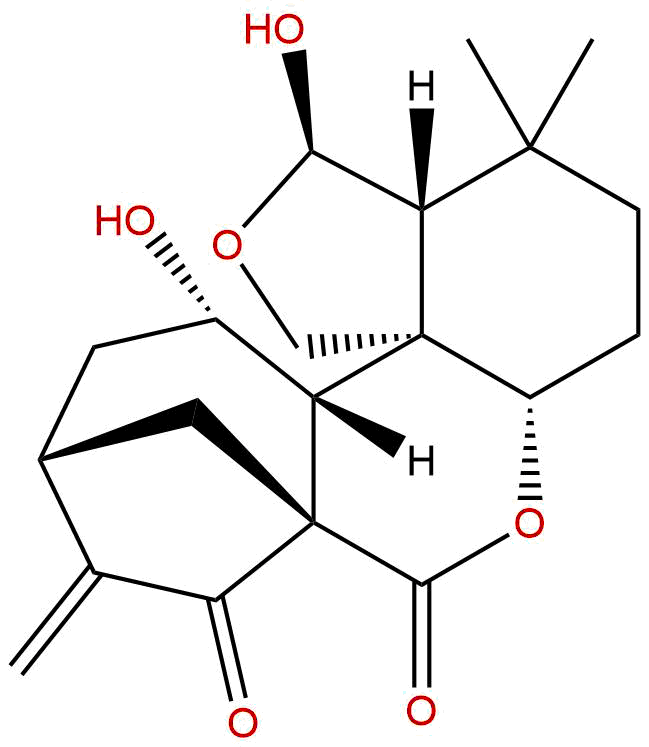


Product name: Epinodosin
Synonym name: (5alpha)-13-Deoxy-5-hydroxyenmein
Catalogue No.: BP1863
Cas No.: 20086-60-6
Formula: C20H26O6
Mol Weight: 362.422
Botanical Source:
Physical Description:
Type of Compound:
Purity: 95%~99%
Analysis Method: HPLC-DAD or/and HPLC-ELSD
Identification Method: Mass, NMR
Packing: Brown vial or HDPE plastic bottle
The product could be supplied from milligrams to grams. Inquire for bulk scale.
We provide solution to improve the water-solubility of compounds, thereby facilitating the variety of activity tests and clinic uses.
For Reference Standard and R&D, Not for Human Use Directly.
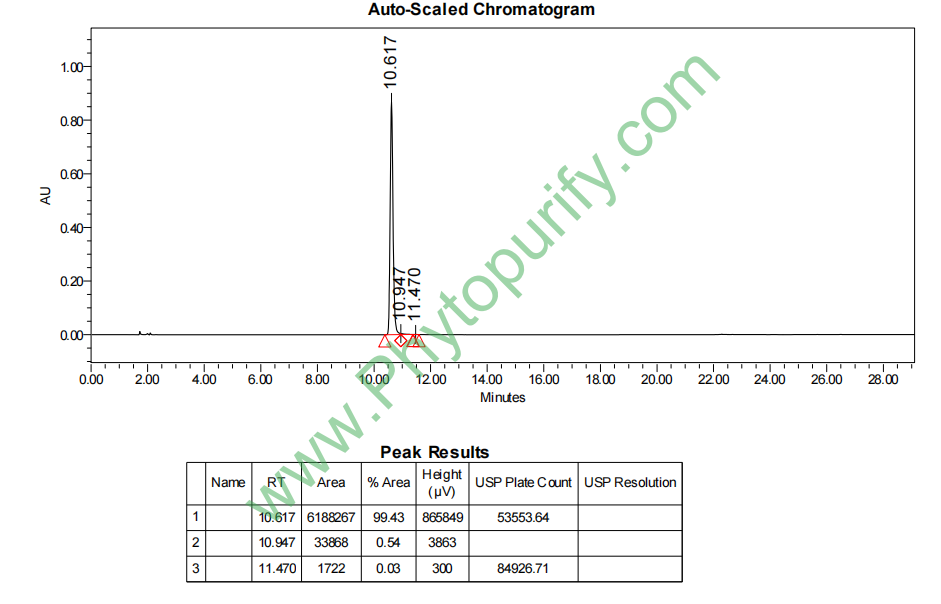
HPLC of Epinodosin
Storage conditions:Short-term storage at 2~8℃, long-term storage at -20 ~ -80℃
93.0600
1.1605
1.1605
.1509
2.2726
10.8977
High
54.9432
6.7128
No
No
No
No
Yes
No
0.3
Yes
No
Yes
Yes
Natural products, as an important source of drug discovery, play an irreplaceable role in the long history of human fight against diseases. From artemisinin to paclitaxel, from morphine to camptothecin, countless natural compounds derived from plants, microorganisms, and marine organisms have become a core component of modern pharmaceutical systems. Among numerous natural products, diterpenes have attracted much attention due to their structural diversity, wide range of biological activities, and unique mechanisms of action. Diterpenes are secondary metabolites composed of four isoprene units, widely present in plants, fungi, and marine organisms, with various pharmacological activities such as anti-inflammatory, anti-tumor, antibacterial, and antiviral.
Epinodosin (CAS number: 20086-60-6) is a naturally occurring diterpenoid compound that has gradually entered the field of researchers in recent years due to its unique biological activity. Existing studies have shown that Betamethasone exhibits moderate cytotoxicity towards the HL-60 human promyelocytic leukemia cell line, with a half maximal inhibitory concentration (IC50) of 10.4 μ M. More importantly, this compound has demonstrated potential application value in the field of inflammatory disease research. Lymphoma, as a malignant tumor originating from the lymphatic hematopoietic system, involves abnormal activation of multiple signaling pathways and imbalanced regulation of apoptosis in its pathogenesis. The potential regulatory effect of denosumac on lymphoma related targets such as MCL1, BCL2, STAT3, TP53, etc. provides a theoretical basis for its application in the treatment of lymphoma.
This article will comprehensively and systematically review the research progress of Betamethasone from multiple dimensions, including chemical structure and physicochemical properties, plant sources and extraction methods, pharmacological activity research, mechanism of action and molecular targets, drug evaluation and pharmacokinetics, clinical application prospects and prospects, in order to provide reference for the in-depth research and development of this natural product.
Epinepheline belongs to the terpenoid class of compounds, with a chemical structural framework consisting of 20 carbon atoms and four isoprene units. Diterpenoid compounds can be classified into various types based on their different carbon ring frameworks, including rosin type, sea pine type, shell cedar type, taxane type, etc. The molecular formula of Pinduoduo is C20H26O6, with a molecular weight of 362.4220 g/mol. Its structure contains multiple oxygen-containing functional groups, such as hydroxyl, carbonyl, and ether bonds, which endow the compound with unique chemical properties and biological activity.
From the perspective of structural characteristics, the multi star molecules of Epinephelus contain multiple chiral centers, presenting a complex stereochemical structure. The specificity of this three-dimensional structure determines the specificity of its interaction with biomolecules. The biological activity of diterpenoid compounds is often closely related to their specific configurations. The prefix "epi -" in the epigenetics suggests differences in their stereoisomers from their homologs, which may lead to significant differences in their biological activity compared to their isomers.
The physicochemical properties parameters of Betamethasone provide important references for its pharmacological evaluation. The lipid water partition coefficient (LogP) of this compound is 1.1605, indicating that it has a certain degree of lipid solubility, but its lipophilicity is not strong. This moderate lipid solubility facilitates the transmembrane transport and distribution of compounds in the body. The topological polar surface area (TPSA) is 93.0600 Å ², indicating that the molecule contains a large number of polar groups that facilitate the formation of hydrogen bonds, thereby affecting its binding ability to target proteins and oral absorption characteristics.
Water solubility is one of the key factors affecting the in vivo processes of drugs. The water solubility parameter of Pinduoduo is 0.1509 mg/mL, which belongs to low water solubility compounds. Lower water solubility may limit its oral bioavailability, but it can be improved through appropriate formulation techniques such as nanomaterials, liposomes, cyclodextrin inclusion complexes, etc. It is worth noting that the blood-brain barrier permeability of this compound is evaluated as "high", which suggests that Betamethasone may have the potential to have central nervous system effects, but at the same time, it may also bring central related toxic side effects, which need to be paid attention to in subsequent research.
In terms of safety assessment, the hERG inhibition test result was negative, indicating a low risk of heart QT interval prolongation caused by etoposide. The Ames test result is 0.3, indicating a low risk of genetic toxicity. These preliminary safety evaluation results provide favorable conditions for the further development of the compound.
Epidides mainly come from plants in the Lamiaceae family. Lipstick plants are an important source of terpenoids, and many plants in this family have a long history of application in traditional medicine, such as Salvia miltiorrhiza, Scutellaria baicalensis, Prunella vulgaris, and so on. Initially isolated from the aboveground parts or whole plants of certain lip shaped plants, typically found in temperate and subtropical regions of Asia, Europe, and North America.
Specifically, polyphenolic acid has been reported to exist in plants of the Isodon genus. Plants of the Camellia genus are an important source of diterpenoids, from which hundreds of bioactive diterpenoid compounds have been isolated, including famous compounds such as Oridonin and Rabdoserin. These plants are often used to treat inflammation, tumors and infectious diseases in China. The content of Betamethasone in plants is usually low and requires systematic separation and purification to obtain sufficient amounts for activity research.
The extraction of Betamethasone is usually carried out using organic solvent extraction method. Common extraction solvents include organic solvents with moderate polarity such as methanol, ethanol, and ethyl acetate. The extraction process generally includes the following steps: first, the dried plant material is crushed, and then soaked or percolated with a solvent at room temperature or heating conditions for extraction. The extraction solution is filtered and concentrated to obtain the crude extract. In order to improve extraction efficiency, modern extraction techniques such as ultrasound assisted extraction, microwave-assisted extraction, supercritical fluid extraction, etc. have also been applied in the extraction process of multi star systems.
The crude extract contains a large amount of impurities and requires systematic separation and purification to obtain pure products. Common separation methods include silica gel column chromatography, ODS reverse phase column chromatography, Sephadex LH-20 gel column chromatography, preparative high-performance liquid chromatography (prep HPLC), etc. The separation process is usually monitored by thin layer chromatography (TLC) or high-performance liquid chromatography (HPLC), and the target compound is identified by comparing retention time and characteristic absorption peaks. Due to the high structural similarity of diterpenoids, it is sometimes necessary to combine multiple chromatographic techniques to achieve effective separation.
In terms of structural identification, the structure of multi star systems is usually confirmed by spectroscopic methods such as nuclear magnetic resonance spectroscopy (NMR, including 1H-NMR, 13C-NMR, DEPT, HSQC, HMBC, NOESY, etc.), high-resolution mass spectrometry (HR-MS), infrared spectroscopy (IR), and ultraviolet spectroscopy (UV). Among them, two-dimensional NMR technology is crucial for determining the planar structure and relative configuration of compounds, while X-ray single crystal diffraction is the gold standard method for determining absolute configuration.
One of the most notable pharmacological activities of Betamethasone is its cytotoxic effect on tumor cells. Existing studies have shown that Betamethasone exhibits moderate cytotoxicity towards the HL-60 human promyelocytic leukemia cell line, with an IC50 value of 10.4 μ M. Although this level of activity is not as high as some potent anti-tumor natural products (such as paclitaxel, vinblastine, etc.), it still has value for further research and optimization.
It is worth noting that cytotoxic activity often has cell line specificity. The sensitivity of Betamethasone to different tumor cell lines may vary significantly, depending on the molecular characteristics, signaling pathway status, and drug sensitivity of each cell line. Therefore, the systematic evaluation of the cytotoxicity profile of Neogene on multiple tumor cell lines is of great significance for clarifying its anti-tumor spectrum and potential indications. In addition, the selective toxicity between normal cells and tumor cells is also an important indicator for evaluating anti-tumor compounds, and further research is needed on the toxic effects of Betamethasone on normal cells.
Inflammation is a defensive response of the body to injury and infection, but chronic inflammation is closely related to the occurrence and development of various diseases, including cancer, cardiovascular disease, autoimmune diseases, etc. Betamethasone has been reported to be useful in the study of inflammatory diseases, suggesting its potential anti-inflammatory activity.
The anti-inflammatory mechanism of natural diterpenes usually involves multiple aspects such as inhibiting the production of inflammatory mediators, regulating immune cell function, and interfering with inflammatory signaling pathways. Common anti-inflammatory targets include cyclooxygenase-2 (COX-2), inducible nitric oxide synthase (iNOS), nuclear factor kappa B (NF - κ B), mitogen activated protein kinase (MAPK) pathway, etc. There is currently a lack of systematic experimental evidence to determine whether Pinduoduo exerts anti-inflammatory effects through the aforementioned mechanisms, which will be an important direction for future research.
In addition to cytotoxicity and anti-inflammatory activity, diterpenoids typically possess various other biological activities, such as antibacterial, antiviral, antioxidant, and immunomodulatory properties. Considering the chemical structural characteristics of Epidides, they may also have similar pleiotropic biological activities. However, there are currently limited reports on the other pharmacological activities of Betamethasone, and further exploration and verification are needed.
Lymphoma is a highly heterogeneous group of malignant tumors, and its pathogenesis involves multiple gene mutations and abnormal signaling pathways. The potential regulatory effect of Betamethasone on lymphoma related targets provides a molecular basis for its application in lymphoma treatment. According to existing data, lymphoma targets associated with Betamethasone include MCL1, BCL2, CDC25B, PTPRC, RXRB, STAT3, MAPT, TOP2A, CASP8, and TP53.
MCL1 and BCL2 are important members of the B-cell lymphoma 2 (BCL-2) family, playing a crucial role in regulating cell apoptosis. The overexpression of MCL1 and BCL2 is closely related to the occurrence, development, and drug resistance of various hematological malignancies. Targeting BCL-2 family proteins has become a hot strategy in the development of anti-tumor drugs, such as the BCL-2 selective inhibitor venetoclax, which has been used clinically to treat chronic lymphocytic leukemia. Epidides may promote tumor cell apoptosis by regulating the expression or function of MCL1 and BCL2.
STAT3 is an important member of the signal transduction and transcriptional activation factor family, which is continuously activated in various tumors, promoting cell proliferation, survival, and angiogenesis. The abnormal activation of STAT3 is closely related to the onset and prognosis of lymphoma. Targeting the STAT3 signaling pathway has become an important direction in the development of anti-tumor drugs. Epidides may exert anti-tumor effects by inhibiting the phosphorylation and nuclear translocation of STAT3, blocking the transcription of downstream target genes.
TP53 is one of the most important tumor suppressor genes, and its encoded p53 protein plays a central role in DNA damage repair, cell cycle arrest, apoptosis induction, and other processes. TP53 mutations or functional deficiencies are closely related to the occurrence and development of various tumors. Epidides may induce tumor cell apoptosis or aging by restoring or enhancing the function of p53.
TOP2A is DNA topoisomerase II α, which plays an important role in DNA replication and transcription processes. TOP2A is the target of various anti-tumor drugs, such as etoposide and doxorubicin. Epidides may cause DNA damage and cell death by inhibiting the activity of TOP2A.
CASP8 is cysteine aspartic protease 8, a key initiating enzyme in the exogenous apoptotic pathway. Epidides may induce tumor cell apoptosis by activating CASP8, initiating an apoptotic cascade reaction.
Based on the above target analysis, it is possible that Betamethasone exerts anti-tumor effects through multiple mechanisms. Firstly, epigenoxacin may promote mitochondrial outer membrane permeabilization, release cytochrome c, and activate endogenous apoptotic pathways by regulating the expression balance of BCL-2 family proteins. Secondly, epigenoxacin may enhance the sensitivity of tumor cells to apoptosis by inhibiting the STAT3 signaling pathway and downregulating the expression of downstream anti apoptotic proteins such as MCL1, BCL2, and Survivor. In addition, epigallocatechin sulfate may induce cell cycle arrest by activating the p53 signaling pathway, upregulating the expression of cell cycle inhibitory proteins such as p21; Or upregulate the expression of pro apoptotic proteins such as Bax and PUMA to promote apoptosis.
It is worth noting that Betamethasone may act on multiple targets simultaneously, exerting a synergistic effect on multiple targets. Although this multi-target mode of action may bring broader anti-tumor activity, it also increases the complexity of studying the mechanism of action. The application of systems biology and network pharmacology methods helps to comprehensively analyze the mechanism of action and molecular target network of Epidides.
The evaluation of drug properties is a crucial step in the discovery and development of natural products. The pharmacological parameters of Betamethasone provide important references for its further development. The molecular weight of this compound is 362.4220, which meets the requirement of Lipinski's Rule of Five that the molecular weight should be less than 500. The LogP value is 1.1605, within the ideal range (-0.4~5.6), indicating moderate lipid solubility. The TPSA value is 93.0600 Å ², less than 140 Å ², which is favorable for oral absorption.
However, the water solubility of Betamethasone is relatively low (0.1509 mg/mL), which may affect its oral bioavailability. Strategies to improve water solubility include preparing salt forms, using solubilizers, and developing nano formulations. In addition, the compound has high blood-brain barrier permeability, which may be beneficial for the treatment of central nervous system diseases, but may also increase the risk of central toxicity, requiring comprehensive safety evaluation during drug development.
At present, there is limited experimental data on the pharmacokinetics of Betamethasone. Based on its physicochemical properties, its pharmacokinetic characteristics can be preliminarily predicted. Epidides have moderate lipid solubility and high TPSA, suggesting that they may be absorbed through passive diffusion and carrier mediated transport. After oral administration, its absorption may be affected by water solubility and intestinal metabolism.
In terms of distribution, Betamethasone may be widely distributed in various tissues throughout the body, including brain tissue. The binding rate with plasma proteins is not yet clear, but considering the presence of multiple polar groups in its structure, it may have some binding with plasma proteins. In terms of metabolism, diterpenoids are usually mainly metabolized by the liver cytochrome P450 enzyme system, undergoing oxidation, reduction, hydrolysis and other reactions to generate more polar metabolites, which are then excreted from the body through urine or bile.
The preliminary safety evaluation results show that the hERG inhibition risk of Betamethasone is low, and the Ames test result is also negative, indicating a low risk of cardiac toxicity and genetic toxicity. However, these evaluations are still in the preliminary stage and require more comprehensive safety assessments, including acute toxicity, chronic toxicity, reproductive toxicity, immunotoxicity, etc. Especially considering its high blood-brain barrier permeability, it is necessary to focus on its central nervous system toxicity.
Lymphoma is a common malignant tumor of the blood system. Despite significant progress in targeted therapy and immunotherapy in recent years, there are still some patients who are insensitive to existing treatments or develop resistance. Natural products provide new candidate molecules for lymphoma treatment due to their structural diversity and unique mechanisms of action.
The potential regulatory effect of Betamethasone on lymphoma related targets such as MCL1, BCL2, STAT3, TP53, etc. provides a theoretical basis for its application in lymphoma treatment. Especially for lymphoma subtypes with overexpression of BCL-2 family proteins, epigenoxacin may exert therapeutic effects by regulating the apoptotic pathway. In addition, the combined use of pembrolizumab and existing anti lymphoma drugs (such as Venetoclax, rituximab, CHOP regimen, etc.) may produce synergistic effects, improve treatment efficacy, and overcome drug resistance.
Inflammation is the common pathological basis of various diseases, and anti-inflammatory treatment has a wide range of applications in clinical practice. Betamethasone has been reported to be useful in the study of inflammatory diseases, suggesting its potential anti-inflammatory activity. There have been successful cases of natural diterpenoids in the field of anti-inflammatory drugs, such as andrographolide, which has been developed as an anti-inflammatory drug. Further research is needed to verify whether Epidides has similar anti-inflammatory activity and whether its anti-inflammatory mechanism involves classic inflammatory signaling pathways such as NF - κ B and MAPK.
Natural products, as lead compounds, usually require structural optimization to develop into clinical drugs. The chemical structure of Betamethasone contains multiple modifiable sites, such as hydroxyl and carbonyl groups, which can be structurally modified through chemical synthesis or biotransformation methods to improve its pharmacological activity, pharmacokinetic properties, and safety.
The strategies for structural optimization include: improving water solubility and oral bioavailability; Enhance affinity and selectivity towards the target; Reduce toxic side effects; Improve metabolic stability, etc. Through the study of structure-activity relationships, the key pharmacophores and structural features that affect drug properties in multi star molecules can be identified, providing guidance for the rational design of new derivatives.
The research and development of multi star systems still face many challenges. Firstly, its plant derived content is relatively low, making it difficult to obtain on a large scale. The solution strategies include developing fully synthetic or semi synthetic methods, utilizing biotechnology (such as plant cell culture, genetic engineering, etc.) to increase yield, and finding alternative natural sources. Secondly, its pharmacological activity and mechanism of action are not fully studied, and systematic in vitro and in vivo experiments are needed to clarify its anti-tumor and anti-inflammatory spectrum and molecular mechanism. In addition, its pharmacokinetic properties and safety evaluation data are lacking, and comprehensive preclinical studies are needed.
As a natural diterpenoid compound, Betamethasone has attracted the attention of researchers for its cytotoxic activity against HL-60 cells (IC50=10.4 μ M) and potential application value in inflammatory disease research. This compound has moderate molecular weight, lipid solubility, and polarity, with low risk of hERG inhibition and genetic toxicity, and has shown promising potential for drug development. Its potential regulatory effect on lymphoma related targets (MCL1, BCL2, STAT3, TP53, etc.) provides a molecular basis for its application in lymphoma treatment.
However, the research on multi star systems is still in its early stages, and many key questions remain to be answered. Future research should focus on the following aspects: firstly, a systematic evaluation of the toxic effects of Betamethasone on multiple tumor cell lines and normal cells, clarifying its anti-tumor spectrum and selectivity; Secondly, conduct in-depth research on its anti-inflammatory activity and mechanism of action; Thirdly, utilizing network pharmacology and systems biology methods to comprehensively analyze its multi-target mechanism of action; Fourthly, carry out pharmacokinetic and safety evaluations to lay the foundation for preclinical research; The fifth is to optimize the structure and develop derivatives to improve their drug properties.
In summary, as a natural diterpenoid compound with potential anti-tumor and anti-inflammatory activities, Betamethasone deserves further in-depth research. With the continuous deepening of research, Betamethasone is expected to provide new candidate molecules for the treatment of lymphoma and inflammatory diseases, and contribute to the discovery of natural product drugs.
