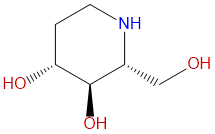


Product name: Fagomine
Synonym name:
Catalogue No.: BP2176
Cas No.: 53185-12-9
Formula: C6H13NO3
Mol Weight: 147.174
Botanical Source:
Type of Compound:
Purity: 95%~99%
Analysis Method: HPLC-DAD or/and HPLC-ELSD
Identification Method: Mass, NMR
Packing: Brown vial or HDPE plastic bottle
Storage: Store in a well closed container, protected from air and light. Put into refrigerate or freeze for long term storage.
Whenever possible, you should prepare and use solutions on the same day. However, if you need to make up stock solutions in advance, we recommend that you store the solution as aliquots in tightly sealed vials at -20℃. Generally, these will be useable for up to two weeks.
The product could be supplied from milligrams to grams
Inquire for bulk scale.
For Reference Standard and R&D, Not for Human Use Directly.
Storage conditions:Short-term storage at 2~8℃, long-term storage at -20 ~ -80℃
72.7200
-2.0767
-3.1385
583.8346
.4621
1.5532
Low
8.5854
3.8975
Yes
No
No
No
No
No
0.6
Yes
Yes
Yes
Yes
Diabetes is a global chronic metabolic disease, its incidence rate continues to rise, has become a serious public health challenge. Although traditional hypoglycemic drugs are effective, they often come with side effects such as gastrointestinal discomfort, weight gain, and low blood sugar risk, prompting researchers to continuously explore safer and multi-target treatment strategies from natural products. In this context, a class of alkaloids derived from natural plants - glycosidase inhibitors - have attracted much attention due to their ability to delay the digestion and absorption of carbohydrates in the intestine, stabilize postprandial blood sugar levels. Fagomine, a pyridine alkaloid originally isolated from buckwheat (Fagopyrum esculentum Moench) seeds, is an outstanding representative of this class of compounds.
Since its discovery, buckwheat alkaloid has gradually emerged from many natural products due to its mild and unique glycosidase inhibitory activity and its potential role in a broader anti diabetes network. Unlike potent glycosidase inhibitors such as acarbose, the inhibitory effect of buckwheat alkaloids is relatively mild, which may lead to better gastrointestinal tolerance. More importantly, research in recent years has constantly revealed that the anti diabetes effect of buckwheat alkaloid is far more than the inhibition of enzymes in the intestine. It may intervene in glucose metabolism disorder from multiple dimensions by activating AMPK signaling pathway, improving insulin signal transduction, regulating glucose transporter and other molecular mechanisms.
The purpose of this paper is to systematically review buckwheat alkaloid, and from its chemical nature and natural source, to deeply explore its pharmacological activity, especially around the multi target mechanism of anti diabetes effect, and to comprehensively evaluate the possibility and future direction of its development from natural compounds to potential therapeutic drugs in combination with its pharmaceutical properties.
Buckwheat alkaloids, with the chemical name (2R, 3R, 4R) -2-hydroxymethyl-3,4-dihydroxypyridine, have a CAS number of 53185-12-9. Structurally, it is a polyhydroxypyridine alkaloid with the molecular formula C6H13NO3 and a molecular weight of 147.1740. The core of its structure is a six membered pyridine ring, which is connected to a hydroxymethyl group and two hydroxyl groups, forming a multi hydroxyl structural unit similar to sugars. This "sugar like" structure is the chemical basis for its ability to bind to the active centers of various glycosidases and competitively inhibit substrate digestion.
In terms of physical and chemical properties, buckwheat alkaloids exhibit typical hydrophilic characteristics. Its calculated lipid water partition coefficient (LogP) is -2.0767, indicating that it has high hydrophilicity and low lipid solubility. The topologically polar surface area (TPSA) is as high as 72.72 Å ², mainly attributed to the multiple hydroxyl and tertiary amine nitrogen atoms in its structure, which are strong donors and acceptors of hydrogen bonds. The high TPSA and negative LogP values jointly determine the excellent water solubility of buckwheat alkaloids, with a calculated value of 583.8 mg/L, which is beneficial for their dissolution and absorption in aqueous media such as gastrointestinal environments.
In addition, preliminary pharmacological risk assessment shows that buckwheat alkaloids have a lower ability to penetrate the blood-brain barrier, which reduces the potential risk of central nervous system toxicity. In the hERG potassium channel inhibition test, it showed a negative result, indicating a lower risk of inducing QT interval prolongation in the heart. The Ames test result is 0.6 (usually considered negative if the ratio is less than 2), indicating that it has no significant genetic toxicity. These physicochemical and early safety properties provide a favorable starting point for further drug development.
The name buckwheat alkali directly reveals its main natural source - buckwheat (Fagopyrum esculentum Moench), especially enriched in its seeds (i.e. buckwheat rice). In addition to buckwheat, subsequent studies have also found the presence of buckwheat alkaloids or their derivatives in the root bark of mulberry trees (Morus spp.), as well as in some leguminous and solanaceous plants, but the content is usually lower than that of buckwheat.
Extracting and purifying buckwheat alkaloids from plant materials usually follows the general process of natural alkaloids and is optimized for their strong hydrophilicity. The classic method begins with solvent extraction: methanol, ethanol, or acidic aqueous solutions (such as dilute hydrochloric acid) are often used to extract or reflux crushed buckwheat seeds to fully dissolve the alkaloid components. Subsequently, utilizing the alkalinity of buckwheat alkali, liquid-liquid extraction purification can be carried out by adjusting the pH value, such as alkalizing in acidic water extract and extracting with organic solvents such as n-butanol.
Further purification relies on chromatographic techniques. Ion exchange chromatography is very effective and can utilize its alkaline nitrogen atoms for adsorption and elution. In addition, reverse phase high performance liquid chromatography (RP-HPLC) and preparative thin-layer chromatography are also commonly used purification methods. With the development of analytical techniques, high-performance liquid chromatography-mass spectrometry (HPLC-MS) and nuclear magnetic resonance (NMR) have become standard methods for identifying the structure, purity, and content of buckwheat alkaloids. In order to meet the needs of pharmacological research, some studies have explored the use of microbial transformation or chemical synthesis methods to prepare buckwheat alkaloids, but natural extraction is still the main source at present.
The pharmacological activity of buckwheat alkaloid mainly focuses on its anti diabetes effect, and extends to the related improvement of metabolic syndrome.
1. Core activity: α - glucosidase inhibition
This is the earliest and most clearly identified pharmacological effect of buckwheat alkaloids. It can reversibly and competitively inhibit alpha glucosidase (such as maltase and sucrase) and alpha amylase on the brush border of the small intestine. Its inhibition intensity is selective, for example, its inhibition of Aspergillus niger starch glucosidase (Ki=4.8 μ M) is stronger than that of bovine β - glucosidase (Ki=39 μ M) and yeast isomaltase (Ki=70 μ M). This mild and broad-spectrum inhibitory property allows buckwheat alkaloids to effectively delay the process of complex carbohydrates breaking down into monosaccharides (glucose), thereby smoothing out the sharp increase in postprandial blood sugar. The mechanism of action is similar to the clinical drug acarbose, but may be milder.
2. Anti diabetes and improvement of insulin resistance
In a variety of diabetes animal models (such as streptozotocin induced diabetes rats and high-fat diet induced obese insulin resistant mice), oral administration of buckwheat alkaloid showed a clear hypoglycemic effect. Its function is not only to lower postprandial blood glucose peak, but long-term administration can also significantly reduce fasting blood glucose and glycated hemoglobin (HbA1c) levels. More importantly, research has shown that buckwheat alkaloids can improve insulin sensitivity in peripheral tissues such as skeletal muscle and adipose tissue, manifested by improved insulin tolerance testing and enhanced phosphorylation of key proteins in the insulin signaling pathway. It can also partially promote the repair or functional protection of pancreatic beta cells.
3. Regulating lipid metabolism
Buckwheat alkaloids also have a regulatory effect on lipid metabolism disorders. In animal experiments, it can reduce the levels of serum total cholesterol, triglyceride and low-density lipoprotein cholesterol in hyperlipidemic model animals, and at the same time increase high-density lipoprotein cholesterol, which is helpful to alleviate the abnormal lipid metabolism often associated with diabetes.
4. Other potential activities
Some preliminary studies also suggest that buckwheat alkaloids may have antioxidant stress and anti-inflammatory effects. The occurrence and development of diabetes and its complications are closely related to oxidative stress and chronic low-grade inflammation. These auxiliary activities of buckwheat alkaloid may provide synergy for its core anti sugar effect.
The anti diabetes effect of buckwheat alkaloid is a multi target, multi pathway synergistic process, and its mechanism has expanded from simple enzyme inhibition to deep regulation of cell signaling pathway.
1. Direct target: Intestinal glycosidase
As a classic competitive inhibitor, the "sugar like" structure of buckwheat alkaloids allows them to bind to the catalytic site of the α - glucosidase active center, preventing the normal hydrolysis of polysaccharides and disaccharides in the diet and reducing glucose absorption at the source. This is the cornerstone of its immediate postprandial blood glucose control effect.
2. Key signaling hub: AMPK pathway activation
Adenosine activated protein kinase (AMPK) is a core regulator of cellular energy metabolism. Research has shown that buckwheat alkaloids can activate AMPK (including its catalytic subunit PRKAA1). The activation of AMPK produces a series of downstream effects: (a) promoting glucose uptake and utilization in skeletal muscle and liver; (b) Inhibit hepatic gluconeogenesis and reduce endogenous glucose output; (c) Promote fatty acid oxidation and improve lipid metabolism. This is one of the core molecular mechanisms by which buckwheat alkaloids improve insulin resistance and regulate systemic energy metabolism.
3. Enhancement of insulin signaling pathway
Buckwheat alkaloids can enhance tyrosine phosphorylation of insulin receptor substrate 1 (IRS1), thereby activating the classic insulin signaling pathway of phosphatidylinositol 3-kinase (PI3K, whose regulatory subunit is PIK3R1) - protein kinase B (AKT1). The activation of AKT1 leads to: (a) promoting the translocation of glucose transporter 4 (SLC2A4/GLUT4) to the cell membrane, increasing the uptake of glucose by muscle and adipocytes; (b) Generate various effects that promote synthetic metabolism and inhibit catabolism.
4. Regulation of other related targets
- PPARγBuckwheat alkaloids may act as weak agonists or modulators of peroxisome proliferator activated receptor gamma (PPARG), involved in adipocyte differentiation, lipid storage, and insulin sensitization.
- GCK May have a positive impact on glucokinase (GCK) and regulate glucose sensing in liver and pancreatic beta cells.
- SGLT2 and DPP4 Although its direct inhibitory effect may not be strong, the overall metabolic improvement effect of buckwheat alkaloids may indirectly affect the activity or expression of sodium glucose cotransporter 2 (SGLT2) and dipeptidyl peptidase-4 (DPP4), which are currently important targets of hypoglycemic drugs.
To sum up, buckwheat alkaloid forms its unique anti diabetes effect network through the dual or even multiple mechanisms of "intestinal enzyme inhibition (symptomatic)" and "peripheral AMPK/insulin signaling pathway activation (radical)".
Based on its physicochemical properties and preliminary biological data, buckwheat alkaloids have shown certain potential for development, but their comprehensive medicinal characteristics still need to be further explored.
Pharmacodynamics (Prediction and Preliminary Study)
Due to its high hydrophilicity (low LogP) and large polar surface area, the oral bioavailability of buckwheat alkaloids may face challenges. Hydrophilic molecules are usually absorbed through the bypass or active transporter of intestinal epithelial cells. Limited animal pharmacokinetic studies suggest that buckwheat alkaloids can be absorbed into the bloodstream after oral administration, but the degree and rate of absorption may be moderate. Its distribution in the body may be concentrated in tissues with abundant blood flow and extracellular fluid, due to low blood-brain barrier permeability and limited central distribution. The metabolic pathway is not yet clear and may involve oxidation or binding reactions of hydroxyl groups. The prototype drug and metabolites are expected to be primarily excreted through the kidneys. Systematic ADME (absorption, distribution, metabolism, excretion) research is a key step in advancing it towards preclinical development.
Preliminary evaluation of safety
The existing data provides positive early safety signals: the absence of hERG inhibition suggests good cardiac safety; The negative Ames test reduces concerns about genetic toxicity; The long-term consumption history of natural food sources (buckwheat) also provides some evidence for its safety. However, as a drug, complete preclinical safety pharmacology, repeated administration toxicity, reproductive toxicity, and other GLP safety evaluations are still required.
Pharmaceutical considerations
In order to improve its oral bioavailability, it may be necessary to use pharmaceutical methods. For example, it can be prepared into solid dispersions, liposomes, or nanoparticles containing penetration enhancers, or combined with other natural ingredients to improve its transmembrane absorption. Due to its good water solubility, it is also suitable for development into oral liquids, tablets, or capsules.
As a multi target natural anti diabetes lead compound, buckwheat alkaloid has broad clinical application prospects, but the road still needs solid exploration.
Potential application directions
1. Early intervention of pre diabetes and type 2 diabetes Its mild hypoglycemic properties and the effect of multi-target improvement of insulin resistance are very suitable for intervention in pre diabetes to delay or prevent disease progression.
2. Adjuvant treatment of type 2 diabetes Can be used as a supplement to first-line or second-line oral hypoglycemic drugs, especially suitable for patients with poor postprandial blood glucose control and metabolic syndrome. It may have a synergistic effect with drugs such as metformin.
3. Development of functional and health foods Given that it originates from the food buckwheat, developing specific healthy foods rich in or fortified with buckwheat alkaloids for daily blood sugar management is a more achievable market direction.
Challenges faced and future research directions
1. Deep analysis of the mechanism of action More precise elucidation of its direct interaction with key targets such as AMPK and PPAR γ is needed to confirm whether it is a direct agonist or an upstream regulator.
2. System pharmacokinetics and optimization A comprehensive ADME study must be completed, and on this basis, structural modifications (while retaining pharmacophores) or advanced formulation techniques must be used to address the issue of potential low bioavailability.
3. Preclinical and clinical research It is necessary to conduct standardized long-term pharmacological and toxicological studies on animals, and ultimately advance them to human clinical trials to confirm their effectiveness and safety.
4. Exploration of Compound Preparations Combining buckwheat alkaloids with other complementary natural products (such as flavonoids, polysaccharides) or existing drugs to form a compound may produce a synergistic therapeutic effect of "multi-target, low-dose, high efficiency, and reduced toxicity", which is a highly valuable research direction.
Buckwheat alkali has gradually grown from a common food crop ingredient to a star molecule in the field of natural product anti diabetes research. It is not only a mild glycosidase inhibitor, but also a multi-component metabolic regulator that can activate the AMPK energy metabolism hub and enhance the insulin signaling pathway. This combination of "source control" and "peripheral sensitization" is consistent with the concept of modern diabetes treatment from simple hypoglycemic to comprehensive management of metabolic disorders.
Although buckwheat alkaloids still face scientific challenges such as optimizing bioavailability and conducting systematic pharmacological and toxicological evaluations on the road to mature drugs, their clear multiple pharmacological activities, good early safety characteristics, and natural food source background endow them with enormous development potential and unique advantages. In the future, through interdisciplinary in-depth research, buckwheat alkaloid is expected not only to be used as a probe to clarify the complex regulatory network of glucose metabolism, but also to eventually develop into a new drug or functional ingredient to prevent and treat type 2 diabetes and its complications, providing a new choice of natural origin and multiple effects for the prevention and treatment of diabetes globally.
Batch can search by a CAS number,one per line
