
Pick To:. 《Chinese Pharmacopoeia》2020Licorice is included asglycyrrhiza uralensis fisch Glycyrrhiza uralensis, Glycyrrhiza glabraG. glabra, Glycyrrhiza inflataG. inflata 3Varieties.Different varieties of Glycyrrhiza uralensis Fisch have not only differences in content, but also species specificity and different pharmacological activities. The chemical constituents of different varieties of Glycyrrhiza uralensis Fisch、The research progress of pharmacological effects is reviewed, and its quality marker(quality marker,Q-Marker)According to the prediction analysis, the flavonoids liquiritigenin, isoliquiritigenin, liquiritigenin, isoliquiritigenin and triterpenoids glycyrrhizic acid and glycyrrhetinic acid are recommended as3Licorice growingQ-MarkerIn addition, considering the specificity of ingredients and their respective dominant biological activities among different varieties, it is suggested that glycyrrhizin glabra can be used as the main component of Glycyrrhiza glabraQ-Marker, chalconeAAs the root of Glycyrrhiza inflataQ-Marker, in order to clarify the different varieties of liquoriceQ-MarkerAnd provide a theoretical basis for the establishment of quality standards and rational development and utilization of different varieties of Glycyrrhiza.
Liquorice, also known as sweet grass root, powder grass, Lingtong, Guolao, meicao, honey sweet, soft gold, etc., is a perennial herb, belonging to the genus Glycyrrhiza of LeguminosaeGlycyrrhiza L.At present, there are29species6Variants, China18species3variety[1]The application of licorice in traditional Chinese medicine has a long history. It was listed as "top-grade" in the Shennong materia medica classic. According to the notes to the materia medica classic, "this herb is the king of all herbs, and few of the classic prescriptions are used". According to Li Shizhen's Compendium of materia medica, licorice can "harmonize the group of products, and have the merit of the elders... It can be said to be a good phase in medicine". Zoushi's "Ben Jing Shu Zheng" in the Qing Dynasty said: "in the treatise on Febrile Diseases and synopsis of the golden chamber, there are 250 prescriptions for licorice, and up to 120 prescriptions for licorice". . 《Chinese Pharmacopoeia》2020Annual Edition 1[2]The collected liquorice is uralensis uralensisGlycyrrhiza uralensis Fisch., Glycyrrhiza glabraG. glabra L., Glycyrrhiza inflataG. inflata Bat. 3Varieties. Modern research shows that licorice has antibacterial, anti-inflammatory, antiviral, antitumor, antioxidant, hypoglycemic, lipid regulating, anti atherosclerotic and other effects, and is widely used in medicine, food, beauty and other industries. . This paper summarizes and analyzes the resource distribution, chemical composition and pharmacological activity of Glycyrrhiza uralensis, analyzes its source pathway, traditional medicinal properties and efficacy, blood entry components, new pharmacodynamic pathways and the relationship between modern pharmacological effects and chemical components, and attempts to analyze its quality marker(quality marker,Q-Marker)Conduct forecast analysis in order to3Medicinal Licorice ResourcesQ-MarkerTo provide references.
1 resource distribution
Liquorice plants are mainly distributed in temperate desert and temperate grassland areas in arid and semi-arid regions of Northwest China. Affected by climate, they are distributed in a long east-west and narrow north-south belt, including Xinjiang and Inner Mongolia, the north of Gansu, Ningxia, Qinghai, Shaanxi, Shanxi and Hebei, and the west of Liaoning, Jilin and Heilongjiang. Uralensis uralensis is widely distributed, extending from the Erqisi River Basin in Northern Xinjiang to the East and south, through the Hexi Corridor and Ordos Plateau to the Northeast Horqin grassland, and entering the Qinghai Plateau to the south. Glycyrrhiza inflata is mainly distributed in southern Xinjiang, reaching the Hexi Corridor of Gansu Province on the eastern edge, and rarely distributed in Northern Xinjiang. Glycyrrhiza glabra is mainly distributed in areas with abundant water sources on the northern and southern slopes of Tianshan Mountains in Xinjiang[3]。
2 chemical composition
3The chemical constituents of Glycyrrhiza uralensis Fisch. Are diverse, and the main chemical constituents are triterpenoids, flavonoids, polysaccharides, coumarins, alkaloids, volatile oils, trace elements and other compounds.
2.1 Triterpenoids
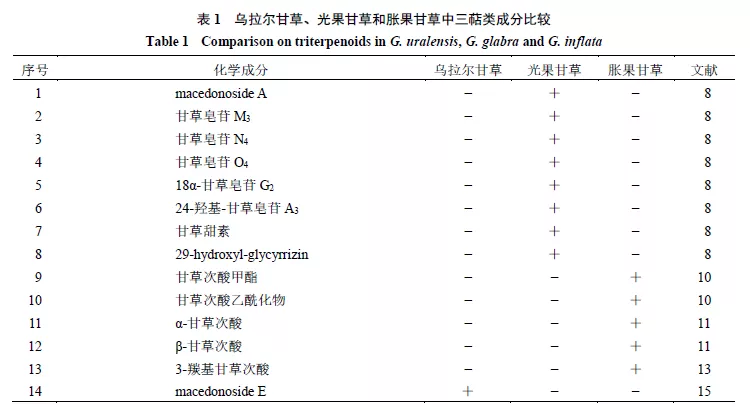
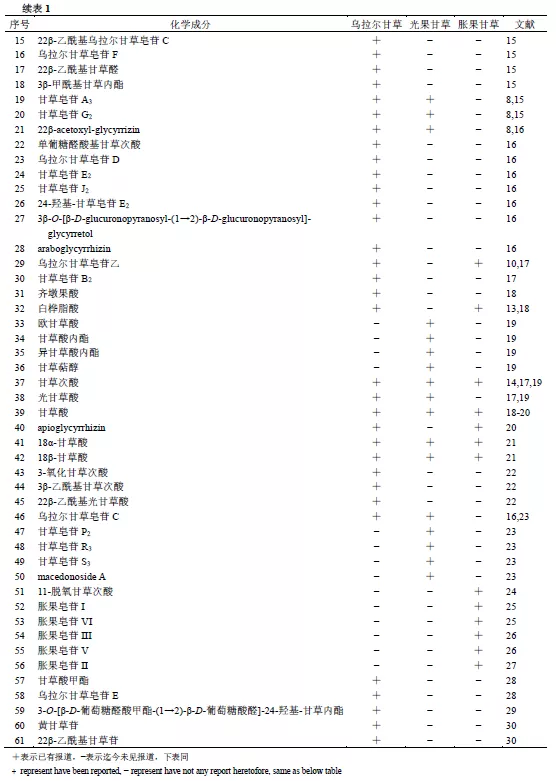
Triterpenoids are the main components of licorice and natural sweeteners6Polymer with molecular isoprene as unit has the characteristics of high content, strong physiological activity and high medicinal value. Its skeleton structure is generally3β-Hydroxypentacyclic triterpene oleanane type, which can be regarded asβ-Derivatives of oleanol[4](Glycyrrhetinic acid monoglucuronide), glycyrrhetinic acid, methyl glycyrrhetinic acid, neoglycyrrhizin, etc3β-Derivatives of oleanane type compounds[5]Triterpenoids isolated from Glycyrrhiza glabra include glycyrrhizic acid, glycyrrhetinic acid, glycyrrhizin, glycyrrhizic acid, euglycyrrhizic acid, and glycyrrhizin[6-8]Et al. The proportion of Glycyrrhiza inflata in the reserves of wild Glycyrrhiza in China60%more than[9]According to literature reports, Glycyrrhiza inflata contains triterpenoids glycyrrhizic acid, glycyrrhetinic acid, glycyrrhetinic acid methyl ester11-Deoxyglycyrrhetinic acid3-Carbonyl glycyrrhetinic acid, etc[10-14], see table for specific compounds1。
2.2 Flavonoids
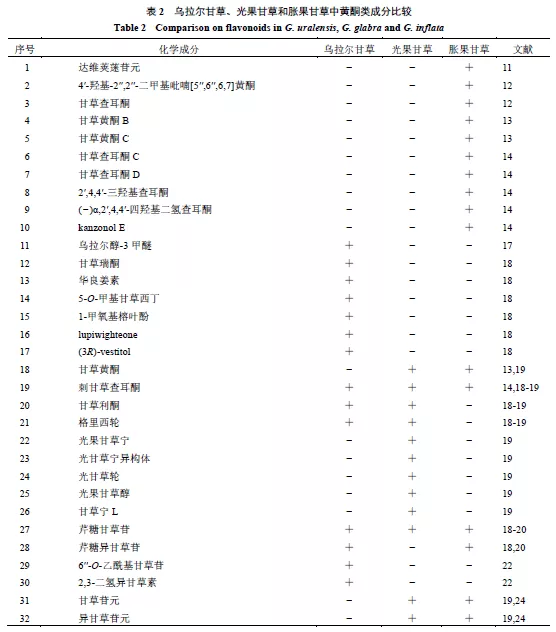
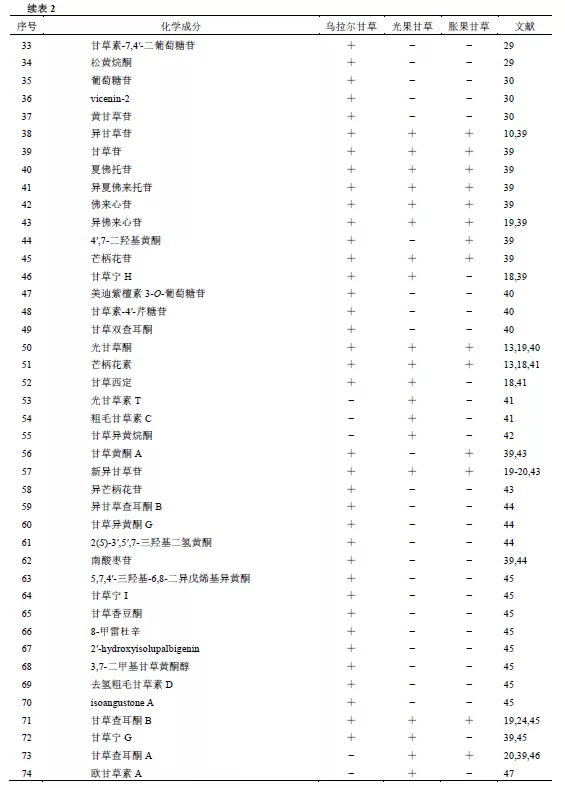
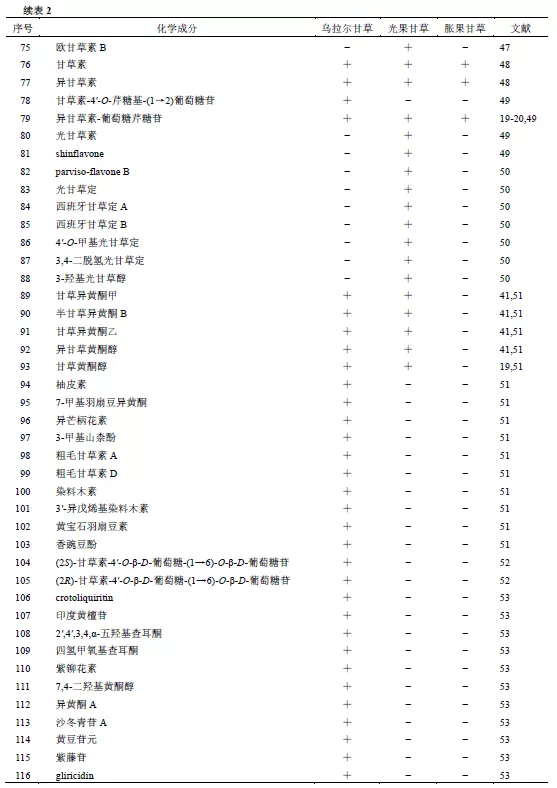
Flavonoids mainly refer to the basic parent nucleus of2-So far, phenyl chromones have been isolated and identified from licorice plants at home and abroad300Multiple flavonoids[31]The flavonoids in Glycyrrhiza uralensis can be divided into flavonoids, flavonols, isoflavones, andErKetones, dihydroflavonoids, dihydroisoflavones, isoflavones, etc., of which the basic skeleton of flavonoids isC6-C3-C6[32]Some scholars have reported that the kinds and contents of flavonoids in different species of liquorice or the same species of liquorice but from different regions are different[33]The flavonoids of Glycyrrhiza glabra include glycyrrhizin glabra, isoliquiritigenin, glycyrrhizin glabra, and origantigeninA、3-Hydroxyglycyrrhizin[34-35]Et al., in which glycyrrhizin glabra is a species-specific hallmark component in Glycyrrhiza glabra[36]The flavonoids in Glycyrrhiza inflata include liquiritigenin, isoliquiritigenin4,7Dihydroxyflavone, Glycyrrhiza spinosa chalcone, etc[10-14]. in the above3Among the species of liquorice, some scholars conducted variety identification and determined that liquoriceErketoneAIs a species-specific component of Glycyrrhiza inflata[37-38], see table2。
2.3 Polysaccharides
Polysaccharides are one of the active components of Glycyrrhiza uralensis Fisch. They have complex structures and diverse functions. At present, most of the research on them focuses on the relationship between polysaccharides and biological activities. The polysaccharides in Glycyrrhiza uralensis are mainly composed of rhamnose, dextran, arabinose and galactose, which have antitumor, immune promoting and antiviral activities[54-55]The polysaccharides in Glycyrrhiza inflata are mainly acidic polysaccharides, mainlyL-ArabinoseL-RhamnoseD-GlucoseD-Galactose andD-Galactic acid[56]Some scholars have found that3The polysaccharide content of different varieties of Glycyrrhiza is different. Although the monosaccharide composition of different varieties of Glycyrrhiza is the same, the proportion of monosaccharide is also different[57-58]。
2.4 Coumarins
Coumarins are mainly found in Glycyrrhiza uralensis Fisch. They are typically characterized by benzene ring substitution at the ortho position of the carbonyl group. The structure of these components is consistent withC6-C3-C6Rules for. [4]In the classification, it is classified as a flavonoid component, and the substituted benzene ring in the structure of a few components is cyclized with the parent core to form a furan ring, formingcoumestnas (II)Class structure. Lu Jingjing et al[59]The chemical composition of the waste residue of uralensis uralensis was studied to obtain a newCoumarins, named Sophora coumarin. Liuyuchen[18]take7,2′,4′-Trihydroxy-5-Methoxy-3-Coumarin was isolated from Glycyrrhiza for the first time. It is reported that the chemical structure of coumarin a, a coumarin component of Glycyrrhiza inflata, is4-(P-hydroxybenzene)-6-Isopentenyl-7-hydroxyl-coumarin[60]。
2.5 Alkaloids
At present, there are many studies on the analysis of flavonoids and triterpenoids in Glycyrrhiza uralensis Fisch. There are a certain amount of studies on the alkaloids in Glycyrrhiza uralensis Fisch, but the variety source is less indicated. Zhang Ji et al[61]The study found that the alkaloids in Glycyrrhiza uralensis, Glycyrrhiza glabra, Glycyrrhiza inflata and Glycyrrhiza spinosa basically belong to one class, and their types may be quinoline derivatives,4The content of alkaloids in Glycyrrhiza uralensis Fisch is higher and close, and the content of alkaloids in Glycyrrhiza uralensis Fisch is6More than alkaloids with mass fraction of0.26%。
2.6 other
In addition to the above chemical components, volatile oil components, amino acids and trace elements in licorice have also been reported. Majunyi et al[62]The main volatile components of Glycyrrhiza uralensis root were alkanes and aromatics. 8Amino acids[63]In addition, trace elements in the root of liquorice may play a role in the genuine quality of liquorice, liangxinhua et al[64]It was found that the root of Glycyrrhiza uralensisZnElement content andZn/CuThere was a significant positive correlation between glycyrrhizic acid content and glycyrrhizic acid content.
In conclusion, there are relatively many studies on the constituents of Glycyrrhiza uralensis and Glycyrrhiza glabra, followed by Glycyrrhiza inflata,3There are triterpenoids, flavonoids, polysaccharides, alkaloids and other components in Glycyrrhiza uralensis Fisch. But the content of chemical components varies among different varieties. The content of flavonoids and triterpenoids varies greatly among different varieties. However, due to the differences of samples and experimental design, it is still difficult to confirm which variety has higher content of Glycyrrhiza uralensis Fisch; ; Different varieties of liquorice have their species-specific components, such aslicoarylcoumarin, liquorice coumarin, galangin, glycyrrhizin, grisea round5The chemical constituents are only found in Glycyrrhiza uralensis Fisch[18], glycyrrhizin Guangguo and chalconeAThey are regarded as the specific components of Glycyrrhiza glabra and Glycyrrhiza bloatum, which can provide a certain basis for the quality control of different varieties of Glycyrrhiza.
3 pharmacological action
3.1 Antibacterial、antiinflammatory
Modern pharmacological studies have shown that flavonoids in Glycyrrhiza uralensis, Glycyrrhiza glabra and Glycyrrhiza inflata may be the main active ingredients of their antibacterial and anti-inflammatory effects. Such studies may have some enlightenment for the research and development of new drugs for some drug-resistant bacteria and the preservation of antimicrobial agents for foods containing high concentrations of salt and protease, but their safety and effectiveness still need to be further studied. Among them, Glycyrrhiza uralensis has a good inhibitory effect on Gram positive cocci such as Staphylococcus aureus, Streptococcus and Enterococcus[65], Glycyrrhiza inflata chalconeAThe growth of vegetative cells of Bacillus subtilis was inhibited in a concentration dependent manner[66]. in promyelocytic leukemiaHL-60In cells, glycyrrhizin can concentration dependently inhibit the production of effective inflammatory mediators leukotriene and Thromboxane[67]Another study found that chalcone of Glycyrrhiza inflataABy inhibiting nuclear transcription factorsκBsignaling pathway, Promoting nuclear transcription factorsE2Correlation factor2Signaling pathway exerts its antioxidant effect to effectively improve the clinical symptoms of acetic acid-induced ulcerative colitis mouse model[68]。
3.2 antiviral
since20century80In the s, Japanese scholars first reported the anti HIV effect of glycyrrhizin, which caused a sensation. The anti-virus research on Glycyrrhiza involves a variety of active ingredients such as liquiritigenin, isoliquiritigenin, liquiritin and other flavonoids, glycyrrhizic acid, glycyrrhetinic acid, glycyrrhizin and other triterpenoids, glycyrrhizin coumarin and glycyrrhiza polysaccharide. Its anti-virus types also involve a variety of, including anti HIV, anti SARS virus, anti hepatitis virus (hepatitis B, c), anti human respiratory syncytial virus, anti influenza virus, etc.Adiantietc.[69].Wangetc.[70]It was found that the antiviral activity of Glycyrrhiza uralensis was related to the content of glycyrrhizic acid in the extract, and glycyrrhizic acid blocked enterovirus in a dose-dependent manner71coxsackie virus A16.Soufyetc.[71]Glycyrrhizin isolated from the root of Glycyrrhiza glabra showed good immunostimulatory and antiviral effects on duck hepatitis virus infection when used alone or in combination with duck hepatitis vaccine in vivo and in vitro.
3.3 antioxidant
3All varieties of Glycyrrhiza uralensis have antioxidant activity, which may be related to the content, concentration and extraction temperature of polysaccharides and flavonoids[72]And extraction methods[73]Related. In recent years, some scholars have determined the hydrogen peroxide system, scavenging1,1-Diphenyl-2-Picrylhydrazine(1,1-diphenyl-2-picrylhydrazyl,DPPH)Free radical and superoxide anion free radical scavenging methods were used to evaluate the antioxidant activity of Glycyrrhiza uralensis Fisch.Chenetc.[74]Glycyrrhiza uralensis polysaccharide obtained from the root of Glycyrrhiza uralensisIIShowed very good concentration dependent hydroxyl radical scavenging performance and considerableDPPH. Glycyrrhizin is an isopentenyl isoflavone from the root of Glycyrrhiza glabra, which has good antioxidant effect in vitro and in vivo[75]。Ojhaetc.[76]The evaluation results showed that the Glycyrrhiza glabra group ameliorated ischemia induced by ligation of the left anterior descending coronary artery in rats by improving oxidative stress and favorable cardiac function regulation-Reperfusion injury has a protective effect. Congyuanyuan et al[77]It was found that the polysaccharides from Glycyrrhiza inflata LDPPHFree radicals, hydroxyl radicals and superoxide anion radicals have certain scavenging effects.
3.4 Antitumor
The flavonoids of Glycyrrhiza uralensis and Glycyrrhiza inflata have good anti-tumor activity, and can inhibit the proliferation and induce tumor apoptosis of a variety of human tumor cells, such as cervical cancer, breast cancer, prostate cancer, liver cancer cells. Mamiao et al[78]It was found that licorice flavonoids have significant effects on cervical cancerHeLaCell lines, breast cancerBcap-37Cell lines, gastric cancerMGC-803Cell lines and liver cancerBel-7404All cell lines had significant effects of inhibiting and inducing apoptosis.Parketc.[79]Uralensis hexane containing the active ingredient glycyrrhizin was evaluated-The ethanol extract can significantly inhibit the metastasis and invasion of malignant prostate cancer cells. A variety of flavonoids in Glycyrrhiza inflata can inhibit cell growth and induce apoptosis. Studies have found that the crude extract and refined extract of Glycyrrhiza inflata in Xinjiang can effectively inhibit cervical cancerSiHaCells andHeLaCell proliferation, promoting cervical cancer apoptosis[80]。It has also been reported that Glycyrrhiza inflata chalconeACan be achieved by downregulating specific proteins1(specificity protein 1,Sp1)Expression, regulationSp1Downstream proteins cause human oral squamous cell carcinomaHSC4andHN22apoptosis, [81]。
3.5 Hypoglycemic、Regulating blood lipid、Anti atherosclerosis
Flavonoids from Glycyrrhiza uralensis Fisch have good hypoglycemic, lipid regulating and anti atherosclerotic effects. Studies have shown that flavonoids even show more effective hypoglycemic activity than positive control drugs.Gouetc.[82]Isolated from the root of Glycyrrhiza uralensis7All flavonoids showed more effective than acarbose, a positive control drugα-Glucosidase inhibitory activity.Kentetc.[83]It was found that glycyrrhizin guangganding had a significant effect on cytochromeP4503A4It is believed that this effect may contribute to its protective effect on LDL oxidation and its subsequent anti atherosclerotic properties.Carmellietc.[84]The drug administration of glycyrrhizin extracted from the standardized crude extract of Glycyrrhiza glabra was studied22Cases of healthy volunteers in6Plasma LDL oxidation decreased during months20%。
3.6 hishe
In addition to the above pharmacological effects, the liver protection of Glycyrrhiza uralensis[85], neuroprotection[86], neuroprotection of Glycyrrhiza glabra[87], inhibition of tyrosinase[88]And estrogen like effects[89], and the anti angiogenic effect of Glycyrrhiza inflata[90].
4 Q-MarkerPrediction analysis of
Glycyrrhiza uralensis Fisch has a complex chemical composition and a wide application market. Different origins, varieties, planting methods, processing methods, etc. will affect its effective ingredients and efficacy. Traditional Chinese MedicineQ-MarkerThe analysis was conducted by academician liuchangxiao[91-94]The important basis for reflecting the safety and effectiveness of traditional Chinese medicine was put forward. 《Chinese Pharmacopoeia》2020The annual edition recorded that Glycyrrhiza uralensis, Glycyrrhiza glabra and Glycyrrhiza inflata3Species, and the identification methods are only microscopic identification and thin layer chromatography. Therefore, through literature analysis, this paper will3Liquorice varietiesQ-MarkerIn order to provide references for the establishment of scientific methods for the quality control of different varieties of Glycyrrhiza uralensis.
4.1 Based on the evidence of plant phylogeny and chemical composition specificityQ-Markerforecast
Glycyrrhiza was developed by botanist linnai in1753Officially named in flora in, it is an important medicinal plant resource distributed in arid and semi-arid areas. Liquorice plants are distributed worldwide with29species6Varieties, mainly distributed in the Mediterranean region to the temperate Asia, but mainly in the cold temperate and warm temperate dry and semi dry regions of the northern hemisphere, and more concentrated in central and eastern Asia, a few species in North America, western South America and Southeast Australia are also distributed[95]It is distributed in China18Species and3Variants, 《Chinese Pharmacopoeia》2020The next edition includes uralensis uralensis, Glycyrrhiza glabra and Glycyrrhiza inflata3The wild resources of medicinal licorice in China are mainly distributed in the temperate desert area and temperate grassland area in the arid region of Northwest China37°~50°, east longitude75°~123°[9]。
Glycyrrhiza uralensis contains a variety of chemical components, including flavonoids, triterpenoid saponins, polysaccharides, coumarins, alkaloids, volatile oils, trace elements, etc., of which flavonoids and triterpenoid saponins are the main pharmacodynamic components in Glycyrrhiza and the main secondary metabolites of Glycyrrhiza. [96]The content of glycyrrhizin in the total flavonoids of Glycyrrhiza glabra (ca11.6%)It can be regarded as a species-specific component in Glycyrrhiza glabra[36]; liquorice saponinM3It is the first structure found in Glycyrrhiza glabra that contains8The natural triterpenoid saponins substituted by the methyl group of the horn can provide a new way for the rapid identification of Glycyrrhiza glabra[8]Licorice chalcone has also been reportedAIs a species-specific component of Glycyrrhiza inflata[38]In the above study3The chemical composition differences and characteristics of different varieties of Glycyrrhiza uralensis were compared and analyzed, which can be used as a reference for different varieties of Glycyrrhiza uralensisQ-MarkerImportant evidence and feasible path identified.
4.2 Traditional efficacy basedQ-MarkerPredictive analysis
Traditional efficacy is a summary of the effectiveness of traditional Chinese medicine, and licorice is listed as "top grade" in Shennong materia medica classic, 《Chinese Pharmacopoeia》2020Glycyrrhiza uralensis, glaucous fruit and bulging fruit Glycyrrhiza are included in the annual edition3It is recorded that it has the effects of Tonifying the spleen and Qi, clearing away heat and detoxification, eliminating phlegm and relieving cough, relieving pain, and harmonizing various drugs; It is used for spleen and stomach weakness, fatigue, palpitation and shortness of breath, cough and phlegm, abdominal pain, limb contracture and acute pain, carbuncle, swelling and sores, and relieving drug toxicity and intensity. Modern pharmacological research shows that most of the flavonoids and triterpenoids in licorice have antibacterial, anti-inflammatory, antitussive and expectorant, anti ulcer, anti arrhythmia and other effects. The pharmacological activities of the above compounds are consistent with the traditional efficacy of licorice, which is the main material basis of the traditional efficacy of licorice, and can be used asQ-MarkerImportant basis for screening.
4.3 Based on traditional medicineQ-MarkerPredictive analysis
The nature, taste and meridian tropism of traditional Chinese medicine is not only its basic attribute, but also an important basis for clinical prescription and medication, so it can be based on thisQ-MarkerAnalysis. Liquorice is sweet and smooth in nature. It can return to the heart, lungs, spleen and stomach channels. According to the theory of traditional Chinese medicine, the material basis of sweet taste should have the taste characteristics and functional attributes of sweet taste. Modern chemical research shows that the chemical components of sweet medicine are mainly sugars, proteins, amino acids and glycosides. Q-MarkerImportant references for selection.
4.4 Based on the measurability of chemical compositionQ-MarkerPredictive analysis
The measurability of chemical composition is alsoQ-Marker. It is of great significance to study the specific differences between the fingerprints of licorice samples of different varieties, different origins and different cultivation conditions for the quality control of medicinal materials. Duantianxuan et al[20]Determination of Xinjiang3. Yang Rui et al[21,48]Analysis showed that the same origin3Different kinds of Radix Glycyrrhizae4There are significant differences in the contents of the main flavonoids in the same producing area3Different kinds of Radix Glycyrrhizae2. Mahaijuan et al[97]CO detection from licorice extract23Flavonoids,8Triterpenoid saponins. It can be seen from the above that the content of flavonoids and triterpenoids in licorice is large and easy to be detected by chromatography, and there are certain differences in content and composition between different varieties2Flavonoids and triterpenoids are also closely related to the antibacterial, anti-inflammatory, anti-virus, anti-tumor and other biological activities of Glycyrrhiza uralensis, so it is suggested that flavonoids and triterpenoids should be selected as possibleQ-Marker。
4.5 Based on new pharmacodynamic usesQ-MarkerPredictive analysis
In modern pharmacological research, triterpenoids in Glycyrrhiza uralensis Fisch, such as glycyrrhizic acid, glycyrrhetinic acid and glycyrrhizin, can protect the liver and also have antiviral effects. Chalcones such as isoliquiritigenin and chalcone in flavonoids of Glycyrrhiza inflataAIt can inhibit the growth and proliferation of liver cancer, cervical cancer, breast cancer, gastric cancer and other tumor cells. Triterpenoids in Glycyrrhiza glabra, such as glycyrrhizin glabra, have certain potential in the improvement of brain injury caused by ischemia-reperfusion, atherosclerotic cardiovascular disease, and cognitive and memory dysfunction caused by Alzheimer's disease. Q-Marker, isoliquiritigenin, chalconeAAs the root of Glycyrrhiza inflataQ-Marker, glycyrrhizin glabra as Glycyrrhiza glabraQ-Marker.
4.6 Based on the chemical composition of bloodQ-MarkerPredictive analysis
The chemical composition of traditional Chinese medicine is complex, and it must be absorbed into the blood and reach a certain blood concentration in the body before it can directly or indirectly exert pharmacological effects. Therefore, the pharmacodynamic components of Glycyrrhiza uralensis can be screened out by analyzing the prototype components of the drug injected into the blood after administration and their metabolic process in the body, and used as the quality control index of Glycyrrhiza uralensis. Some scholars have reported that ratsivandpoPharmacokinetic experiments after administration proved that chalcone has the characteristics of rapid absorption and elimination, low bioavailability and wide distribution[98]Isoliquiritigenin has high absorption rate and low bioavailability, and its gastroprotective effect may be related to its high distribution in the stomach[99]Other studies have reported that flavonoids and triterpenoids in licorice, such as glycyrrhizic acid, glycyrrhetinic acid, liquiritin, isoliquiritigenin, glycyrrhizin and other components can enter the blood[100-101]Therefore, the above ingredients can be used as licoriceQ-MarkerImportant basis for selection.
4.7 Based on different processing methodsQ-MarkerPredictive analysis
Whether the processing of traditional Chinese medicine is proper will directly affect the content and efficacy of effective ingredients, which is of great significance for the quality control of traditional Chinese medicine. [102]There is a great difference in the efficacy between raw and processed licorice. Research ReportpoThe absorption of isoliquiritigenin in the serum of rats with roasted licorice was enhanced, and the absorption of isoliquiritigenin was inhibited. The amount of excipients during the processing of honey roasted licorice also affected the pharmacokinetic parameters of apigenin, liquiritigenin, isoliquiritigenin, liquiritigenin, isoliquiritigenin, and glycyrrhizic acid[103]It is also reported that stir fried liquorice5Seed chalcone, glycyrrhetinic acid-Glucuronic acid as well as5The content of sugar derivatives increased significantly[104]Therefore, it is suggested that the above chemical components can be used as different processed products of licoriceUnder conditionsQ-MarkerReferences.
5 epilogue
Glycyrrhiza uralensis Fisch has a long history of medicinal use and has a wide range of biological activities. 《Chinese Pharmacopoeia》2020The annual edition recorded that uralensis uralensis, Glycyrrhiza inflata and Glycyrrhiza glabra3Only the content of liquiritin and glycyrrhizic acid were used as quality control indicators, which was not convenient to distinguish liquorice from different sources. Summary of literature findings3All species of Glycyrrhiza uralensis have triterpenoids, flavonoids, polysaccharides, coumarins, alkaloids, but there are differences in the content of some chemical components and each has species-specific components;3Licorice has antibacterial, anti-inflammatory, antiviral, antitumor, antioxidant, hypoglycemic, lipid regulating, anti atherosclerotic and other effects, but its pharmacological activities also have their own advantages, such as the liver protective effect of uralensis uralensis, the antioxidant effect of Glycyrrhiza glabra, and the anti-tumor effect of Glycyrrhiza bulgarica. Therefore, based on the review of the chemical constituents and pharmacological effects of different varieties of Glycyrrhiza uralensis, combined withQ-MarkerConcept, right licoriceQ-MarkerAccording to the differences in the content of flavonoids and triterpenoids in different varieties of Glycyrrhiza uralensis, the detectability in blood and the diversity of biological activities, it is suggested that the flavonoids liquiritin, isoliquiritigenin, liquiritigenin, isoliquiritigenin and triterpenoids glycyrrhizic acid and glycyrrhetinic acid can be used as3Licorice growingQ-MarkerIn addition, considering the specificity of ingredients and their respective dominant biological activities among different varieties, it is suggested that glycyrrhizin glabra can be used as lightFruit licoriceQ-Marker, chalconeAAs the root of Glycyrrhiza inflataQ-Marker. aboveQ-MarkerThe prediction of both showed3The common points of planting licorice can also show the differences between different varieties. In the later stage, we will combine modern chemical biology related technology to carry out the research on itsQ-MarkerIn order to further screen and determine the effects of different varieties of Glycyrrhiza uralensis FischQ-MarkerIn order to establish the quality control system of Glycyrrhiza uralensis.
References (omitted)
Come Source: Li Na, Zhang ; Feng, limuyun, liaowenyong, Ren Yuna. Research progress and quality marker (q-marker) prediction analysis of chemical constituents and pharmacological effects of different varieties of Glycyrrhiza uralensis [J] . Chinese herbal medicine, 2021, 52 (24): 7680-7392