Introduction/Overview
Natural products, as an important source of drug discovery, have long played an irreplaceable role in the human fight against diseases. From classic aspirin and paclitaxel to artemisinin in recent years, the diverse secondary metabolites in nature provide a rich library of lead compounds for modern drug development. Among numerous natural products, acetophenone derivatives have attracted much attention due to their relatively simple structure and diverse biological activities. These compounds are widely present in plants, microorganisms, and marine organisms, exhibiting various pharmacological activities such as anti-inflammatory, antioxidant, antibacterial, anti-tumor, and hypoglycemic effects.
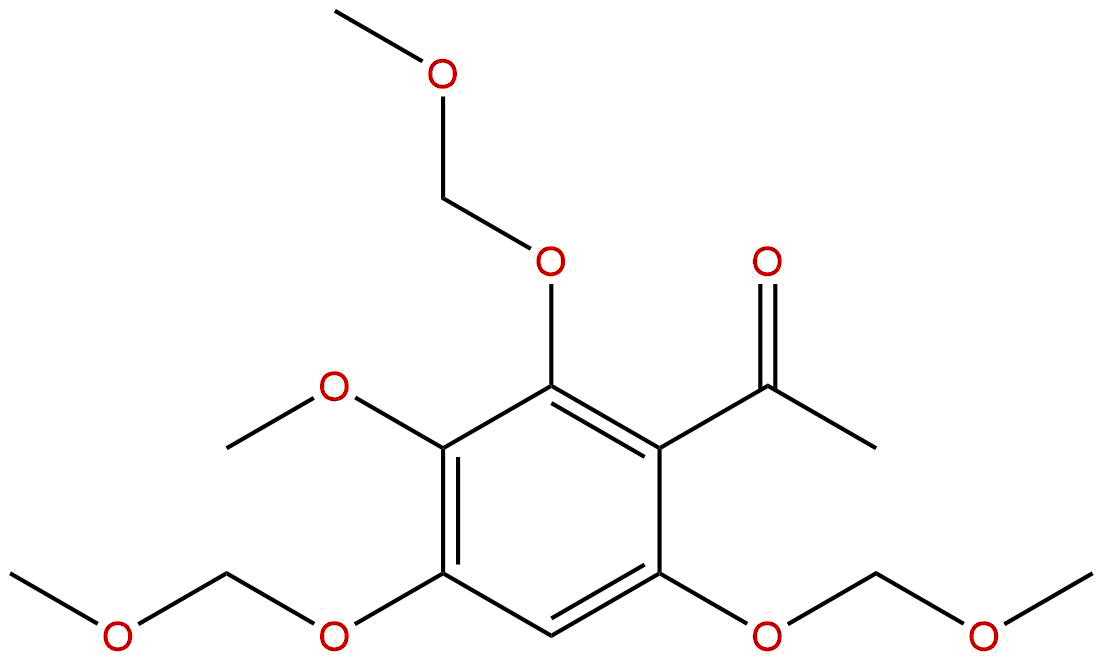
3-methoxy-2,4,6-tris (methoxymethoxy) acetophenone (MTMA) is a structurally unique derivative of acetophenone, consisting of a acetophenone core and multiple methoxy and methoxymethoxy substituents. The CAS number of this compound is 53000-16-1. Although it is not widely known in the field of natural product chemistry, its potential pharmacological activity, especially in the treatment of metabolic diseases, is gradually attracting the attention of researchers. Existing studies have shown that MTMA may exert biological effects by regulating multiple molecular targets closely related to diabetes and related metabolic disorders, including AMP activated protein kinase (AMPK), sodium glucose cotransporter 2 (SGLT2), glucokinase (GCK), protein tyrosine phosphatase 1B (PTPN1), and monoamine oxidase A (MAOA). These targets involve multiple key physiological processes, including energy metabolism regulation, renal glucose reabsorption, insulin secretion regulation, insulin signaling pathway, and neurotransmitter metabolism.
This article aims to provide a systematic professional review of MTMA, a natural product, from multiple dimensions including chemical structure and physicochemical properties, plant sources and extraction methods, pharmacological activity research, mechanism of action and molecular targets, drug evaluation and pharmacokinetics, and clinical application prospects. The aim is to provide reference for the in-depth research and development of this compound.
Chemical structure and physicochemical properties
The chemical structure of MTMA is centered around acetophenone, with methoxymethoxy (- CH ₂ OCH ∝) substituents attached at positions 2, 4, and 6 of the benzene ring, and methoxy (- OCH ∝) substituents at position 3. This highly substitutable pattern endows the molecule with unique chemical properties. Its molecular formula is C ₁₅ H ₂₂ O ₈, and its molecular weight is 330.3330 g/mol. Structurally, the presence of three methoxymethoxy groups significantly increases the steric hindrance and polarity of the molecule. At the same time, methoxymethoxy groups are commonly used as protective groups in organic synthesis for temporary protection of phenolic hydroxyl groups, suggesting that this compound may originate from the derivatization or biosynthesis of a natural phenolic compound as an intermediate.
In terms of physicochemical properties, the calculated LogP value of MTMA is 1.3979, indicating that it has moderate lipophilicity, neither strong lipophilicity nor strong hydrophilicity, which is beneficial for its transmembrane transport and distribution in organisms. The topological polar surface area (TPSA) is 81.6800 Å ², which is at a moderate level. Molecules with TPSA less than 140 Å ² are generally considered to have good oral absorption potential. The water solubility parameter is 1.6045, indicating that the solubility of the compound in water is limited, but not completely insoluble, which is related to the hydrogen bonding ability formed by multiple ether oxygen atoms in its structure. It is worth noting that MTMA exhibits high blood-brain barrier (BBB) penetration ability, which is of great significance for drug development targeting central nervous system targets, but may also increase the risk of central related side effects. In addition, the negative prediction result of hERG inhibition indicates a low risk of cardiac toxicity; The Ames test result is 0.6, indicating that its genetic toxicity risk is at a moderate level and further experimental verification is needed.
Plant sources and extraction methods
There is currently limited publicly available literature on the natural sources of MTMA. Based on its structural characteristics, this compound may originate from certain higher plants, especially families and genera rich in secondary metabolites of acetophenones, such as Asteraceae, Apiaceae, Zingiberaceae, etc. Acetophenone compounds often exist in glycosides or free forms in plants, participating in plant defense responses, signal transduction, and adaptation to environmental stress. The presence of methoxymethoxy in MTMA suggests that it may be a highly modified derivative of acetophenone, or chemically derived from natural phenolic precursors during the extraction process.
In terms of extraction methods, the conventional extraction strategy for acetophenone compounds can be applied to MTMA. Common methods include organic solvent extraction, ultrasound assisted extraction, microwave-assisted extraction, and supercritical fluid extraction. Considering that the LogP value of MTMA is about 1.4, medium polarity solvents such as ethyl acetate, dichloromethane, or methanol water mixed systems may be more suitable. Specifically, the following steps can be taken: first, dry and crush the plant material, then extract it by cold soaking or hot reflux with methanol or ethanol. After vacuum concentration of the extract, it is sequentially classified by liquid-liquid extraction with petroleum ether, ethyl acetate, and n-butanol. MTMA may be enriched in the ethyl acetate extraction site. For further separation and purification, silica gel column chromatography, ODS reverse phase column chromatography, Sephadex LH-20 gel column chromatography and preparative high-performance liquid chromatography (Prep HPLC) can be used. Given the presence of multiple methoxymethoxy groups in its structure, strong acid or high temperature conditions should be avoided during extraction and separation to prevent the removal of protective groups or structural rearrangement.
Pharmacological activity research
At present, there are few reports on the direct pharmacological activity of MTMA, but based on the information of its structural analogues and predicted targets, it can be inferred that MTMA has potential activity in many disease fields, especially in the treatment of diabetes and its complications.
Antidiabetic activity Diabetes is a metabolic disease characterized by hyperglycemia. its pathogenesis involves insufficiently secreted insulin, insulin resistance and increased hepatic glucose output. The prediction target of MTMA includes several key proteins directly related to diabetes. AMPK is a core regulatory factor in cellular energy metabolism, and activation of AMPK can promote glucose uptake, fatty acid oxidation, and inhibit gluconeogenesis, thereby improving insulin sensitivity. SGLT2 is the main transporter protein responsible for glucose reabsorption in the renal proximal tubules. Inhibiting SGLT2 can promote urinary glucose excretion, lower blood glucose levels, and is not dependent on insulin. GCK is a glucose sensor in liver and pancreatic beta cells, regulating glucose stimulated insulin secretion and liver glucose metabolism. PTPN1 is a negative regulator of the insulin signaling pathway, and inhibiting PTPN1 can enhance the phosphorylation levels of insulin receptors and their substrates, improving insulin signaling transduction. The multiple effects of these targets suggest that MTMA may play an anti diabetes effect through a multi target synergistic mechanism.
Neuroprotection and antidepressant activity MAOA is a metabolic enzyme of monoamine neurotransmitters such as serotonin, norepinephrine, and dopamine. Inhibiting MAOA can increase the concentration of these neurotransmitters in synaptic cleft, thereby exerting antidepressant effects. The potential inhibitory effect of MTMA on MAOA, combined with its high blood-brain barrier penetration ability, suggests that this compound may have central nervous system activity. In addition, APP (amyloid precursor protein) is closely related to the onset of Alzheimer's disease, and the potential regulatory role of MTMA on APP is also worth further exploration.
Other potential activities ESR2 (estrogen receptor beta) plays an important role in various physiological processes, including functional regulation of the reproductive system, skeletal metabolism, cardiovascular system, and nervous system. The possible effect of MTMA on ESR2 suggests that it may have estrogen like or anti estrogen like activity, which has potential significance in the treatment of hormone related diseases (such as breast cancer and osteoporosis).
Mechanism of action and molecular targets
The mechanism of action of MTMA is currently in the preliminary exploration stage, but based on the results of computer-aided drug design, molecular docking, and target prediction, a preliminary molecular action network can be constructed. This compound may exert its biological effects through the following mechanisms:
AMPK signaling pathway AMPK is a heterotrimeric protein kinase composed of alpha catalytic subunit, beta regulatory subunit, and gamma regulatory subunit. MTMA may activate AMPK directly by binding to the gamma subunit of AMPK or indirectly through upstream kinases such as LKB1 and CaMKK β. Activated AMPK inhibits synthetic metabolism (such as fatty acid synthesis and protein synthesis) and promotes catabolic metabolism (such as fatty acid oxidation and glucose uptake) by phosphorylating downstream target proteins (such as ACC, TSC2, Raptor), thereby improving energy metabolism disorders.
SGLT2 inhibition SGLT2 is mainly expressed in the S1 segment of the renal proximal tubules, responsible for approximately 90% of the reabsorption of filtered glucose. MTMA may competitively bind to the glucose binding site of SGLT2, inhibiting the transmembrane transport of glucose, thereby increasing urinary glucose excretion and lowering blood glucose levels. This mechanism is independent of insulin, so it may be effective for both type 2 diabetes and type 1 diabetes patients.
GCK activation GCK is a member of the hexokinase family and is specifically expressed in liver and pancreatic beta cells. MTMA may serve as a conformational activator of GCK, increasing the affinity of enzymes for glucose and enhancing the rate of glucose phosphorylation. In beta cells, GCK activation can enhance glucose stimulated insulin secretion; In liver cells, it can promote glucose uptake and glycogen synthesis, and inhibit gluconeogenesis.
PTPN1 inhibition PTPN1 is a negative regulator of the insulin signaling pathway, which terminates signal transduction by dephosphorylating the insulin receptor (IR) and insulin receptor substrate (IRS). MTMA may inhibit the phosphatase activity of PTPN1 by binding to its active site, thereby prolonging and enhancing the transmission of insulin signals and improving insulin resistance.
MAOA inhibition MAOA is mainly distributed in the central nervous system and liver, responsible for the oxidative deamination metabolism of serotonin, norepinephrine, and dopamine. MTMA may inhibit MAOA activity in a reversible or irreversible manner, increase the concentration of monoamine neurotransmitters in synaptic cleft, and thus produce antidepressant and anti anxiety effects.
Evaluation of drug properties and pharmacokinetics
Drug efficacy evaluation is a crucial step in the drug development process, aimed at assessing whether candidate compounds have the potential to become clinical drugs. The calculated pharmacological parameters of MTMA show that it has certain development prospects. The molecular weight of 330.33 Da meets the requirement of molecular weight less than 500 in the Lipinski Five Rules; LogP 1.40 also satisfies the condition that LogP is less than 5; The number of hydrogen bond donors (HBD) is 0, and the number of hydrogen bond acceptors (HBA) is 8. Although the number of HBAs is slightly higher than the upper limit of 10 in Lipinski's rule, it is still within an acceptable range. The TPSA is 81.68 Å ², indicating its good oral absorption potential. However, the Ames test result of 0.6 suggests that there may be a certain genetic toxicity risk, which needs to be validated through in vitro and in vivo experiments in subsequent studies.
In terms of pharmacokinetics, the high blood-brain barrier penetration ability of MTMA is a double-edged sword. For central nervous system targets such as MAOA and APP, this characteristic is beneficial for drugs to reach effective concentrations in the brain; However, for diseases with surrounding tissues as the main target (such as diabetes), high brain penetration may lead to unnecessary neurological side effects. Therefore, in drug design, it may be necessary to consider regulating its brain distribution characteristics through structural modifications. In addition, the metabolic pathway of MTMA is not yet clear, but the methoxymethoxy group in its structure may be metabolized by hydrolytic enzymes or cytochrome P450 enzyme systems in vivo, generating corresponding phenolic hydroxyl metabolites. These metabolites may have different pharmacological activities and toxicity characteristics, and further research is needed.
Clinical application prospects and prospects
Based on the multi-target action characteristics of MTMA, it has potential clinical application prospects in the following disease fields:
Type 2 diabetes MTMA can improve glucose metabolism disorders from multiple aspects by simultaneously activating AMPK and GCK, inhibiting SGLT2 and PTPN1. This multi-target synergistic mode of action may have better efficacy and lower resistance risk than single target drugs. In addition, its inhibitory effect on MAOA may also improve the comorbidity of depression in diabetes patients.
Obesity and metabolic syndrome AMPK activation can promote energy expenditure and fatty acid oxidation, inhibit fat synthesis, therefore MTMA may have the effect of weight loss and improving lipid metabolism disorders. Combined with its regulatory effect on blood glucose, this compound is expected to become a comprehensive drug for treating metabolic syndrome.
Neuropsychiatric disorders The combination of MAOA inhibitory activity and high brain penetration ability makes MTMA potentially useful in the treatment of neurological and psychiatric disorders such as depression and anxiety. Meanwhile, its potential regulatory effect on APP also suggests its potential use in the treatment of Alzheimer's disease.
However, the development of MTMA still faces many challenges. Firstly, the abundance of its natural sources may be low, and efficient chemical synthesis methods need to be developed to meet the needs of subsequent research. Secondly, the positive signal of Ames test needs to be taken seriously, and its safety must be evaluated through in vivo genetic toxicity experiments and long-term toxicity studies. In addition, although multi-target effects may bring better therapeutic effects, they also increase the risk of off target effects and side effects, requiring systematic pharmacological and toxicological evaluation.
Future research directions should include: (1) establishing a complete synthetic route for MTMA and conducting structure-activity relationship (SAR) studies to optimize its pharmacological activity and pharmacokinetic properties; (2) Carry out systematic pharmacodynamic studies in vitro and in vivo to verify the therapeutic effect of the drug on diabetes, obesity, depression and other diseases; (3) Thoroughly study its molecular mechanism of action, clarify the contribution and possible synergistic effects of each target; (4) Conduct comprehensive toxicological evaluations, including acute toxicity, chronic toxicity, reproductive toxicity, and carcinogenicity studies; (5) To explore the combination regimen with other anti diabetes drugs (such as metformin, SGLT2 inhibitor, DPP-4 inhibitor).
Conclusion
3-methoxy-2,4,6-tris (methoxymethoxy) acetophenone, as a structurally unique derivative of acetophenone, exhibits the potential for multi-target regulation of metabolism and neurological function. It may play a synergistic therapeutic effect by acting on AMPK, SGLT2, GCK, PTPN1, MAOA and other molecular targets closely related to diabetes, metabolic syndrome and neuropsychiatric diseases. Although there is currently limited direct research data on this compound, based on computational predictions and structure-activity relationship analysis, MTMA is undoubtedly a natural product lead compound worthy of further investigation. Future research should focus on its synthesis methodology, systematic pharmacological and toxicological evaluation, and elucidation of its mechanism of action, in order to transform it into innovative drugs with clinical application value. The cross fusion of natural product chemistry and pharmacology will undoubtedly bring new breakthroughs to human health.