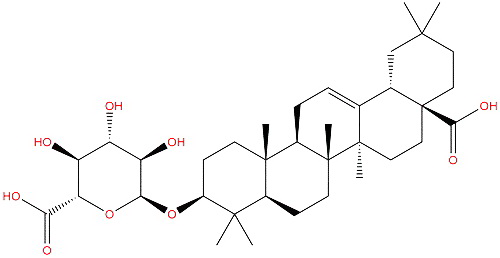


Product name: Calenduloside E
Synonym name: Oleanolic acid 3-O-glucuronide; Silphioside F
Catalogue No.: BP3900
Cas No.: 26020-14-4
Formula: C36H56O9
Mol Weight: 632.835
Botanical Source:
Physical Description:
Type of Compound:
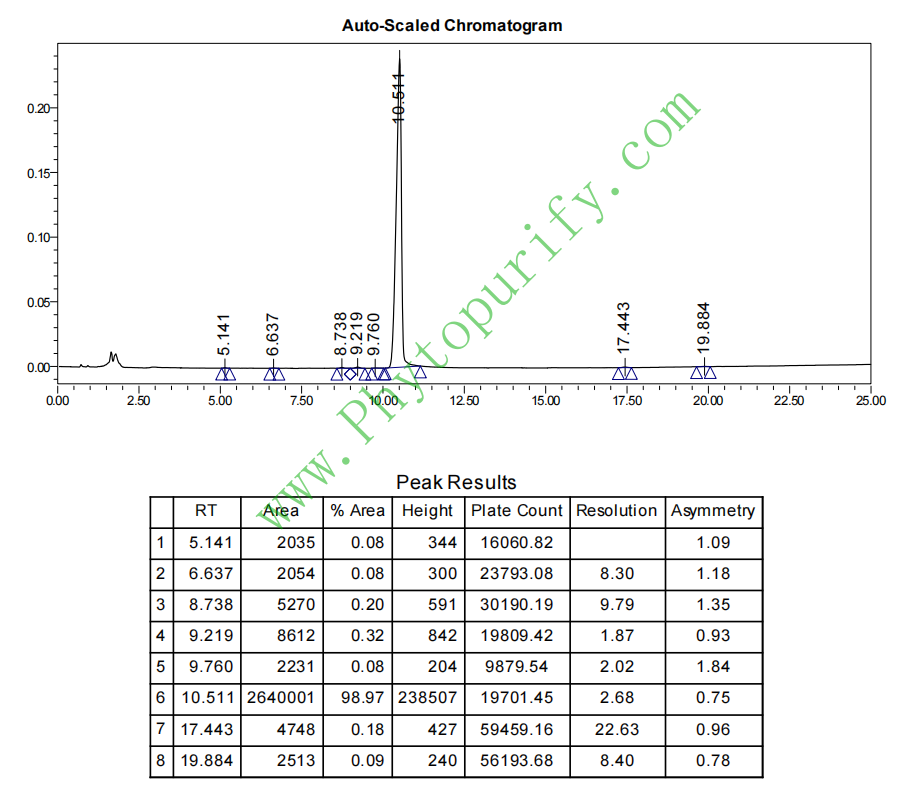
Purity: 95%~99%
Analysis Method: HPLC-DAD or/and HPLC-ELSD
Identification Method: Mass, NMR
Packing: Brown vial or HDPE plastic bottle
Storage: Store in a well closed container, protected from air and light. Put into refrigerate or freeze for long term storage.
Whenever possible, you should prepare and use solutions on the same day. However, if you need to make up stock solutions in advance, we recommend that you store the solution as aliquots in tightly sealed vials at -20℃. Generally, these will be useable for up to two weeks.
The product could be supplied from milligrams to grams
Inquire for bulk scale.
For Reference Standard and R&D, Not for Human Use Directly.
HPLC of Calenduloside E
Storage conditions:Short-term storage at 2~8℃, long-term storage at -20 ~ -80℃
153.7500
4.6843
1.4817
.0165
.6860
.4386
Low
90.6113
5.2189
No
No
Yes
No
No
No
0.0
Yes
No
No
No
Natural products, as an important source of drug discovery, play an irreplaceable role in the long history of human fight against diseases. In recent years, with the rapid development of modern separation technology and pharmacological screening methods, searching for lead compounds with unique biological activity from traditional medicinal plants has become one of the hot areas in new drug research and development. Among numerous structurally diverse natural products, pentacyclic triterpenoid saponins have attracted much attention due to their extensive pharmacological activities, such as anti-inflammatory, anti-tumor, hepatoprotective, and cardiovascular protection. Calenduloside E, as a typical pentacyclic triterpenoid saponin, is gradually moving from behind the scenes to the forefront, demonstrating its significant therapeutic potential in various disease models.
Marigold glycoside E, whose chemical structure belongs to the oleane type pentacyclic triterpenoid saponin, was originally derived from the Asteraceae plant marigold(Calendula officinalis L. The name is derived from the separation and identification of (). However, subsequent studies have found that the compound is present in the Aralia elata plant of the Araliaceae family(Aralia elata The bark and roots of (Miq.) Seed are more abundant, becoming one of its main active ingredients. Aralia elata, as a traditional Chinese medicine, its buds are often eaten as mountain treasures, while its root bark is used to treat rheumatic arthralgia, diabetes, hepatitis and other diseases. Modern pharmacological research has confirmed that marigold glycoside E is one of the key material foundations for the various medicinal effects of Aralia elata.
The pharmacological spectrum of marigold glycoside E is very broad, especially in the fields of inflammation related diseases, cardiovascular diseases, and metabolic diseases. Studies have shown that Calenduloside E can alleviate the pathological process of atherosclerosis by regulating the polarization of macrophages; By regulating the AMPK-SIRT3 signaling pathway and improving mitochondrial function, it exerts a protective effect against acute liver injury; In the myocardial ischemia/reperfusion injury model, marigold glycoside E can promote the interaction between L-type calcium channels and Bcl-2 related apoptotic genes, inhibit calcium overload, and significantly alleviate myocardial injury. In addition, it can improve non-alcoholic fatty liver disease by regulating the heat shock protein dependent pathway and alleviate cellular inflammatory response by inhibiting the ROS mediated JAK1-STAT3 pathway. These diverse pharmacological activities, coupled with their clear molecular targets, make marigold glycoside E a highly promising natural lead compound for development.
This article aims to provide a comprehensive and in-depth review of the chemical structure, plant origin, pharmacological activity, mechanism of action, medicinal properties, and clinical application prospects of marigold glycoside E, in order to provide a systematic theoretical basis and reference for the subsequent research and development of this compound.
The chemical structure of marigold glycoside E is the basis for its biological activity. From a structural classification perspective, it belongs to pentacyclic triterpenoid saponins, specifically derivatives of oleanane type triterpenes. Its glycoside is oleanolic acid, which is a triterpenoid acid widely distributed in nature and has various biological activities. On the C-3 hydroxyl group of oleanolic acid, a disaccharide chain consisting of two glucose molecules (β - D-glucosyl - (1 → 2) - β - D-glucosyl) is connected by a glycosidic bond, forming a complete saponin molecule. Its chemical name is usually 3-O - β - D-glucopyranosyl - (1 → 2) - β - D-glucopyranosyl oleanolic acid.
From the perspective of physicochemical properties, the molecular formula of marigold glycoside E is C ₄₂ H ₆₈ O ₁₄, with a molecular weight of 632.8350 g/mol. Its lipid water partition coefficient (LogP) is 4.6843, indicating that the compound has a certain lipophilicity, which helps it penetrate the cell membrane and bind to intracellular targets. However, its topological polar surface area (TPSA) is as high as 153.7500 Å ², mainly attributed to the presence of multiple hydroxyl and glycosidic bonds in its molecule, which endow the molecule with strong polarity. This high polarity also directly leads to poor water solubility, with a calculated water solubility of only 0.0165 mg/mL. This "amphiphilic" feature - containing both lipophilic triterpenoid parent nuclei and hydrophilic sugar chains - is a typical characteristic of saponins and the structural basis for their ability to interact with biofilms and various protein targets.
In terms of stability, marigold glycoside E, as a saponin compound, may undergo hydrolysis of its glycosidic bonds under acidic or alkaline conditions, leading to the detachment of sugar chains and the formation of secondary glycosides or aglycones such as oleanolic acid. Therefore, in the process of extraction, separation, storage, and formulation development, it is necessary to control conditions such as pH value and temperature to ensure its structural integrity. In addition, its high polarity and low water solubility also pose challenges for its in vivo delivery and improved bioavailability, which are important issues that need to be focused on in the evaluation of drug properties.
Marigold glycoside E was originally isolated from marigold flowers, but currently in nature, its main source is the Araliaceae genus of the Araliaceae family(Aralia)Plants, especially Liaodong Aralia elata(Aralia elata)And edible Angelica sinensis(Aralia cordata)Wait. Aralia elata, commonly known as prickly old buds or prickly dragon buds, is widely distributed in Northeast China, Far East Russia, Japan, and the Korean Peninsula. Its tender buds are famous wild vegetables, while the root bark (Aralia elata root bark) is a traditional Chinese medicine that has the effects of dispelling wind and dampness, promoting blood circulation and blood stasis, strengthening the spleen and promoting diuresis. Modern plant chemistry research has shown that the root bark, bark, and even tender shoots of Aralia elata contain abundant triterpenoid saponins, among which marigold glycoside E is one of the representative components with high content and significant activity. In addition, the compound is also present in the flowers of the marigold plant in the Asteraceae family, but the content is usually lower than that of the Aralia elata.
For the extraction of marigold glycoside E, classical natural product chemical methods are usually used. Due to its high polarity and easy solubility in alcohol solvents, the most commonly used extraction solvents are methanol or ethanol. In order to improve extraction efficiency, heating reflux extraction or ultrasound assisted extraction techniques are often used. The specific process is generally as follows: after crushing the dried root bark or bark of Aralia elata, multiple reflux extractions are carried out with a certain concentration of ethanol (such as 70% or 95% ethanol) at 60-80 ℃, and the extracted liquids are combined and concentrated under reduced pressure to obtain the extract. Subsequently, the extract was dispersed in water and subjected to liquid-liquid extraction using solvents of different polarities such as petroleum ether, ethyl acetate, and n-butanol. Due to the high polarity of marigold glycoside E, it is usually enriched in the n-butanol extraction layer.
After obtaining the n-butanol extract, further separation and purification are required through chromatographic techniques. Common methods include silica gel column chromatography, macroporous adsorption resin column chromatography, ODS (octadecylsilane bonded silica gel) column chromatography, and preparative high-performance liquid chromatography (Pre HPLC). For example, macroporous adsorption resin (such as D101 type) can be used for preliminary separation of n-butanol extract, and gradient elution can be performed using ethanol water systems of different concentrations. Marigold glycoside E is usually enriched in the 60% -80% ethanol elution fraction. Subsequently, a combination of silica gel column chromatography (using chloroform methanol water system as the mobile phase) and ODS column chromatography (using methanol water system as the mobile phase) was used for fine separation, and high-purity marigold glycoside E monomer was finally obtained by preparative HPLC. Its structure can be confirmed by techniques such as nuclear magnetic resonance spectroscopy (NMR) and mass spectrometry (MS).
In recent years, significant progress has been made in the pharmacological activity research of marigold glycoside E, which exhibits strong biological activities in multiple aspects such as anti-inflammatory, cardiovascular protection, liver protection, and metabolic regulation.
1. Anti inflammatory activity
Inflammation is a common pathological basis for many chronic diseases. Marigold glycoside E exhibits significant anti-inflammatory activity. Research has shown that it can inhibit the expression of various pro-inflammatory factors in macrophages stimulated by lipopolysaccharide (LPS), such as tumor necrosis factor - α (TNF - α), interleukin-6 (IL-6), and nitric oxide synthase (iNOS/NOS2). Its anti-inflammatory mechanism is closely related to the inhibition of the nuclear factor kappa B (NF - κ B) signaling pathway. Marigold glycoside E can inhibit the activity of I κ B kinase (IKBKB), prevent the phosphorylation and degradation of I κ B α, thereby inhibiting the nuclear translocation of NF - κ B (RELA subunit) and ultimately downregulating the expression of downstream inflammatory genes. In addition, marigold glycoside E can alleviate cellular inflammatory response by inhibiting the activation of ROS mediated JAK1-STAT3 signaling pathway, providing a theoretical basis for its application in various inflammatory diseases.
2. Cardiovascular protective effect
Marigold glycoside E exhibits multiple protective effects in cardiovascular disease models. In the atherosclerosis model, it can regulate the polarization of macrophages and promote their transformation from the pro-inflammatory M1 type to the anti-inflammatory M2 type, thereby reducing the chronic inflammation of the vascular wall and delaying the formation and development of atherosclerotic plaque. In the myocardial ischemia/reperfusion (I/R) injury model, the protective effect of marigold glycoside E is particularly prominent. The core mechanism is to regulate the calcium homeostasis within myocardial cells. Research has found that marigold glycoside E can promote the interaction between L-type calcium channels and anti apoptotic protein Bcl-2, effectively inhibiting intracellular calcium overload caused by I/R injury. Calcium overload is a key triggering factor for myocardial I/R injury, which can cause mitochondrial dysfunction, reactive oxygen species (ROS) burst, and cell apoptosis. Marigold glycoside E significantly reduces myocardial cell apoptosis, reduces myocardial infarction area, and improves cardiac function by inhibiting calcium overload.
3. Liver protective effect
Marigold glycoside E has a protective effect on various types of liver damage. In acute liver injury models, such as those induced by carbon tetrachloride (CCl ₄) or acetaminophen (APAP), marigold E can significantly reduce serum transaminase (ALT, AST) levels, alleviate liver tissue necrosis and inflammatory infiltration. Its mechanism is closely related to improving mitochondrial function. Marigold glycoside E can activate the AMPK-SIRT3 signaling pathway. AMPK is a cellular energy receptor, and its activation promotes the expression and activity of SIRT3 (a mitochondrial deacetylase). SIRT3 subsequently deacetylates and activates antioxidant enzymes (such as superoxide dismutase SOD2) in mitochondria, enhancing the activity of mitochondrial respiratory chain complexes and reducing the production of mitochondrial ROS, thereby protecting liver cells from oxidative stress damage. In addition, in the non-alcoholic fatty liver disease (NAFLD) model, marigold glycoside E has also shown therapeutic potential. It can improve lipid metabolism disorders in the liver, alleviate hepatic steatosis, inflammation, and fibrosis by regulating pathways dependent on heat shock proteins such as HSP70 and HSP90.
4. Other activities
In addition to the main activities mentioned above, marigold glycoside E has also been reported to have anti apoptotic and analgesic effects. Its regulatory effect on transient receptor potential channels such as TRPV1 and TRPA1 may be related to its potential analgesic activity. In addition, inhibition of CASP1 (caspase-1) may also be involved in its anti-inflammatory and anti apoptotic effects.
The pharmacological activity of marigold glycoside E is the result of multi-target and multi pathway synergistic effects. Based on existing research, its core mechanism of action can be summarized as follows:
1. Regulating the inflammatory signaling network
The anti-inflammatory effect of marigold glycoside E is one of its core pharmacological features. Its target runs through multiple key nodes of inflammatory signal transduction.
- NF - κ B pathway Marigold glycoside E stabilizes the I κ B α protein by inhibiting the activity of IKBKB, thereby preventing nuclear translocation of NF - κ B (RELA/p65) and directly suppressing the expression of pro-inflammatory genes encoded by TNF - α, IL-6, NOS2, and PTGS1 (COX-1).
- JAK-STAT pathway Marigold glycoside E can inhibit the production of ROS, thereby blocking ROS mediated JAK1 phosphorylation and inhibiting STAT3 activation. STAT3 is a key transcription factor for cytokine signaling such as IL-6, and its inhibition can effectively downregulate the inflammatory cascade.
- Inflammasome Marigold glycoside E has an inhibitory effect on the activity of CASP1, which may affect the assembly and activation of inflammasomes such as NLRP3, thereby reducing the maturation and secretion of IL-1 β and IL-18.
2. Maintaining calcium homeostasis and mitochondrial protection
The role of marigold glycoside E in myocardial and liver protection is highly dependent on its regulation of calcium homeostasis and mitochondrial function.
- Inhibit calcium overload In myocardial cells, marigold E promotes the physical interaction between L-type calcium channels and Bcl-2 protein, changes the opening characteristics of L-type calcium channels, reduces the influx of calcium ions under pathological conditions, and effectively inhibits calcium overload. The reduction of calcium overload directly blocks the opening of mitochondrial permeability transition pores (mPTP), protecting the integrity of mitochondrial membranes.
- AMPK-SIRT3 axis Marigold glycoside E is an effective activator of AMPK. Activated AMPK phosphorylates multiple downstream substrates, promoting the breakdown metabolism to produce ATP and upregulating the expression of SIRT3. SIRT3, as the main mitochondrial deacetylase, activates antioxidant enzymes such as SOD2 through deacetylation, enhances the ability of mitochondria to clear ROS, while maintaining the normal function of mitochondrial respiratory chain complexes, thereby comprehensively improving mitochondrial function.
3. Regulating cellular stress and metabolism
- Heat shock reaction In non-alcoholic fatty liver models, marigold glycoside E can upregulate the expression of heat shock proteins (such as HSP70). HSP70, as a molecular chaperone, can help misfolded proteins refold, alleviate endoplasmic reticulum stress, and inhibit the activation of stress kinases such as JNK, thereby improving lipid metabolism and insulin sensitivity in liver cells.
- Macrophage polarization Marigold glycoside E can reprogram pro-inflammatory M1 macrophages into anti-inflammatory and tissue repairing M2 macrophages. This process may involve the regulation of transcription factors such as STAT6 and PPAR γ, which is the key mechanism of its anti atherosclerosis effect.
Although marigold glycoside E has excellent in vitro and in vivo pharmacological effects, its drug affinity is the key to determining whether it can ultimately become a clinical drug.
1. Physical and chemical properties and the "Five Rules for Similar Drugs"
According to Lipinski's "Rule of Five", the molecular weight of marigold glycoside E (632.8) is greater than 500, the LogP (4.68) is slightly greater than 5, and the number of hydrogen bond donors (- OH groups) and acceptors (- O groups) is also relatively high. Therefore, it violates the "Five Rules" to some extent, indicating that there may be a problem of low oral bioavailability. Its high TPSA and low water solubility (0.0165 mg/mL) also confirm this. These physicochemical properties determine that the membrane permeability of marigold glycoside E is poor, making it difficult to be effectively absorbed by the intestine through passive diffusion.
2. Pharmacokinetic characteristics
At present, there is relatively limited in vivo research on the pharmacokinetics of marigold glycoside E, but based on its physicochemical properties and studies on similar saponin compounds, it can be inferred that:
- absorb Poor oral absorption and possibly low bioavailability. Its absorption may depend on intestinal transport proteins (such as organic anion transport peptide OATP) or be absorbed through the lymphatic pathway. In addition, the hydrolysis of its sugar chains by gut microbiota may lead to its conversion into secondary glycosides or aglycones (oleanolic acid) in the body, which may be the true active form.
- distribution Due to its lipophilicity, marigold glycoside E may be mainly distributed in tissues with abundant blood flow, such as the liver, kidneys, and lungs. Its blood-brain barrier permeability has been evaluated as' low ', which limits its application in central nervous system diseases but also reduces the risk of central toxicity.
- Metabolism The main metabolic pathways may include glycosidic bond hydrolysis (deglycosylation) in the liver or intestine, as well as phase I and phase II metabolism of the aglycone oleanolic acid (such as oxidation and glucuronidation).
- excretion Due to its high polarity, the prototype drug and its metabolites may be mainly excreted through bile and feces.
3. Safety evaluation
The preliminary safety evaluation results are relatively optimistic. The Ames test result is 0.0, indicating that it has no mutagenicity. The hERG inhibition assessment is' no ', indicating a low risk of causing QT interval prolongation in the heart. These data indicate that marigold glycoside E has a good safety basis, but comprehensive toxicological studies (such as acute toxicity, long-term toxicity, reproductive toxicity, etc.) still need to be systematically conducted.
4. Optimization strategy for drug properties
Given that the low oral bioavailability of marigold glycoside E is the main bottleneck for its drug development, future research needs to focus on improving its delivery efficiency. Possible strategies include:
- New formulation technology Develop liposomes, nanoparticles, phospholipid complexes, self microemulsion delivery systems, etc. to improve their solubility and oral absorption.
- Prodrug design Modify the hydroxyl groups in its molecules, such as introducing phosphate groups or amino acid esters, to make prodrugs, in order to improve water solubility and membrane permeability, and release the original drug after enzymatic hydrolysis in vivo.
- Structural modification Simplify or modify the sugar chain while retaining key pharmacophores (such as triterpenoid nuclei), and search for derivatives with better activity and drug properties.
Marigold glycoside E, with its unique pharmacological activity and multi-target mechanism of action, has shown broad clinical application prospects in the treatment of various diseases.
1. Cardiovascular diseases
Its significant protective effect on myocardial ischemia/reperfusion injury and atherosclerosis makes it a potential candidate drug for treating coronary heart disease, acute myocardial infarction and preventing reperfusion injury after percutaneous coronary intervention (PCI). Especially through its dual mechanism of regulating calcium homeostasis and macrophage polarization, it provides new ideas for the development of novel cardiovascular drugs.
2. Liver diseases
The protective effect of marigold glycoside E on acute liver injury and non-alcoholic fatty liver disease makes it of great value in the field of liver disease treatment. Given that non-alcoholic fatty liver disease has become the world's largest chronic liver disease and there is a lack of specific therapeutic drugs, marigold glycoside E and its derivatives are expected to become a new choice for treating this disease. The mechanism by which it improves mitochondrial function through the AMPK-SIRT3 pathway also provides potential applications for its treatment of other mitochondrial dysfunction related diseases, such as metabolic syndrome and neurodegenerative diseases.
3. Inflammatory diseases
Its strong anti-inflammatory activity, especially its dual inhibition of NF - κ B and JAK-STAT pathways, makes it potentially valuable in the treatment of chronic inflammatory diseases such as rheumatoid arthritis, inflammatory bowel disease, and chronic obstructive pulmonary disease. Its safety advantages (no hERG inhibition, no mutagenicity) also make it more attractive in the treatment of chronic diseases that require long-term medication.
4. Future research directions
Despite the bright prospects, the clinical translation of marigold glycoside E still faces many challenges, and future research should focus on the following aspects:
- In depth pharmacokinetic research The system elucidates its absorption, distribution, metabolism, and excretion (ADME) processes in the body, clarifies whether its metabolites are active, and explores effective strategies to improve its bioavailability.
- Elucidate the details of molecular mechanisms Using structural biology and chemical biology methods, clarify the direct binding mode and binding sites of marigold glycoside E with key target proteins such as L-type calcium channels, AMPK, IKBKB, etc., providing a basis for structure based drug design.
- Systematic Toxicological Evaluation Conduct comprehensive preclinical safety evaluations, including long-term toxicity, reproductive toxicity, and immune toxicity, to ensure the safety of medication.
- Study on Structure Activity Relationship Systematically synthesize a series of derivatives of marigold glycoside E, study the effects of sugar chain length, connection mode, and different substituents on the glycoside on its activity, selectivity, and drug properties, and search for candidate compounds with stronger activity and better properties.
- Combination therapy research Exploring the synergistic effects of marigold glycoside E with existing clinical drugs such as statins, metformin, aspirin, etc., in order to achieve better therapeutic outcomes and lower toxicity and side effects.
Marigold glycoside E, as a pentacyclic triterpenoid saponin derived from the traditional medicinal plant Aralia elata, has become a new star in the field of natural product research due to its unique chemical structure and rich pharmacological activity. From anti-inflammatory and anti apoptotic effects to protecting important organs such as the heart and liver, its mechanism of action involves regulating calcium homeostasis, improving mitochondrial function, and regulating multiple inflammatory signaling pathways, demonstrating a synergistic effect of multiple targets and pathways. Although its low oral bioavailability and drug defects are the main challenges currently faced, these issues are expected to be resolved through modern medicinal chemistry methods and the intervention of new formulation technologies. In the future, with the in-depth analysis of its mechanism of action, comprehensive elucidation of its pharmacokinetic characteristics, and systematic study of its structure-activity relationship, marigold glycoside E and its derivatives are highly likely to move from the laboratory to clinical practice, providing new, safe, and effective drug options for the treatment of cardiovascular diseases, liver diseases, and chronic inflammatory diseases, and contributing to human health.
