| Catalog No | Package | Original Price | Price | Inventory | Quantity | Operating |
|---|---|---|---|---|---|---|
| BP5128-5mg | 5mg | $420.00 | Sign in |
|


Storage conditions:Short-term storage at 2~8℃, long-term storage at -20 ~ -80℃
Dihydroconiferyl alcohol (CAS number: 28199-69-1), as a natural product, belongs to the derivatives of guaiacol compounds. Due to its unique chemical structure and diverse biological activities, it has attracted widespread attention in the field of natural product pharmacology in recent years. This compound is not only an important component of guaiaceae lignin, but also a key intermediate for various secondary metabolites in plants. With the in-depth study of its molecular mechanism of action, dihydrodehydro dihydro dihydro bis (guaiacol) has shown significant potential in anti-inflammatory, antioxidant, and neuroprotective aspects, especially in regulating inflammation related signaling pathways, exhibiting unique activity and becoming one of the hotspots in the development of natural anti-inflammatory drugs.
This article will provide a systematic review of the chemical structure and physicochemical properties, plant sources and extraction methods, pharmacological activity and mechanism of action, pharmacological evaluation and pharmacokinetic characteristics of dihydrodehydro dihydro bis (guaiacol), combined with the latest research progress, to explore its clinical application prospects and future research directions, aiming to provide theoretical basis and scientific basis for the drug development of this natural product.
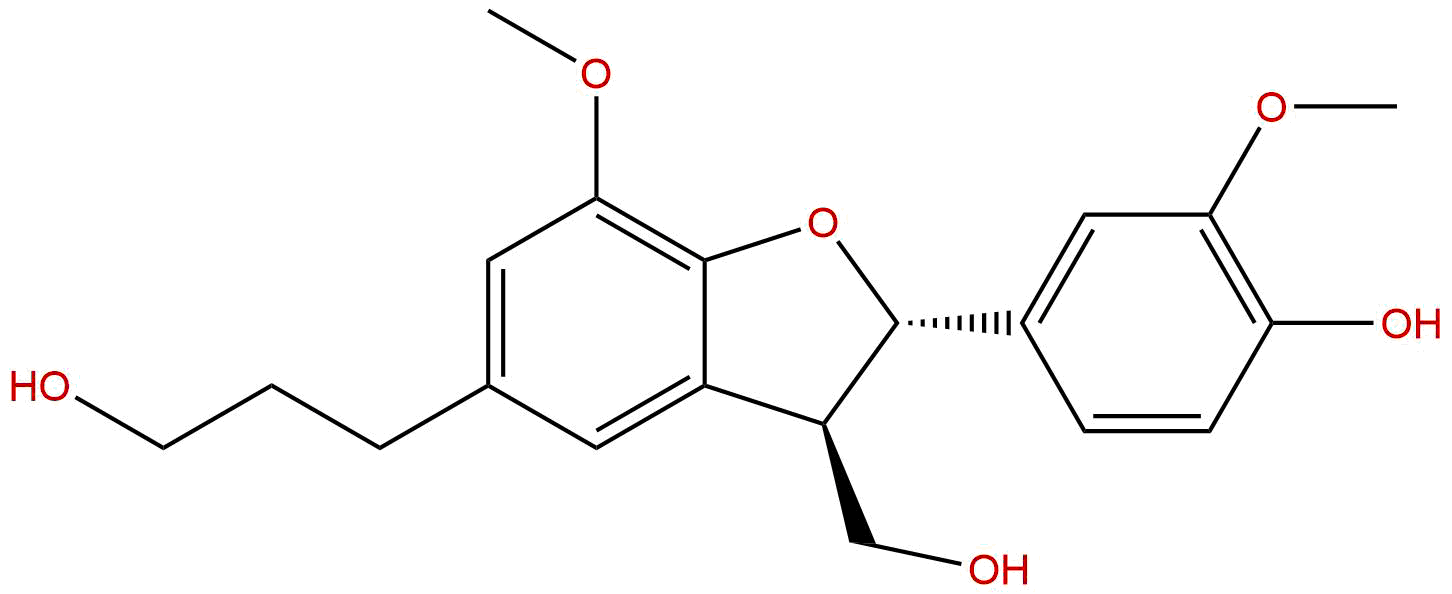
The chemical name of dihydrodehydrodihydrodihydrodihydrodihydrodihydrodihydrodihydrodihydrodihydrodihydrodihydrodihydrodihydrodihydrodihydrodihydrodihydrodihydrodihydrodihydrodihydrodihydrodihydrodihydrodihydrodihydrodihydrodihydrodihydrodihydrodihydrodihydrodihydrodihydrodihydrodihydrodihydrodihydrodihydrodihydrodihydrodihydrodihydrodihydrodihydrodihydrodihydrodihydrodihydrodihydrodihydrodihydrodihydrodihydrodihydrodihydrodihydrodihydrodihydrodihydrodihydrodihydrodihydrodihydrodihydrodihydrodihydrodihydrodihydrodihydrodihydrodihydrodihydrodihydrodihydrodihydrodihydrodihydrodihydrodihydrodihydrodihydrodihydrodihydrodihydrodihydro. Its molecular formula is C20H24O6 and its molecular weight is 360.4060. The compound contains a benzofuran ring system in its structure, with a primary alcohol functional group, and is an enantiomer of (2R, 3S) - dihydrodihydrodipressanol. The stereochemical characteristics of its molecular structure have a significant impact on its biological activity.
In terms of physical and chemical properties, the LogP value of dihydro dehydroxylenol is 2.4230, indicating moderate lipid solubility that facilitates its permeation through the cell membrane. The polar surface area (TPSA) is 88.38 Å ², indicating that it has certain polar groups that may affect its water solubility and bioavailability. The water solubility is 0.2042, belonging to low solubility compounds, but its blood-brain barrier permeability is high, indicating that the compound has potential central nervous system activity. In addition, the hERG channel inhibition experiment showed a negative result, indicating a low risk of cardiac toxicity; The Ames test result is 0.0, indicating no significant mutagenicity and high safety.
Dihydro dehydro dihydro bis (guaiacol) is mainly present in various woody plants, especially in the lignin structural units of pine family plants and certain broad-leaved woods. As an important component of guaiaceae lignin, this compound plays a crucial role in the secondary metabolism of plants, participating in the biosynthesis and structural stability of lignin.
Traditionally, dihydro dehydro dihydro bis (guaiacol) can be isolated from the hydrolysis products of lignin monomers extracted from plant xylem. Common extraction methods include organic solvent extraction, acid-base hydrolysis, and supercritical fluid extraction. The specific steps are usually as follows: first, polar organic solvents such as ethanol or methanol are used to extract plant powder, and then hydrolysis is carried out under acidic or alkaline conditions to release the bound form of dihydrodehydrodihydrodiguaianol. After liquid-liquid separation and column chromatography purification (such as silica gel column or reverse phase high performance liquid chromatography), high-purity target compounds are obtained from the extraction solution.
In recent years, with the development of green chemistry, ultrasound assisted extraction and microwave-assisted extraction technologies have also been applied to the efficient extraction of dihydrodehydrodihydrodihydro dihydro bis (guaiacol), significantly improving extraction efficiency and purity, reducing the use of organic solvents, and meeting the needs of sustainable development.
The pharmacological activity research of dihydrodihydro dihydro dihydro bis (guaiacol) mainly focuses on its anti-inflammatory effect and application in related disease models. Numerous in vitro and in vivo experiments have shown that this compound can significantly inhibit the production of inflammatory mediators, alleviate inflammatory responses, and has potential therapeutic value for inflammatory diseases.
As one of the most prominent natural products with anti-inflammatory activity, dihydrodehydro dihydro dihydro bis (guaiacol) regulates the inflammatory signaling pathway through multiple targets and inhibits the expression of pro-inflammatory cytokines. Research has shown that this compound can effectively downregulate the release of key inflammatory factors such as IL-6 and TNF - α, alleviate inflammatory cell infiltration and tissue damage. In addition, it also inhibits the activity of cyclooxygenase (PTGS1 and PTGS2) and inducible nitric oxide synthase (NOS2), reducing the production of inflammatory mediators such as prostaglandins and nitric oxide.
Dihydrodehydro dihydro dihydro bis (guaiacol) has excellent blood-brain barrier penetration ability, which makes it exhibit potential neuroprotective effects in central nervous system diseases. Research has found that this compound exhibits analgesic effects by regulating TRPV1 and TRPA1 ion channels, reducing neuroinflammation and pain perception. In addition, its regulation of apoptosis related protein CASP1 helps to inhibit inflammatory apoptosis of nerve cells and protect neural function.
Oxidative stress is an important pathological mechanism in various inflammations and chronic diseases. Dihydro dehydro dihydro dihydro dihydro dihydro dihydro dihydro xylenol activates the NFKB1 signaling pathway, regulates the cellular antioxidant defense system, reduces reactive oxygen species (ROS) levels, alleviates oxidative damage, and further exerts its anti-inflammatory and cell protective effects.
The biological activity of dihydrodihydrodihydro dihydro dihydro bis (guaiacol) depends on its regulation of various inflammation related molecular targets, forming a complex signaling network.
IL-6 and TNF - α are key cytokines in the inflammatory response, involved in immune regulation and inflammatory cascade reactions. Dihydrodehydrodihydrodihydrodihydrodihydrodihydrodihydrodihydrodihydrodihydrodihydrodihydrodihydrodihydrodihydrodihydrodihydrodihydrodihydrodihydrodihydrodihydrodihydrodihydrodihydrodihydrodihydrodihydrodihydrodihydrodihydrodihydrodihydrodihydrodihydrodihydrodihydrodihydrodihydrodihydrodihydrodihydrodihydrodihydrodihydrodihydrodihydrodihydrodihydrodihydrodihydrodihydrodihydrodihydrodihydrodihydrodihydrodihydrodihydrodihydrodihydrodihydrodihydrodihydrodihydrodihydrodihydrodihydrodihydrodihydrodihydrodihydrodihydrodihydro. The mechanism may involve inhibiting the activation of STAT3 transcription factors, blocking IL-6 mediated signaling, and reducing the transcription of pro-inflammatory genes.
STAT3, as an intracellular signaling and transcriptional activator, plays an important role in inflammation and tumorigenesis. Dihydrodehydrodihydrodihydrodihydrodihydrodihydrodihydrodihydrodihydrodihydrodihydrodihydrodihydrodihydrodihydrodihydrodihydrodihydrodihydrodihydrodihydrodihydrodihydrodihydrodihydrodihydrodihydrodihydrodihydrodihydrodihydrodihydrodihydrodihydrodihydrodihydrodihydrodihydrodihydrodihydrodihydrodihydrodihydrodihydrodihydrodihydrodihydrodihydrodihydrodihydrodihydrodihydrodihydrodihydrodihydrodihydrodihydrodihydrodihydrodihydrodihydrodihydrodihydrodihydrodihydrodihydrodihydrodihydrodihydrodihydrodihydrodihydrodihydrodihydrodihydrodihydrodihydrodihydrodihydrodihydrodihydrodihydrodihydrodihydrodihydrodihydro.
CASP1 is a key enzyme in inflammasome activation, mediating the maturation and release of pro-inflammatory cytokine IL-1 β. Dihydrodehydrodihydrodihydrodihydrodihydrodihydrodihydrodihydrodihydrodihydrodihydrodihydrodihydrodihydrodihydrodihydrodihydrodihydrodihydrodihydrodihydrodihydrodihydrodihydrodihydrodihydrodihydrodihydrodihydrodihydrodihydrodihydrodihydrodihydrodihydrodihydrodihydrodihydrodihydrodihydrodihydrodihydrodihydrodihydrodihydrodihydrodihydrodihydrodihydrodihydrodihydrodihydrodihydrodihydrodihydrodihydrodihydrodihydrodihydrodihydrodihydrodihydrodihydrodihydrodihydrodihydrodihydrodihydrodihydrodihydrodihydrodihydrodihydrodihydrodihydrodihydrodihydrodihydrodihydrodihydrodihydrodihydrodihydrodihydrodihydro.
TRPV1 and TRPA1 are non selective cation channels in sensory nerves involved in the transmission of pain and inflammatory signals. Dihydrodehydrodihydrodihydrodihydrodihydrodihydrodihydrodihydrodihydrodihydrodihydrodihydrodihydrodihydrodihydrodihydrodihydrodihydrodihydrodihydrodihydrodihydrodihydrodihydrodihydrodihydrodihydrodihydrodihydrodihydrodihydrodihydrodihydrodihydrodihydrodihydrodihydrodihydrodihydrodihydrodihydrodihydrodihydrodihydrodihydrodihydrodihydrodihydrodihydrodihydrodihydrodihydrodihydrodihydrodihydrodihydrodihydrodihydrodihydrodihydrodihydrodihydrodihydrodihydrodihydrodihydrodihydrodihydrodihydrodihydrodihydrodihydrodihydrodihydrodihydrodihydrodihydrodihydrodihydrodihydro.
PTGS1 and PTGS2 (i.e. COX-1 and COX-2) are key enzymes involved in prostaglandin synthesis and contribute to the production of inflammatory mediators. NOS2 catalyzes the production of inducible nitric oxide, which is an important regulatory factor in inflammatory response. Dihydrodehydrodihydrodihydrodihydrodihydrodihydrodihydrodihydrodihydrodihydrodihydrodihydrodihydrodihydrodihydrodihydrodihydrodihydrodihydrodihydrodihydrodihydrodihydrodihydrodihydrodihydrodihydrodihydrodihydrodihydrodihydrodihydrodihydrodihydrodihydrodihydrodihydrodihydrodihydrodihydrodihydrodihydrodihydrodihydrodihydrodihydrodihydrodihydrodihydrodihydrodihydrodihydrodihydrodihydrodihydrodihydrodihydrodihydrodihydrodihydrodihydrodihydrodihydrodihydrodihydrodihydrodihydrodihydrodihydrodihydrodihydrodihydrodihydrodihydrodihydrodihydrodihydrodihydro.
NFKB1 is a core transcription factor in inflammatory response, regulating the expression of various pro-inflammatory genes. Dihydrodehydrodihydrodihydrodihydrodihydrodihydrodihydrodihydrodihydrodihydrodihydrodihydrodihydrodihydrodihydrodihydrodihydrodihydrodihydrodihydrodihydrodihydrodihydrodihydrodihydrodihydrodihydrodihydrodihydrodihydrodihydrodihydrodihydrodihydrodihydrodihydrodihydrodihydrodihydrodihydrodihydrodihydrodihydrodihydrodihydrodihydrodihydrodihydrodihydrodihydrodihydrodihydrodihydrodihydrodihydrodihydrodihydrodihydrodihydrodihydrodihydrodihydrodihydrodihydrodihydrodihydrodihydrodihydrodihydrodihydrodihydrodihydrodihydrodihydrodihydrodihydrodihydrodihydrodihydrodihydrodihydrodihydrodihydro.
The development of medicinal properties is a key consideration in the development of natural product drugs. Dihydro dehydro bis (guaiacol) exhibits excellent pharmacokinetic and safety properties.
Its moderate lipid solubility (LogP=2.4230) and low polar surface area (TPSA=88.38) contribute to its oral absorption and cell membrane penetration. The high blood-brain barrier permeability indicates that the compound has good distribution potential in the central nervous system and is suitable for developing drugs for neurological related diseases.
At present, there is limited research on the metabolic pathways of dihydrodehydrodihydrodihydrodihydrodihydrodihydrodihydrodihydrodihydrodihydrodihydrodihydrodihydrodihydrodihydrodihydrodihydrodihydrodihydrodihydrodihydrodihydrodihydrodihydrodihydrodihydrodihydrodihydrodihydrodihydrodihydrodihydrodihydrodihydrodihydrodihydrodihydrodihydrodihydrodihydrodihydrodihydrodihydrodihydrodihydrodihydrodihydrodihydrodihydrodihydrodihydrodihydrodihydrodihydrodihydrodihydrodihydrodihydrodihydrodihydrodihydrodihydrodihydrodihydrodihydrodihydrodihydrodihydrodihydrodihydrodihydrodihydrodihydrodihydrodihydrodihydrodihydrodihydrodihydrodihydrodihydrodihydrodihydrodihydrodihydrodihydrodihydrodihydrodihydrodihydrodihydrodihydrodihydrodihydrodihydrodihydrodihydrodihydrodihydrodihydrodihydrodihydrodihydro.
The hERG channel inhibition experiment result was negative, indicating a low risk of cardiac toxicity and reducing the possibility of side effects such as arrhythmia. The Ames test result is 0.0, indicating no mutagenicity and high safety, suitable for further drug development.
Due to its structural characteristics, dihydrodehydro dihydro bis (guaiacol) may interact with various drug metabolizing enzymes and transporters. In the future, a systematic evaluation of its effects on cytochrome P450 enzyme systems and drug transporters is needed to avoid potential drug interactions.
Dihydro dehydro dihydro bis (guaiacol) has demonstrated extensive clinical application potential due to its significant anti-inflammatory and neuroprotective activities. Its application prospects in chronic inflammatory diseases (such as rheumatoid arthritis, inflammatory bowel disease), neurodegenerative diseases (such as Alzheimer's disease, Parkinson's disease), and pain management are worth looking forward to.
Future research should focus on:
Preclinical efficacy and safety evaluation Systematic in vivo pharmacological and toxicological studies to clarify the effective dose range and safety window.
Pharmacokinetic optimization Improve its bioavailability and in vivo stability through structural modification or drug carrier technology.
In depth analysis of the mechanism of action Using multi omics techniques to reveal its specific regulatory mechanisms in cellular signaling networks and expand its indications.
Combination therapy strategy Explore synergistic effects with existing anti-inflammatory or neuroprotective drugs to enhance treatment efficacy.
Clinical trial design Conduct early clinical trials to verify its safety and efficacy, laying the foundation for subsequent drug development.
As a naturally occurring product with unique structure and rich biological activity, dihydrodehydro dihydro bis (guaiacol) has shown broad research and application prospects in the fields of anti-inflammatory and neuroprotective effects. Its multi-target mechanism of action and excellent pharmacological characteristics provide valuable resources for the development of new natural medicines. In the future, through interdisciplinary collaboration and the use of modern research methods in medicinal chemistry, molecular biology, and clinical medicine, dihydrodehydrodihydrodihydrodihydro dihydro bis (guaiacol) is expected to become an important candidate drug for the treatment of inflammation and related diseases, promoting the development and innovation of natural product pharmacology.
