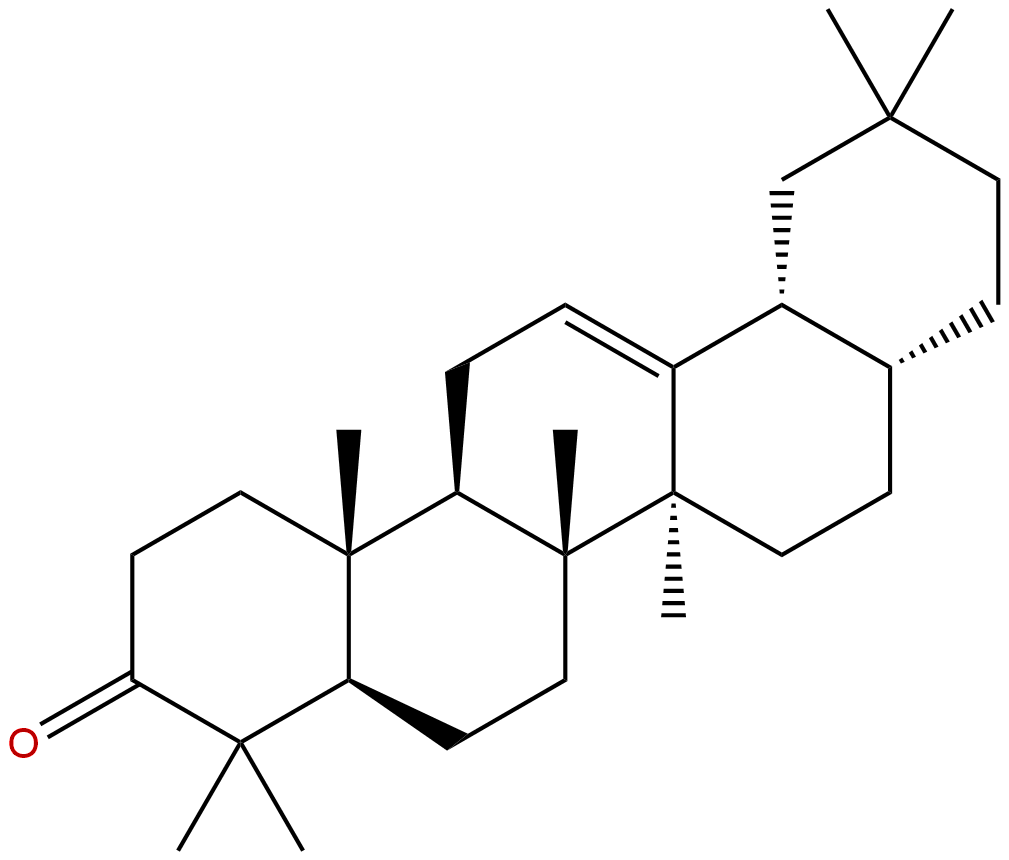
Introduction/Overview
Skin photoaging is a series of complex and cumulative pathophysiological changes caused by long-term exposure of the skin to ultraviolet radiation (mainly UVA and UVB), characterized by wrinkles, sagging, roughness, pigmentation, and loss of elasticity. Its molecular mechanisms involve multiple levels such as oxidative stress, chronic inflammation, extracellular matrix degradation, and disruption of cellular signaling pathways. At present, intervention strategies for skin photoaging, such as topical retinoids, antioxidants, and physical therapy, have certain therapeutic effects, but often come with limitations such as irritation, allergies, or high costs. Therefore, exploring efficient and low toxicity new active ingredients from natural products has become a research hotspot in the fields of skin pharmacology and cosmetic science.
Pentacyclic triterpenoids have attracted much attention due to their wide range of biological activities and low toxicity. 28 demethyl - β - amyrone (CAS number: 73493-60-4), as a structurally modified β - coumarin triterpenoid ketone, has shown promising potential in combating skin photoaging in recent years. Preliminary studies have shown that this compound can exhibit multiple pharmacological effects such as antioxidant, anti-inflammatory, and inhibition of matrix degradation by regulating multiple key targets closely related to photoaging, such as tyrosinase (TYR), matrix metalloproteinase family (MMP1, MMP3, MMP9), nuclear transcription factor kappa B (NF - κ B, involving RELA/p65 and NFKB1/p50 subunits), and inflammatory factor (IL-6). This article aims to provide a systematic review of the chemical properties, plant sources, pharmacological activities, molecular mechanisms of action, and pharmacological properties of 28 demethyl - β - coumarin ketone, and to explore its potential applications in the prevention and treatment of skin photoaging.
Chemical structure and physicochemical properties
28 demethyl - β - aromatic resin ketone, molecular formula C29H46O, molecular weight 410.6860. Its chemical structure belongs to the oleane type (also known as β - coumarin type) pentacyclic triterpenoid compounds, and its core feature is the absence of a methyl group (- CH3) at position C-28 on the parent nucleus of β - amyrone. This structural modification may result in significant differences in polarity and biological activity between it and common triterpenoid compounds such as β - coumarinol or oleanolic acid.
The physicochemical properties of the compound are highly correlated with its hydrophobic structure. Its lipid water partition coefficient (LogP) is as high as 7.8571, indicating its strong lipophilicity. The topologically polar surface area (TPSA) is only 17.0700 Å ², further confirming its extremely low molecular polarity. These properties directly determine its extremely low water solubility (about 0.0002 mg/mL), which means it is difficult to dissolve in conventional aqueous systems, posing a challenge for its formulation development. On the other hand, high lipophilicity may facilitate its penetration into the stratum corneum of the skin, which has certain advantages in local topical administration. In addition, the predictive model shows that it has a high ability to penetrate the blood-brain barrier, indicating its potential application value in the field of central nervous system diseases. However, current research focuses on its local effects on the skin. It is crucial that the preliminary pharmacological risk assessment shows that the compound has no hERG potassium channel inhibitory activity under test conditions (no), and the Ames test result is 0.0 (negative), indicating that its potential risks of cardiac and genetic toxicity are low, providing important safety evidence for its further development.
Plant sources and extraction methods
28 demethyl - β - coumarin ketone has a relatively limited distribution in nature and is mainly isolated from certain specific plant genera and species. According to literature reports, this compound exists in Lacquer tree family and Fabaceae Waiting within the plant family. For example, in traditional medicinal plants Xiaoruxiang genus(Schinus Spp.) and Jueming genus(Cassia Some species of spp. have been identified. These plants are often used in traditional medicine in different regions around the world to treat inflammation, skin diseases, and infections, which indirectly suggests that their extracts may contain ingredients with anti-inflammatory and skin protective activities.
Its extraction and separation usually follow the classic process of natural product chemistry. Firstly, dry plant materials such as bark, leaves, or fruits are crushed and subjected to Soxhlet extraction or cold soaking extraction using medium polarity organic solvents such as dichloromethane, ethyl acetate, or methanol to obtain crude extracts. Subsequently, preliminary separation was performed using silica gel column chromatography, followed by elution using gradient solvent systems such as petroleum ether ethyl acetate or chloroform methanol. Due to the strong hydrophobicity (high LogP) of 28 demethyl - β - aromatic resin ketone, it is usually found in low polarity elution fractions (such as those with higher ratios of petroleum ether/ethyl acetate) during chromatography. Further purification may require repeated silica gel column chromatography, gel (LH-20) column chromatography or high performance liquid chromatography (HPLC, usually using reversed phase C18 column, methanol water or acetonitrile water as mobile phase) and other technologies. Its structure was ultimately confirmed by spectroscopic methods such as nuclear magnetic resonance (NMR, including 1H NMR, 13C NMR, 2D NMR), mass spectrometry (MS), and X-ray single crystal diffraction. At present, the acquisition of this compound still mainly relies on plant extraction, and there are no mature reports on the total synthesis route, which to some extent limits its large-scale supply and in-depth structure-activity relationship research.
Pharmacological activity research
The pharmacological research on 28 demethyl - β - coumarin mainly focuses on models related to anti skin photoaging, demonstrating various protective activities.
1. Antioxidant activity: Ultraviolet radiation is the main exogenous factor for the production of reactive oxygen species (ROS) in the skin. Research has shown that 28 demethyl - β - coumarinone can effectively scavenge free radicals such as DPPH and ABTS, and alleviate UV induced ROS overproduction in cell models such as human skin fibroblasts. Its antioxidant capacity may be related to its triterpenoid structure itself, or it may be achieved by upregulating the expression of endogenous antioxidant enzymes such as catalase (CAT).
2. Anti inflammatory effect: Chronic low-grade inflammation is an important sign of photoaging. In macrophages (such as RAW264.7) or skin cell models stimulated by ultraviolet radiation or lipopolysaccharide (LPS), this compound can significantly inhibit the production of pro-inflammatory mediators such as nitric oxide (NO), prostaglandin E2 (PGE2), and key inflammatory cytokine interleukin-6 (IL-6). This suggests that it has the potential to intervene in the inflammatory cascade reaction during skin photoaging.
3. Inhibit extracellular matrix degradation: The structural integrity of the dermis layer of the skin depends on extracellular matrix (ECM) such as collagen and elastin. Ultraviolet radiation accelerates ECM degradation by inducing overexpression of matrix metalloproteinases (MMPs). Experimental results have shown that 28 demethyl - β - coumarinone can dose dependently inhibit the mRNA and protein expression levels of MMP-1, MMP-3, and MMP-9 in skin fibroblasts after UV irradiation, while promoting the synthesis of type I procollagen. This function is crucial for maintaining skin elasticity and wrinkle resistance.
4. Inhibit melanin production: UV induced pigmentation is a common manifestation of photoaging. This compound exhibits inhibitory activity against tyrosinase (TYR), the rate limiting enzyme for melanin synthesis, in vitro, and reduces melanin production in a mouse melanoma cell model (B16F10), indicating its potential whitening or improving pigmentation induced photoaging effects.
5. Cell protection and proliferation regulation: In a cell model of ultraviolet damage, this compound can increase the survival rate of human skin fibroblasts, reduce cell apoptosis, and may promote damage repair by regulating pathways such as transforming growth factor - β 1 (TGFB1).
Mechanism of action and molecular targets
The anti photoaging effect of 28 demethylated - β - coumarin ketone is not achieved through a single target, but through an interconnected signaling network. Its core mechanism involves the regulation of key signaling pathways such as NF - κ B and MAPK, and affects a series of downstream effector molecules.
Inhibition of core signaling pathways:
* NF - κ B pathway: This is the core mechanism by which it exerts anti-inflammatory and matrix protective effects. UV activated IKK complex leads to phosphorylation and degradation of I κ B α, causing nuclear translocation of NF - κ B dimer (mainly composed of RELA/p65 and NFKB1/p50). Research has shown that 28 demethyl - β - coumarinone can effectively inhibit the degradation of I κ B α and the nuclear translocation of RELA/p65, thereby blocking the transcriptional activity of NF - κ B. This directly leads to downregulation of downstream pro-inflammatory factors (such as IL-6, TNF - α) and some MMPs (such as MMP-9) gene expression.
* MAPK pathway: Ultraviolet radiation can rapidly activate the ERK, JNK, and p38 MAPK pathways. This compound has been shown to specifically inhibit UV induced phosphorylation activation of JNK and p38, which are closely related to cellular stress, apoptosis, and induction of MMP-1 and MMP-3 expression. Inhibition of the MAPK pathway is another important pathway for reducing ECM degradation.
Key target regulation:
* Matrix metalloproteinases (MMP1, MMP3, MMP9): As mentioned above, by inhibiting the NF - κ B and JNK/p38 MAPK pathways, this compound suppresses the expression of these MMPs at the transcriptional level.
* Inflammatory mediators (IL6, RELA, NFKB1): As a key component and downstream product of the NF - κ B pathway, the expression and activity of RELA, NFKB1, and IL6 are significantly inhibited by this compound.
* Catalase (CAT): This compound may enhance the antioxidant defense ability of cells by activating antioxidant stress pathways such as Nrf2/ARE, upregulating the expression of phase II detoxifying enzymes such as CAT.
* Peroxisome proliferator activated receptor gamma (PPARG): PPAR γ plays a role in regulating inflammation, lipid metabolism, and cell differentiation. There are studies suggesting that certain triterpenoid compounds can serve as ligands for PPAR γ. It is worth exploring whether 28 demethylated - β - coumarinone can cross inhibit pro-inflammatory pathways such as NF - κ B by activating PPAR γ.
* Transforming Growth Factor - β 1 (TGFB1): The TGFB1/Smad pathway is a classic pathway that promotes collagen synthesis. This compound may counteract the inhibition of collagen synthesis by ultraviolet radiation and promote ECM repair by upregulating TGFB1 or enhancing its downstream signaling.
Tyrosinase (TYR) inhibition: The whitening mechanism may involve direct competitive or non competitive inhibition of TYR enzyme activity, and the specific mode of action remains to be elucidated through enzyme kinetics research.
In summary, 28 demethylated - β - coumarinone has constructed a three-dimensional defense network through multi-target and multi pathway synergistic effects, which effectively combats multiple pathological processes of skin photoaging by inhibiting oxidative stress sources, blocking inflammatory signaling, protecting the dermal matrix, and regulating pigment metabolism.
Evaluation of drug properties and pharmacokinetics
Based on its physicochemical properties and preliminary biological data, a preliminary evaluation of the pharmacological properties of 28 demethyl - β - coumarin ketone was conducted.
Advantage:
1. Clear activity and multi-target synergy: Multiple key processes related to skin photoaging, including oxidation, inflammation, and matrix degradation, have shown activity and may have comprehensive therapeutic effects.
2. High potential for topical application: The extremely high lipophilicity (high LogP) and low molecular weight are conducive to its penetration into the cuticle of the skin and reach an effective concentration in the dermis, which is suitable for the development of external preparations such as cream, gel or nano carrier.
3. Preliminary safety is good: The absence of hERG inhibition and Ames mutagenicity alert provides a positive starting point for its safety assessment.
Challenges and unknowns:
1. Balance of solubility and permeability: Extremely low water solubility and extremely high fat solubility are a double-edged sword. Although it is beneficial for transdermal delivery, it may pose difficulties in achieving uniform dispersion in the formulation and release from the formulation onto the skin surface. Advanced formulation technologies such as nanoemulsions, liposomes, cyclodextrin inclusion, micronization, etc. are needed to improve its solubility and control release.
2. System pharmacokinetic (PK) data missing: At present, there is a complete lack of systematic PK research data on the oral or transdermal absorption of this compound, including absorption, distribution, metabolism, and excretion (ADME) processes. The metabolic stability, major metabolites, bioavailability, tissue distribution (especially skin targeting), and potential induction or inhibition effects of liver enzymes (such as CYP450) in its body are all unknown.
3. Toxicological research gap: Except for preliminary genetic toxicity screening, there have been no reports on preclinical toxicology studies such as acute toxicity, subchronic toxicity, skin irritation/allergy, and phototoxicity of the system.
4. Source and Supply: Relying on plant extraction limits its yield and purity control, and developing economically feasible chemical or biological synthesis routes is a prerequisite for future large-scale applications.
Therefore, the compound is currently in a very early stage of drug discovery. The next research focus should be on developing suitable local drug delivery formulations and conducting in vitro transdermal and skin retention studies; Conduct animal level pharmacological and preliminary pharmacokinetic/toxicological evaluations; Further explore its exact molecular target binding mode (such as through molecular docking, surface plasmon resonance SPR, and other techniques).
Clinical application prospects and prospects
28 demethyl - β - aromatic resin ketone has shown unique application prospects in the field of skin health.
Main application directions:
1. Functional cosmetics and pharmaceuticals active ingredients: As the core active substance for preventing and improving skin photoaging, it is added to anti wrinkle, firming, repair essence, face cream and sunscreen products. Its multiple effects (antioxidant, anti-inflammatory, anti MMP, potential whitening) are in line with the current trend of "multi effect integration" in the development of skincare products.
2. External drug development: For more severe skin pathological photoaging such as photoelastic fiber degeneration and chronic photodermatitis, it may be developed as a prescription or over-the-counter drug (such as in combination with retinoic acid, vitamin C, etc.).
3. Medical beauty assisted therapy: Used after medical beauty treatments such as laser and intense pulsed light, utilizing their anti-inflammatory and repair promoting properties to reduce postoperative reactions, improve efficacy, and shorten the recovery period.
Future research prospects:
1. In depth mechanism research: By utilizing CRISPR gene editing, proteomics, transcriptomics, and other technologies, we can more accurately depict its functional network and discover new direct targets (such as receptors and kinases).
2. Structural optimization and derivative development: In response to its poor water solubility, chemical modifications such as introducing polar groups, preparing prodrugs, and synthesizing glycoside derivatives are used to improve its physicochemical properties and bioavailability, and the structure-activity relationship (SAR) is systematically studied.
3. Research on Advanced Delivery Systems: Actively exploring transdermal delivery systems based on nanotechnology (solid lipid nanoparticles, nanostructured lipid carriers, polymer nanoparticles) to enhance their skin targeting, stability, and sustained release performance.
4. Preclinical and clinical evaluation: After completing preclinical efficacy, pharmacokinetics, and toxicology studies of the system, gradually promote human skin patch testing and efficacy clinical trials (such as through skin texture analysis, elasticity testing, biomarker detection, etc.) to verify its safety and effectiveness.
5. Exploring expanded indications: Based on its anti-inflammatory and antioxidant properties, its potential applications in other inflammatory skin diseases (such as atopic dermatitis, psoriasis) or oxidative stress-related diseases can be explored.
Conclusion
28 demethylated - β - coumarin ketone, as a structurally unique demethylated triterpenoid ketone, acts on multiple molecular targets closely related to skin photoaging, such as TYR, MMPs, IL-6, CAT, etc., by regulating key signaling pathways such as NF - κ B and MAPK. It exhibits excellent multidimensional pharmacological activities such as antioxidant, anti-inflammatory, matrix protection, and potential whitening. Its excellent transdermal potential and preliminary good safety characteristics make it an attractive lead compound for developing new skin photoaging prevention and treatment agents. However, its extremely low water solubility, unknown systemic pharmacokinetic properties, and lack of in-depth toxicological data are obstacles that must be overcome to move towards practical applications. Future research needs to focus on innovative formulation technology, systematic ADME/T evaluation, and in-depth elucidation of molecular mechanisms. With the advancement of these studies, 28 demethyl - β - coumarin ketone is expected to move from the laboratory to the market, providing an innovative solution in the field of skin health that originates from nature, has clear mechanisms, and is highly efficient and multifunctional.