| Catalog No | Package | Original Price | Price | Inventory | Quantity | Operating |
|---|---|---|---|---|---|---|
| BP5123-5mg | 5mg | $350.00 | Sign in |
|


Product name: Panaxcerol C
Synonym name:
Catalogue No.: BP5123
Cas No.: 63180-02-9
Formula: C45H74O10
Mol Weight: 775.077
Botanical Source:
Type of Compound:
Purity: 95%~99%
Analysis Method: HPLC-DAD or/and HPLC-ELSD
Identification Method: Mass, NMR
Packing: Brown vial or HDPE plastic bottle
Storage: Store in a well closed container, protected from air and light. Put into refrigerate or freeze for long term storage.
Whenever possible, you should prepare and use solutions on the same day. However, if you need to make up stock solutions in advance, we recommend that you store the solution as aliquots in tightly sealed vials at -20℃. Generally, these will be useable for up to two weeks.
The product could be supplied from milligrams to grams
Inquire for bulk scale.
For Reference Standard and R&D, Not for Human Use Directly.
Storage conditions:Short-term storage at 2~8℃, long-term storage at -20 ~ -80℃
Natural products, as an important source of drug development, occupy an irreplaceable position in the field of modern medicine. Lipid based natural products have shown broad application prospects in drug delivery systems, immune regulation, and anti-tumor fields in recent years due to their unique biological activity and good biocompatibility. Panaxcerol C (CAS number: 63180-02-9), as an emerging natural lipid compound, has received widespread attention in the fields of pharmacology and medicinal chemistry due to its key role in the preparation of lipid nanoparticles (LNPs) and its potential immune enhancing activity.
This article aims to systematically review the chemical structure and physicochemical properties, plant sources and extraction methods, pharmacological activity and mechanism of action, pharmacological evaluation and pharmacokinetic characteristics of Panaxcerol C, and explore its clinical application prospects and development directions in the field of immune enhancement, combined with its target research. By integrating existing literature and the latest research results, we strive to provide theoretical support and practical guidance for the pharmacological development and clinical translation of this natural product.
Panaxcerol C is a high molecular weight lipid compound with a molecular weight of 775.0770 and high hydrophobicity (LogP=7.8504). Its topological polar surface area (TPSA) is 151.98 Å ², indicating that the molecule contains a certain number of polar groups that may participate in intermolecular hydrogen bonding. Its water solubility is extremely low (0.0056 mg/mL), exhibiting strong lipid solubility characteristics, which gives it an advantage in cell membrane penetration and liposome construction.
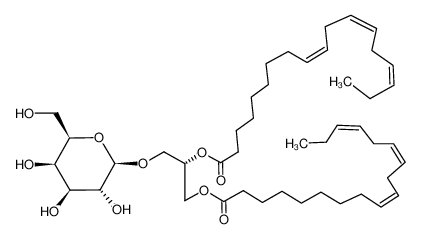
From a molecular structure perspective, Panaxcerol C contains a long-chain fatty acid backbone and polar head groups, with a complex structure and high stereoselectivity. Its structural characteristics make it an ideal material for constructing lipid nanoparticles (LNP), which can effectively encapsulate and deliver various drug molecules, especially nucleic acid drugs. In addition, the high blood-brain barrier permeability of Panaxcerol C provides potential applications for its drug delivery in central nervous system diseases.
It is worth noting that Panaxcerol C does not exhibit hERG channel inhibitory activity, indicating a low risk of cardiac toxicity; At the same time, the Ames mutagenicity test result was negative, indicating a low risk of genotoxicity and meeting the basic requirements for safe drug use.
Panaxcerol C mainly comes from plants of the Panax genus in the Araliaceae family, especially Panax ginseng and its related species, which are abundant in content. As one of the lipid components of ginsenosides, Panaxcerol C exists in a bound state in plants and usually covalently binds with glycosides, fatty acids, etc. to form complex lipid molecules.
The common methods for extracting Panaxcerol C include organic solvent extraction, supercritical CO ₂ extraction, and column chromatography separation. Traditional organic solvent extraction usually uses ethanol or methanol as extraction agents, combined with ultrasound assisted technology to improve extraction efficiency. Subsequently, purification was carried out using silica gel column chromatography or reverse phase high performance liquid chromatography (RP-HPLC) to ensure the acquisition of high-purity Panaxcerol C.
In recent years, green extraction technologies such as supercritical fluid extraction and membrane separation have been introduced into the extraction process of Panaxcerol C, which not only improves extraction efficiency but also reduces environmental pollution and solvent residue risks, in line with the sustainable development trend of modern natural product extraction.
The pharmacological research of Panaxcerol C mainly focuses on its application as a component of lipid nanoparticles (LNP) and its immunomodulatory function. As an important component of LNP, Panaxcerol C can significantly improve the stability and biocompatibility of nanoparticles, promote cellular uptake and release of drugs, and exhibit excellent effects in the field of nucleic acid drug delivery.
In terms of immune enhancement, Panaxcerol C works by regulating multiple immune related targets. In vitro and in vivo experiments have shown that Panaxcerol C can upregulate the expression of key immune factors such as interleukin-2 (IL-2), signal transducer and activator of transcription 4 (STAT4), interferon - γ, etc., promoting the activation and proliferation of T cell subsets CD4 ⁺ and CD8 ⁺, thereby enhancing the body's cellular immune response.
In addition, the regulatory effects of Panaxcerol C on immune cells include promoting the maturation and antigen presentation ability of dendritic cells, enhancing the activity of natural killer cells (NK cells), and improving the body's immune surveillance ability against pathogens and tumor cells. These immunomodulatory properties make Panaxcerol C potentially valuable for adjuvant therapy in anti-tumor, antiviral, and immunodeficiency diseases.
The immune enhancing effect of Panaxcerol C is mainly achieved by regulating key molecules such as IL-2, STAT4, IFNG, CD4, and CD8A. IL-2, as a core factor for T cell proliferation and differentiation, upregulates its expression and promotes the expansion of effector T cells. STAT4, as a key protein in intracellular signal transduction, mediates the IL-12 signaling pathway, promotes Th1 cell differentiation, and enhances cellular immune response.
IFN - γ is an important cytokine with antiviral, anti-tumor, and immune regulatory functions. Panaxcerol C enhances the immune response of the body by promoting the secretion of IFN - γ. CD4 ⁺ helper T cells and CD8 ⁺ cytotoxic T cells are the core effector cells of immune response, and Panaxcerol C can promote their activation and function, enhancing the overall efficacy of the immune system.
At the molecular level, Panaxcerol C may regulate the lipid composition of cell membranes, affect the aggregation and signaling of immune cell receptors, and further activate downstream signaling pathways. In addition, as a component of LNP, Panaxcerol C helps to deliver immunomodulators or antigens to target cells, enhancing the specificity and strength of immune responses.
The pharmacological evaluation of Panaxcerol C shows that it has good safety and pharmacokinetic characteristics. Its high molecular weight and high lipid solubility give it strong membrane permeability in vivo, especially its high blood-brain barrier permeability, demonstrating potential central nervous system drug delivery capabilities.
Although its low water solubility limits its oral bioavailability, its in vivo distribution and efficacy can be effectively improved through nanotechnology modifications such as lipid nanoparticle encapsulation. It does not inhibit hERG channels and reduces the risk of cardiac toxicity; A negative Ames test indicates a low risk of genotoxicity and meets safety medication standards.
Pharmacokinetic studies have shown that Panaxcerol C is mainly metabolized by the liver in vivo, and the metabolites are safe and easy to excrete. Its half-life is moderate and can maintain effective concentration, supporting its application as a component of drug delivery systems. In addition, further in-depth research is needed on the metabolic pathway of Panaxcerol C to clarify its in vivo transport mechanism and potential drug interactions.
Panaxcerol C, as a natural lipid, has shown broad application prospects in clinical drug delivery and immunotherapy due to its unique physicochemical properties and immune regulatory functions. Firstly, as a component of lipid nanoparticles (LNP), it can effectively encapsulate and deliver various drugs, especially nucleic acid drugs (such as mRNA, siRNA), providing a new carrier choice for gene therapy and vaccine development.
Secondly, the immune enhancing effect of Panaxcerol C provides a potential adjuvant therapy for immune deficiency diseases, tumor immunotherapy, and infectious disease prevention and treatment. By regulating key immune molecules and cellular functions, Panaxcerol C is expected to enhance patients' immune response capabilities and improve treatment outcomes.
Future research should focus on the efficacy validation of Panaxcerol C in different disease models, optimize the design of its drug delivery system, and improve targeting and bioavailability. At the same time, strengthening its safety evaluation and preclinical toxicology research lays a solid foundation for clinical trials. In addition, by combining modern molecular biology and nanotechnology, the development of novel immunomodulators and drug carriers based on Panaxcerol C will drive its clinical translation.
Panaxcerol C, as a natural product with unique lipid structure and significant immunomodulatory activity, has demonstrated significant application value in the fields of drug delivery and immunotherapy. Its excellent physicochemical properties and good safety provide a solid foundation for its use as a component of lipid nanoparticles, while its regulatory mechanisms on IL-2, STAT4, IFN - γ, and T cell subsets reveal the molecular basis of its immune enhancement.
In the future, with the optimization of extraction technology and innovation of drug delivery systems, Panaxcerol C is expected to become a new generation of natural lipid drug carriers and immunomodulators, promoting the deep integration of natural product pharmacology research and clinical applications. The in-depth pharmacological mechanism research and preclinical evaluation of the system will provide scientific basis for its clinical translation and promote its widespread application in the treatment of immune related diseases.
In summary, Panaxcerol C not only enriches the research scope of natural lipid drugs, but also provides new ideas and strategies for modern precision medicine and personalized treatment, which deserves continuous attention and in-depth exploration.
