Introduction/Overview
Natural products, as important resources for drug discovery, have attracted much attention due to their structural diversity and biological activity. As a major class of secondary metabolites in plants, lignans have become a hot topic in pharmacological research due to their wide range of biological activities, such as antibacterial, antifungal, anti-inflammatory, and antioxidant effects. (+) - Lysinorol 9 '- O-glucoside is a unique lignan derivative with significant antibacterial and antifungal activity, and has been found in various plants, particularly in the root bark of Stemmadenia minima and Lycium chinense. In recent years, with in-depth research on its biological activity and mechanism of action, this compound has shown potential therapeutic value in various diseases such as bacterial and fungal skin infections, gastritis, inflammatory bowel disease, and oral candidiasis.
This article aims to provide a systematic review of the chemical structure and physicochemical properties, plant sources and extraction methods, pharmacological activity research, mechanism of action and molecular targets, pharmacological evaluation and pharmacokinetic characteristics of (+) - Nanzhumuzhifen-9 '- O-glucoside, and explore its clinical application prospects and development directions, in order to provide theoretical basis and research ideas for natural product pharmacology research and new drug development.
Chemical structure and physicochemical properties
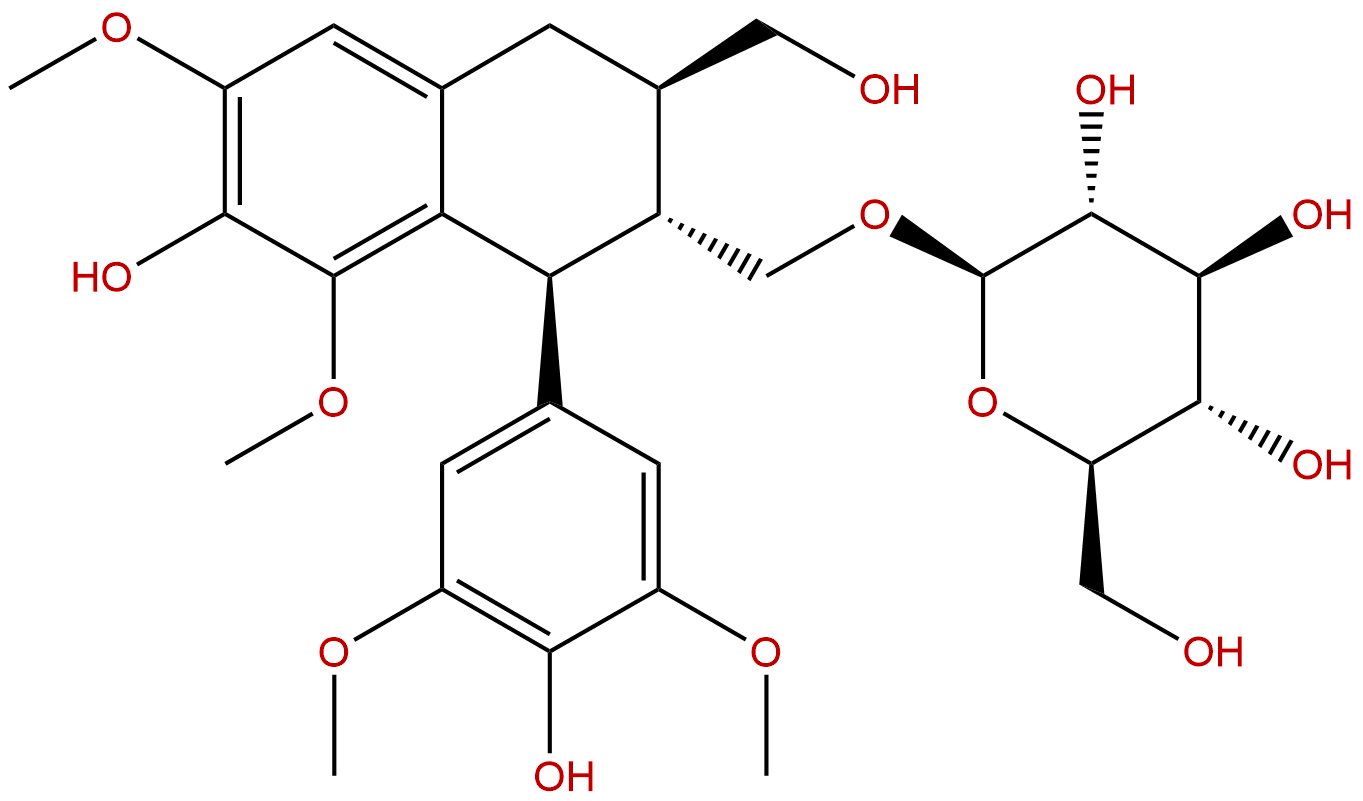
(+) - Nanzhu tree resin phenol-9 '- O-glucoside is a lignan compound, with a core structure of (+) - lyoniresol, and a 3-hydroxyl group connected by a β - D-glucopyranose group in the form of a glycosidic bond. The molecular formula is C27H34O13 and the molecular weight is 582.60. Its structural features include the combination of the diphenylpropane skeleton and sugar groups of lignin, which endows it with good water solubility and biological activity.
In terms of physical and chemical properties, the LogP value of this compound is about -1.0, indicating its strong hydrophilicity and suitability for biological activity in aqueous environments. The extremely high topological polarity surface area (TPSA=226.75 Å ²) and the number of 13 hydrogen bond receptors suggest that there are certain limitations in its cell membrane penetration, which may affect its oral bioavailability and blood-brain barrier penetration ability. Pharmacokinetic prediction shows that its blood-brain barrier permeability is low, and there is no significant risk of liver toxicity, cardiac toxicity, or hERG channel inhibition, indicating high safety.
Plant sources and extraction methods
(+) - Nanzhumu tree resin phenol-9 '- O-glucoside is mainly isolated from the root bark of Stemmadenia minima and Lycium chinense. Stemmadenia minima is a plant in the Apocynaceae family, widely distributed in tropical America; Lycium chinense is a plant of the Solanaceae family and a traditional Chinese medicinal herb widely used in the field of traditional Chinese medicine.
The extraction method usually uses ethanol or methanol aqueous solution for crude extraction, followed by purification through liquid-liquid distribution, column chromatography (such as silica gel column, reverse phase C18 column), and high performance liquid chromatography (HPLC) techniques. Identification methods include mass spectrometry (MS), nuclear magnetic resonance (NMR), and infrared spectroscopy (IR) to ensure the structural accuracy of the compound. In recent years, the application of ultrasound assisted extraction and microwave-assisted extraction technologies has improved extraction efficiency and purity, providing technical support for large-scale preparation.
Pharmacological activity research
Antibacterial activity
(+) - Nanzhumu tree resin phenol-9 '- O-glucoside exhibits inhibitory effects on various Gram positive and negative bacteria, especially showing significant activity against Staphylococcus aureus, Streptococcus, and Escherichia coli that cause skin infections. In vitro experiments have shown that the compound can inhibit bacterial growth, reduce bacterial colony forming units (CFU), and exhibit bactericidal effects at certain concentrations.
Antifungal activity
This compound exhibits inhibitory effects on various fungi, especially skin fungi such as Candida albicans and dermatophyton. Its antifungal activity is achieved by inhibiting fungal cell membrane synthesis and cell wall synthase activity, reducing fungal growth and reproduction. The in vitro MIC (minimum inhibitory concentration) test showed that its inhibitory effect on Candida was superior to some traditional antifungal drugs.
anti-inflammatory activity
(+) - Nanzhumu tree resin phenol-9 '- O-glucoside exhibits significant anti-inflammatory effects in an inflammation model. By inhibiting the nuclear factor kappa B (NF - κ B) signaling pathway and reducing the expression of pro-inflammatory cytokines such as tumor necrosis factor alpha (TNF - α) and interleukin-6 (IL-6), the inflammatory response is alleviated. It exhibits the potential to protect gastrointestinal mucosa and regulate immune response in inflammatory bowel disease and gastritis models.
Other activities
In addition, the compound also exhibits certain antioxidant activity, which may protect cells from oxidative damage by clearing free radicals and regulating the activity of oxidative stress-related enzymes. Studies on its metabolites have shown that the hydrolysis product of the glycoside (+) - lyoniresinol also has biological activity, suggesting that its in vivo metabolism may affect drug efficacy.
Mechanism of action and molecular targets
The biological activity of (+) - Nanzhumu tree resin phenol-9 '- O-glucoside is mainly achieved through interactions with various key enzymes and proteins of bacteria and fungi.
Bacterial skin infection related targets
- Bacterial DNA gyrase (gyrA/gyrB)This enzyme is a key enzyme for bacterial DNA replication and transcription, and inhibiting its activity can block bacterial proliferation. (+) - Nanzhumu tree resin phenol-9 '- O-glucoside interferes with DNA supercoiled state and inhibits bacterial growth by binding to gyrA/gyrB.
- Bacterial peptidoglycan synthase (murA)MurA participates in the synthesis of bacterial cell walls, and inhibiting MurA can damage the integrity of bacterial cell walls. The inhibitory effect of this compound on murA enhances its antibacterial efficacy.
- Bacterial lipopolysaccharide binding protein (LBP)LBP is involved in the recognition of bacterial lipopolysaccharides and the regulation of immune responses. Regulating LBP activity can help alleviate inflammation caused by bacterial infections.
Fungal skin infection related targets
- Fungal cell membrane ergosterol synthase (ERG11)ERG11 is a key enzyme in ergosterol biosynthesis, and inhibition of this enzyme can disrupt the structure of fungal cell membranes. The inhibitory effect of (+) - naringenin-9 '- O-glucoside on ERG11 is an important component of its antifungal mechanism.
- Fungal β -1,3-glucan synthase (FKS1)FKS1 is involved in the synthesis of β -1,3-glucan in fungal cell walls. Inhibiting FKS1 can weaken cell wall strength and lead to fungal death.
- Fungal protein kinase C (PKC1)PKC1 regulates fungal cell wall synthesis and stress response, and regulating its activity helps enhance antifungal efficacy.
Gastritis related targets
- Helicobacter pylori urease (ureA/ureB)Urease is a key enzyme for the survival and pathogenesis of Helicobacter pylori, and inhibiting its activity can reduce bacterial damage to the gastric mucosa.
- Gastric wall cell proton pump (ATP4A)Regulating gastric acid secretion, affecting the gastric mucosal environment, and regulating ATP4A activity can help alleviate symptoms of gastritis.
- Nuclear factor kappa B (NFKB1)As a key transcription factor in inflammatory response, inhibiting NFKB1 activity can alleviate gastric mucosal inflammation.
Inflammatory bowel disease related targets
- Tumor necrosis factor alpha (TNF)and Interleukin-6 (IL6)The main pro-inflammatory cytokines, regulating their expression helps control intestinal inflammation.
- Nuclear factor kappa B (NFKB1)Similarly participating in the regulation of intestinal inflammatory response, inhibiting its signaling pathway can help alleviate inflammatory bowel disease.
Oral candidiasis related targets
- Candida β -1,3-glucan synthase (FKS1)Inhibit fungal cell wall synthesis and reduce Candida survival.
- Candida proteinase (SAP)Participating in the invasion and pathogenicity of Candida, inhibiting SAP activity can reduce the pathogenicity of Candida.
- Candida polysaccharide binding protein (MBP1)Regulating the polysaccharide structure of fungal cell walls and affecting their immune escape ability.
In summary, (+) - Nanzhumuzhifen-9 '- O-glucoside exerts its antibacterial, antifungal, and anti-inflammatory activities through multi-target and multi pathway synergistic effects, demonstrating its potential as a multifunctional natural drug candidate molecule.
Evaluation of drug properties and pharmacokinetics
The evaluation of drug properties is an important step in the development of natural product drugs. The physicochemical properties of (+) - Nanzhu tree resin phenol-9 '- O-glucoside show that it has strong hydrophilicity, with a LogP of -1.0, indicating that it may exist in aqueous solution in vivo, which is beneficial for its distribution in blood circulation, but may limit its transmembrane absorption.
Its TPSA value is as high as 226.75 Å ², and the number of hydrogen bond receptors is 13, both exceeding the recommended range of Lipinski's rules, indicating that its oral bioavailability may be limited, and absorption and permeability need to be improved through drug carriers or structural modifications.
In terms of safety, it is predicted that there will be no hepatotoxicity, cardiac toxicity, or hERG channel inhibition, indicating a wide safety window. Low blood-brain barrier permeability reduces the risk of central nervous system side effects. The mutagenicity of Ames is not yet clear and further experimental verification is needed.
Pharmacokinetic studies have shown that the compound is mainly metabolized by glycoside hydrolases in vivo, releasing active nucleocapsid (+) - lyoneisinol, and the two work together to exert pharmacological effects. Its metabolites are stable and excreted mainly through the renal and biliary pathways. Moderate half-life, suitable for daily administration.
Clinical application prospects and prospects
(+) - Nanzhumu tree resin phenol-9 '- O-glucoside has shown good therapeutic potential in various skin infections, gastritis, inflammatory bowel disease, and oral candidiasis due to its broad-spectrum antibacterial, antifungal, and anti-inflammatory activities. Its multi-target mechanism of action helps to overcome the problem of single target drug resistance and enhance therapeutic efficacy.
Future clinical applications can focus on the following directions:
- Skin infection treatment: Develop topical agents, such as cream and gel, and take advantage of their dual antibacterial and antifungal effects against bacterial and fungal skin infections to reduce the use of traditional antibiotics and antifungal drugs and reduce the risk of drug resistance.
- Adjuvant therapy for gastrointestinal diseases Combining existing treatment plans for gastritis and inflammatory bowel disease, utilizing their anti-inflammatory and anti Helicobacter pylori activities to improve patient symptoms and promote mucosal repair.
- Prevention and treatment of oral candidiasis: Develop gargles or oral sprays for candida infection, especially for patients with low immune function.
- Drug combination therapy Combined use with existing antibacterial and antifungal drugs to achieve synergistic effects, reduce drug dosage and side effects.
In addition, strategies such as drug chemical modification and nanocarrier delivery systems can be used to enhance oral bioavailability and targeting, and expand its clinical applicability, in order to address the limitations of its pharmacological properties.
Future research should strengthen in vivo efficacy evaluation, toxicology studies, and preclinical trials, clarify its pharmacokinetic characteristics and safety, and promote its transition from laboratory to clinical application.
Conclusion
(+) - Nanzhu wood resin phenol-9 '- O-glucoside, as a natural lignan derivative with multiple biological activities, has shown broad application prospects in the fields of antibacterial, antifungal, and anti-inflammatory due to its unique chemical structure and multi-target mechanism of action. Its excellent safety and diverse pharmacological activities provide valuable resources for the development of new natural medicines.
Although there are certain challenges in drug development, modern drug design and delivery technologies have the potential to overcome these limitations and achieve clinical translation. In the future, combined with the pharmacological mechanism research and clinical evaluation of the system, (+) - naringenin-9 '- O-glucoside is expected to become an effective natural medicine for the treatment of various infectious and inflammatory diseases, contributing significantly to the pharmacology of natural products and the development of new drugs.