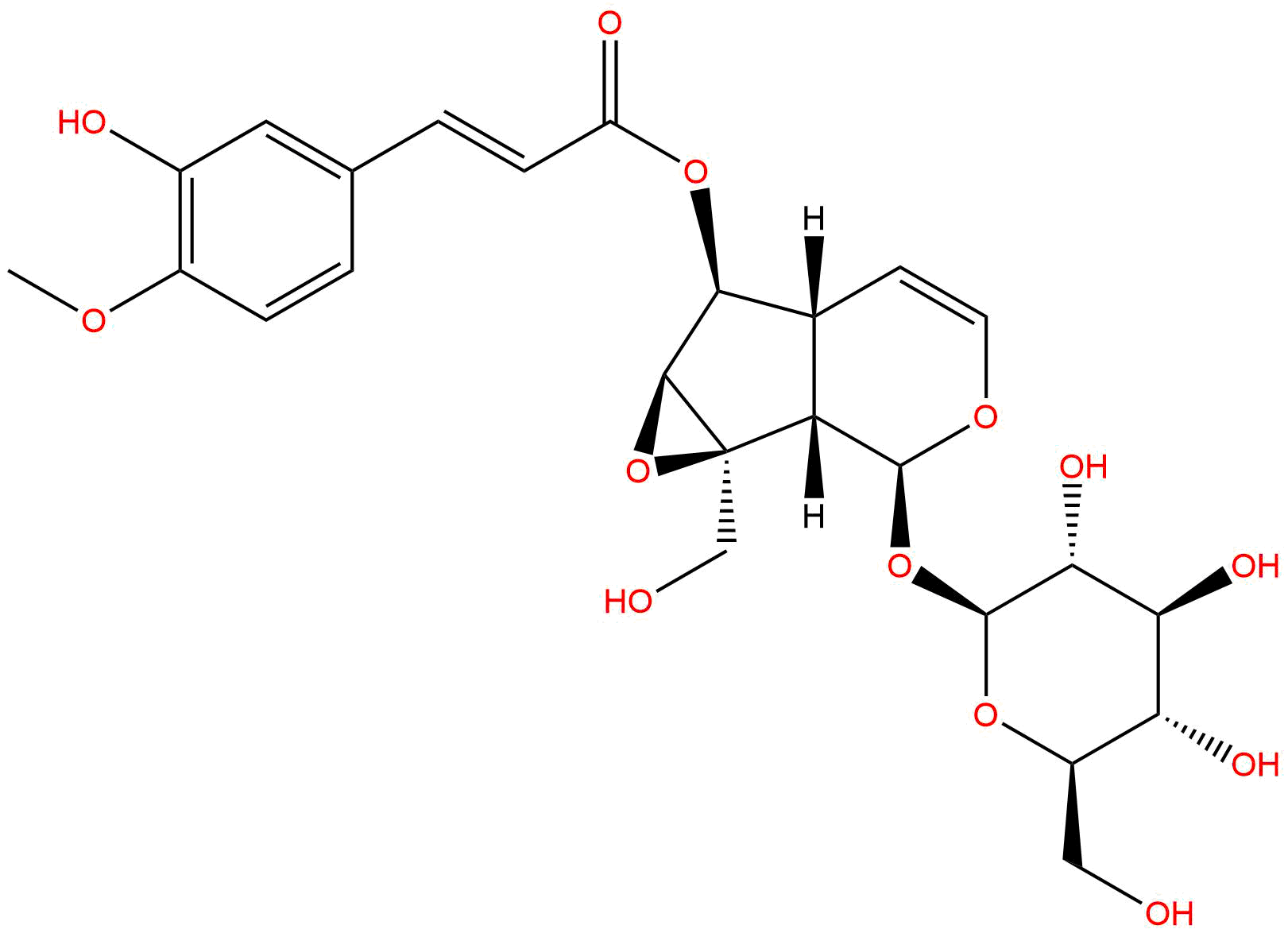


Product name: Minecoside
Synonym name:
Catalogue No.: SBP01933
Cas No.: 51005-44-8
Formula: C25H30O13
Mol Weight: 538.502
Botanical Source:
Type of Compound:
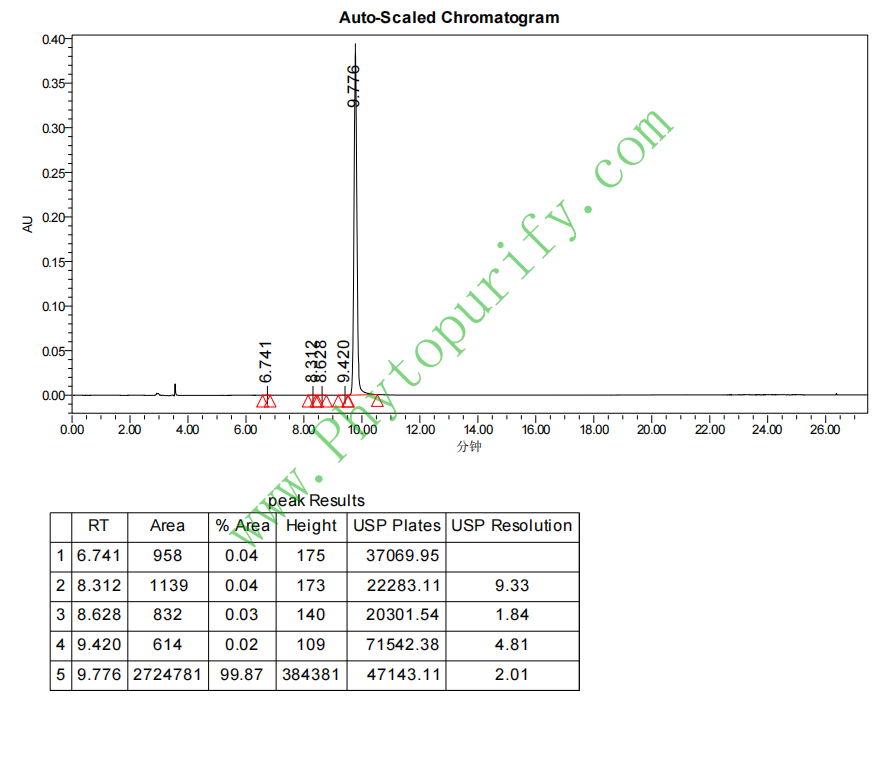
Purity: 95%~99%
Analysis Method: HPLC-DAD or/and HPLC-ELSD
Identification Method: Mass, NMR
Packing: Brown vial or HDPE plastic bottle
Storage: Store in a well closed container, protected from air and light. Put into refrigerate or freeze for long term storage.
Whenever possible, you should prepare and use solutions on the same day. However, if you need to make up stock solutions in advance, we recommend that you store the solution as aliquots in tightly sealed vials at -20℃. Generally, these will be useable for up to two weeks.
The product could be supplied from milligrams to grams
Inquire for bulk scale.
For Reference Standard and R&D, Not for Human Use Directly.
HPLC of Minecoside
Storage conditions:Short-term storage at 2~8℃, long-term storage at -20 ~ -80℃
197.1300
-.0922
-.0941
4.2478
.5607
.2902
Low
67.1325
5.0442
Yes
No
No
No
No
No
0.0
Yes
Yes
Yes
Yes
Natural products, as an important source of drug discovery, play an irreplaceable role in the long history of human fight against diseases. From the classic analgesic morphine to the anti-cancer drug paclitaxel, the chemical diversity inherent in nature provides endless inspiration and lead compounds for modern drug development. In recent years, with the continuous deepening of understanding of cellular signal transduction networks, small molecule natural products targeting specific signaling pathways have attracted much attention due to their high selectivity and low toxicity. Among numerous bioactive natural products, Minecoside, as a cyclic terpenoid glycoside isolated from plants, has gradually become a research hotspot in the field of natural product pharmacology due to its unique pharmacological activity and clear molecular targets.
Minecoside, with CAS number 51005-44-8, is a natural small molecule compound with significant anti-cancer and anti-inflammatory activities. Its most notable feature is its ability to simultaneously target chemokine receptor 4 (CXCR4) and signal transducer and activator of transcription 3 (STAT3), two signaling nodes that play a central role in tumorigenesis, development, and inflammatory response. Research has shown that myricetin can significantly reduce the expression level of CXCR4 and effectively inhibit the phosphorylation activation of STAT3, thereby blocking its downstream signaling. This dual inhibitory mechanism endows myricetin with unique pharmacological advantages: on the one hand, by inhibiting the CXCL12/CXCR4 axis, myricetin can effectively inhibit the migration and invasion of tumor cells, demonstrating strong anti metastatic potential; On the other hand, by blocking the STAT3 signaling pathway, myricetin can induce tumor cell apoptosis and inhibit the expression of various cytokines and enzymes related to inflammation. Therefore, myricetin is not only a potential anti-tumor metastasis drug, but also a promising anti-inflammatory lead compound.
This article will provide a systematic review of the research progress of myricetin from multiple dimensions, including chemical structure and physicochemical properties, plant sources and extraction methods, pharmacological activity research, mechanism of action and molecular targets, pharmacological evaluation and pharmacokinetics, clinical application prospects and prospects, aiming to provide comprehensive scientific basis for the in-depth development and translational application of this compound.
Mi'nei glycoside belongs to the class of iridoid glycosides, and its chemical structure has typical characteristics of this natural product. Iridoid aglycones are a class of monoterpene compounds composed of iridoid aglycones and glycosides (usually glucose) linked by glycosidic bonds. The molecular formula of myricetin is C ₂₅ H ∝ ₄ O ₁∝, with a molecular weight of 538.5020 Da. Its structural core is a cyclopentane [c] pyran ring system, which is a cyclohexene ether terpene skeleton, with hydroxyl, methoxy and other substituents attached at specific positions. The sugar moiety is usually connected at the C-1 position, forming a stable O-glycosidic bond. This structure endows myricetin with a certain degree of polarity and water solubility, while also retaining the hydrophobic properties of the iridoid skeleton, allowing it to interact with specific biomolecules such as proteins.
From the perspective of physical and chemical properties, myricetin exhibits typical hydrophilic characteristics. The calculated lipid water partition coefficient (LogP) is -0.0922, indicating that the distribution of the compound in the aqueous and oil phases is close to equilibrium, slightly inclined towards the aqueous phase, which is closely related to the sugar moiety containing multiple hydroxyl groups in its structure. The topologically polar surface area (TPSA) is as high as 197.1300 Å ², far exceeding the recommended upper limit of 140 Å ² for oral medications. This suggests that there may be some obstacles in the transmembrane transport of myricetin, especially in penetrating the blood-brain barrier. In fact, the evaluation of pharmacological parameters shows that the blood-brain barrier penetration ability of myricetin is "low", which limits its application in the treatment of central nervous system diseases. However, for peripheral tumors and inflammatory diseases, this characteristic may actually reduce the side effects of the central nervous system. Its water solubility parameter is 4.2478, indicating good solubility in water, which is beneficial for the development of drug formulations. In addition, the risk assessment of hERG inhibition was "no", and the Ames test result was 0.0, indicating that myricetin did not show significant cardiac toxicity (hERG channel inhibition) or genetic toxicity (mutagenicity) in the preliminary safety assessment, which laid a good safety foundation for its subsequent drug development.
As a natural product, myricetin mainly comes from the plant kingdom, especially certain specific medicinal plants. According to current literature reports, the main plant sources of myricetin include Lamiaceae and Plantaginaceae. For example, in traditional herbal medicine, certain species of Veronica or Plantago plants have been reported to contain myricetin. In addition, some folk medicinal plants used to treat inflammatory diseases, such as Ajuga decorens, have also been found to be potential sources of myricetin. These plants usually grow in temperate and subtropical regions and have a long history of folk medicine, mainly used to treat diseases such as cough, inflammation, trauma, and tumors.
The extraction and separation of myricetin usually follow the classic process of natural product chemistry. Due to its water solubility and polarity, traditional extraction methods often use polar solvents. The specific steps are as follows:
The pharmacological activity research of myricetin mainly focuses on its anti-cancer and anti-inflammatory fields, and significant progress has been made in recent years.
1. Anti cancer activity
The anticancer activity of myricetin is its most studied direction. Multiple in vitro and in vivo experiments have confirmed its inhibitory effects on various types of cancer.
2. Anti inflammatory activity
Inflammation is a common pathological basis for various diseases, including cancer, autoimmune diseases, and neurodegenerative diseases. The anti-inflammatory activity of myricetin has also been extensively studied.
The pharmacological activity of myricetin is rooted in its unique molecular mechanism of action, with the core being its dual regulation of the CXCR4/STAT3 signaling pathway.
1. Inhibit CXCR4 expression
CXCR4 is a G protein coupled receptor, and its ligand is stromal cell-derived factor-1 (SDF-1, also known as CXCL12). The CXCL12/CXCR4 axis plays a crucial role in embryonic development, immune cell homing, and tumor metastasis. In the tumor microenvironment, high expression of CXCR4 guides tumor cells to migrate towards organs with high expression of CXCL12, such as lungs, liver, bone marrow, and lymph nodes, forming metastatic foci. Minoside can downregulate the expression of CXCR4 at the transcriptional level. Research has shown that treatment with myricetin can inhibit the activity of the CXCR4 gene promoter, reduce its mRNA transcription, and thus lower the expression level of CXCR4 protein on the cell membrane. This effect does not depend on the stimulation of ligand CXCL12, but directly acts on the gene expression regulatory mechanism of CXCR4. By reducing the expression of CXCR4, myricetin cuts off the "antenna" of tumor cells that receive chemotactic signals, making them unable to respond to the chemotaxis of CXCL12, thereby effectively inhibiting the migration and invasion of tumor cells.
2. Inhibit the STAT3 signaling pathway
STAT3 is a key transcription factor in the JAK/STAT signaling pathway, which is phosphorylated and activated by various cytokines (such as IL-6) and growth factors. Activated STAT3 forms a dimer and enters the nucleus, regulating a series of downstream genes related to cell proliferation, survival, angiogenesis, immune escape, and inflammation (such as Bcl-2, Survivor, Cyclin D1, VEGF, MMP-9, IL-6, TNF - α, etc.). The sustained activation of STAT3 is a common feature of many cancers and inflammatory diseases. Minoside can effectively inhibit the phosphorylation of STAT3, especially at the Tyr705 site, blocking its nuclear translocation and transcriptional activity. This inhibitory effect may be achieved through the following pathways:
- Directly inhibit upstream kinase Minoside may directly inhibit the activity of JAK family kinases (such as JAK1, JAK2) or Src family kinases, thereby reducing the phosphorylation of STAT3.
- Inducing negative regulatory factors Minoside may upregulate the negative regulatory factors of STAT3, such as protein tyrosine phosphatases (SHP-1, SHP-2) or SOCS protein expression, thereby accelerating the dephosphorylation or inhibiting its activation.
- Cross talk with CXCR4 signaling The CXCR4 signal itself can also activate STAT3. Therefore, myricetin indirectly weakens CXCL12 induced STAT3 activation by inhibiting CXCR4 expression, forming a synergistic inhibitory effect.
3. Multi target network regulation
In addition to the core CXCR4/STAT3 pathway, myricetin also exerts its pharmacological effects by regulating other key molecules, forming a complex multi-target network:
- NF - κ B pathway Minoside can inhibit the activation of nuclear factor kappa B (NF - κ B). NF - κ B is another core transcription factor in inflammation and cancer. Minoside may inhibit the activity of I κ B kinase (IKBKB) and prevent the degradation of I κ B α, thereby causing NF - κ B (RELA subunit) to remain in the cytoplasm and unable to enter the nucleus to initiate the transcription of downstream pro-inflammatory genes (such as TNF - α, IL-6, iNOS, COX-2).
- IL-6/STAT3 feedback loop IL-6 is an important upstream activator of STAT3, and the activation of STAT3 promotes the expression of IL-6, forming a positive feedback loop that exacerbates inflammation and tumor progression. Minoside can effectively break this vicious cycle by simultaneously inhibiting the production of IL-6 and the activation of STAT3.
- Apoptosis and autophagy Mitochondria dysfunction and activation of Caspase cascade reaction are related to the induction of apoptosis by myricetin. In addition, studies suggest that myricetin may also induce autophagic cell death in tumor cells, but its specific mechanism remains to be elucidated.
In summary, the mechanism of action of myricetin is not a single target "key lock" mode, but rather through the regulation of multiple key signaling nodes such as CXCR4, STAT3, NF - κ B, etc., synergistically exerting its anti-cancer and anti-inflammatory activities. This multi-target mode of action is the fundamental reason for its wide pharmacological activity and significant effects.
To promote the clinical application of minocycline from laboratory research, a systematic evaluation of its pharmacological properties is necessary, with pharmacokinetic (ADME) characteristics being a key step.
1. Analysis of pharmacological parameters
Based on computational predictions and preliminary experimental data, the pharmacological properties of myricetin exhibit a mixed picture.
- Advantage:
- Good water solubility LogP is a negative value and has a high water solubility parameter, which is beneficial for making injectable or oral liquid preparations and also facilitates distribution in the body's circulation.
- Low toxicity risk The risk of hERG inhibition is "no", and the Ames test is negative, indicating a low possibility of causing cardiac toxicity and genetic toxicity, and a relatively wide safety window.
- Clear target Targeting CXCR4 and STAT3, two clinically validated cancer and inflammation targets, has a clear pharmacological basis.
- challenge:
- Low oral bioavailability High TPSA (>140 Å ²) and hydrophilic characteristics typically indicate poor oral absorption and difficulty in penetrating intestinal epithelial cells. Therefore, the oral bioavailability of myricetin may be low, which will be the main obstacle to the development of its oral formulations.
- Metabolic stability Cycloterpenoid glycosides are easily metabolized by gut microbiota or liver enzymes in the body, especially glycosidic bonds that may be hydrolyzed, leading to decreased or inactivated activity. The metabolic pathways and activity of metabolites need to be further studied.
- Low blood-brain barrier penetration Although it is advantageous for peripheral diseases, it limits its application in brain tumors or neuroinflammatory diseases.
2. Pharmacokinetic characteristics (speculation and preliminary study)
At present, there is insufficient publicly available research data on the pharmacokinetics of myricetin in vivo, but based on its physicochemical properties and studies of similar compounds, its general characteristics can be inferred:
- absorb Poor oral absorption and low bioavailability. Intravenous or intraperitoneal injection may be more effective routes of administration. It may be necessary to use formulation technologies such as nanocarriers, liposomes, or prodrug design to improve its oral absorption.
- distribution Due to its good water solubility, it is mainly distributed in extracellular fluid and blood. The binding rate with plasma proteins may not be high. Due to the inability to effectively penetrate the blood-brain barrier, the distribution of the central nervous system is limited.
- Metabolism Mainly metabolized in the liver and intestines. Possible metabolic pathways include: hydrolysis of glycosidic bonds to generate aglycones (iridoid compounds); The glucuronidation or sulfation binding reaction of hydroxyl groups; And the oxidation-reduction reaction of cyclohexene ether terpene skeleton.
- excretion Mainly excreted in the form of metabolites through urine and bile. Due to its moderate molecular weight and high polarity, the prototype drug may also be excreted through renal filtration.
3. Optimization strategy for drug properties
In response to the above challenges, future research directions should include:
- Prodrug design Esterification or phosphorylation modification of the hydroxyl group of myricetin to enhance its lipid solubility and promote oral absorption. After enzymatic hydrolysis in the body, the active parent drug is released.
- nano-formulation Using liposomes, polymer nanoparticles, or micelles to encapsulate myricetin, improving its stability, targeting, and bioavailability.
- Structural modification On the basis of maintaining the core pharmacophore, structural modifications are made to the cyclohexene ether terpene skeleton or sugar moiety to search for derivatives with higher activity, more stable metabolism, and better pharmacokinetic properties.
- combination therapy By utilizing the synergistic effect of myricetin with chemotherapy or targeted drugs, the effective dose can be reduced through a combination therapy strategy, thereby reducing potential toxic side effects and improving pharmacokinetics.
Minoside, as a natural product with a unique dual target (CXCR4/STAT3), has shown broad application prospects in the treatment of various diseases.
1. Anti tumor therapy
2. Treatment of inflammatory diseases
3. Other potential applications
4. Future research directions
Despite the bright prospects, the clinical translation of myricetin still faces many challenges. Future research should focus on:
- In depth mechanism research Using gene knockout/knock in mice, CRISPR technology, etc., to more accurately elucidate the specific molecular details of the target proteins directly bound by myricetin in vivo and its regulation of CXCR4/STAT3 signaling.
- Optimize pharmacokinetics By designing prodrugs, nano formulations, or structural modifications, the oral bioavailability and in vivo stability of myricetin can be significantly improved, which is the key to its potential as a clinical drug.
- Comprehensive toxicological evaluation Conduct acute toxicity, long-term toxicity, reproductive toxicity, and immunotoxicity studies on the system to ensure its safety.
- Preclinical efficacy validation To validate the efficacy of single and combination therapy of mifepristone in animal models closer to clinical settings, such as patient derived xenograft tumor models and genetically engineered mouse models.
- Clinical trial design After completing sufficient preclinical research, carefully design Phase I clinical trials to evaluate their safety, tolerability, and pharmacokinetic characteristics in humans, and preliminarily explore their anti-tumor or anti-inflammatory activities.
As a plant derived cyclic terpenoid glycoside, myricetin occupies a place in the field of natural product pharmacology due to its unique chemical structure and clear pharmacological mechanism. It cleverly intervenes in key signaling nodes in cancer metastasis and inflammatory response by simultaneously inhibiting CXCR4 expression and STAT3 activation, demonstrating the therapeutic potential of "killing two birds with one stone". The preliminary pharmacological evaluation showed good safety and water solubility, but also exposed the urgent challenge of low bioavailability of oral medication.
The road to the transformation of myricetin from laboratory discoveries to clinical applications is destined to be bumpy. However, it is precisely due to its unique dual target mechanism and clear pharmacological activity that it has become an extremely attractive lead compound for the development of novel anti-tumor metastasis and anti-inflammatory drugs. Future research requires the collaboration of chemists, pharmacologists, pharmacists, and clinical doctors to overcome the bottleneck of drug development through structural optimization, formulation innovation, and in-depth mechanism research. We have reason to believe that with the continuous deepening of research, myricetin and its derivatives have the potential to bring new treatment options for cancer patients and inflammatory disease patients in the future, continuing the glorious chapter of natural products benefiting human health.
