Introduction/Overview
Osteoporosis and male infertility are two major diseases that seriously threaten human health and affect quality of life. Osteoporosis is characterized by reduced bone mass and microstructural damage, leading to increased bone fragility and increased risk of fractures, particularly affecting postmenopausal women and the elderly population. The etiology of male infertility is complex, involving multiple factors such as endocrine disorders and dysfunction of spermatogenesis. Among them, abnormal function of androgen levels, testosterone synthesis, and targets related to spermatogenesis are key links. In the process of exploring safe and effective treatment strategies, natural products derived from traditional medicinal plants have become an important treasure trove for new drug development due to their structural diversity and multi-target effects. Curculigoside B (CAS number: 143601-09-6) is derived from the traditional Chinese medicine Polygonum cuspidatum(Polygonum cuspidatum A phenolic glycoside compound isolated from Sieb. et Zucc. Early studies have revealed that it exhibits significant activity in promoting osteoblast proliferation, inhibiting osteoclast differentiation and function, suggesting its potential for anti osteoporosis. In recent years, its pharmacological spectrum has been continuously expanded, especially in regulating key targets related to male reproductive endocrine, showing remarkable activity, providing new scientific clues for its application in the treatment of male infertility. This article aims to provide a systematic review of the chemical properties, plant sources, pharmacological activities, mechanisms of action, medicinal properties, and application prospects of Xianmao glycoside B in the fields of osteoporosis and male infertility, in order to provide comprehensive academic references for the in-depth research and development of this compound.
Chemical structure and physicochemical properties
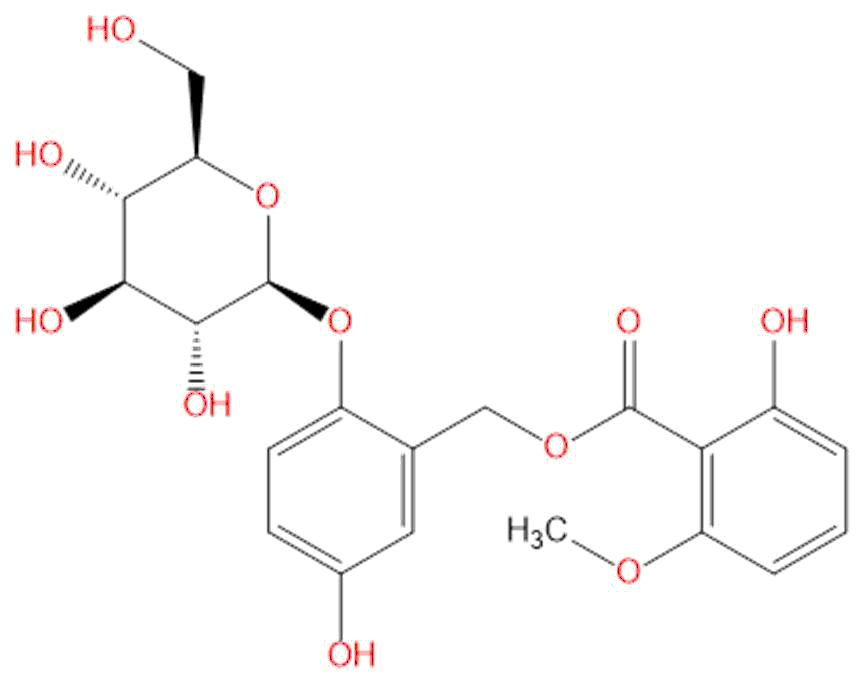
The chemical name of Xianmao glycoside B is (2R, 3S, 4S, 5R, 6S) -2- (hydroxymethyl) -6- [4-hydroxy-3- [(E) -3- (4-hydroxyphenyl) prop-2-enyl] phenoxy] oxane-3,4,5-triol, and its molecular formula is (C)_ {21}H_{24}O_ {11} The molecular weight is 452.4120. Its structure belongs to the class of phenolic glycosides, which are connected to a special phenolic ligand through a glycosidic bond by a glucosidic moiety. The ligand contains a para hydroxycinnamoyl (p) - coumaryl) fragment, which is connected to a resorcinol structural unit through an ester bond, forming a molecular skeleton with a conjugated system as a whole. This structure gives it significant UV absorption properties and is also the structural basis for its antioxidant activity.
From the analysis of the parameters related to medicinal properties, Xianmao glycoside B exhibits good hydrophilicity and moderate lipid solubility. The calculated lipid water partition coefficient (LogP) is 0.3108, indicating that it has a certain degree of amphiphilicity. The topologically polar surface area (TPSA) is as high as 175.37 Å ², mainly attributed to the presence of multiple hydroxyl groups and oxygen atoms on the sugar ring in the molecule, which are potential hydrogen bond donors and acceptors, resulting in a higher TPSA value. Higher TPSA is usually associated with poorer cell membrane permeability. The predicted water solubility value is 6.2781 (usually measured in mg/mL or log mol/L, depending on the model), indicating that it has a certain solubility in water, which is beneficial for the development of its formulation. Preliminary computer simulation toxicity prediction shows that it has no inhibitory risk on hERG potassium channels (hERG inhibition: no), and the Ames test prediction value is 0.0, indicating that it may not be mutagenic and has good preliminary safety characteristics. However, its blood-brain barrier permeability prediction is "low", indicating that the compound mainly acts on the peripheral system and is not easily able to enter the central nervous system. This may reduce potential central side effects for the treatment of peripheral diseases such as bone metabolism and reproductive system, which is beneficial.
Plant sources and extraction methods
Xianmao glycoside B is mainly derived from the traditional Chinese medicine Polygonum cuspidatum(Polygonum cuspidatum)Separated from the roots and stems. Polygonum cuspidatum is a plant of the Polygonaceae family, which has the effects of promoting dampness, reducing jaundice, clearing heat and detoxifying, dispersing blood stasis and relieving pain, stopping cough and resolving phlegm in traditional Chinese medicine theory. Modern research has isolated various active ingredients such as resveratrol, Polygonatum cuspidatum glycoside, and emodin from it. Xianmao glycoside B, as one of the relatively low content phenolic glycosides, requires specific processes for extraction, separation, and purification.
At present, the extraction of syringin B from Polygonum cuspidatum is usually carried out using organic solvent extraction combined with various chromatographic separation techniques. The conventional process is as follows: first, the dried roots and stems of Polygonum cuspidatum are crushed, and then heated with a certain concentration of ethanol (such as 70% -95%) for reflux extraction or ultrasound assisted extraction to fully dissolve polar components such as phenolic glycosides and anthraquinones. The extract is concentrated under reduced pressure to obtain a paste. Subsequently, macroporous adsorption resins (such as D101, AB-8, etc.) were used for preliminary enrichment, usually with gradient elution using water and ethanol solutions of different concentrations. Curcumin B was mostly concentrated in the 30% -70% ethanol elution site. After obtaining the crude extract, it needs to be further separated and purified repeatedly by silica gel column chromatography, reverse phase silica gel column chromatography (such as ODS-C18), dextran gel column chromatography (such as Sephadex LH-20), and high performance liquid chromatography (HPLC) preparation. Among them, reverse phase HPLC is a key step in obtaining high-purity quercetin B, often using methanol water or acetonitrile water as the mobile phase for gradient elution, monitored by a UV detector (whose maximum absorption wavelength is usually in the range of 280-330 nm). The entire separation process requires tracking and identification using thin-layer chromatography (TLC) or liquid chromatography-mass spectrometry (LC-MS). Optimizing the extraction solvent, temperature, time, and developing efficient separation and purification strategies are the research focuses for improving the yield and purity of Curcuma baicalensis glycoside B.
Pharmacological activity research
The pharmacological activity research of Xianmao glycoside B mainly focuses on the skeletal system and reproductive endocrine system, and exhibits various biological effects.
1. Anti osteoporosis activity
This is the earliest reported and extensively studied pharmacological effect of Xianmao glycoside B. At the cellular level, studies have shown that quercetin B can significantly promote the proliferation and differentiation of osteogenic precursor cells (such as MC3T3-E1 cells), enhance alkaline phosphatase (ALP) activity, promote the expression of osteogenic related genes such as osteocalcin (OCN) and type I collagen (Col-I), thereby accelerating the formation and mineralization of bone matrix. On the other hand, quercetin B exhibits a strong inhibitory effect on osteoclasts. In the osteoclast differentiation model induced by receptor activator of nuclear factor kappa B ligand (RANKL), quercetin B can dose dependently reduce the formation of tartrate resistant acid phosphatase (TRAP) positive multinucleated osteoclasts and decrease the TRAP activity of mature osteoclasts. More intuitive evidence comes from the analysis of bone resorption pits: co culturing osteoclasts with bone slices, treatment with quercetin B can significantly reduce the area and number of resorption pits formed by osteoclasts on bone slices, indicating that it directly inhibits the bone resorption function of osteoclasts. In animal models, after intervention with quercetin B, the bone mineral density (BMD) of the femur and lumbar vertebrae in osteoporotic rats induced by ovariectomy (OVX) was significantly increased, and the microstructure of bone trabeculae (such as the number and thickness of trabeculae) was improved. The biomechanical properties (such as maximum load) were enhanced, effectively alleviating bone loss caused by estrogen deficiency.
2. Antioxidant activity
The phenolic hydroxyl structure in Xianmao glycoside B molecule endows it with excellent free radical scavenging ability. In vitro experiments have shown that it exhibits significant scavenging effects on 1,1-diphenyl-2-trinitrophenylhydrazine (DPPH) free radicals, 2,2 '- diazo-bis-3-ethylbenzothiazoline-6-sulfonic acid (ABTS) cationic free radicals, and superoxide anion free radicals. This antioxidant activity not only helps to protect cells from oxidative stress damage, but may also indirectly participate in its anti osteoporosis and reproductive protection effects, as oxidative stress is one of the important triggers for bone metabolism imbalance and sperm quality decline.
3. Potential activity on the male reproductive system (based on target prediction and preliminary research)
Although there are insufficient in vitro and in vivo experimental reports on the direct treatment of male infertility with Xianmao glycoside B, based on its known chemical structure and related target prediction analysis, it has great potential in regulating male reproductive endocrine. Xianmao glycoside B may improve male infertility by acting on the following key target networks:
* Aromatase (CYP19A1)This enzyme is responsible for converting androgens (such as testosterone) into estrogens. Moderate inhibition of aromatase activity helps maintain high levels of testosterone in the body, which is crucial for promoting spermatogenesis, maintaining libido, and secondary sexual characteristics.
* Androgen receptor (AR)As a target of testosterone and dihydrotestosterone (DHT), the activity and expression of AR directly affect the transmission of androgen signaling. Xianmao glycoside B may act as a regulator of AR, enhancing the androgen signaling pathway.
* 5 α - reductase type 2 (SRD5A2)This enzyme converts testosterone into more active DHT. Regulating its activity can affect the microenvironment of prostate growth and spermatogenesis.
* Follicle stimulating hormone receptor (FSHR) and luteinizing hormone/chorionic gonadotropin receptor (LHB)FSHR mainly acts on testicular Sertoli cells, while LHB mainly acts on testicular interstitial cells, jointly regulating spermatogenesis and testosterone synthesis. Xianmao glycoside B may affect the function or expression of these receptors.
* Steroid synthesis acute regulatory protein (STAR)This protein is the rate limiting step in the transport of cholesterol from the outer membrane to the inner membrane of mitochondria, and is crucial for the synthesis of all steroid hormones, including testosterone.
Preliminary molecular docking and cell experiments suggest that quercetin B may regulate its activity by binding to some of the aforementioned targets, thereby positively regulating the hypothalamic pituitary gonadal axis function, promoting testosterone biosynthesis, and improving the reproductive microenvironment. This provides a theoretical basis for its development as a novel drug for the treatment of idiopathic oligoasthenozoospermia or delayed hypogonadism.
Mechanism of action and molecular targets
The molecular mechanism by which Xianmao glycoside B exerts pharmacological effects involves multiple signaling pathways and key targets, reflecting the multi-target and multi pathway characteristics of natural products.
In terms of anti osteoporosis:
* Promote osteogenic mechanism Xianmao glycoside B may promote osteogenic differentiation by activating the classical Wnt/β - catenin signaling pathway. This pathway is one of the core pathways regulating the differentiation of mesenchymal stem cells into osteoblasts. Xianmao glycoside B may upregulate Wnt ligand expression or inhibit the activity of glycogen synthase kinase-3 β (GSK-3 β), leading to the accumulation of β - catenin in the nucleus, which then binds to transcription factors TCF/LEF and initiates the expression of key osteogenic transcription factors such as Runx2 and Osterix. In addition, the bone morphogenetic protein (BMP) and mitogen activated protein kinase (MAPK) signaling pathways may also be involved.
* Inhibition of osteoclast mechanism The core mechanism of its inhibition of osteoclast differentiation and function is closely related to interference with the RANKL/RANK/NF - κ B signaling pathway. Xianmao glycoside B may block the transcriptional activity of NF - κ B by inhibiting RANKL induced degradation of I κ B α and nuclear translocation of NF - κ B p65 subunit. NF - κ B is an upstream key switch that initiates the expression of core transcription factors for osteoclast differentiation, such as NFATc1. Meanwhile, Xianmao glycoside B may also inhibit the phosphorylation of MAPK (such as JNK, p38, ERK) and Akt, and activate antioxidant pathways such as nuclear factor E2 related factor 2 (Nrf2)/heme oxygenase-1 (HO-1), indirectly inhibiting osteoclast activity by reducing oxidative stress.
In regulating male reproductive endocrine system (potential mechanism):
Based on its related targets, Xianmao glycoside B may exert its effects through a networked mechanism:
1. Regulating steroid hormone synthesis By upregulating the expression of STAR protein, the transport of cholesterol into mitochondria is accelerated, providing sufficient substrates for testosterone synthesis. At the same time, it is possible to regulate the activity of CYP19A1 (aromatase), control the conversion of testosterone to estradiol, and maintain a favorable androgen/estrogen balance for spermatogenesis.
2. Enhance androgen signaling As a potential agonist or positive regulator of AR, it enhances the biological effects of testosterone and DHT, promotes the differentiation and maturation of germ cells, while maintaining the normal function of accessory glands.
3. Regulating the action of gonadotropins May enhance the effects of follicle stimulating hormone (FSH) and luteinizing hormone (LH) on testicular Sertoli cells and stromal cells by affecting the signal transduction of FSHR and LHB, synergistically promoting spermatogenesis and testosterone secretion.
4. Antioxidant stress protection Its inherent antioxidant activity can protect testicular tissue from oxidative damage, maintain the integrity of the blood testis barrier, reduce germ cell apoptosis, and thus improve sperm quality and quantity.
These mechanisms are interrelated and together form a multidimensional map of the role of sesquiterpenoid B in bone metabolism and reproductive health.
Evaluation of drug properties and pharmacokinetics
Although Xianmao glycoside B has shown good pharmacological activity in vitro and some animal models, its successful development as a drug still depends on systematic pharmacological evaluation and pharmacokinetic studies. At present, there is relatively limited pharmacokinetic research data on Xianmao glycoside B, but preliminary analysis can be conducted based on its physicochemical properties and studies of similar compounds.
absorb Xianmao glycoside B is a moderately polar compound containing glycosidic bonds. After oral administration, its absorption may be influenced by gastrointestinal pH, gut microbiota, and intestinal mucosal epithelial cell transporters. Glycoside bonds may be partially hydrolyzed by gut microbiota or glycosidase on the intestinal mucosa, releasing aglycones, which have higher lipid solubility and may be more easily absorbed. Therefore, the oral bioavailability of Xianmao glycoside B needs to be experimentally determined, and its absorption form may be a mixture of the prototype drug and aglycone.
distribution Its high TPSA and predicted low blood-brain barrier permeability suggest that it is mainly distributed in blood, extracellular fluid, and blood rich tissues and organs such as the liver, kidneys, bones, and testes in the body, making it difficult to enter the central nervous system. This is consistent with its positioning in treating peripheral diseases. Further animal tissue distribution experiments are needed to clarify its target organ accumulation characteristics.
Metabolism As a phenolic glycoside compound, the main metabolic pathways of Xianmao glycoside B in the body may include hydrolysis (glycosidic bond cleavage), hydroxylation, demethylation, etc. in phase I metabolism; Phase II metabolism mainly binds with glucuronic acid, sulfuric acid, or glutathione to generate more polar metabolites that are easier to excrete. The liver is its main metabolic site, and the cytochrome P450 enzyme system and various transferases may be involved.
excretion Metabolites and some prototype drugs are expected to be mainly excreted through the kidneys in urine, and may also be partially excreted through bile and feces.
Challenges and Strategies in Drug Development:
1. Solubility and permeability Although it has some water solubility, higher TPSA may result in average cell membrane permeability, affecting oral absorption. Formulation strategies such as making nanocrystals, liposomes, solid dispersions, or combining them with penetration enhancers may improve their bioavailability.
2. Metabolic stability Glycoside bonds may be unstable in the body. Structural modifications, such as appropriate chemical modifications to sugar or phenolic hydroxyl groups, may enhance their metabolic stability and prolong their half-life.
3. Targeted delivery Targeted delivery systems for osteoporosis or testicular diseases, such as bone targeted delivery based on bisphosphonates or testicular targeted delivery based on specific ligands, are expected to increase drug concentration at the lesion site, enhance efficacy, and reduce potential side effects caused by systemic exposure.
4. safety Although the computer predicts no hERG inhibition or mutagenic risk, a comprehensive preclinical safety evaluation is still needed, including acute toxicity, chronic toxicity, reproductive toxicity, etc., to confirm its safety window.
Clinical application prospects and prospects
Xianmao glycoside B, as a natural small molecule compound with multiple biological activities, has shown broad clinical application prospects in the following fields:
1. Prevention and treatment of osteoporosis The dual mechanism of action of Xianmao glycoside B, which promotes bone formation and inhibits bone resorption, makes it a promising new type of bone metabolism regulator. Compared to the current mainstream anti bone resorption drugs (such as bisphosphonates) or bone formation promoting drugs (such as teriparatide), quercetin B may provide a more balanced treatment option, especially for elderly or postmenopausal osteoporosis. In the future, it is possible to explore its use alone or in combination with existing drugs, and develop oral tablets, capsules, or sustained-release formulations.
2. Adjuvant treatment for male infertility Regarding specific types of male infertility characterized by low androgen levels and impaired sperm production, the potential of Xianmao glycoside B to regulate reproductive endocrine through multi-target regulation is worthy of further exploration. It may serve as a supplement or alternative to traditional hormone therapies such as clomiphene and tamoxifen, especially for patients who are insensitive to hormone therapy or concerned about its side effects. Can be developed as a health food or prescription drug specifically designed to improve male fertility.
3. Diseases related to antioxidant and anti-aging Its strong antioxidant activity makes it also have potential value in preventing and treating diseases related to oxidative stress, such as atherosclerosis, neurodegenerative diseases (peripheral effects), diabetes complications, etc.
Outlook and Future Research Directions:
Despite the promising prospects, there are still many challenges for the transition of Xianmao glycoside B from a lead compound to a clinical drug. Future research should focus on:
* In depth study on the mechanism of action Using gene knockout/knock in animal models, proteomics, metabolomics, and other techniques, accurately elucidate its direct targets and upstream and downstream signaling networks in bone metabolism and reproductive regulation.
* Pharmacokinetic study of the system Conduct comprehensive ADME (absorption, distribution, metabolism, excretion) research to clarify its pharmacokinetic characteristics in different species of animals, providing a basis for dosage form design and administration plans.
* Structural optimization and derivative development Based on its pharmacophore, reasonable structural modifications are carried out to improve its activity, metabolic stability, oral bioavailability, and targeting, in order to obtain candidate drugs with greater development value.
* Preclinical and clinical research Complete standardized GLP toxicology evaluation and gradually advance Phase I, II, and III clinical trials to verify its safety and efficacy in humans.
* Development of compound preparations Combining traditional Chinese medicine theory, explore the combination of Xianmao glycoside B and other natural ingredients with synergistic effects (such as resveratrol in Polygonum cuspidatum) to form a compound, and leverage the comprehensive therapeutic advantages of multiple components and targets.
Conclusion
Xianmao glycoside B is a phenolic glycoside compound with important research value discovered from the traditional Chinese medicine Polygonum cuspidatum. It not only exhibits a unique advantage of "bidirectional regulation" in anti osteoporosis by regulating core pathways such as Wnt/β - catenin and RANKL/NF - κ B, but also provides new molecular entities and ideas for the treatment of male infertility due to its potential to act on a series of key targets closely related to male reproductive endocrine, such as CYP19A1, AR, SRD5A2, FSHR, LHB, STAR, etc. Its good preliminary safety prediction and moderate pharmacological parameters have laid the foundation for its further development. However, to translate the findings of this laboratory into drugs that benefit patients, extensive and solid research work is still needed in terms of in-depth analysis of the mechanism of action, improvement of pharmacokinetic properties, structural optimization, and rigorous clinical validation. With the continuous advancement of natural product chemistry, pharmacology, and drug development technology, Xianmao glycoside B is expected to become an important member of the drug family for treating osteoporosis and male reproductive disorders in the future, demonstrating the enormous potential and value of modern research on traditional Chinese medicine.