| Catalog No | Package | Original Price | Price | Inventory | Quantity | Operating |
|---|---|---|---|---|---|---|
| BP4728-5mg | 5mg | $650.00 | Sign in |
|


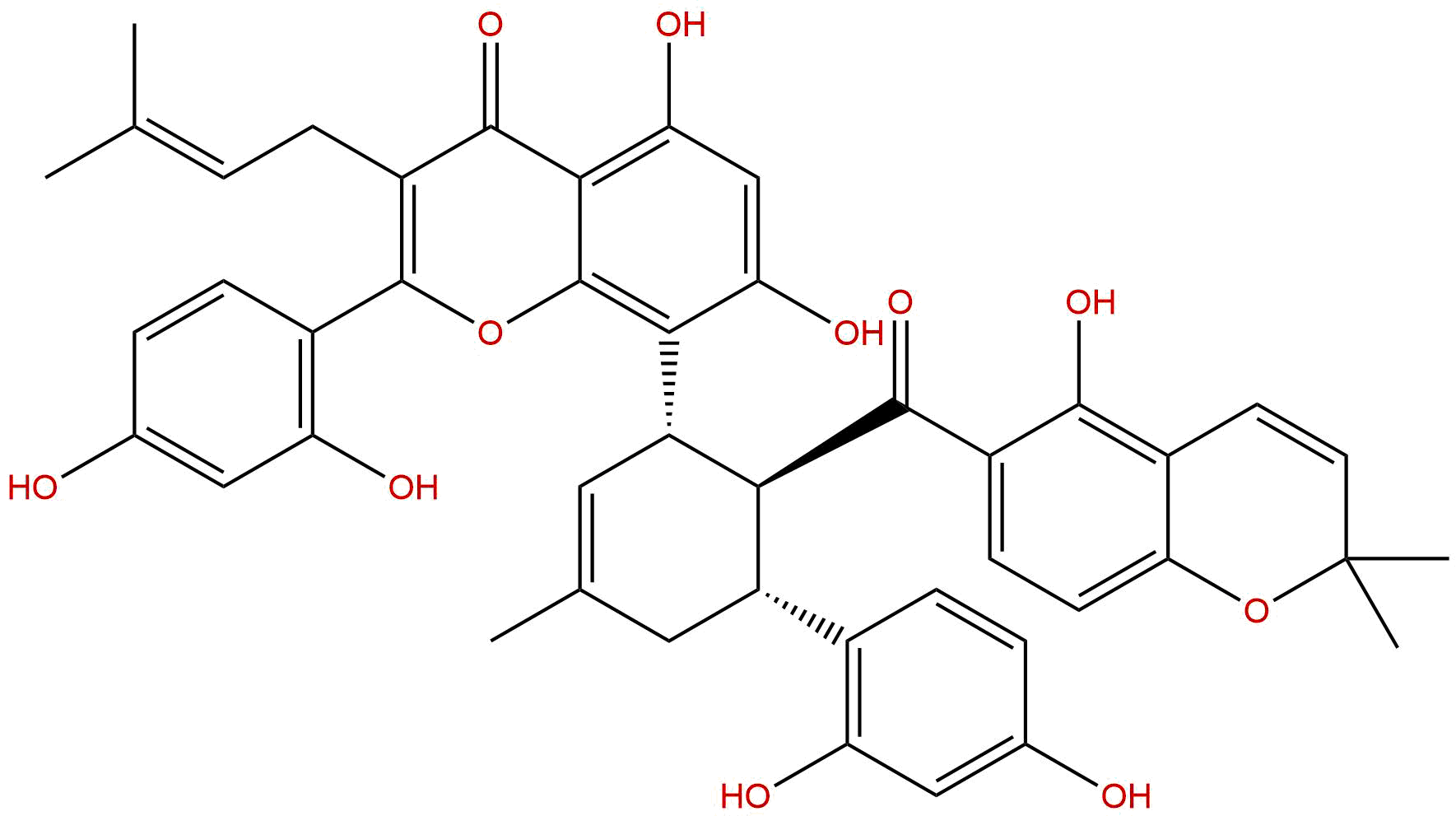
Product name: Kuwanon W
Synonym name:
Catalogue No.: BP4728
Cas No.: 95518-95-9
Formula: C45H42O11
Mol Weight: 758.82
Botanical Source:
Type of Compound:
Purity: 95%~99%
Analysis Method: HPLC-DAD or/and HPLC-ELSD
Identification Method: Mass, NMR
Packing: Brown vial or HDPE plastic bottle
Storage: Store in a well closed container, protected from air and light. Put into refrigerate or freeze for long term storage.
Whenever possible, you should prepare and use solutions on the same day. However, if you need to make up stock solutions in advance, we recommend that you store the solution as aliquots in tightly sealed vials at -20℃. Generally, these will be useable for up to two weeks.
The product could be supplied from milligrams to grams
Inquire for bulk scale.
For Reference Standard and R&D, Not for Human Use Directly.
Storage conditions:Short-term storage at 2~8℃, long-term storage at -20 ~ -80℃
Natural products, as an important source of drug discovery, play an irreplaceable role in the development of anti-tumor drugs. Kuwanon W is a natural flavonoid compound isolated from the roots of Morus lhou, a plant in the mulberry genus. In recent years, it has attracted widespread attention due to its significant biological activity. With the continuous rise of the incidence rate of cancer, it has become the focus of contemporary drug research and development to find efficient and low toxic new anti-tumor drugs. Mulberry flavonoids W, with its unique chemical structure and multi-target mechanism of action, have shown great potential for application in the field of anti-tumor. This article provides a systematic review of the chemical structure and physicochemical properties, plant sources and extraction methods, pharmacological activity, mechanism of action, pharmacological evaluation, and clinical application prospects of mulberry flavonoids W. The aim is to provide theoretical basis and reference for the in-depth research and development of this natural product.
The molecular formula of mulberry flavonoids W is C44H-58O12, with a molecular weight of 758.82, belonging to polyphenolic flavonoid derivatives. Its structure is complex, containing multiple hydroxyl and methoxy substituents, and has high polarity and spatial conformational diversity. The LogP value of mulberry flavonoids W is 6.3075, indicating strong lipid solubility, which helps them penetrate cell membranes, but also suggests poor water solubility (0.0030 mg/mL), which may affect their absorption and distribution in vivo. Its topological polar surface area (TPSA) is 198.12 Å ², with higher TPSA typically associated with lower cell membrane permeability. The low permeability of the blood-brain barrier suggests its limited distribution in the central nervous system. It is worth noting that mulberry flavonoids W have no inhibitory effect on hERG channels, and the Ames mutagenicity test result is 0.0, indicating its high safety and low potential risks of cardiac toxicity and genotoxicity.
Mulberry flavonoids W mainly come from the roots of Morus lhou plants. Morus lhou belongs to the Moraceae family and is widely distributed. Traditionally, it has been used as a traditional Chinese medicinal herb in Asia. The extraction of mulberry flavonoids W usually involves organic solvent extraction combined with multi-step chromatographic separation technology. The specific process includes:
In recent years, green extraction techniques such as ultrasound assisted extraction and supercritical fluid extraction have also been applied to the extraction of mulberry flavonoids W, significantly improving extraction efficiency and purity, reducing solvent usage, and meeting the environmental protection requirements of modern natural product extraction.
The pharmacological activity research of mulberry flavonoids W mainly focuses on its anti-tumor effect. In vitro cell experiments showed that mulberry flavone W had significant proliferation inhibitory effects on a variety of tumor cell lines, including breast cancer, lung cancer, liver cancer and colorectal cancer cells. Its IC_50 value is usually in the low micromolar range, indicating strong cytotoxicity.
In addition, mulberry flavonoids W can induce apoptosis of tumor cells, inhibit cell cycle progression, and block the migration and invasion ability of tumor cells. Animal model studies further confirmed its anti-tumor activity. In a mouse transplant tumor model, mulberry flavonoids W significantly inhibited tumor growth without significant toxic side effects.
In addition to its anti-tumor effect, mulberry flavonoids W also exhibit multiple biological activities such as antioxidant, anti-inflammatory, and immune regulation, which may synergistically enhance its anti-tumor effect. Its anti-inflammatory activity helps to block tumor progression by inhibiting the expression of inflammatory factors, reducing the inflammatory response in the tumor microenvironment.
The anti-tumor mechanism of mulberry flavonoids W involves multiple signaling pathways and molecular targets, reflecting its multi-target and multi pathway pharmacological properties. The main targets include:
In summary, mulberry flavonoids W regulate the proliferation, apoptosis, migration, and microenvironment of tumor cells through multi-target synergistic effects, effectively inhibiting the occurrence and development of tumors.
The pharmacological evaluation of mulberry flavonoids W shows that it has certain challenges. Its high lipid solubility (LogP=6.3) and extremely high polar surface area (TPSA=198.12 Å ²) result in extremely poor water solubility (0.0030 mg/mL), limiting its oral absorption and bioavailability. In addition, the low permeability of the blood-brain barrier means that it is difficult to use for the treatment of central nervous system related diseases.
However, mulberry flavonoids W have no inhibitory effect on hERG channels, reducing the risk of cardiac toxicity; The Ames test is negative, indicating a low risk of genotoxicity and good safety.
At present, there is limited pharmacokinetic data on mulberry flavonoids W. Preliminary animal experiments have shown that its absorption is slow after oral administration, and its plasma half-life is relatively long, which may be related to its high lipid solubility and high molecular weight. To improve its pharmacokinetic properties, drug delivery strategies such as nanocarriers, liposome encapsulation, and structural modification have been proposed to enhance its bioavailability and targeting.
Mulberry flavonoids W, as a multi-target anti-tumor natural product, exhibit good pharmacological activity and high safety, and have great clinical application potential. It has unique advantages in the treatment of hormone dependent tumors (such as breast cancer), solid tumors and metastatic tumors.
Future research should focus on the following aspects:
In addition, the anti-inflammatory, antioxidant, and immunomodulatory effects of mulberry flavonoids W provide new application directions for their use in tumor adjuvant therapy and chronic disease management.
Mulberry flavonoids W, as a natural flavonoid compound derived from the roots of Morus lhou, have become a hot topic in natural product pharmacology research due to their unique chemical structure and multi-target anti-tumor activity. Its significant anti-tumor effect and good safety provide valuable resources for the development of new anti-cancer drugs. Despite the challenges of poor water solubility and low bioavailability, with the development of modern drug delivery technology and structural optimization strategies, mulberry flavonoids W are expected to break through the bottleneck and enter the clinical application stage. In the future, through interdisciplinary cooperation and in-depth exploration of its mechanism of action and clinical potential, mulberry flavonoids W are expected to become an important member in the field of anti-tumor drugs, promoting the development of natural product drugs to new heights.
