Storage conditions:Short-term storage at 2~8℃, long-term storage at -20 ~ -80℃
244.9100
-.4218
-.4215
5.1168
.5858
.2725
Low
67.6823
5.1717
Yes
No
No
No
No
No
0.0
Yes
No
Yes
Yes
Natural products, as an important source of drug discovery, play an irreplaceable role in the long struggle between humans and diseases. Especially active ingredients derived from traditional medicinal plants have always been a hot topic in modern drug development due to their structural diversity and unique biological activity. Eucommia ulmoides(Eucommia ulmoides Oliv.), As a precious traditional Chinese medicinal herb, its application history can be traced back to more than two thousand years ago in the "Shennong Bencao Jing". It is listed as a top-grade herb and has the effects of nourishing the liver and kidneys, strengthening muscles and bones, and stabilizing pregnancy. Modern pharmacological research has confirmed that Eucommia ulmoides extract and its active ingredients exhibit significant potential in regulating bone metabolism and preventing osteoporosis.
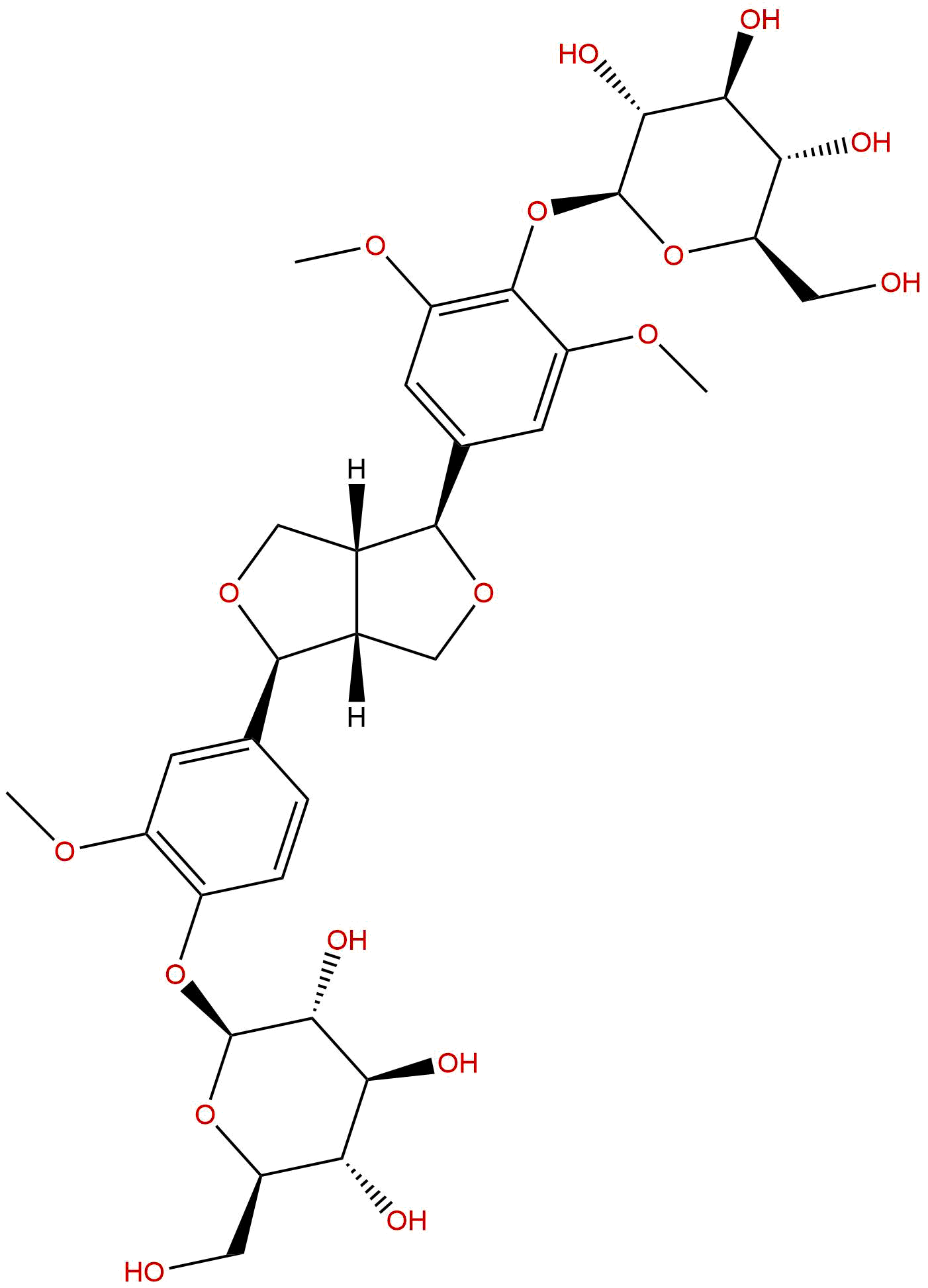
Among the numerous active ingredients in Eucommia ulmoides, lignans are one of its important pharmacological substances. (+) - Eucommia ulmoides Resin Phenol Glucoside ((+) - Mediorelinol Di-O - β - D-glucopyranoside), as a typical bicyclic lignan glycoside, is a representative component with high content and outstanding activity in Eucommia ulmoides. This compound is composed of two glucose groups connected to the phenolic hydroxyl group of the parent nucleus of Eucommia ulmoides resin phenol (Medioresinol) through β - glycosidic bonds. This structural feature endows it with unique physicochemical properties and biological activity. In recent years, with the advancement of separation and analysis techniques and the improvement of pharmacological evaluation systems, the pharmacological activities of (+) - Eucommia ulmoides resin phenol diglucoside in anti osteoporosis, antioxidant, anti-inflammatory, and cardiovascular protection have gradually been revealed, especially its multi-target mechanism of action in the bone metabolism regulatory network, making it a highly promising natural lead compound for the treatment of osteoporosis.
Osteoporosis is a systemic bone disease characterized by low bone mass and destruction of bone microstructure, leading to increased bone fragility and increased risk of fractures. With the acceleration of global population aging, osteoporosis has become a serious public health problem that threatens the quality of life of middle-aged and elderly people. The commonly used anti osteoporosis drugs in clinical practice, such as bisphosphonates, selective estrogen receptor modulators, parathyroid hormone analogues, etc., although have certain therapeutic effects, long-term use often accompanies adverse reactions such as mandibular necrosis, atypical femoral fractures, and increased risk of thrombosis. Therefore, searching for highly efficient and low toxicity new anti osteoporosis active molecules from natural products has important scientific significance and clinical translational value. This article will provide a systematic review of the research progress on (+) - Eucommia ulmoides resin phenolic diglucoside from the aspects of chemical structure, plant origin, pharmacological activity, mechanism of action, medicinal properties, and clinical application prospects, in order to provide reference for the further development and utilization of this compound.
The chemical name of (+) - Eucommia ulmoides resin phenol diglucoside is (+) - Mediorelinol Di-O - β - D-glucopyranoside, which belongs to the class of furofuran lignans. Its parent core structure is Medioresinol, which belongs to the typical 8-O-4 'type lignin skeleton. It is composed of two phenylpropanoid units connected by C8-C8' and C8-O-C4 'to form a tetrahydrofuran ring system. Specifically, its structural feature is that the C2 and C6 positions of the parent nucleus are respectively connected to a β - D-glucopyranose group, forming a diglycoside structure. This disaccharide modification not only significantly increases the water solubility of the molecule, but also has an important impact on its bioavailability and targeting.
The molecular formula of this compound is C ∝₄ H ₄₈ O ₁₇, with a molecular weight of 712.6980 g/mol. From the perspective of physical and chemical properties, its lipophilic water partition coefficient (LogP) is -0.4218, indicating that the compound has strong hydrophilicity, which is consistent with its molecular structure containing multiple hydroxyl and sugar groups. The topologically polar surface area (TPSA) is as high as 244.9100 Å ², which is much higher than the recommended upper limit of 140 Å ² for oral drugs. This suggests that the compound may be difficult to pass through the cell membrane through passive diffusion, and its transmembrane transport may depend on specific transport proteins or endocytic pathways. The water solubility parameter (5.1168, expressed in logS) further confirms its good water solubility characteristics, providing favorable conditions for its dissolution and distribution in biological fluids.
In terms of stability, as a glycoside compound, (+) - Eucommia ulmoides resin phenol diglucoside is relatively stable under acidic conditions. However, under strong acid or specific enzyme action (such as β - glucosidase), glycosidic bond hydrolysis may occur, removing the glucosyl group to generate glycoside eucommia ulmoides resin phenol. This metabolic transformation may affect its in vivo efficacy and pharmacokinetic behavior. In addition, multiple phenolic hydroxyl groups in the molecule give it a certain degree of reducibility and may participate in antioxidant reactions. It is worth noting that its blood-brain barrier penetration assessment is "low", which is consistent with its high polarity and high molecular weight characteristics, indicating that the compound mainly acts in peripheral tissues and may have a relatively small impact on the central nervous system. The hERG inhibition assessment is negative, and the Ames test result is 0.0, indicating a low risk of cardiac and genetic toxicity, which provides a positive signal for its safety evaluation.
(+) - Eucommia ulmoides Resin Phenol Glucoside was originally derived from Eucommia ulmoides(Eucommia ulmoides Oliv. was isolated and identified as one of the high content lignans in this plant. Eucommia ulmoides is a deciduous tree belonging to the Eucommia family. It is a unique economic tree species and rare medicinal plant in China, mainly distributed in provinces such as Shaanxi, Gansu, Henan, Hubei, Sichuan, Yunnan, and Guizhou. Besides Eucommia ulmoides, this compound has also been found in other plants, such as Forsythia suspensa(Forsythia suspensa)Japanese Cypress(Chamaecyparis obtusa)Wait, but Eucommia ulmoides is still its main source.
There are significant differences in the content of (+) - Eucommia ulmoides resin phenol diglucoside in different parts of Eucommia ulmoides. Research has shown that Eucommia ulmoides bark (including dry bark and branch bark) has the highest content, followed by leaves, while the content is lower in seeds and roots. This distribution pattern is consistent with the traditional medicinal site (skin) of Eucommia ulmoides. In addition, factors such as harvest season, tree age, place of origin, and processing method can also affect its content. Generally speaking, the content of this component is higher in Eucommia ulmoides bark harvested in spring, while the content of medicinal materials that have undergone sweating treatment may vary. Therefore, establishing standardized harvesting and processing techniques is crucial for ensuring the quality of raw materials.
In terms of extraction methods, due to the good water solubility of (+) - Eucommia ulmoides resin phenolic diglucoside, traditional extraction often uses water or different concentrations of ethanol as solvents. Common extraction methods include:
Solvent extraction method Using 50% -70% ethanol reflux extraction, with a solid-liquid ratio of 1:10-1:20, extraction time of 1-2 hours, and extraction 2-3 times. This method is easy to operate and cost-effective, but the extraction efficiency is affected by factors such as temperature and time, and there are many impurities, requiring subsequent purification steps.
Ultrasound assisted extraction Utilizing the cavitation effect and mechanical vibration of ultrasound to accelerate cell wall rupture and component dissolution. Compared with traditional reflux extraction, ultrasonic extraction can shorten the time (30-60 minutes), lower the temperature (40-60 ℃), and improve the extraction rate. Research has shown that under the conditions of ultrasound power of 300W, temperature of 50 ℃, and 70% ethanol, the extraction rate can be increased by 15% -20% compared to traditional methods.
Microwave assisted extraction By utilizing the penetrability and selective heating of microwaves, the internal temperature of cells rapidly increases, and the pressure increases, leading to cell rupture. This method has a short extraction time (10-20 minutes) and requires a small amount of solvent, but it has high equipment requirements and requires control of microwave power to avoid component degradation.
Enzyme assisted extraction Add cellulase, pectinase, etc. before extraction to disrupt the structure of plant cell walls and promote the release of active ingredients. This method has mild conditions and can improve extraction efficiency, but the cost of enzymes and control of reaction conditions are challenges in practical applications.
The crude extract after extraction needs to be purified to obtain high-purity (+) - Eucommia ulmoides resin phenol diglucoside. Common purification methods include: macroporous adsorption resin column chromatography (such as HPD-100, D101 resin), silica gel column chromatography, ODS reverse phase column chromatography, preparative high-performance liquid chromatography, etc. Among them, the combination of macroporous adsorption resin and gradient elution can achieve preliminary enrichment, and then a single compound with a purity greater than 98% can be obtained through preparative HPLC. In recent years, new separation methods such as high-speed counter current chromatography (HSCCC) and molecular imprinting technology have gradually been applied to the purification of this compound, demonstrating the advantages of high efficiency and speed.
The occurrence of osteoporosis is closely related to the dynamic imbalance between bone resorption and bone formation. (+) - Eucommia ulmoides resin phenol diglucoside has been extensively studied for its anti osteoporosis effect, and multiple in vitro and in vivo experiments have confirmed its bone protective effect.
At the cellular level, this compound can significantly promote the proliferation and differentiation of osteoblasts, such as MC3T3-E1 cells. Research has shown that within the concentration range of 10 ⁻⁸ -10 ⁻⁶ M, (+) - Eucommia ulmoides resin phenol diglucoside can dose dependently increase alkaline phosphatase (ALP) activity, promote mineralization nodule formation, and upregulate the expression of osteogenic related genes such as RUNX2, SP7, COL1A1, and BGLAP. Meanwhile, the compound can also inhibit the formation and activity of osteoclasts. In the RANKL induced RAW264.7 cell osteoclast differentiation model, (+) - Eucommia ulmoides resin phenol diglucoside significantly reduced the number of TRAP positive multinucleated cells, decreased the activity of osteoclast marker enzyme CTSK, and inhibited the formation of bone resorption pits.
In animal models, ovariectomy (OVX) rats were used to simulate postmenopausal osteoporosis. After oral administration of (+) - Eucommia ulmoides resin phenol diglucoside (20-80 mg/kg/d) for 12 consecutive weeks, significant improvement in bone microstructural parameters was observed. Micro CT analysis showed that the bone volume fraction (BV/TV), trabecular thickness (Tb. Th), and trabecular number (Tb. N) of the treatment group rats significantly increased, while the trabecular separation degree (Tb. Sp) decreased. The biomechanical tests showed that the maximum load and stiffness of the femur were significantly increased. In addition, serum bone turnover marker detection found that the levels of bone formation markers (such as PINP, OCN) increased, while the levels of bone resorption markers (such as CTX-1, TRAP5b) decreased, indicating that this compound has a dual regulatory effect of promoting bone formation and inhibiting bone resorption.
In addition to its anti osteoporosis effect, (+) - Eucommia ulmoides resin phenol diglucoside also exhibits various other pharmacological activities:
antioxidant activity The phenolic hydroxyl structure in the compound molecule endows it with the ability to scavenge free radicals. In vitro antioxidant experiments such as DPPH, ABTS, FRAP, etc. have shown that (+) - Eucommia ulmoides resin phenolic diglucoside has moderate antioxidant activity and can effectively scavenge hydroxyl radicals, superoxide anion radicals, and inhibit lipid peroxidation. In the cellular oxidative stress model, this compound can reduce H ₂ O ₂ - induced oxidative damage in osteoblasts, decrease reactive oxygen species (ROS) levels, and increase the activity of superoxide dismutase (SOD) and glutathione peroxidase (GSH Px).
anti-inflammatory activity Inflammatory response is closely related to the occurrence and development of osteoporosis. Research has found that (+) - Eucommia ulmoides resin phenol diglucoside can inhibit the production of NO and PGE2 in LPS induced RAW264.7 macrophages, and downregulate the expression of iNOS and COX-2. Meanwhile, the compound can also reduce the levels of pro-inflammatory cytokines TNF - α, IL-1 β, and IL-6, and its mechanism may be related to the inhibition of NF - κ B signaling pathway activation.
Cardiovascular protective effect In endothelial cells, (+) - Eucommia ulmoides resin phenol diglucoside can inhibit endothelial cell damage induced by oxidized low-density lipoprotein (ox LDL), reduce cell apoptosis, and maintain endothelial barrier function. In addition, the compound can also dilate blood vessels and lower blood pressure, and its mechanism may be related to activating endothelial nitric oxide synthase (eNOS) and promoting NO release.
Estrogen like activity Given that the traditional "kidney tonifying" effect of Eucommia ulmoides is somewhat related to its estrogenic effects, researchers have tested the estrogen receptor binding ability of (+) - Eucommia ulmoides resin phenol diglucoside. The results showed that the compound can bind to estrogen receptor alpha (ER alpha), but its affinity is much lower than that of 17 β - estradiol, exhibiting weak estrogen like activity. This characteristic may partially explain its bone protective effect, while avoiding side effects such as endometrial hyperplasia caused by strong estrogen receptor agonists.
The anti osteoporosis effect of (+) - Eucommia ulmoides resin phenol diglucoside involves multiple signaling pathways and molecular targets, reflecting the characteristics of natural multi-target drugs. Based on existing research, its mechanism of action can be summarized as follows:
Osteoblasts are the main functional cells for bone formation, and their differentiation process is regulated by multiple transcription factors. RUNX2 (Runt related transcription factor 2) and SP7 (Osterix) are key transcription factors for osteoblast differentiation. Research has shown that (+) - Eucommia ulmoides resin phenol diglucoside can upregulate the expression of RUNX2 and SP7 by activating the BMP-2/Smad signaling pathway. Specifically, this compound can promote the binding of BMP-2 to its receptor, leading to phosphorylation of Smad1/5/8 proteins. Phosphorylated Smad proteins form complexes with Smad4 and are transferred into the nucleus, initiating the transcription of downstream target genes. The activation of RUNX2 further induces the expression of osteoblast marker genes such as COL1A1 (type I collagen alpha 1 chain) and BGLAP (osteocalcin), thereby promoting bone matrix synthesis and mineralization.
In addition, the compound can promote osteogenic differentiation through the Wnt/β - catenin signaling pathway. After binding to Frizzled receptors and LRP5/6 co receptors on the cell membrane, Wnt protein inhibits GSK-3 β activity, causing β - catenin to accumulate in the cytoplasm and transfer to the nucleus, where it binds to TCF/LEF transcription factors and activates osteogenic related gene expression. Research has found that (+) - Eucommia ulmoides resin phenol diglucoside can upregulate LRP5 expression, increase β - catenin nuclear translocation, and inhibit SOST (osteoclastin) expression. SOST is a negative regulator of the Wnt pathway, and its reduced expression helps to alleviate the inhibition of bone formation.
Osteoclasts are multinucleated giant cells responsible for bone resorption, and their excessive activation is an important pathological mechanism in osteoporosis. The RANKL/RANK/OPG system is a core signaling pathway that regulates osteoclast differentiation. After binding to the RANK receptor on the surface of osteoclast precursors, RANKL activates the NF - κ B and MAPK signaling pathways, induces the expression of the key transcription factor NFATc1 for osteoclast differentiation, and subsequently initiates the transcription of osteoclast specific genes such as CTSK (tissue protease K) and MMP9 (matrix metalloproteinase 9).
The inhibitory effect of (+) - Eucommia ulmoides resin phenol diglucoside on osteoclast differentiation involves multiple steps. Firstly, this compound can upregulate the expression of TNFRSF11B (osteoprotegerin, OPG), which acts as a bait receptor for RANKL and competitively inhibits the binding of RANKL and RANK, thereby blocking osteoclast differentiation signals. Secondly, the compound can directly inhibit RANKL induced NF - κ B activation, reduce nuclear translocation of p65 protein, and inhibit phosphorylation of ERK, JNK, and p38 in the MAPK pathway. In addition, the compound can downregulate the expression of NFATc1, reduce the synthesis and secretion of osteoclast marker enzyme CTSK, thereby inhibiting bone resorption activity.
Estrogen plays an important role in maintaining bone homeostasis, and the decrease in estrogen levels after menopause is the main cause of osteoporosis in women. ESR1 (estrogen receptor alpha) is the main receptor subtype that mediates estrogen bone protective effects. Research has found that (+) - Eucommia ulmoides resin phenol diglucoside can bind to ESR1, although with low affinity, it is sufficient to activate some downstream signals. This compound can promote nuclear translocation of ESR1, enhance the transcriptional activity of estrogen response element (ERE), and upregulate the expression of ESR1 target genes such as TNFRSF11B. This weak estrogen like activity may partially explain its bone protective effect while avoiding the side effects of strong estrogen receptor agonists.
Vitamin D receptor (VDR) is a member of the nuclear receptor superfamily, playing a crucial role in calcium and phosphorus metabolism and bone homeostasis. After binding with VDR, 1,25-dihydroxyvitamin D3 can regulate the expression of genes related to intestinal calcium absorption and bone metabolism. Research has shown that (+) - Eucommia ulmoides resin phenol diglucoside can upregulate the expression of VDR and enhance the sensitivity of osteoblasts to vitamin D. This synergistic effect may help improve calcium metabolism and promote bone mineralization.
Oxidative stress and inflammatory response play important promoting roles in the pathogenesis of osteoporosis. The antioxidant activity of (+) - Eucommia ulmoides resin phenol diglucoside can reduce ROS damage to osteoblasts and protect their function. Meanwhile, its anti-inflammatory effect can inhibit the production of pro-inflammatory cytokines such as TNF - α and IL-1 β, which can directly stimulate osteoclast differentiation and inhibit osteoblast function. By inhibiting the NF - κ B signaling pathway, this compound can simultaneously exert antioxidant and anti-inflammatory effects, forming a synergistic protective effect on bone metabolism.
In summary, (+) - Eucommia ulmoides Resin Phenol Glucoside exerts anti osteoporosis effects through multi-target and multi pathway mechanisms, involving multiple key nodes such as osteoblast differentiation (RUNX2, SP7, COL1A1, BGLAP), osteoclast differentiation (CTSK, MMP9, TNFRSF11B), estrogen signaling (ESR1), vitamin D signaling (VDR), and Wnt signaling (SOST). This multi-target mode of action meets the therapeutic needs of the complex pathological mechanism of osteoporosis and provides a theoretical basis for its development as a new type of anti osteoporosis drug.
Based on the Lipinski Five Rules and subsequent optimized drug efficacy evaluation criteria, a preliminary evaluation of the drug efficacy of (+) - Eucommia ulmoides resin phenol diglucoside was conducted. The molecular weight of the compound is 712.70 Da, exceeding the threshold of 500 Da; LogP is -0.42, below the threshold of 5; The number of hydrogen bond donors (phenolic hydroxyl and alcohol hydroxyl) is 10, exceeding the threshold of 5; The number of hydrogen bond acceptors (oxygen atoms) is 17, exceeding the threshold of 10. Therefore, the compound violates three of Lipinski's five rules (molecular weight, hydrogen bond donor, hydrogen bond acceptor), suggesting that its bioavailability as an oral drug may be low.
However, many successfully marketed drugs in natural products do not fully comply with Lipinski's rules, especially glycoside compounds. Although the high polarity and high molecular weight limit its passive diffusion ability, it may be transported in vivo through other pathways. The TPSA is as high as 244.91 Å ², far exceeding the recommended upper limit of 140 Å ² for oral medications, further indicating poor membrane permeability. Good water solubility (logS=5.12) is its advantage, which is beneficial for dissolution in the gastrointestinal tract. Low blood-brain barrier penetration may actually be an advantageous feature for anti osteoporosis drugs that primarily target the peripheral skeletal system, reducing central nervous system side effects.
The hERG inhibition assessment is' no ', indicating that the compound has a low risk of blocking cardiac potassium ion channels and a low risk of cardiac toxicity. The Ames test result is 0.0, indicating no significant mutagenicity and low risk of genetic toxicity. These preliminary safety data provide positive signals for subsequent development. Of course, a more comprehensive safety evaluation requires systematic research on acute toxicity, chronic toxicity, reproductive toxicity, and other factors.
At present, there are few direct studies on the pharmacokinetics of (+) - Eucommia ulmoides resin phenolic diglucoside in vivo, but reasonable inferences can be made based on its structural characteristics and related compound research.
absorb As a highly polar glycoside compound, (+) - Eucommia ulmoides resin phenol diglucoside has poor passive diffusion absorption in the small intestine. Its absorption may mainly rely on active transport or facilitated diffusion mediated by intestinal transporters such as SGLT1, GLUT2, etc. In addition, β - glucosidase in the gut microbiota may hydrolyze it into glycoside eucommia ulmoides resin phenol, which has decreased polarity and may be absorbed through passive diffusion. Therefore, the oral bioavailability of the compound may be low, but absorption in the form of aglycones may improve its in vivo exposure.
distribution Due to its high polarity and potential protein binding rate, this compound is mainly distributed in extracellular fluid. Its apparent distribution volume may be small, mainly distributed in blood and well perfused tissues. The distribution characteristics of bone tissue as a target site deserve further investigation. Due to low blood-brain barrier penetration, the distribution of the central nervous system is limited.
Metabolism Metabolic pathways may include: ① Glycoside bond hydrolysis: the production of glycosylated eucommia ulmoides resin phenol through the action of β - glucosidase in the intestine or liver; ② Phase II metabolism: Phenolic hydroxyl groups of aglycones or prototype compounds may undergo binding reactions such as glucuronidation and sulfation; ③ Methylation: Some phenolic hydroxyl groups may undergo methylation modification. The activity of metabolites may differ from that of the prototype compound, for example, aglycones may have stronger membrane permeability and different target selectivity.
excretion Polar compounds are mainly excreted through the kidneys in their original form or metabolite form. Bile excretion may also be an important pathway, especially for glycosides with larger molecular weights. The enterohepatic circulation may prolong its duration of action in the body.
Given that the oral bioavailability of (+) - Eucommia ulmoides resin phenol diglucoside may be low, developing appropriate formulation techniques is key to improving its pharmacological properties. Possible strategies include:
nano-formulation Liposomes, nanoemulsions, polymer nanoparticles, etc. can enhance drug solubility and membrane permeability, prolong circulation time, and potentially achieve bone targeted delivery.
Prodrug design Esterification or etherification modification of polar groups (such as hydroxyl groups) to enhance lipid solubility and improve membrane permeability. The prodrug releases the prototype drug after enzymatic or chemical hydrolysis in the body.
Absorption enhancer Combined with surfactants, bile salts, and other absorption enhancers to increase intestinal permeability.
Phospholipid complex Forming complexes with phospholipids, improving lipid solubility, and enhancing oral absorption.
Bone targeted delivery Using bone targeting groups such as bisphosphonates and tetracyclines to modify drugs or carriers, achieving selective enrichment of drugs in bone tissue, improving efficacy, and reducing systemic side effects.
Based on the multi-target anti osteoporosis mechanism and good preliminary safety characteristics of (+) - Eucommia ulmoides resin phenol diglucoside, this compound shows significant potential for development in the treatment of osteoporosis. Compared with existing drugs, its unique advantages lie in:
Dual regulatory effect Simultaneously promoting bone formation and inhibiting bone resorption, in line with the characteristics of ideal anti osteoporosis drugs. At present, commonly used drugs in clinical practice act on a single link (such as bisphosphonates inhibiting bone resorption and teriparatide promoting bone formation), while dual regulation may bring better efficacy and lower risk of adverse reactions.
Multi-target effect Acting on multiple targets such as ESR1, VDR, RUNX2, SP7, CTSK, MMP9, TNFRSF11B, SOST, etc., it can simultaneously regulate multiple signaling pathways and may have therapeutic effects on complex etiologies of osteoporosis, such as postmenopausal osteoporosis, senile osteoporosis, and glucocorticoid induced osteoporosis.
Natural source, good safety Derived from the traditional Chinese medicine Eucommia ulmoides, its long-term clinical application history provides a safety reference. Preliminary toxicological assessment shows low risks of cardiac toxicity and genetic toxicity, and is expected to be developed as a long-term medication.
Weak estrogen like activity Avoiding the side effects of strong estrogen receptor agonists (such as raloxifene) such as endometrial hyperplasia and venous thrombosis, while retaining some bone protective effects.
Considering the multifactorial pathogenesis of osteoporosis, the combination of (+) - Eucommia ulmoides resin phenol diglucoside and other drugs may produce synergistic effects. For example:
In addition to osteoporosis, based on its pharmacological activity, (+) - Eucommia ulmoides resin phenol diglucoside may also have therapeutic potential in other bone related diseases:
Although (+) - Eucommia ulmoides Resin Phenol Glucoside has many advantages, its development still faces some challenges:
Future research directions should include: ① establishing a systematic pharmacokinetic pharmacodynamic model to elucidate the relationship between in vivo processes and drug efficacy; ② Using omics techniques (proteomics, metabolomics) to deeply reveal its functional network; ③ Develop bone targeted delivery systems to increase drug concentration in target tissues; ④ Conduct standardized preclinical toxicology evaluations and early clinical trials to verify their safety and efficacy.
(+) - Eucommia ulmoides Resin Phenol Glucoside, as an important active lignan component in Eucommia ulmoides, has shown significant development potential in the field of anti osteoporosis due to its unique chemical structure and multi-target pharmacological mechanism. This compound achieves synergistic regulation of bone metabolism by regulating osteoblast differentiation (RUNX2, SP7, COL1A1, BGLAP), inhibiting osteoclast activity (CTSK, MMP9, TNFRSF11B), modulating estrogen receptor (ESR1) and vitamin D receptor (VDR) signaling, as well as antioxidant and anti-inflammatory pathways. Its good water solubility, low cardiac toxicity, and low genetic toxicity risk provide preliminary guarantees for its safety.
However, the compound still faces challenges in terms of drug development, especially the issue of low oral bioavailability that needs to be addressed through formulation innovation or structural modification. Future research should focus on elucidating its complete pharmacokinetic characteristics in vivo, delving into molecular mechanisms of action, developing efficient delivery systems, and ultimately verifying its effectiveness and safety in treating osteoporosis through standardized clinical studies.
Exploring active ingredients from traditional Chinese medicine Eucommia ulmoides and conducting in-depth research using modern pharmacology and medicinal chemistry methods is an important approach for innovative drug discovery. The study of (+) - Eucommia ulmoides resin phenol diglucoside not only provides new candidate molecules for the treatment of osteoporosis, but also provides reference for the development of other natural glycoside compounds. With the continuous deepening of research, this compound is expected to become a new natural medicine for treating osteoporosis, bringing new treatment options to billions of osteoporosis patients worldwide.
Batch can search by a CAS number,one per line