Introduction/Overview
Natural products, as an important source of drug discovery, play an irreplaceable role in the long history of human struggle against diseases. Among them, lignans are a class of plant secondary metabolites formed by oxidative coupling polymerization of phenylpropanoid units (C6-C3), which have attracted much attention due to their structural diversity and wide range of biological activities. Among many lignans, Matarisinol monoglucoside (MMG), as a representative compound, has gradually entered the field of vision of researchers in recent years. Its aglycone, Matairesinol, is a key precursor for the synthesis of many important lignans (such as ring opening isolaricin, rosin, etc.) in plants, while glycosylation modification endows isoneneneba rosin with unique physical and chemical properties and biological activity.
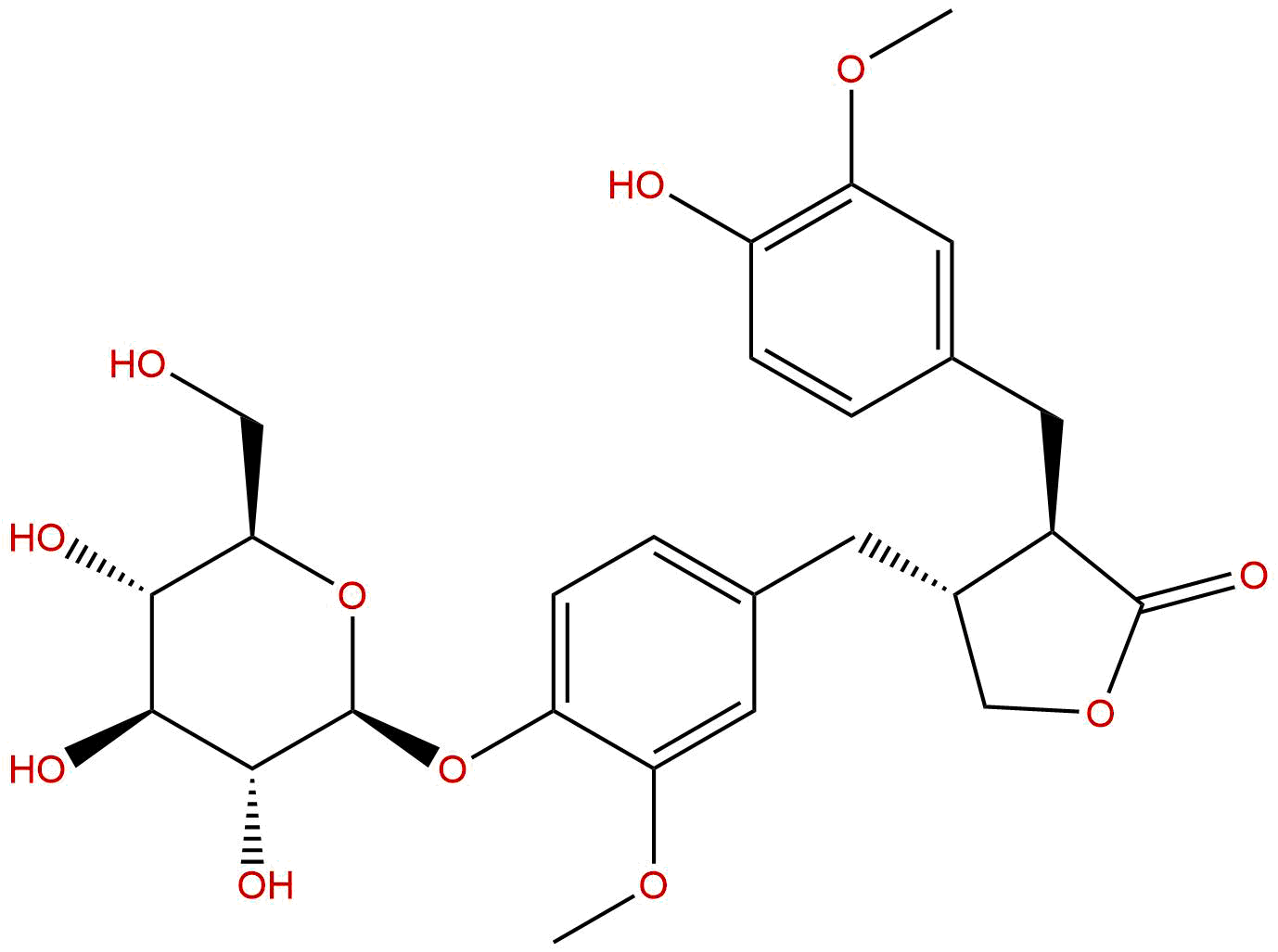
The chemical name of isoneneneba arhat rosin is (8R, 8'R) -4,4 '- dihydroxy-3,3' - dimethoxylignane-9,9 '- lactone -4' - O - β - D-glucopyranoside, CAS No. 34446-06-5. Structurally, it belongs to the class of dibenzylbutyrolactone lignans, with its parent nucleus consisting of two phenylpropanoid units connected by a C8-C8 'bond, forming a tetrahydrofuran lactone ring system with a chiral center. This rigid skeleton endows it with the ability to specifically bind to biomolecules. It is worth noting that the existing research data show that isoneneneba arhat rosin has relatively low inhibitory activity on interferon gamma (IFN - γ) - mediated signal transduction and activator of transcription 1 (STAT1) pathway and interleukin-6 (IL-6) - mediated STAT3 pathway, with inhibition rates of 5.8% and 7.0% respectively. This characteristic suggests that although its direct anti-inflammatory activity may not be strong, as a member of the natural product library, its potential other pharmacological effects, especially in the field of antiviral, are worth further exploration.
In recent years, with the systematic screening of the antiviral activity of natural products, isoneneneba arhat rosin has been found to be potentially associated with a variety of virus related targets, including myeloperoxidase (MPO), UL42, UL54, ICP27, TK, gD proteins of herpes simplex virus (HSV), and the co receptors of human immunodeficiency virus (HIV) CCR5, CXCR4 and protease (HIV1-PR), integrase (INT), etc. These targets cover multiple key stages in the virus lifecycle, from virus adsorption, invasion, genome replication to protein processing and assembly. Although the research on the direct antiviral activity of isoneneneba arhat rosin is still in its infancy, these preliminary target correlation analyses provide an important theoretical basis for its development as a lead compound or adjuvant. This paper will systematically review the research status of isoneneneba arhat rosin from the aspects of chemical structure, plant origin, pharmacological activity, mechanism of action, pharmaceutical properties and clinical application prospects, in order to provide a reference for the in-depth research and development of this compound.
Chemical structure and physicochemical properties
The chemical structure of isoneneneba arhat rosin belongs to a typical dibenzylbutyrolactone lignan glycoside. The core skeleton of its aglycone isorosin consists of two C6-C3 units (i.e. a phenylpropane unit) connected by C8-C8 'bond, forming a fused ring system containing γ - lactone ring (butyrolactone). Specifically, C8 and C8 'are chiral centers, and the naturally occurring isorosin is usually in the (8R, 8'R) configuration. Two aromatic rings (A ring and A 'ring) are connected at positions C7 and C7', respectively, and each aromatic ring contains one methoxy (- OCH3) and one hydroxyl (- OH) substituent located at positions C3, C4, and C3 ', C4', respectively. The structural characteristics of this adjacent dihydroxy (or methoxy) group are an important basis for its antioxidant activity. Glycosylation occurs on the hydroxyl group at the C4 'position, and connects a molecule of D-glucose through the β - glycoside bond to form isorosin glycoside.
From the point of view of physical and chemical properties, the molecular formula of isoneneneba arhat rosin is C26H32O11, and its molecular weight is 520.5310 Da. Its lipid water partition coefficient LogP is 0.6924, indicating that the compound has certain hydrophilicity, but is not completely water-soluble. The topological polar surface area (TPSA) is 164.3700 Å ², which is a relatively high value mainly attributed to the oxygen atoms of multiple hydroxyl and sugar groups in the molecule. High TPSA usually means that the compound is not easily passively diffused across the cell membrane, especially through the blood-brain barrier (BBB). In fact, its blood-brain barrier permeability has been evaluated as' low ', which limits its application in central nervous system diseases, but may also mean that there are fewer central side effects after peripheral administration. The water solubility parameter is 2.3377, indicating that it has a certain solubility ability in water, which provides favorable conditions for its absorption and distribution in organisms. In addition, the hERG inhibition assessment result is' no ', indicating a low risk of cardiac toxicity; The Ames test result was 0.0, indicating that it did not exhibit significant mutagenicity in the standard bacterial recovery mutation test. These preliminary pharmaceutical parameters provide a positive signal for the safety evaluation of isoneneneba arhat rosin.
Plant sources and extraction methods
As a natural lignan glycoside, isorosin is widely found in many plants, especially in gymnosperms and angiosperms. One of its most famous sources is flaxseed (Linum usitatissimum), which is rich in a variety of lignans, of which ring opening isolastin diglucoside (SDG) is the main component, and isolastin also exists as its metabolic intermediate or coexistence component. In addition, the presence of isoproterenoside was also reported in Eucommia ulmoides, Arctium lappa, Forsythia suspensa, Schisandra chinensis, and some Pinaceae and Cupressaceae plants. There are significant differences in its content among different plants, which are usually closely related to plant species, growth environment, harvest season, and tissue parts such as seeds, roots, stems, and leaves.
The classical method of extracting isoneneneba arhat rosin is mainly based on solvent extraction. Due to the polarity and water solubility of the compound, commonly used extraction solvents include methanol, ethanol, acetone, and their aqueous mixtures. For example, using 70% methanol or 80% ethanol for extraction at room temperature or heating conditions can achieve high extraction efficiency. In order to improve the extraction rate and purity, modern extraction techniques such as ultrasound assisted extraction (UAE), microwave-assisted extraction (MAE), and supercritical fluid extraction (SFE) have also been applied to the extraction of lignin compounds. Among them, ultrasound assisted extraction is widely used in laboratory scale research due to its advantages of easy operation, high efficiency, and low solvent dosage.
The crude extract after extraction usually contains a large amount of impurities such as lipids, pigments, sugars, and other phenolic compounds, thus requiring further separation and purification steps. Common separation methods include liquid-liquid extraction (such as fractional extraction with petroleum ether, ethyl acetate, n-butanol and other polar solvents), column chromatography (such as silica gel column, ODS reverse phase column, Sephadex LH-20 gel column, etc.) and preparative high-performance liquid chromatography (Prep-HPLC). Because the glycosyl part of isorosin increases its polarity, it is usually eluted earlier than its aglycone isorosin on reverse phase chromatography (such as C18 column). By combining a variety of chromatographic techniques, we can obtain high-purity isoproterenoside monomer from plant extracts for subsequent structural identification and activity studies. Structural identification typically relies on nuclear magnetic resonance spectroscopy (NMR, including 1H-NMR, 13C-NMR, HMBC, HSQC, etc.) and high-resolution mass spectrometry (HR-MS) techniques.
Pharmacological activity research
At present, there are relatively limited reports on the direct pharmacological activities of isoprosin, but some studies have revealed its anti-inflammatory, antioxidant and potential antiviral effects.
1. Anti inflammatory activity
As mentioned above, the available data show that isoproterenoside has low inhibitory activity on IFN - γ/STAT1 and IL-6/STAT3 signaling pathways (inhibition rates are 5.8% and 7.0%, respectively). STAT1 and STAT3 are important transcription factors in cells that mediate signal transduction of cytokines such as IFN - γ and IL-6, respectively. They play a central role in inflammatory response, immune regulation, and cell proliferation. The low inhibition rate suggests that isoproterenoside may not play an anti-inflammatory role by directly blocking these classical inflammatory pathways. However, this does not exclude the possibility that it indirectly exerts anti-inflammatory effects through other mechanisms, such as inhibiting the NF - κ B pathway, regulating the MAPK pathway, or affecting inflammasome activation. For example, its aglycone isorosin has been proved to have the ability to inhibit the production of nitric oxide (NO) and prostaglandin E2 (PGE2) in macrophages induced by lipopolysaccharide (LPS), which suggests that glycosylation modification may change its anti-inflammatory activity spectrum. Therefore, more comprehensive anti-inflammatory models in vitro and in vivo are needed to evaluate the real anti-inflammatory potential of isoproterenoside.
2. Antioxidant activity
Lignin compounds generally exhibit antioxidant activity, mainly attributed to the phenolic hydroxyl groups in their molecular structure, which can effectively scavenge free radicals, chelate metal ions, or inhibit oxidase activity. Isopodocarpine glycoside contains two phenolic hydroxyl groups (C4 and C4 'position), which theoretically has antioxidant capacity. Previous studies have shown that its aglycone isorosin has good antioxidant activity in DPPH free radical scavenging experiment, ABTS cationic free radical scavenging experiment and reduction capacity determination. Glycosylation usually increases the water solubility of molecules, which may affect their contact efficiency with free radicals, but generally does not completely eliminate their antioxidant capacity. Therefore, it is very likely that isoneneneba arhat rosin also has some antioxidant activity, but the specific activity intensity and its comparison with aglycones still need experimental verification. Antioxidant activity may be one of the foundations for its other biological activities, such as anti-inflammatory, anti-aging, and cardiovascular protection.
3. Antiviral activity
This is one of the most potential research directions of isoneneneba arhat rosin. Preliminary target association analysis suggests that the compound may interact with various virus related proteins. Specifically, its potential targets include:
- Herpes simplex virus (HSV) related targets UL42 (DNA polymerase helper protein), UL54 (DNA polymerase catalytic subunit), ICP27 (immediate early protein involved in mRNA output), TK (thymidine kinase involved in nucleoside analogue phosphorylation), gD (glycoprotein D, mediating virus adsorption and invasion). These targets cover multiple stages of the HSV replication cycle, from virus entry into cells (gD) to genome replication (UL42, UL54, TK) and gene expression regulation (ICP27). This suggests that isoneneneba arhat rosin may inhibit HSV infection through a multi target mechanism.
- Human immunodeficiency virus (HIV) related targets CCR5 and CXCR4 (co receptors required for HIV to enter cells), HIV1-PR (HIV protease responsible for viral protein processing), INT (integrase responsible for viral DNA integration into the host genome). These targets also involve key steps in the HIV lifecycle, including virus entry (CCR5/CXCR4) and virus maturation (HIV1-PR, INT). This suggests that isoneneneba arhat rosin may have anti HIV potential.
- Other targets MPO (myeloperoxidase, an enzyme associated with inflammation and oxidative stress that may also be activated in viral infections).
It should be emphasized that most of these target associations are based on computer virtual screening or preliminary enzyme activity assays, and there is a lack of direct cellular or in vivo antiviral experimental data. Therefore, the antiviral activity of isoneneneba arhat rosin is still in the hypothesis stage. Future research should focus on verifying its actual inhibitory effect in HSV, HIV, or other viral (such as influenza virus, coronavirus) infection models, and clarifying its mechanism of action.
Mechanism of action and molecular targets
Based on the existing research, the mechanism of action of isoneneneba arhat rosin is not completely clear, but it can be inferred from its chemical structure and known target correlation.
1. Weak interaction with STAT signaling pathway
The inhibition rate of isoprosin on IFN - γ/STAT1 and IL-6/STAT3 pathways was very low (5.8% and 7.0%), indicating that its direct binding ability to STAT protein was very weak, or its action site was not the key region of phosphorylation or dimerization of STAT protein. This weak interaction may be due to spatial hindrance in its molecular structure, especially in the glycosyl portion, which hinders its effective binding to the SH2 domain or other functional domains of STAT proteins. Therefore, it is unlikely to exert its primary anti-inflammatory or anti-tumor effects by directly inhibiting the STAT signaling pathway.
2. Potential antiviral mechanisms
According to target prediction, the antiviral mechanism of isoneneneba arhat rosin may involve multiple levels:
- Inhibit virus entry By binding to the gD protein of HSV or the CCR5/CXCR4 co receptor of HIV, it may interfere with the adsorption and membrane fusion processes between the virus and host cells. For example, gD protein is necessary for HSV to invade host cells, while CCR5 and CXCR4 are key co receptors for HIV to enter CD4+T cells. If isorosin can competitively bind these proteins, it can block virus entry.
- Inhibition of viral genome replication By binding to UL42 (DNA polymerase helper protein) and UL54 (DNA polymerase catalytic subunit) of HSV, it may interfere with the function of the viral DNA polymerase complex, thereby inhibiting the replication of viral DNA. In addition, inhibiting the TK enzyme of HSV may affect the phosphorylation activation of nucleoside analogues (such as acyclovir), which is both a potential therapeutic target and may pose a risk of drug interactions.
- Inhibition of viral gene expression By binding to the ICP27 protein of HSV, it may interfere with the expression of early viral genes or the nuclear export of host mRNA, thereby inhibiting the synthesis of viral proteins.
- Inhibit virus maturation and release By binding to HIV1-PR (protease), it may inhibit the cleavage of viral precursor proteins (such as Gag Pol polyprotein), leading to the production of immature, non infectious viral particles. By binding to HIV INT (integrase), it is possible to inhibit the integration of viral DNA into the host genome, thereby blocking the establishment of latent infection by the virus.
3. The correlation between antioxidant and anti-inflammatory mechanisms
The antioxidant activity of isoneneneba arhat rosin may indirectly inhibit inflammatory reaction by scavenging reactive oxygen species (ROS). ROS is an important signaling molecule that activates NF - κ B and NLRP3 inflammasomes. By reducing the level of intracellular ROS, isoproterenoside may inhibit the activation of these pro inflammatory pathways, thus playing an anti-inflammatory role. In addition, its potential inhibitory effect on MPO may also reduce the generation of strong oxidants such as hypochlorous acid (HOCl), further alleviating tissue damage and inflammation.
Evaluation of drug properties and pharmacokinetics
The evaluation of drug properties is a crucial step in determining whether natural products can become candidate drugs. Based on the parameters provided, isorosin showed some favorable and unfavorable characteristics.
Beneficial features:
- Low risk of cardiac toxicity The hERG inhibition assessment is' no ', indicating a low risk of prolonging QT interval and inducing arrhythmia, which is an important safety indicator in drug development.
- Low mutagenicity The Ames test result is 0.0, indicating that it has no mutagenicity in the standard bacterial recovery mutation test and reduces the risk of genetic toxicity.
- Good water solubility The water solubility parameter is 2.3377, indicating that it has a certain solubility in water, which is beneficial for the development and in vivo absorption of oral preparations.
- Moderate molecular weight The molecular weight of 520.53 Da is slightly higher than the limit of 500 Da in the "Five Rules", but still within an acceptable range, and glycosylation modification may promote absorption through active transport mechanisms.
Adverse features and challenges:
- Low blood-brain barrier permeability The TPSA is as high as 164.37 Å ², much higher than the threshold for passive diffusion through BBB (usually<90 Å ²), and the LogP is low (0.69). This makes it almost impossible for it to enter the central nervous system, limiting its application in brain diseases such as viral encephalitis and neurodegenerative diseases. But this also means that there are fewer central side effects after peripheral administration.
- Potential metabolic instability As a glycoside, isorosin may be hydrolyzed by intestinal flora or liver glycosidase in vivo, releasing its aglycone isorosin. Glycosides may be further metabolized (such as methylation, sulfation, glucuronidation). Therefore, its true active form in the body may be the original drug, aglycone, or its metabolites. This metabolic transformation increases the complexity of pharmacokinetic studies.
- Oral bioavailability Although it has good water solubility, its high polarity (high TPSA) and glycosylation structure may result in lower oral absorption, mainly relying on active transport by intestinal transporters such as SGLT1. Its oral bioavailability needs to be accurately evaluated through animal experiments.
- Target selectivity Currently, there are numerous predicted targets (MPO, UL42, UL54, ICP27, TK, gD, CCR5, CXCR4, HIV1-PR, INT), but there is a lack of experimental evidence for high selectivity. Multi targeted effects are both advantageous (possibly resulting in synergistic effects) and may also bring off target effects and toxic side effects. Further target validation experiments (such as surface plasmon resonance, thermal displacement analysis, cellular thermal transition analysis, etc.) are needed to confirm its direct binding to key targets.
Pharmacokinetic characteristics (speculated): Based on the physical and chemical properties, it can be inferred that the oral absorption of isoneneneba arhat rosin may be poor, but its aglycones may be absorbed after the metabolism of intestinal flora. After absorption, the active ingredient and aglycone are mainly distributed in peripheral tissues such as blood, liver, and kidneys. Due to low BBB permeability, there is very little central distribution. Metabolism mainly occurs in the liver and intestines, involving glycoside hydrolysis, methylation, sulfation, and glucuronidation. Excretion may mainly occur through bile and urine.
Clinical application prospects and prospects
Although the research of isoneneneba arhat rosin is still in its early stage, its unique chemical structure and preliminary target relevance paint a potential prospect for its clinical application, mainly in the field of antiviral.
1. Lead compounds of antiviral drugs
In view of its potential interaction with a variety of key proteins of HSV and HIV, isoneneneba arhat rosin can be used as a lead compound to develop new antiviral drugs. Especially for HSV, its multi-target mechanism of action (simultaneously acting on entry, replication, and gene expression) may help overcome the resistance problem of existing drugs such as acyclovir. The strategy of targeting both CCR5/CXCR4 and maturation (PR, INT) simultaneously is also attractive for HIV. Future research directions should include:
- In vitro antiviral activity validation: In the cell models infected with HSV-1, HSV-2, HIV-1 and other viruses, the half inhibitory concentration (IC50) and half cytotoxic concentration (CC50) of isoneneneba arhat rosin were measured, and the selectivity index (SI) was calculated.
- In depth study of mechanisms By constructing drug-resistant virus strains, conducting time-based drug addition experiments, target knockout/knockdown, molecular docking, surface plasmon resonance and other techniques, the specific targets and binding modes of the virus can be clarified.
- structural optimization Based on its parent nucleus structure, the sugar moiety, aromatic ring substituent, or lactone ring can be modified through chemical synthesis or biotransformation to enhance activity, improve pharmacokinetic properties (such as increasing oral bioavailability, reducing metabolic rate), or enhance target selectivity.
2. As an adjuvant therapy or dietary supplement
Considering its low toxicity and potential antioxidant and anti-inflammatory activities, isoproterenoside may be used as an auxiliary therapeutic agent in combination with existing antiviral drugs (such as acyclovir, zidovudine, etc.) to enhance efficacy, reduce dose or reduce side effects. In addition, due to its presence in common foods such as flaxseed, it may also be used as a functional food ingredient or dietary supplement to prevent viral infections or improve related inflammatory states. But strict clinical trials are needed to confirm its effectiveness and safety.
3. Challenges and Future Directions Faced
- The urgency of activity verification The biggest challenge currently is the lack of direct and systematic pharmacological activity data. All speculations about antiviral activity are based on computer predictions or preliminary enzyme activity data. It is necessary to conduct experiments at the cellular and animal levels as soon as possible to confirm or deny its antiviral potential.
- Pharmacokinetic study It is necessary to systematically study its oral absorption, metabolism, distribution, and excretion characteristics, clarify its active form (active drug or glycoside) in vivo, and evaluate its oral bioavailability.
- toxicological evaluation Although the results of Ames and hERG are good, more comprehensive toxicological studies are still needed, including acute toxicity, subchronic toxicity, reproductive toxicity, etc., to evaluate their long-term safety.
- Source and Sustainability The content of isoneneneba arhat rosin in plants is usually low, and the cost of large-scale extraction is high. In the future, efficient chemical synthesis or biosynthetic methods need to be developed to ensure their sustainable supply as drug leads or products.
Conclusion
As a naturally occurring dibenzylbutyrolactone like lignan glycoside, Isopodocarpine glycoside has a unique chemical structure, which combines the rigid skeleton of the mother nucleus of lignans and the water solubility brought by glycosyl modification. Although the current understanding of its pharmacological activity is not deep, especially its weak inhibitory activity on the STAT signaling pathway suggests that it is not a potent anti-inflammatory molecule, based on target association analysis, it shows potential for exploration in the field of antiviral, especially against HSV and HIV. Its low cardiac toxicity, low mutagenicity, and good water solubility provide a favorable basis for its development as a lead compound or adjuvant therapy. However, there is still a long way to go from the "target hypothesis" to the "clinical candidate drug". Future research urgently needs to focus on: 1) verifying its antiviral activity through rigorous cell and animal experiments; 2) Elucidate its exact molecular mechanism of action; 3) Systematically evaluate its pharmacokinetic and toxicological properties. Only by overcoming these key scientific problems can we accurately evaluate the real value of isoprosin and lay a solid scientific foundation for its development and utilization in antiviral drugs or functional products. Today, when the discovery of natural products is increasingly valued, the in-depth exploration of such "non star" molecules as isoneneneba arhat rosin may provide new ideas and tools for humans to deal with the challenges of viral diseases.