Introduction/Overview
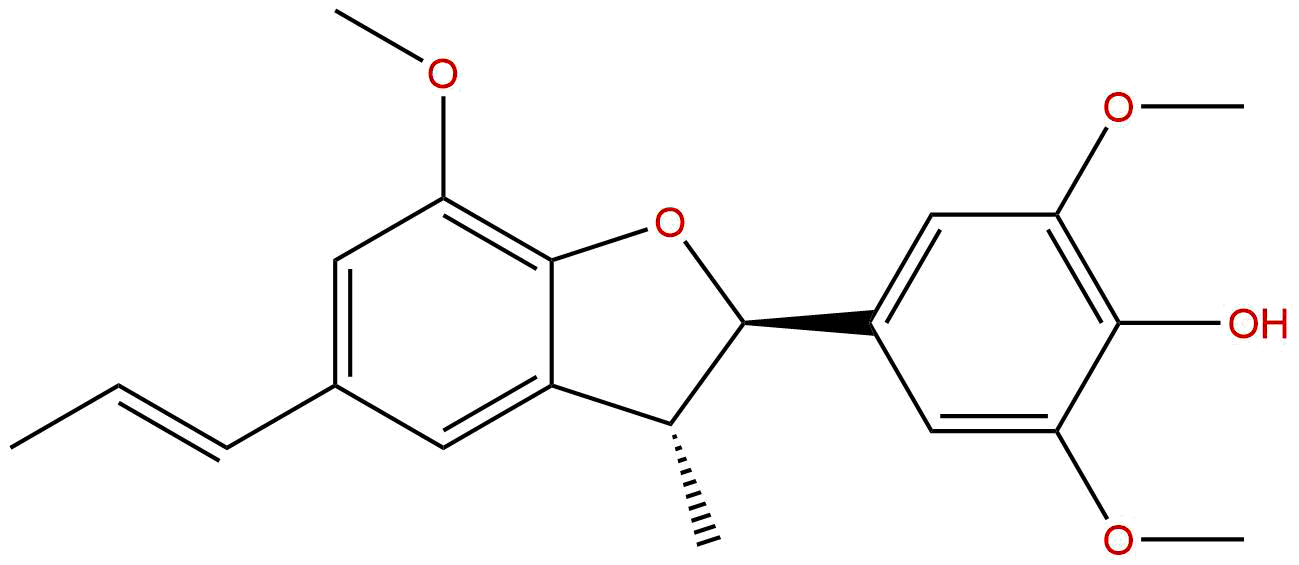
Natural products, as an important source of drug discovery, play an irreplaceable role in the long history of human struggle against diseases. From classic aspirin and artemisinin to paclitaxel, natural products and their derivatives provide diverse chemical entities and unique pharmacological mechanisms for modern medicine. Among numerous natural products, new lignans have attracted much attention due to their structural diversity and wide range of biological activities. Among them, (+) -5-methoxydehydrodiiiseugenol, also known as ent Odoratosol A, is a natural lignan compound with a unique stereochemical structure. This compound was first isolated from certain medicinal plants, and its chemical structure belongs to the new lignans of the dibenzylbutane class. It has a dihydrobenzofuran skeleton formed by oxidative coupling of two phenylpropanoid units.
In recent years, with the increasingly severe problem of antibiotic resistance worldwide, the search for new antibiotics has become an urgent need in the pharmaceutical field. The World Health Organization has listed antibiotic resistance as one of the top ten global public health threats. In this context, (+) -5-methoxydihydrodiisobutylphenol has attracted widespread attention from researchers due to its significant antibacterial activity. Preliminary studies have shown that the compound exhibits inhibitory activity against various Gram positive bacteria, Gram negative bacteria, and fungi. Its targets include bacterial DNA gyrases (GYRA, GYPB), cell division protein FTSZ, acyl ACP reductase FABI, dihydrofolate reductase DHFR, as well as fungal ergosterol biosynthesis related enzymes (ERG11, CYP51A1) and resistance related transporter protein CDR1. This multi-target action characteristic not only endows the compound with broad-spectrum antibacterial potential, but may also reduce the risk of drug resistance to some extent.
This article will provide a systematic review of the research progress of (+) -5-methoxydihydrodiisobutyrol from multiple dimensions, including chemical structure and physicochemical properties, plant sources and extraction methods, pharmacological activity research, mechanism of action and molecular targets, drug evaluation and pharmacokinetics, and clinical application prospects, in order to provide reference for the in-depth development and utilization of this natural product.
Chemical structure and physicochemical properties
Chemical structural characteristics
The chemical name of (+) -5-methoxydihydrodiisobutylphenol is (2R, 3S) -2,3-dihydro-2- (4-hydroxy-3,5-dimethoxyphenyl) -5-methoxy-3-methyl-7- (1E) -1-propenyl-1-benzofuran, with a molecular formula of C ₂ ₁ H ₂ ₄ O ₅ and a molecular weight of 356.4180. From a structural classification perspective, this compound belongs to the dihydrobenzofuran type in the new lignans. Its core skeleton consists of a dihydrobenzofuran ring, which is formed by the oxidative coupling reaction of two C ₆ - C ∝ units (phenylpropanoid units). Specifically, one phenylpropanoid unit provides the A ring and C3 side chain of the benzofuran ring, while another unit serves as a substituent attached to the C2 position of the furan ring.
The key functional groups in the structure of this compound include: a methoxy group (- OCH ∝) located at the C5 position, a 1-propenyl group (- CH=CH-CH ∝) located at the C7 position, a 4-hydroxy-3,5-dimethoxyphenyl substituent located at the C2 position, and a methyl group located at the C3 position. It is worth noting that the molecule has two chiral centers (C2 and C3) and its absolute configuration is 2R, 3S. This stereochemical feature corresponds to the "ent -" prefix in its name, indicating that it is the enantiomer of the naturally occurring odoratisol A. This specific stereoconfiguration has a decisive impact on its biological activity, as the interaction between chiral molecules and biological targets typically exhibits high stereoselectivity.
Physical and chemical property parameters
From the perspective of physical and chemical properties, (+) -5-methoxydihydrodiisobutylphenol exhibits typical lipid soluble natural product characteristics. Its oil-water partition coefficient (LogP) is 4.5123, indicating that the compound has strong lipophilicity, which is consistent with its molecular structure being rich in hydrophobic groups such as aromatic rings and methoxy groups. A higher LogP value is beneficial for compounds to penetrate biofilms, but it may also affect their solubility and distribution in the aqueous phase.
The topological polar surface area (TPSA) of this compound is 57.15 Å ², which is at a moderate level. According to the "Rule of 5" class of pharmacological rules, the TPSA of oral drugs should usually be less than 140 Å ², so this compound may have good potential for oral absorption. However, its water solubility is extremely low, only 0.0062 mg/mL, which poses an important challenge in its drug development. Low water solubility not only affects the bioavailability of the formulation, but may also limit its distribution and metabolism in the body.
In terms of blood-brain barrier penetration, this compound is predicted to have high penetration, which is related to its high lipid solubility and moderate molecular weight. This characteristic suggests that the compound may have central nervous system activity, but it may also pose potential neurotoxic risks. In addition, the hERG inhibition prediction result was negative, indicating that the compound has a low risk of causing QT interval prolongation in the heart. The Ames test result is 0.0, indicating that it may not have significant genetic toxicity. These preliminary toxicological assessment results provide a favorable safety basis for the further development of the compound.
Plant sources and extraction methods
Plant-based
(+) -5-methoxydihydrodiisobutylphenol, as a natural product, mainly exists in certain specific medicinal plants. According to existing literature reports, this compound was initially isolated from Magnoliaceae plants, particularly from the genus Smiles(Michelia)And Magnolia genus(Magnolia)Plants. In addition, the presence of this compound has also been found in some Lauraceae plants. These plants are often used in the traditional medical system to treat infectious diseases, inflammation and pain, which is consistent with the antibacterial and anti-inflammatory activities found in modern pharmacological research.
It is worth noting that the content of this compound varies greatly in different plants and usually exists in the form of trace components. For example, in the bark and leaves of certain plants in the genus Smiles, the content of (+) -5-methoxydihydrodiisobutophenol may only be 0.01% -0.1% of dry weight. This low content feature poses high requirements for extraction and purification processes, and is also one of the main bottlenecks restricting its large-scale acquisition and in-depth research.
extraction method
Researchers have developed various methods for the extraction of (+) -5-methoxydihydrodiisobutanol, including traditional solvent extraction and modern assisted extraction techniques.
Traditional solvent extraction method It is the most commonly used method. Due to the high lipid solubility of the compound, organic solvents with lower polarity are usually selected for extraction. Common solvents include ethanol, methanol, ethyl acetate, dichloromethane, etc. Among them, ethanol is often used as the preferred extraction solvent due to its good permeability and relatively low toxicity. The typical extraction process is: after crushing the dried plant material, soak it in 70% -95% ethanol at room temperature or heating conditions for extraction. The extraction time is usually 24-72 hours, and repeat the extraction 2-3 times. After merging the extracts, the crude extract was obtained by vacuum concentration.
Modern assisted extraction technology It has shown significant advantages in improving extraction efficiency and selectivity. Ultrasonic assisted extraction (UAE) utilizes the cavitation effect of ultrasound to destroy plant cell walls, accelerate the dissolution of target compounds, shorten the extraction time to 30-60 minutes, and improve the extraction rate. Microwave assisted extraction (MAE) rapidly increases the internal temperature of plants through the heating effect of microwaves, promoting the release of target compounds. In addition, supercritical fluid extraction (SFE) technology, especially the use of carbon dioxide as the extraction solvent, has received increasing attention in natural product extraction due to its advantages of green environmental protection and good selectivity. For (+) -5-methoxydihydrodiisobutylphenol, supercritical CO ₂ extraction can be carried out at lower temperatures, avoiding the degradation of thermosensitive components.
Separation and purification
The crude extract contains a large amount of impurities and requires a series of separation and purification steps to obtain high-purity (+) -5-methoxydihydrodiisobutylphenol. Common separation and purification methods include:
Liquid-liquid extraction Preliminary separation of target compounds and impurities based on their solubility differences using different solvents. For example, after dispersing the crude ethanol extract in water, it is extracted sequentially with petroleum ether, ethyl acetate, and n-butanol, and the target compound is usually enriched in the ethyl acetate extraction site.
column chromatography This is the core step of separation and purification. Common stationary phases include silica gel, ODS (octadecylsilane bonded silica gel), Sephadex LH-20, etc. Silica gel column chromatography usually uses solvent systems such as chloroform methanol or petroleum ether ethyl acetate for gradient elution. For structurally similar analogues, it may be necessary to combine high-performance liquid chromatography (HPLC) for final purification.
Preparation HPLC When obtaining high-purity samples at the milligram level or above, preparative HPLC is the most effective method. Usually, a C18 reverse phase chromatography column is used, with acetonitrile water or methanol water as the mobile phase, and the target peak is monitored by a UV detector at a specific wavelength (such as 280 nm).
The entire extraction and purification process requires real-time monitoring using techniques such as thin-layer chromatography (TLC), high-performance liquid chromatography (HPLC), and mass spectrometry (MS) to ensure the purity and structural integrity of the target compound.
Pharmacological activity research
Antibacterial activity
The most notable pharmacological activity of (+) -5-methoxydihydrodiisobutylphenol is its broad-spectrum antibacterial activity. Numerous in vitro studies have shown that this compound has inhibitory activity against various clinically important pathogens.
Antibacterial activity This compound is effective against Gram positive bacteria such as Staphylococcus aureus(Staphylococcus aureus)Staphylococcus epidermidis(Staphylococcus epidermidis)Bacillus subtilis(Bacillus subtilis)When exhibiting strong inhibitory effects, the minimum inhibitory concentration (MIC) is usually in the range of 4-32 μ g/mL. It is worth noting that it also showed good activity against methicillin-resistant Staphylococcus aureus (MRSA), with MIC values of about 8-16 μ g/mL, which provides important evidence for its use as a candidate drug for drug-resistant bacteria. For Gram negative bacteria such as Escherichia coli(Escherichia coli)Pseudomonas aeruginosa(Pseudomonas aeruginosa)The activity is relatively weak, and the MIC value is usually between 32-128 μ g/mL, which may be related to the outer membrane barrier effect of Gram negative bacteria.
Antifungal activity This compound is effective against Candida albicans(Candida albicans)Cryptococcus neoformans(Cryptococcus neoformans)And Aspergillus fumigatus(Aspergillus fumigatus)Pathogenic fungi also exhibit inhibitory activity. Especially for azole resistant strains of Candida albicans, this compound can still maintain certain activity, indicating that its mechanism of action may be different from existing azole antifungal drugs.
Other pharmacological activities
In addition to its antibacterial activity, researchers have also found that (+) -5-methoxydihydrodiisobutanol has other potential pharmacological effects:
anti-inflammatory activity In the lipopolysaccharide (LPS) - induced macrophage inflammation model, this compound can significantly inhibit the production of nitric oxide (NO) and prostaglandin E ₂ (PGE ₂), downregulate the expression of inducible nitric oxide synthase (iNOS) and cyclooxygenase-2 (COX-2). Its anti-inflammatory mechanism may be related to the inhibition of the NF - κ B signaling pathway.
antioxidant activity The phenolic hydroxyl group in the molecular structure of this compound endows it with certain free radical scavenging ability. DPPH and ABTS free radical scavenging experiments showed that its antioxidant activity is comparable to or slightly lower than vitamin C, but stronger than the common synthetic antioxidant BHT.
Antitumor activity: The preliminary study found that this compound showed cytotoxicity to some tumor cell lines, such as human hepatoma cell HepG2, human breast cancer cell MCF-7, etc., and the IC ₀ value was within the range of 10-50 μ M. However, its selectivity index (the ratio of toxicity to normal cells and tumor cells) is low, and further structural optimization is needed to improve selectivity.
Mechanism of action and molecular targets
Multi target action characteristics
The antibacterial activity of (+) -5-methoxydihydrodiisobutylphenol originates from its interaction with multiple key targets, and this multi-target mode of action is an important characteristic that distinguishes it from traditional single target antibiotics.
Bacterial DNA gyrase (GYRA/GYPB)DNA gyrase is a key enzyme in bacterial DNA replication, responsible for introducing negative supercoils to alleviate topological tension during DNA replication fork advancement. This enzyme consists of two subunits, GyrA and GyrB, with GyrA responsible for DNA fragmentation and rewiring, and GyrB providing ATP hydrolysis energy. Molecular docking studies have shown that (+) -5-methoxydihydrodiisobutanol can bind to the ATP binding pocket of the GyrB subunit, blocking enzyme activity by competitively inhibiting ATP binding. This mode of action is different from classical quinolone antibiotics, which mainly act on the GyrA subunit.
Cell division protein FTSZ FTSZ is a key protein that forms the Z-ring during bacterial cell division, and its function is similar to microtubule proteins in eukaryotic cells. This compound can bind to the GTPase active site of FTSZ, inhibit GTP hydrolysis, and interfere with the correct assembly of the Z ring and cell division process. Due to its high conservation in bacteria and low homology with eukaryotic microtubule proteins, FTSZ is an ideal target for antibacterial drugs.
Acyl ACP reductase FABI FABI is a key enzyme in the bacterial fatty acid synthesis pathway, catalyzing the reduction reaction of acyl ACP. The inhibitory effect of this compound on FABI can block the synthesis of bacterial cell membrane phospholipids, leading to damage to cell membrane integrity. It is worth noting that FABI inhibitors such as triclosan have been widely used as antibacterial agents, but the issue of drug resistance is becoming increasingly prominent. The binding mode of (+) -5-methoxydihydrodiisobutylphenol to FABI may be different from that of triclosan, which provides the possibility to overcome drug resistance.
Dihydrofolate reductase DHFR DHFR is a key enzyme in the folate metabolism pathway, catalyzing the reduction of dihydrofolate to tetrahydrofolate, which is an essential cofactor for nucleic acid synthesis. The inhibitory effect of this compound on DHFR can block bacterial DNA and RNA synthesis. Compared with the traditional DHFR inhibitor trimethoprim, the binding site of this compound may differ.
Mechanism of antifungal action
In terms of antifungal activity, the target of this compound mainly involves ergosterol biosynthesis and resistance related proteins.
ERG11/CYP51A1 ERG11 (also known as CYP51A1 in fungi) is a key enzyme in the biosynthesis pathway of ergosterol, catalyzing the 14 α - demethylation of lanosterol. This compound can coordinate with the heme iron center of ERG11, inhibit enzyme activity, and thus block ergosterol synthesis. Ergosterol is an important component of fungal cell membrane, and its deficiency can lead to increased membrane permeability and cell death. It is worth noting that the compound is still effective against certain azole resistant strains, suggesting that its binding mode with ERG11 may be different from that of azole drugs.
CDR1 CDR1 is an ABC transporter protein in Candida albicans, responsible for pumping drugs out of the cell and is one of the main mechanisms by which fungi develop multidrug resistance. Research has shown that (+) -5-methoxydihydrodiisobutanol can inhibit the activity of CDR1, thereby increasing the accumulation of drugs in fungal cells. This mechanism of action is similar to that of resistance reversal agents, which can enhance the efficacy of traditional antifungal drugs.
Preliminary analysis of structure-activity relationship
Preliminary structure-activity relationship studies have shown that the antibacterial activity of (+) -5-methoxydihydrodiisobutylphenol is closely related to multiple functional groups in its molecular structure. The dihydrobenzofuran skeleton is the core structure that maintains activity, and the 4-hydroxy-3,5-dimethoxyphenyl substituent at the C2 position is crucial for activity, among which the phenolic hydroxyl group may participate in hydrogen bonding interactions with the target protein. The methoxy group at C5 and the propylene group at C7 also contribute to the activity, which may affect the hydrophobicity and binding ability of the molecule to the target. In addition, the stereoconfiguration of C2 and C3 positions has a decisive impact on activity, and the activity of their enantiomers is usually significantly lower than that of their natural configuration.
Evaluation of drug properties and pharmacokinetics
Analysis of drug properties
Based on Lipinski's "Rule of 5" rule, the molecular weight of (+) -5-methoxydihydrodiisobutylphenol is 356.4180 (<500), the LogP is 4.5123 (<5), the number of hydrogen bond donors is 1 (<5), and the number of hydrogen bond acceptors is 5 (<10), which meets the basic requirements for oral medication. However, its water solubility is extremely low (0.0062 mg/mL), far below the ideal threshold of 0.1 mg/mL, which constitutes the main obstacle to its oral administration.
Pharmacokinetic prediction
Pharmacokinetic prediction using computer-aided drug design tools shows:
absorb This compound has a high predicted Caco-2 cell permeability, indicating its strong passive diffusion ability in small intestinal epithelial cells. However, low water solubility may limit its dissolution rate in the gastrointestinal tract, thereby affecting oral bioavailability. In addition, the compound may be a substrate for P-glycoprotein (P-gp), which may lead to increased efflux in the intestine.
distribution The high lipid solubility and moderate molecular weight give it a large distribution volume, indicating that the compound may have a wide distribution in tissues. The prediction results of high blood-brain barrier penetration suggest that it may enter the central nervous system, which is both a potential advantage (such as treating central nervous system infections) and a potential risk (such as neurotoxicity).
Metabolism This compound mainly undergoes phase I metabolism (oxidation, reduction, hydrolysis) and phase II metabolism (glucuronic acid binding, sulfuric acid binding). The methoxy group in the molecular structure may undergo O-demethylation reaction, while the propylene group may undergo epoxidation or oxidative cleavage. The CYP450 enzyme system, particularly CYP3A4 and CYP2D6, may be involved in its metabolic processes.
excretion Due to its large molecular weight and high lipid solubility, this compound may mainly enter the intestine through bile excretion, and some may undergo enterohepatic circulation. Renal excretion may not be its primary clearance pathway.
Formulation strategy
To address the issue of poor water solubility of this compound, the following formulation strategies can be considered:
Cyclodextrin inclusion complex The use of β - cyclodextrin or its derivatives (such as hydroxypropyl - β - cyclodextrin) to encapsulate the compound can significantly increase its apparent solubility. Research has shown that the solubility can be increased by 10-100 times after encapsulation.
liposome Encapsulating compounds in lipid bilayers can not only improve their water dispersibility, but also enhance their biological distribution and reduce toxicity.
Solid dispersion Dispersing compounds in hydrophilic polymer matrices such as polyethylene glycol and polyvinylpyrrolidone can increase their dissolution rate.
nanocrystal Preparation of nano-sized drug crystals through wet grinding or high-pressure homogenization techniques can significantly improve their saturation solubility and dissolution rate.
Clinical application prospects and prospects
Antimicrobial drug development
Given the increasingly severe global crisis of antibiotic resistance, (+) -5-methoxydihydrodiisobutanol, as a natural antibacterial compound with a multi-target mechanism of action, has important development value. Its unique advantages include: effective against drug-resistant bacteria such as MRSA and azole resistant Candida albicans; Multi target mode of action may reduce the risk of drug resistance development; Potential for synergistic effects with existing antibiotics.
However, there are still many challenges in transitioning from natural products to clinical drugs. Firstly, it is necessary to establish efficient and economical synthetic or semi synthetic methods to address the issue of low yield from natural sources. Secondly, it is necessary to optimize its pharmacokinetic properties through structural modification, especially to improve its water solubility and oral bioavailability. In addition, systematic toxicology studies are needed, including acute toxicity, chronic toxicity, reproductive toxicity, and carcinogenicity.
Combination therapy strategy
The multi-target action characteristics of this compound make it an ideal candidate for combination therapy. Combined with traditional single target antibiotics, it may produce synergistic effects, reduce effective doses, and minimize toxic side effects. For example, the combination with beta lactam antibiotics may enhance the activity against MRSA; The combination with azole antifungal drugs may overcome fungal resistance.
Structural optimization direction
Based on existing structure-activity relationship research, future structural optimization can be carried out in the following directions: introducing polar groups (such as amino and carboxyl groups) to improve water solubility; Modify the propylene group to improve metabolic stability; Explore different substitution modes to enhance target selectivity; Synthesize a series of analogues to establish a more comprehensive structure-activity relationship model.
Other potential applications
In addition to its antibacterial effect, the anti-inflammatory and antioxidant activities of this compound also deserve further exploration. In local application scenarios such as skin infections and oral infections, this compound may have unique advantages. In addition, its blood-brain barrier penetration suggests that it may be used for the treatment of central nervous system infections or neurodegenerative diseases.
Conclusion
As a natural lignan compound with a unique dihydrobenzofuran skeleton, (+) -5-methoxydihydrodiisobutyrol A has shown remarkable potential in the field of antibacterial drug development. Its broad-spectrum antibacterial activity, multi-target mechanism of action, and effectiveness against drug-resistant bacteria make it an important candidate molecule for addressing the global antibiotic resistance crisis. However, the road from laboratory discovery to clinical application is still long and challenging. Low natural abundance, low water solubility, potential metabolic stability issues, and incomplete toxicological data are all key bottlenecks restricting its further development.
Future research should focus on the following core directions: firstly, developing efficient total synthesis or semi synthesis routes to provide sufficient material basis for subsequent research; The second is to optimize its pharmacokinetic properties and selectivity through systematic structure-activity relationship research and rational drug chemical modification; Thirdly, conduct in-depth pharmacological and toxicological studies in vivo to comprehensively evaluate its therapeutic potential and safety; The fourth is to explore its synergistic effect with other antibacterial drugs and develop effective combination therapy plans.
Natural products have always been an important source of drug discovery, and the discovery of (+) -5-methoxydihydrodiisobutanol once again confirms this truth. In today's highly developed world of chemical synthesis and biotechnology, we have both the ability to draw inspiration from complex natural products and the means to optimize and modify them through modern medicinal chemistry methods. I believe that in the near future, through the collaborative efforts of multiple disciplines, this natural product is expected to be transformed into a truly beneficial antibacterial drug for humanity, contributing to the fight against drug-resistant infections.