| Catalog No | Package | Original Price | Price | Inventory | Quantity | Operating |
|---|---|---|---|---|---|---|
| BP4817-5mg | 5mg | $590.00 | Sign in |
|


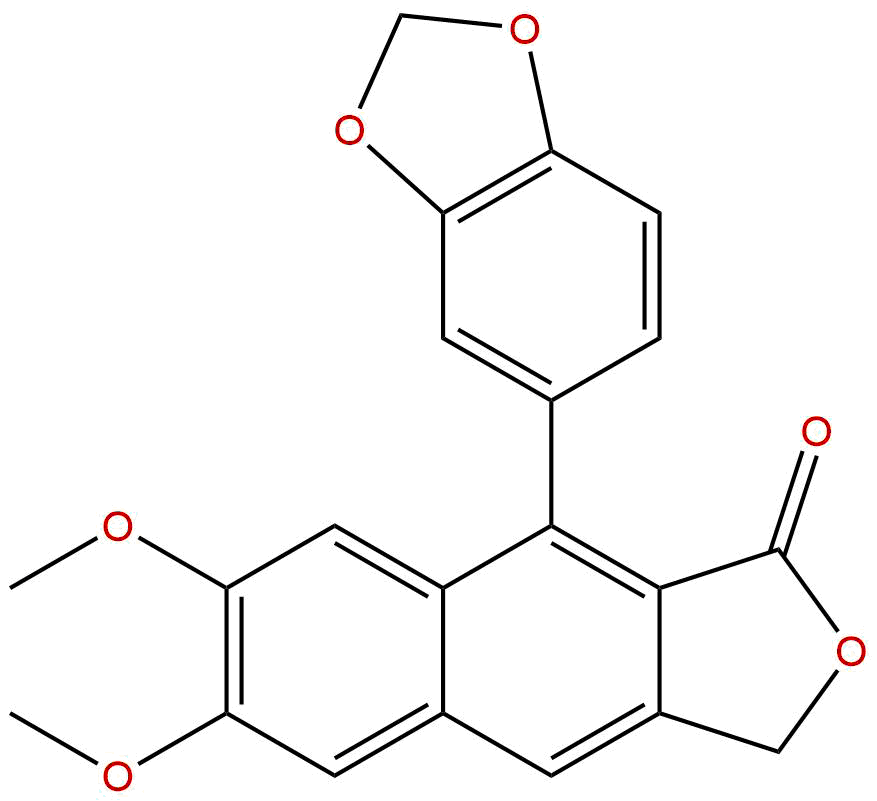
Product name: Justicidin B
Synonym name:
Catalogue No.: BP4817
Cas No.: 17951-19-8
Formula: C21H16O6
Mol Weight: 364.353
Botanical Source:
Type of Compound:
Purity: 95%~99%
Analysis Method: HPLC-DAD or/and HPLC-ELSD
Identification Method: Mass, NMR
Packing: Brown vial or HDPE plastic bottle
Storage: Store in a well closed container, protected from air and light. Put into refrigerate or freeze for long term storage.
Whenever possible, you should prepare and use solutions on the same day. However, if you need to make up stock solutions in advance, we recommend that you store the solution as aliquots in tightly sealed vials at -20℃. Generally, these will be useable for up to two weeks.
The product could be supplied from milligrams to grams
Inquire for bulk scale.
For Reference Standard and R&D, Not for Human Use Directly.
Storage conditions:Short-term storage at 2~8℃, long-term storage at -20 ~ -80℃
63.2200
3.6544
3.6541
.0011
5.2243
31.7889
High
89.3584
2.4905
Yes
No
Yes
No
Yes
Yes
1.8
Yes
No
Yes
Yes
Natural products, as an important source of drug discovery, play an irreplaceable role in the long history of human struggle against diseases. Among them, lignans derived from plants have attracted much attention due to their structural diversity and wide range of biological activities. Justicidin B, as a typical aromatic naphthalide type lignan, has become a research hotspot in the field of natural product pharmacology due to its significant multiple pharmacological activities such as anti-cancer, antiviral, anti-inflammatory, and bone protection since its isolation and identification from plants in the family Justicinaceae.
The discovery of Jue bed ester B can be traced back to the mid-20th century, when scientists studied the traditional medicinal plant Jue bed(Justicia procumbens)In the study of its chemical composition, its structure was isolated and determined for the first time. With the deepening of research, it has been found that this compound is not only present in plants of the Quercus genus, but also widely distributed in other families and genera, suggesting that it may have important ecological functions in the plant kingdom. From a chemical structure perspective, Quercetin B belongs to the class of aromatic naphthalide lignans. Its core skeleton is composed of a naphthalene ring and a gamma lactone ring fused together, with specific substituent groups. This unique structure is the chemical basis for its diverse biological activities.
In recent years, with the rapid development of molecular biology and pharmacology techniques, research on Jue Jia Di Ding B has progressed from initial activity phenotype description to detailed analysis of molecular targets and signaling pathways. Research has shown that Quetiapine B can exert its anti-inflammatory, anti-tumor, and immunomodulatory effects by regulating multiple key signaling pathways, such as STAT3 and NF - κ B. Its significant pro apoptotic activity makes it exhibit strong cytotoxicity in various tumor cell models, while its relatively low toxicity to normal cells provides important guarantees for its potential clinical applications. In addition, Jue bed ester Ding B has shown remarkable potential in antiviral, antifungal, and bone metabolism regulation, especially as a bone resorption inhibitor, providing a new candidate molecule for the treatment of bone related diseases such as osteoporosis.
The purpose of this review is to systematically review and summarize the latest research progress on Quercetin B, covering its chemical structure and physicochemical properties, plant sources and extraction methods, pharmacological activity, mechanism of action, pharmacological evaluation, and clinical application prospects, in order to provide comprehensive and professional references for the in-depth research and development of this natural product.
The chemical structure of Jue bed ester Ding B belongs to the aromatic naphthalide type lignans, and its core skeleton is composed of a naphthalene ring (C ₁₀) fused with a gamma butyrolactone ring (C ₄), and connected to an aromatic group (usually 3,4-methylenedioxyphenyl) at the C-1 position. Specifically, its chemical name is (9R) -9- (1,3-benzodioxolan-5-yl) -4-methoxy-6,7-methylenedioxynaphtho [2,3-c] furan-1 (3H) - one. In this molecule, the C-4 position on the naphthalene ring is connected to a methoxy group (- OCH ∝), while the C-6 and C-7 positions form a methylenedioxy bridge (- OCH ₂ O -). The presence of these substituents not only gives the molecule a specific electron cloud distribution and spatial configuration, but also directly affects its interaction with biological targets.
From the perspective of physical and chemical properties, the molecular formula of Jue bed ester Ding B is C ₂ ₂ H ₁₆ O ₇, with a molecular weight of 364.3530 g/mol. Its lipid water partition coefficient (LogP) is 3.6544, indicating that the compound has moderate to high lipid solubility, which facilitates its penetration of cell membranes and distribution in lipid rich tissues and organs. The topological polar surface area (TPSA) is 63.2200 Å ², which is at a moderate level and suggests that it may have some oral absorption potential, but may also be affected by efflux transporters such as P-glycoprotein (P-gp). The water solubility data (0.0011 mg/mL) shows that the water solubility of Quetzalcoatin B is extremely poor, which is a key obstacle that needs to be overcome in actual drug development and formulation design. It is usually necessary to improve its solubility and bioavailability through structural modification, nano formulations, or cyclodextrin inclusion techniques.
It is worth noting that computer simulations predict that Quetzalcoatin B has a high blood-brain barrier (BBB) penetration ability. This characteristic has potential advantages for treating central nervous system diseases such as brain tumors and neuroinflammation, but it may also increase the risk of central nervous system toxicity. In addition, the predicted result of hERG inhibition is' no ', indicating a low risk of inducing QT interval prolongation and arrhythmia in the heart, which is a positive pharmacological indicator. However, the Ames test predicted a value of 1.8, indicating that the compound may have a certain genetic toxicity risk, which requires special attention in subsequent toxicological evaluations. Overall, Jue bed ester Ding B has typical natural product characteristics: complex structure, diverse activities, but problems such as poor water solubility and potential toxicity also pose challenges for its development.
Jue bed ester Ding B was originally derived from the Jue bed plant of the Jue bed family(Justicia procumbens L. Separated from it. Jue bed, as a traditional Chinese herbal medicine, is widely used in Asia to treat colds, fever, cough, malaria, and various inflammatory diseases. With the deepening of plant chemistry research, it has been found that Quercetin B is not an exclusive component of Quercetin plants. It also exists in plants of other families and genera, such as certain species of Boraginaceae and Lauraceae plants. This cross disciplinary distribution suggests that the compound may be involved in some conservative defense or signaling mechanisms in the plant kingdom.
In plants, the content of quercetin B is usually low and is influenced by various factors such as growth environment, harvest season, and plant parts. Generally speaking, the whole plant or aboveground parts are its main enrichment sites. Traditional extraction methods often use organic solvent soaking or reflux extraction. Due to its strong lipid solubility, commonly used extraction solvents include methanol, ethanol, ethyl acetate, or chloroform. For example, the classic extraction process is to repeatedly extract dried and crushed plant materials with 95% ethanol at room temperature or heating conditions, combine the extracts, concentrate under reduced pressure to obtain a paste, and then sequentially extract and grade them with solvents such as petroleum ether, ethyl acetate, n-butanol, etc. Jue bed ester B is usually enriched in the ethyl acetate extraction site.
The development of modern extraction technology provides a new option for efficient and environmentally friendly acquisition of Jue bed ester Ding B. Ultrasound assisted extraction (UAE) and microwave-assisted extraction (MAE) techniques can significantly shorten extraction time and improve extraction efficiency by disrupting plant cell walls, accelerating solvent permeation and solute diffusion. Supercritical fluid extraction (SFE), especially using carbon dioxide as a solvent, exhibits unique advantages in extracting thermosensitive natural products due to its non-toxic, residue free, and low operating temperature. However, the equipment cost is relatively high.
The crude extract after extraction needs to undergo a series of separation and purification steps to obtain high-purity Jue bed ester Ding B. Traditional column chromatography methods, such as silica gel column chromatography and ODS reverse phase column chromatography, combined with gradient elution, are commonly used separation methods in laboratories. In recent years, high-speed countercurrent chromatography (HSCCC) and preparative high-performance liquid chromatography (pre HPLC) have been widely used in the rapid purification of Dexmedetomidine B due to their high separation efficiency and good reproducibility. Usually, after initial separation by normal phase silica gel column chromatography, combined with reverse phase preparative liquid chromatography, a purity of over 98% of Jue bed ester Ding B monomer can be obtained. It is worth noting that the effective separation of these homologous compounds (such as Jue Jia Di Ding A, C, etc.) is a technical challenge in the purification process, as Jue Jia Di Ding B often coexists with its structurally similar compounds in plants.
The most notable pharmacological activity of Jue bed ester Ding B is its broad-spectrum anti-tumor effect. A large number of in vitro studies have shown that gemcitabine B has significant proliferation inhibition and cytotoxicity effects on a variety of human cancer cell lines, including lung cancer (A549, H1299), breast cancer (MCF-7, MDA MB-231), liver cancer (HepG2), colon cancer (HT-29), prostate cancer (PC-3), and leukemia (HL-60), and its IC ≮ value is usually in the micromolar level. Of particular importance is the relatively low toxicity of Quercetin B to normal cells (such as human peripheral blood monocytes and fibroblasts), demonstrating a certain degree of selectivity, which provides an important safety basis for its use as an anti-tumor candidate drug.
This compound is clearly defined as a potent pro apoptotic agent. The mechanism by which it induces cell apoptosis involves multiple pathways: firstly, it can activate the mitochondrial apoptosis pathway (endogenous pathway), manifested as the loss of mitochondrial membrane potential (Δ PSI m), release of cytochrome c into the cytoplasm, and subsequent cascade activation of caspase-9 and caspase-3. Secondly, Quercetin B can also exert its effects through the death receptor pathway (exogenous pathway), upregulating the expression of Fas and FasL and activating caspase-8. In addition, it can effectively trigger the apoptosis program by inhibiting the expression of anti apoptotic proteins (such as Bcl-2, Bcl xL) and upregulating the levels of pro apoptotic proteins (such as Bax, Bak), breaking the mitochondrial membrane homeostasis.
Inflammation is a common pathological basis for various diseases, including cancer, cardiovascular disease, and autoimmune diseases. Jue bed ester Ding B exhibits strong anti-inflammatory activity. In a macrophage model stimulated by lipopolysaccharides (LPS), etoposide B can significantly inhibit the production of pro-inflammatory cytokines such as tumor necrosis factor - α (TNF - α), interleukin-6 (IL-6), and interleukin-1 β (IL-1 β). Meanwhile, it can also downregulate the expression of inducible nitric oxide synthase (iNOS/NOS2) and cyclooxygenase-2 (COX-2/PTGS2), thereby reducing the release of inflammatory mediators such as nitric oxide (NO) and prostaglandin E ₂ (PGE ₂). These effects are closely related to their inhibition of key inflammatory signaling pathways NF - κ B and STAT3.
Jue bed ester Ding B has a wide antiviral spectrum. Early research reported that it has inhibitory effects on influenza virus, herpes simplex virus (HSV), and other viruses. In recent years, its antiviral activity has also been confirmed in the fight against human immunodeficiency virus (HIV) and hepatitis B virus (HBV). Mechanistic studies have shown that Quercetin B may exert antiviral effects by interfering with key steps in the viral replication cycle, such as reverse transcription, integration, or viral assembly. In addition, the compound also exhibits certain antifungal activity against Candida albicans(Candida albicans)Pathogenic fungi have inhibitory effects, but their antifungal efficacy is usually weaker than their anti-tumor and antiviral activities.
The overactivity of bone resorption is a common feature of bone metabolism diseases such as osteoporosis and rheumatoid arthritis. Jue bed ester Ding B has been found to be an effective bone resorption inhibitor. In vitro, it can inhibit osteoclast differentiation, fusion, and maturation induced by receptor activator of nuclear factor kappa B ligand (RANKL), and suppress the bone resorption function of mature osteoclasts. In an in vivo animal model, Quetiapine B can effectively prevent bone loss induced by ovariectomy (OVX), increase bone density, and improve bone microstructure. This discovery provides new ideas for the development of novel anti osteoporosis drugs.
Platelet aggregation is the core process of thrombosis formation. Jue bed ester Ding B can significantly inhibit platelet aggregation caused by various inducers such as ADP, collagen, and arachidonic acid. The mechanism may be related to inhibiting platelet calcium ion mobilization, reducing the production of thromboxane A ₂ (TXA ₂), and regulating platelet surface receptor activity. This activity suggests that Jue bed ester Ding B has potential application value in the prevention and treatment of cardiovascular and cerebrovascular thrombotic diseases.
A deep understanding of the mechanism of action of Jue bed ester Ding B is the key to its successful conversion into clinical drugs. Based on existing research, its pharmacological activity is mainly achieved by regulating the following core signaling pathways and molecular targets.
STAT3 (Signal Transduction and Transcription Activation Factor 3) is a key transcription factor that is continuously activated in various cancers and inflammatory diseases, promoting cell proliferation, survival, angiogenesis, and immune escape. Jue bed ester Ding B has been proven to be a potent inhibitor of the STAT3 signaling pathway. It can directly or indirectly inhibit the phosphorylation of upstream kinases of STAT3, such as JAK2 and Src, thereby preventing the activation of STAT3. Activated STAT3 needs to form a dimer and translocate into the nucleus in order to initiate transcription of downstream target genes. Jue bed ester Ding B can inhibit the dimerization and nuclear translocation process of STAT3. Ultimately, the expression of downstream target genes of STAT3, including anti apoptotic proteins (Bcl-2, Survivin), cell cycle regulatory protein (Cyclin D1), and pro angiogenic factor (VEGF), was inhibited. By blocking the STAT3 pathway, Jue Jia Di Ding B effectively inhibited the growth of tumor cells and induced their apoptosis.
NF - κ B (nuclear factor kappa B) is another transcription factor that plays a central role in inflammation and cancer. Jue bed ester Ding B can inhibit the activity of I κ B kinase (IKK/IKBKB), prevent the phosphorylation and degradation of I κ B α, thereby locking NF - κ B (p65/RELA) in the cytoplasm and preventing it from entering the nucleus to initiate the transcription of inflammation related genes. Therefore, the expression of NF - κ B target genes such as TNF - α, IL-6, iNOS, COX-2, etc. were downregulated. In addition, Jue bed ester Ding B can directly interact with the p65 subunit, interfering with its binding ability to DNA. This dual inhibitory mechanism on the NF - κ B pathway exhibits strong anti-inflammatory and anti-tumor synergistic effects.
CASP1 (cysteine aspartic protease 1) is a key effector molecule for inflammasome activation, responsible for cleaving pro-IL-1 β and pro-IL-18 into mature active forms. Research has shown that Quetiapine B can inhibit the assembly and activation of NLRP3 inflammasomes, thereby reducing the activation of CASP1 and the secretion of IL-1 β, which may be another important mechanism of its anti-inflammatory activity.
In addition, Jue bed ester Ding B also has a regulatory effect on transient receptor potential (TRP) channel family members TRPV1 and TRPA1. TRPV1 and TRPA1 are key molecules for pain and inflammation perception. Jue bed ester Ding B can antagonize the activity of these channels, thereby exerting analgesic and anti-inflammatory effects. This discovery provides a molecular basis for its application in the treatment of inflammatory pain and neuropathic pain.
PTGS1 (cyclooxygenase-1/COX-1) and PTGS2 (cyclooxygenase-2/COX-2) are key enzymes involved in prostaglandin synthesis. Although the inhibitory activity of Jue bed ester Ding B on PTGS1 is relatively weak, its inhibitory effect on PTGS2 is more significant, consistent with its anti-inflammatory activity. Meanwhile, as mentioned earlier, it can inhibit the expression of NOS2 (iNOS) and reduce the production of NO, an important inflammatory and signaling molecule.
In summary, Jue bed ester Ding B exerts its pharmacological effects through multiple targets and pathways. The core of its functional network lies in the inhibition of two key signaling pathways, STAT3 and NF - κ B, supplemented by the regulation of inflammasomes, TRP channels, and inflammatory enzymes. This multi-target mode of action is not only a manifestation of the "multidirectional pharmacology" characteristics of natural products, but also provides unique advantages for their treatment of complex diseases such as cancer and chronic inflammation.
Despite the encouraging pharmacological activity demonstrated by Jue bed ester Ding B in vitro and in vivo models, its potential as a clinical drug depends on its drug like and pharmacokinetic (PK) properties.
According to Lipinski's "Rule of Five", the molecular weight (364.35<500), LogP (3.65<5), and number of hydrogen bond donors/acceptors of Quetzalcoatin B meet the basic requirements for oral medication. However, its extremely poor water solubility (0.0011 mg/mL) is a significant shortcoming, which may lead to incomplete oral absorption and large individual differences. High blood-brain barrier penetration is a double-edged sword, which is advantageous for treating brain diseases, but it may also lead to central neurotoxicity. HERG inhibition negative is a positive signal that reduces the risk of cardiac toxicity. But a positive Ames test (1.8) suggests that it may have mutagenicity, which requires further genetic toxicity assessment (such as in vivo micronucleus test). Overall, Jue bed ester Ding B has a certain medicinal skeleton, but its water solubility and potential genetic toxicity are key issues that need to be addressed first.
At present, there is insufficient research on the in vivo pharmacokinetics of Quercetin B. The existing limited animal experimental data indicate that the compound has a slower absorption rate and lower absolute bioavailability after oral administration, which may be mainly attributed to its poor water solubility and possible first pass effects. After intravenous administration, its distribution volume is relatively large, indicating widespread tissue distribution, which is consistent with the prediction of high BBB penetration. In terms of metabolism, it is speculated that it mainly undergoes oxidation and demethylation metabolism in the liver through cytochrome P450 enzyme systems (such as CYP3A4), and may undergo glucuronic acid or sulfate binding reactions. The main excretion pathways may be bile and feces. Due to the lack of systematic PK research, key parameters such as half-life and clearance rate remain unclear.
Researchers are exploring various strategies to address the pharmacological defects of Jue bed ester Ding B: 1)Structural modification Improve water solubility through prodrug design (such as introducing phosphate ester and amino acid ester groups); Alternatively, while maintaining the core pharmacophore, hydrophilic groups such as hydroxyl, carboxyl, and amino sugars can be introduced to synthesize a series of analogues in order to obtain candidate compounds with higher activity, lower toxicity, and better PK properties. 2)New formulation technology The use of delivery systems such as liposomes, nanoparticles, polymer micelles, and cyclodextrin inclusion complexes can significantly improve the apparent solubility, stability, and bioavailability of Dexmedetomidine B, and achieve targeted delivery. 3)combination therapy Combination therapy with other chemotherapy drugs or targeted drugs may alleviate toxic side effects by synergistically increasing efficacy and reducing monotherapy dosage.
Based on its rich pharmacological activity, Jue bed ester Ding B has shown broad clinical application prospects in multiple therapeutic fields.
Given its broad-spectrum anti-tumor activity and inhibitory ability on key oncogenic pathways such as STAT3 and NF - κ B, the most promising application area of Jue Jia Di Ding B is in tumor therapy. Especially for those tumors that are resistant to traditional chemotherapy drugs, or refractory tumors driven by the continuous activation of STAT3/NF - κ B (such as triple negative breast cancer, pancreatic cancer, and some types of leukemia), quetiazide B may provide new treatment options. In the future, developing Dexmedetomidine B as a chemotherapy sensitizer in combination with existing chemotherapy drugs such as paclitaxel and cisplatin to overcome drug resistance and improve efficacy is an important research direction.
Its strong anti-inflammatory activity, especially the inhibition of key pro-inflammatory factors such as IL-6 and TNF - α, as well as the regulation of TRPV1/TRPA1 channels, make it promising in the treatment of chronic inflammation and autoimmune diseases such as rheumatoid arthritis, inflammatory bowel disease, psoriasis, etc. In addition, its bone resorption inhibitory effect also lays the foundation for its application in the treatment of bone metabolism diseases such as osteoporosis and periodontitis.
Although its antiviral and antifungal activity is relatively weak, the broad-spectrum antiviral properties (including resistance to HIV and HBV) of Quetiapine B still deserve attention. In the development of antiviral drugs, it is crucial to search for lead compounds with new mechanisms, and the unique lignin skeleton of Jue bed ester Ding B may provide a template for the development of new antiviral drugs.
Despite the bright prospects, the clinical translation of Jue bed ester Ding B still faces severe challenges. The primary issue is its extremely poor water solubility and potential genetic toxicity. Future research should focus on: 1)In depth toxicological research Systematically evaluate its long-term toxicity, reproductive toxicity, immune toxicity, and exact genetic toxicity risks, and clarify its safety window. 2)Comprehensive pharmacokinetic studies Establish sensitive and reliable methods for analyzing biological samples, and elucidate their absorption, distribution, metabolism, and excretion processes in vivo. 3)Efficient structural optimization Through medicinal chemical methods, a series of structurally novel derivatives of Quercetin B were synthesized, and candidate drugs with higher activity, lower toxicity, and better PK properties were screened. 4)Target validation and mechanism deepening Using techniques such as gene knockout, proteomics, and chemical biology, further clarify its direct target and elucidate the molecular network of its multi-target effects. 5)Formulation development Develop formulations suitable for clinical administration routes (such as oral and injection), especially nano formulations, to improve their bioavailability and achieve targeted delivery.
As an aromatic naphthalide type lignan derived from traditional medicinal plants, Jue Jia Di Ding B has become a shining star in the field of natural product pharmacology due to its unique chemical structure and various pharmacological activities, especially its significant anti-tumor, anti-inflammatory, and bone protective effects. From the initial structural identification to the in-depth analysis of molecular targets such as STAT3 and NF - κ B, scientists have gradually uncovered a corner of their mysterious veil. However, the road to the transformation of Jue Jia Di Ding B from laboratory to clinical, from natural products to innovative drugs, is still long and challenging. The problems of poor water solubility and potential genetic toxicity are urgent challenges that need to be overcome. In the future, through interdisciplinary collaborative efforts, combined with the latest methods of medicinal chemistry, pharmacy, pharmacology, and toxicology, systematic structural optimization and formulation development of Gynostembine B are expected to be promoted to clinical practice, providing new powerful weapons for humans to overcome major health threats such as cancer, inflammation, and bone metabolism diseases. The study of Jue bed ester Ding B is not only an exploration of a natural active molecule, but also a vivid practice of the deep integration of traditional medical wisdom and modern pharmaceutical science.
Batch can search by a CAS number,one per line
