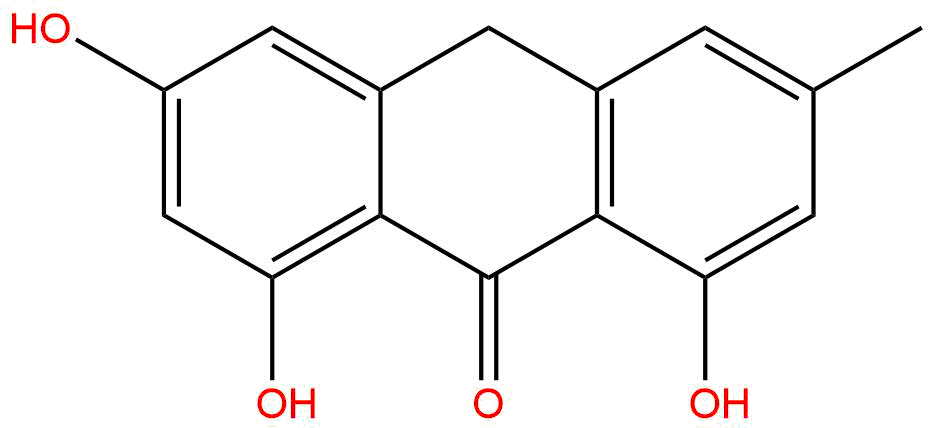


Product name: Emodin anthrone
Synonym name: Emodin-9-anthrone;Frangula emodin anthrone
Catalogue No.: BP4493
Cas No.: 491-60-1
Formula: C15H12O4
Mol Weight: 256.257
Botanical Source:
Type of Compound:
Purity: 95%~99%
Analysis Method: HPLC-DAD or/and HPLC-ELSD
Identification Method: Mass, NMR
Packing: Brown vial or HDPE plastic bottle
Storage: Store in a well closed container, protected from air and light. Put into refrigerate or freeze for long term storage.
Whenever possible, you should prepare and use solutions on the same day. However, if you need to make up stock solutions in advance, we recommend that you store the solution as aliquots in tightly sealed vials at -20℃. Generally, these will be useable for up to two weeks.
The product could be supplied from milligrams to grams
Inquire for bulk scale.
For Reference Standard and R&D, Not for Human Use Directly.
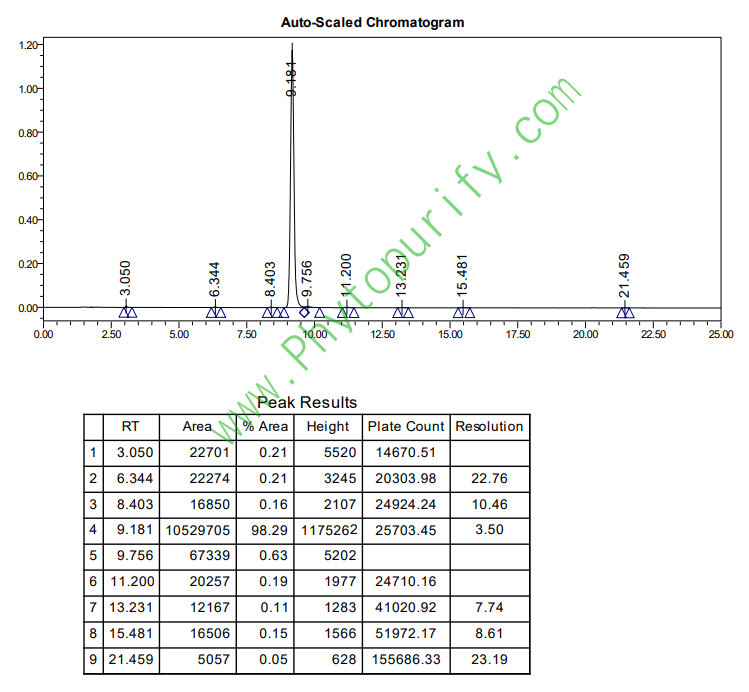
HPLC of Emodin anthrone
Storage conditions:Short-term storage at 2~8℃, long-term storage at -20 ~ -80℃
77.7600
3.2225
2.9805
.1252
5.3891
10.3032
Low
91.7176
2.5679
Yes
No
No
No
Yes
Yes
1.2
Yes
No
Yes
No
As an important treasure trove for drug discovery, natural products continue to provide modern medicine with lead compounds with novel structures and diverse activities. Anthraquinone compounds, as one of the major categories, are widely present in various medicinal plants and have various biological activities such as diarrhea, anti-inflammatory, and anti-tumor. Emodin anthraquinone (also known as Frangula emodin, CAS number: 491-60-1) is a reduced form of the anthraquinone compound Emodin and belongs to the anthraquinone derivative. For a long time, plants containing emodin anthrone (such as rat chestnut bark) have been used as laxatives in traditional medicine. With the deepening of modern pharmacological research, the biological activity spectrum of emodin anthrone has far exceeded traditional laxative effects, demonstrating potential in anti-inflammatory, anti-tumor, antiviral, and metabolic regulation. Especially in the context of the global novel coronavirus pneumonia (COVID-19) epidemic, it has been identified as an active compound that can block the interaction between SARS CoV-2 spike protein and host cell receptor ACE2, causing widespread concern. This article aims to systematically review the chemical properties, plant sources, pharmacological activities, molecular mechanisms of action, pharmacological evaluation, and clinical application prospects of emodin anthrone, in order to provide comprehensive scientific references for the in-depth research and development of this compound.
The chemical name of emodin anthrone is 1,3,8-trihydroxy-6-methyl-9,10-dihydroanthracene-9-one, with a molecular formula of C15H12O4 and a molecular weight of 256.2570. The core of its structure is the anthrone skeleton, where a central quinone structure is reduced to a ketone group, connecting two benzene rings (A ring and C ring). There are two hydroxyl groups at positions 1 and 3 on the A ring, and one hydroxyl group at position 8 and one methyl group at position 6 on the C ring. This substitution mode of trihydroxymethyl is the key pharmacophore basis for its various biological activities.
In terms of physicochemical properties, the lipid water partition coefficient (LogP) of emodin anthrone is 3.2225, indicating that it has a certain lipophilicity, but not highly hydrophobic. Its topological polar surface area (TPSA) is 77.7600 Å ², reflecting the polarity brought by multiple hydroxyl groups in the molecule. The water solubility value is 0.1252 mg/mL, which belongs to the category of slightly soluble to poorly soluble, posing a challenge for its formulation development. This compound usually appears as yellow to orange yellow crystals or powder. In the air, anthrone has an unstable structure and is easily oxidized to its corresponding anthraquinone form - emodin. This characteristic needs to be considered in extraction, storage, and in vivo metabolism processes.
Emodin anthraquinone is not widely present in its free form. It mainly serves as a precursor or metabolic intermediate for anthraquinone glycosides and is found in various Polygonaceae, Rhamnaceae, and Fabaceae plants. Common rich plants include:
1. Rheum officinale and Rheum palmatum for medicinal purposes Its rhizome is the main source of the traditional laxative "rhubarb", containing bound emodin anthrone glycosides (such as sennosides), which are hydrolyzed into active aglycones under the action of gut microbiota.
2. Frangula alnus Its bark (rat chestnut bark) is a traditional European laxative and also contains a large amount of anthraquinone glycosides. Its name "Frangula emodin" comes from this.
3. Cassia obtusifolia or Cassia tora Seeds also contain such components.
The extraction method usually follows the conventional process of natural product chemistry. Firstly, the plant materials are dried and crushed, and then subjected to heating reflux or ultrasound assisted extraction using organic solvents such as methanol, ethanol, or alcohol water mixtures in different proportions. After the crude extract is concentrated under reduced pressure, the acidic or amphoteric properties of anthraquinone components are utilized for preliminary separation using pH gradient extraction method: usually, free anthraquinone/anthraquinone is extracted with organic solvents (such as ether, chloroform) first, and then alkaline aqueous solutions (such as sodium bicarbonate, sodium carbonate, sodium hydroxide solution) are used for graded extraction of different acidic components. Rhubarb anthrone has weak acidity due to its phenolic hydroxyl group, and can dissolve as a salt in low concentration alkaline solutions. Further purification depends on column chromatography technology, such as silica gel column chromatography, Sephadex LH-20 column chromatography, etc., eluting with solvent systems with increasing polarity (such as petroleum ether ethyl acetate, chloroform methanol). High performance liquid chromatography (HPLC) and preparative thin layer chromatography (PTLC) are the key final steps for obtaining high-purity monomeric compounds. During the entire extraction and purification process, attention should be paid to avoiding light, low temperature, and inert gas protection to prevent the oxidation of anthrone.
Numerous in vitro and in vivo studies have revealed the extensive and complex pharmacological activities of emodin anthrone.
Diarrhea effect This is its most classic and extensively studied activity. Emodin anthraquinone and its glycosides exert a laxative effect by stimulating colonic peristalsis, inhibiting net absorption of intestinal water and electrolytes, and promoting intestinal secretion. Its effect is mild, but long-term use may lead to electrolyte imbalance and colon melanosis.
Anti inflammatory and immune regulatory effects Rhubarb anthraquinone has shown significant anti-inflammatory effects in various inflammatory models. It can inhibit the excessive production of nitric oxide (NO), prostaglandin E2 (PGE2), tumor necrosis factor - α (TNF - α), interleukin-6 (IL-6) and other pro-inflammatory factors in macrophages induced by lipopolysaccharide (LPS). Its anti-inflammatory mechanism is closely related to the inhibition of key inflammatory signaling pathways such as nuclear factor kappa B (NF - κ B) and mitogen activated protein kinase (MAPK).
Antitumor activity Research shows that rhubarb anthrone can inhibit the proliferation and induce apoptosis of many cancer cell lines (such as liver cancer, breast cancer, lung cancer, colon cancer, leukemia, etc.). Its anti-cancer mechanisms are diverse, including inducing cell cycle arrest (such as G2/M phase), activating caspase cascade reactions, regulating Bcl-2 family protein balance, inducing mitochondrial dysfunction, producing reactive oxygen species (ROS), and inhibiting tumor cell invasion and metastasis.
Antiviral activity One of the most notable discoveries in recent years is its potential to resist SARS-CoV-2 virus. Research has confirmed that emodin anthraquinone can effectively block the binding of viral spike protein (S protein) to angiotensin converting enzyme 2 (ACE2) receptors on the surface of human cells, thereby exerting inhibitory effects in the initial stage of viral invasion. In addition, it also exhibits certain inhibitory activity against other viruses such as Coxsackievirus and influenza virus.
Metabolic regulation effect In metabolic disease research, emodin anthrone has been identified as an effective selective inhibitor of 11 β - hydroxysteroid dehydrogenase type 1 (11 β - HSD1). 11 β - HSD1 converts inactive cortisone into active cortisol in liver and adipose tissue, locally amplifying glucocorticoid effects and associated with insulin resistance, obesity, and metabolic syndrome. The half maximal inhibitory concentrations (IC50) of emodin anthraquinone on human and mouse 11 β - HSD1 were 186 nM and 86 nM, respectively, demonstrating good inhibitory efficacy. In a diet induced obese mouse model, it can improve glucose tolerance, reduce fasting blood glucose, alleviate fatty liver and insulin resistance.
Kinase inhibitory activity Rhubarb anthrone has also been reported as an inhibitor of casein kinase 2 (CK2). CK2 is a widely expressed and multifunctional serine/threonine protein kinase that plays a central role in cell survival, proliferation, and stress response. Its overactivity is associated with various cancers and inflammatory diseases. Inhibition of CK2 may contribute to its anti-inflammatory and anticancer effects.
The multiple pharmacological activities of emodin anthrone stem from its interactions with multiple molecular targets, forming a complex network.
Targets related to diarrhea Its laxative effect involves complex regulation of intestinal ion channels and transporters.
Key enzymes and signaling pathway targets:
Other potential targets This also includes proteins related to cell cycle regulation (such as Cyclin B1/CDK1), apoptosis execution (Caspases, Bcl-2 family), and oxidative stress (Nrf2/ARE pathway). Its multi-target characteristics are not only the basis for its comprehensive therapeutic effect, but also may bring complex effects and potential side effects.
Based on the provided parameters and existing research, a preliminary evaluation of the pharmacological properties of emodin anthrone is conducted
Preliminary analysis of drug properties The molecular weight of 256 Da conforms to Lipinski's "five rules", with a LogP value of approximately 3.2 in the ideal range (1-5) and a moderate TPSA value of 77.8 Å ². These parameters suggest that it has good oral absorption potential. However, poor water solubility (0.1252 mg/mL) is its main drawback, which may affect its bioavailability and needs to be improved through formulation techniques such as salt formation, solid dispersion, nanocrystals, cyclodextrin inclusion, etc.
Preliminary Safety Assessment:
Pharmacokinetic characteristics Existing literature indicates that the pharmacokinetic behavior of emodin anthraquinone and its related anthraquinone compounds is complex.
The multi-target and multi activity properties of emodin anthrone provide possibilities for its application in multiple therapeutic fields, but also come with challenges.
Potential clinical application directions:
Challenges and Prospects Faced:
Future research should focus on: ① designing and synthesizing derivatives with greater selectivity and drug properties; ② Utilizing new technologies such as nano delivery systems to enhance targeting and bioavailability; ③ Conduct rigorous randomized controlled clinical trials, especially in the exploration of metabolic diseases and antiviral fields; ④ Conduct in-depth research on its interactions and synergistic effects when used in combination with other drugs.
Rhubarb anthrone, a natural anthrone compound derived from traditional laxatives, has demonstrated rich pharmacological activities and complex molecular mechanisms of action far beyond its traditional uses under the revelation of modern scientific research. From inhibiting 11 β - HSD1 to improving metabolism, blocking viral invasion, and regulating kinase and inflammatory pathways, its multi-target action characteristics reflect the unique advantages of natural products in intervening in complex disease networks. Despite facing challenges such as solubility, selectivity, and potential side effects in drug development, its clear activity, relatively clear targets, and preliminary good safety implications (such as low hERG inhibition risk) make it a highly valuable lead compound for development. Through rational drug chemical modification, pharmaceutical innovation, and systematic clinical development, emodin anthrone and its optimized derivatives are expected to provide new drug options for the treatment of metabolic diseases, viral infections, inflammation, and even tumors in the future, becoming another successful example connecting traditional medical wisdom with modern drug development.
