Introduction/Overview
Natural products, as an important source of drug discovery, play an irreplaceable role in the history of human disease treatment. Schisandra chinensis(Schisandra chinensis)As a traditional Chinese medicine, it has the effects of nourishing qi, generating fluids, tonifying the kidneys, and calming the heart, and its pharmacological active substance basis has attracted much attention. Among them, Schisandra chinensis lignans are its main active ingredient group, exhibiting a wide range of biological activities. Gomisin E is a biphenyl cyclooctadiene lignan with significant biological activity isolated from the fruit of Schisandra chinensis. Since its structure was elucidated, Gomisine E has become one of the hot molecules in natural product pharmacology research due to its unique chemical skeleton and diverse pharmacological effects, especially its clear anti-inflammatory activity. Modern pharmacological studies have shown that Gomixin E can regulate the expression of various inflammatory mediators and cytokines by intervening in key signaling pathways such as nuclear factor NFAT, thus demonstrating potential therapeutic value in various inflammation related disease models. This article aims to provide a systematic review of the chemical structure, plant origin, pharmacological activity, mechanism of action, pharmacological evaluation, and clinical application prospects of Gomixin E, in order to provide comprehensive scientific references for the in-depth research and development of this compound.
Chemical structure and physicochemical properties
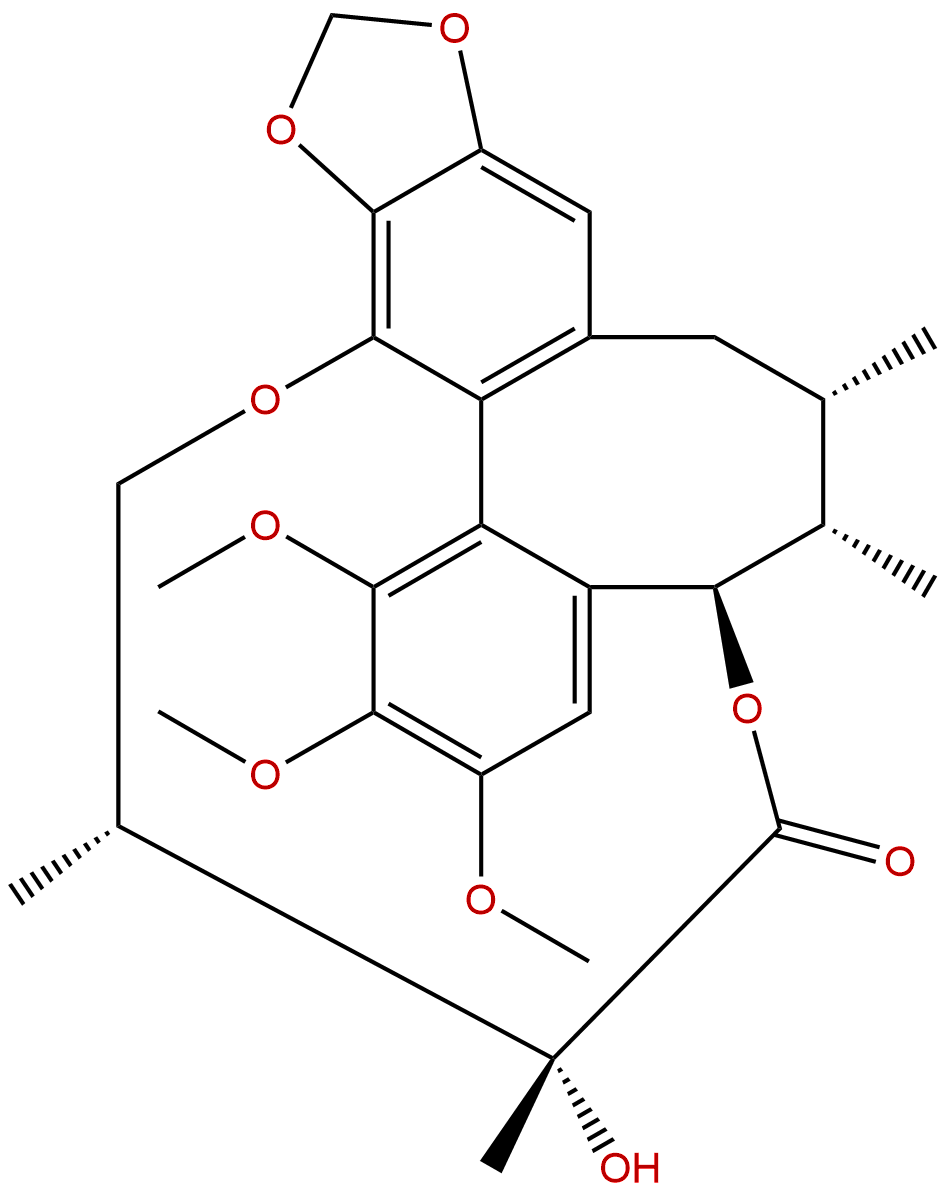
The chemical name of Gomisin E is (6S, 7R) -6,7-dimethyl-1,2,3,12-tetramethoxy-6,7,8,9-tetrahydro-5H-dibenzo [a, c] cyclooctene-10,11-diol, and its CAS number is 72960-21-5. Structurally, Gomisine E belongs to the typical biphenyl cyclooctadiene lignans, with its core skeleton consisting of two benzene rings (A and C) connected by an eight membered oxygen-containing heterocyclic ring (B ring). This structure has multiple chiral centers and complex stereochemistry, with an absolute configuration of (6S, 7R). The molecule contains four methoxy groups (- OCH3) and two phenolic hydroxyl groups (- OH), and these polar functional groups have a significant impact on its physicochemical properties and biological activity.
Its molecular weight is 514.5710 g/mol. The calculated lipid water partition coefficient (LogP) is 3.2202, indicating that Gomisine E has a certain lipophilicity, which is consistent with the presence of multiple methoxy groups and larger aromatic systems in its structure. The topological polar surface area (TPSA) is 101.91 Å ², reflecting the polarity characteristics brought by multiple oxygen atoms in the molecule. The predicted water solubility value is relatively low, about 0.0080 mg/mL, indicating poor solubility of Gomixin E in water, which may pose challenges in formulation development. It is worth noting that based on its physical and chemical properties, it is predicted that Gomisin E has a high blood-brain barrier permeability, which provides the possibility for its potential therapeutic application in central nervous system related diseases. In addition, preliminary pharmacological risk assessment showed that Gomixin E did not significantly inhibit hERG potassium channels (predicted as "no"), and the Ames test predicted a result of 0.0, suggesting that it may not have mutagenicity and significant cardiotoxicity risks, providing preliminary positive signals for its safety evaluation.
Plant sources and extraction methods
Gomisin E is mainly derived from the traditional Chinese medicine Schisandra chinensis(Schisandra chinensis Dry and ripe fruit of (Turcz.) Baill. Schisandra plants have multiple distributions worldwide, but Schisandra chinensis It is one of the most extensively studied and widely used species, and its fruit is rich in various lignans, among which Gomisin E is one of the important active ingredients. In addition, in plants of the same genus such as Schisandra chinensis(S. sphenanthera)It may also contain this ingredient, but there may be differences in its content and proportion.
The extraction and separation of Gomisine E from Schisandra chinensis fruits usually follow the conventional process of natural product chemistry. Firstly, organic solvents such as methanol, ethanol, or acetone are used for reflux extraction or ultrasound assisted extraction of dried and crushed Schisandra chinensis fruits to obtain crude total lignin extract. Subsequently, the crude extract was preliminarily separated using solvent partitioning method (such as extraction with petroleum ether, ethyl acetate, and n-butanol in sequence), and Gomisine E was mostly enriched in the ethyl acetate fraction. Further purification relies on various chromatographic techniques. Silica gel column chromatography is commonly used for preliminary separation, with different ratios of petroleum ether ethyl acetate or chloroform methanol gradient elution. After obtaining the flow containing Gomicin E, it is often refined by combining reverse phase silica gel column chromatography (such as ODS, eluted with methanol water system), preparative high performance liquid chromatography (HPLC) or gel chromatography (such as Sephadex LH-20), and finally obtain high-purity Gomicin E monomer compound. Modern extraction techniques such as supercritical CO2 extraction have also been applied, with the advantages of high efficiency and low solvent residue, but relatively high cost. The extraction and separation process needs to be monitored by thin layer chromatography (TLC) or high-performance liquid chromatography to ensure the tracking and purity of the target compound.
Pharmacological activity research
A large number of in vitro and in vivo pharmacological studies have shown that Gomixin E has various biological activities, among which anti-inflammatory activity is the most prominent and widely studied.
1. Anti inflammatory activity:
Gomisin E exhibits strong anti-inflammatory effects in various inflammatory models. In the lipopolysaccharide (LPS) - induced macrophage (such as RAW 264.7 cells) inflammation model, gomisin E can dose dependently inhibit the production of nitric oxide (NO), prostaglandin E2 (PGE2), and key inflammatory cytokines such as tumor necrosis factor - α (TNF - α) and interleukin-6 (IL-6). In animal models, acute inflammation models such as xylene induced ear swelling in mice and carrageenan induced paw swelling in rats, as well as chronic inflammation models such as arthritis induced by Freund's complete adjuvant, have significant improvement effects, reducing tissue edema, inflammatory cell infiltration, and joint damage.
2. Antioxidant and neuroprotective activities:
Due to its phenolic hydroxyl structure, Gomixin E has a certain ability to scavenge free radicals. Research has shown that it can alleviate oxidative stress-induced cell damage. In neuronal cell lines or primary neuron cultures, Gomisine E has a protective effect against glutamate excitotoxicity, β - amyloid protein induced cell apoptosis, etc., suggesting its potential neuroprotective value, which may be applicable for interventions in neurodegenerative diseases such as Alzheimer's disease and Parkinson's disease.
3. Liver protective activity:
Schisandra chinensis lignans are renowned for their hepatoprotective effects. Gomesin E, as one of its members, has shown a role in reducing serum transaminase levels and alleviating liver tissue pathological damage in animal models of acute liver injury induced by chemicals such as carbon tetrachloride and acetaminophen. Its hepatoprotective mechanism may be related to anti-inflammatory, antioxidant, and regulation of liver metabolic enzyme activity.
4. Other activities:
Some studies also suggest that Gomixin E may have potential activities such as anti-tumor and antiviral effects, but there is relatively little research in these areas and further exploration is needed.
Mechanism of action and molecular targets
The pharmacological effects of GOMIXIN E, especially its core anti-inflammatory effect, are achieved by acting on multiple molecular targets and signaling pathway networks. Its known IC50 value is 4.73 μ M, which inhibits NFAT transcriptional activity, revealing a key starting point of its action.
1. Inhibition of NFAT signaling pathway:
The activated T-cell nuclear factor (NFAT) family is a key transcription factor that regulates immune and inflammatory responses. Gomisin E can inhibit the transcriptional activity of NFAT at lower micromolar concentrations (IC50=4.73 μ M). The activation of NFAT depends on the dephosphorylation of calcineurin. Gomisin E may inhibit NFAT entry into the nucleus by interfering with calcium signaling or directly acting on upstream components of the pathway, thereby downregulating the expression of a series of pro-inflammatory genes. This is one of the core mechanisms by which it exerts immunomodulatory and anti-inflammatory effects.
2. Regulating the NF - κ B signaling pathway:
Nuclear factor kappa B (NF - κ B) is the central regulator of inflammatory response. Research has shown that Gomixin E can inhibit LPS induced NF - κ B activation. Its mechanism of action may include: inhibiting the activity of I κ B kinase (IKK, especially IKBKB), preventing the phosphorylation and degradation of I κ B α; Reduce nuclear translocation of key subunits of NF - κ B (such as RELA/p65); And reduce the binding ability of NF - κ B to DNA. By inhibiting the NF - κ B pathway, GOMIXIN E can effectively reduce the expression of downstream effector molecules such as TNF - α, IL-6, inducible nitric oxide synthase (NOS2), and cyclooxygenase-2 (COX-2/PTGS2).
3. Regulating the STAT3 signaling pathway:
Signal transducer and activator of transcription factor 3 (STAT3) is an important mediator of cytokine (such as IL-6) signaling, involved in chronic inflammation and autoimmune diseases. Gomesin E has been shown to inhibit IL-6-induced STAT3 phosphorylation (activation) and nuclear translocation, thereby blocking the transmission of the JAK-STAT3 signaling pathway, which helps to suppress persistent inflammatory responses and certain pathological processes.
4. Affects other inflammation related targets:
- Inflammatory bodies and CASP1: Gomisin E may reduce the activation of caspase-1 (CASP1) and decrease the release of mature cytokines such as IL-1 β and IL-18 by inhibiting the assembly or activation of NLRP3 inflammasomes.
- Pain related ion channels: Research suggests that Gomixin E may have a regulatory effect on transient receptor potential vanillic acid subtype 1 (TRPV1) and ANKTM1 (TRPA1) channels, which is related to its analgesic effect observed in inflammatory pain models.
- Cyclooxygenase-1 (PTGS1/COX-1): As a constitutive enzyme, COX-1 is also involved in maintaining inflammation. The effect of Gomixin E on its activity may contribute to its comprehensive anti-inflammatory effect.
In summary, Gomisin E exerts anti-inflammatory effects through multi-target and multi pathway pathways, and its action network covers multiple levels from cell membrane receptor signaling, intracellular kinase cascade reactions to nuclear transcription factor activation, reflecting the multi efficiency of natural products.
Evaluation of drug properties and pharmacokinetics
Although Gomixin E exhibits excellent pharmacological activity, its potential as a drug still requires systematic pharmacological evaluation.
Pharmacokinetic characteristics:
At present, research on the pharmacokinetics of the Gomixin E system is relatively limited. Based on its physicochemical properties (moderate LogP value, high TPSA), it can be inferred that its oral absorption may be limited by low water solubility, and its bioavailability may be moderate or low. Its high predictive value for blood-brain barrier permeability has been indirectly supported by some in vitro and in vivo experiments, indicating its potential to act on the central nervous system. In terms of metabolism in the body, lignans typically undergo extensive phase I (such as oxidation, demethylation) and phase II (such as glucuronidation, sulfation) metabolism. The methoxy and phenolic hydroxyl groups in the structure of Gomisin E are the main metabolic sites. Preliminary research suggests that it may be mainly metabolized through the liver, with metabolites excreted through bile and urine. Further research is needed to clarify the clear metabolic profile, major metabolic enzymes (such as CYP450 isoenzymes), and the activity of metabolites.
Challenges and optimization directions for drug development:
1. Solubility and permeability: Low water solubility is the primary challenge in the development of oral formulations of Gomixin E. Formulation strategies can be used for improvement, such as making nanocrystals, solid dispersions, liposomes, cyclodextrin inclusion complexes, or self microemulsion delivery systems, to enhance their dissolution and bioavailability.
2. Metabolic stability: The metabolic stability needs to be evaluated through in vitro liver microsomal models and other methods. If strong first pass effects or rapid metabolism are found, structural modifications can be considered, such as designing prodrugs for easily metabolized phenolic hydroxyl groups to improve their metabolic stability and oral exposure.
3. Security: Although preliminary predictions indicate no risk of hERG inhibition and mutagenicity, a complete preclinical safety evaluation is still needed, including acute toxicity, chronic toxicity, reproductive toxicity, etc., to confirm its safety window.
4. Target selectivity and off target effects: As a multi-target molecule, it is necessary to identify the core target group that exerts therapeutic effects and evaluate the potential adverse reactions caused by off target effects.
Clinical application prospects and prospects
The multi-target anti-inflammatory properties of Gomixin E have demonstrated broad application prospects in the treatment of various inflammation related diseases.
Potential indications:
1. Autoimmune and inflammatory diseases: Such as rheumatoid arthritis, inflammatory bowel disease (Crohn's disease, ulcerative colitis), psoriasis, etc. Its inhibitory effect on the NFAT, NF - κ B, and STAT3 pathways precisely targets the overactivated immune inflammatory core mechanisms in these diseases.
2. Neuroinflammatory related diseases: Given its excellent blood-brain barrier permeability potential, Gomesin E can be used to treat Alzheimer's disease, Parkinson's disease, multiple sclerosis, cerebral ischemia-reperfusion injury, and neuropathic pain. By inhibiting the inflammatory response of the central nervous system, it may slow down neuronal degeneration, improve cognitive function, and alleviate pain.
3. Acute tissue injury: Such as acute liver injury, acute lung injury, myocardial ischemia-reperfusion injury, etc., their anti-inflammatory and antioxidant effects help alleviate tissue damage and promote repair.
4. Pain management: By regulating pain related ion channels such as TRPV1/TRPA1 and inhibiting inflammatory mediators, it may be developed as a novel analgesic drug, especially for inflammatory pain.
Future research directions and challenges:
1. In depth mechanism research: Using chemical biology methods such as probe molecules and proteomics to more accurately identify their direct targets and draw clearer signal network diagrams.
2. Structural optimization and derivative development: On the basis of retaining core pharmacological activity, through rational drug chemistry design, improve its water solubility, metabolic stability, and target selectivity, and obtain candidate compounds with better drug properties.
3. Preclinical development and translation: Conduct standardized pharmacodynamic, pharmacokinetic, and toxicological systematic evaluations to provide solid data for its application for clinical research.
4. Exploration of compound application: As an active ingredient discovered from traditional Chinese medicine, exploring the combination application of GOMIXIN E with other active ingredients (such as other lignans in Schisandra chinensis) or existing drugs may produce synergistic effects and reduce toxic side effects, which is in line with the holistic concept of traditional Chinese medicine.
Conclusion
Gomisin E, as a representative active lignan in Schisandra chinensis, has attracted sustained attention from the pharmacological community due to its unique chemical structure and clear multi-target anti-inflammatory mechanism. Starting from the key point of inhibiting NFAT transcription, its pharmacological action network widely covers multiple core inflammatory signaling pathways such as NF - κ B and STAT3, and has shown potential therapeutic value in various disease models. Despite challenges such as water solubility in drug development, these obstacles are expected to be overcome through the intervention of modern medicinal chemistry and formulation techniques. In the future, with a more refined analysis of its mechanism of action, rational design of its derivatives, and the advancement of systematic preclinical research, GOMIXIN E is expected to develop from an excellent natural product lead compound into a new drug candidate for the treatment of major health problems such as inflammation, autoimmune and neurodegenerative diseases, fully demonstrating the enormous potential of exploring the value of modern drugs from the treasure trove of traditional Chinese medicine.