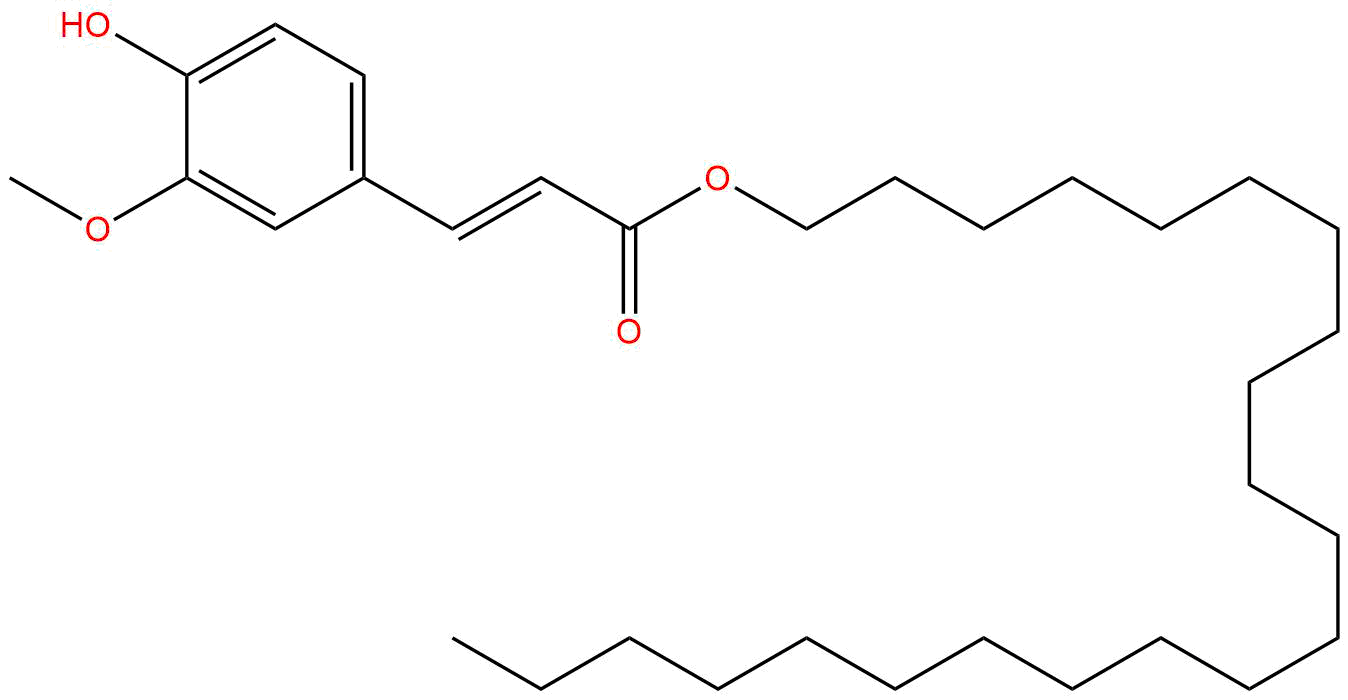
Product name: Docosyl ferulate
Synonym name: Docosyl trans-ferulate;E-Ferulic acid docosyl ester
Catalogue No.: BP4808
Cas No.: 101927-24-6
Formula: C32H54O4
Mol Weight: 502.78
Botanical Source:
Type of Compound:
Purity: 95%~99%
Analysis Method: HPLC-DAD or/and HPLC-ELSD
Identification Method: Mass, NMR
Packing: Brown vial or HDPE plastic bottle
Storage: Store in a well closed container, protected from air and light. Put into refrigerate or freeze for long term storage.
Whenever possible, you should prepare and use solutions on the same day. However, if you need to make up stock solutions in advance, we recommend that you store the solution as aliquots in tightly sealed vials at -20℃. Generally, these will be useable for up to two weeks.
The product could be supplied from milligrams to grams
Inquire for bulk scale.
Docosyl ferulate is a natural product found in Reissantia buchananii, Teucrium divaricatum, and other organisms with data available.
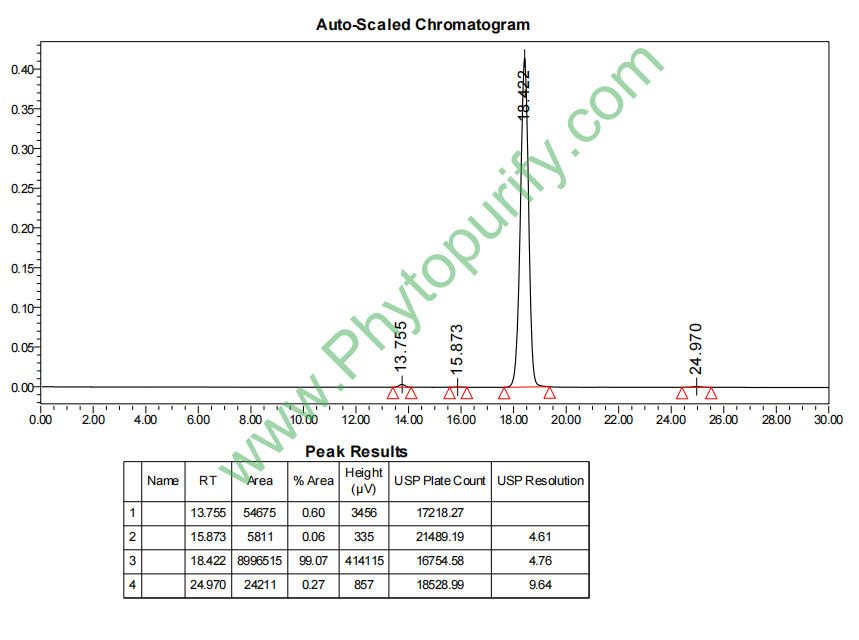
HPLC of Docosyl ferulate
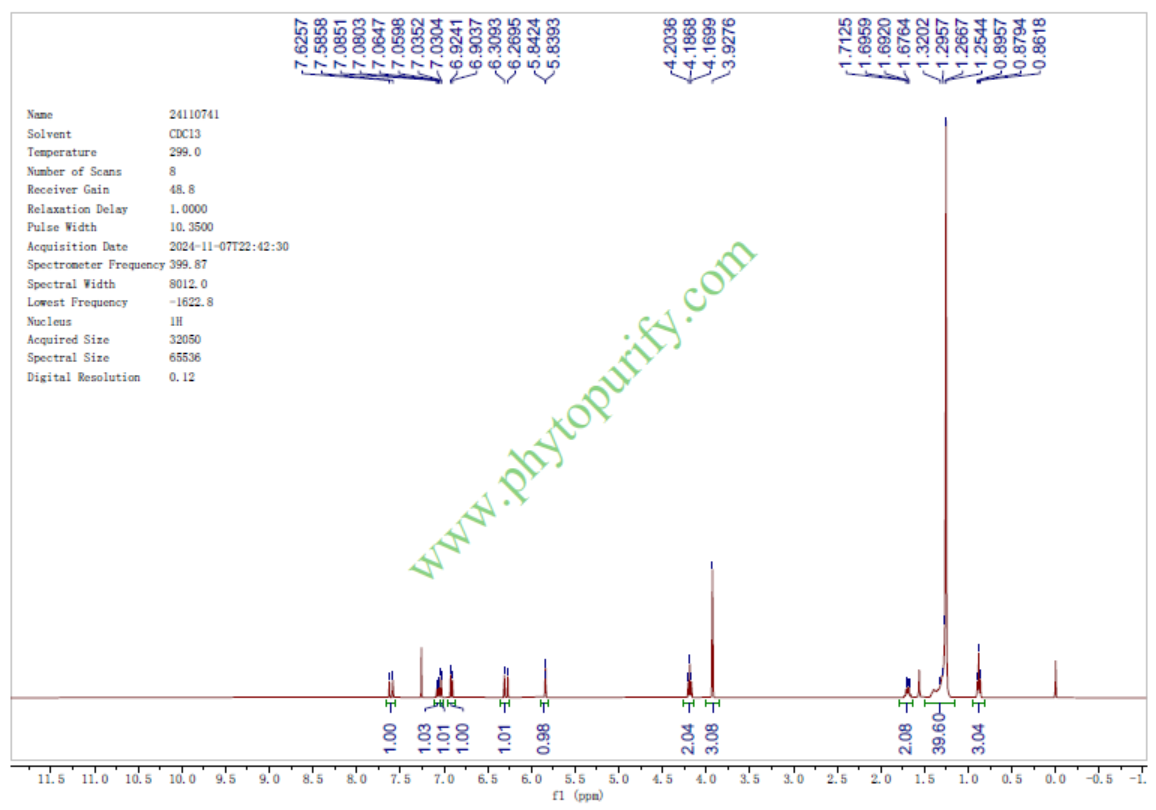
HNMR of Docosyl ferulate
Storage conditions:Short-term storage at 2~8℃, long-term storage at -20 ~ -80℃
55.7600
10.8448
10.8420
.0004
3.2861
4.3745
High
96.1427
2.3562
Yes
No
Yes
No
No
No
0.0
No
No
No
No
Natural products, as an important source of lead compounds for drugs, play an irreplaceable role in the long history of human struggle against diseases. Among them, phenolic acid compounds have attracted much attention due to their widespread biological activity. Ferulic acid, as a hydroxycinnamic acid derivative widely present in plant cell walls, has become one of the hotspots in natural product chemistry and pharmacology research due to its excellent antioxidant, anti-inflammatory, anti fibrotic, and neuroprotective activities. However, ferulic acid itself has high polarity and poor lipid solubility, which limits its membrane permeability and bioavailability. To improve this characteristic, nature combines long-chain fatty alcohols with ferulic acid through esterification modification, forming a series of ferulic acid alkyl esters. Docosyl ferulate, also known as docosyl trans ferulate, is one of the representative long-chain ester derivatives.
The molecular formula of docosanyl ferulate (CAS number: 101927-24-6) is C ∝₂ H ₅₄ O ₄, with a molecular weight of 502.78. Its structure is composed of a ferulic acid core connected by ester bonds to a saturated straight chain fatty alcohol (docosanol, also known as erythritol) with twenty-two carbons. This unique "polar head non-polar tail" amphiphilic structure endows the molecule with physicochemical properties and biological behavior that are distinct from the parent ferulic acid. In nature, this compound mainly exists in the wax layer or fat soluble extracts of certain plants, such as rice bran wax, sugarcane wax, and the rhizomes of certain medicinal plants. For a long time, it has been regarded as a minor ingredient, but with the advancement of separation techniques and activity screening methods, its unique pharmacological value is gradually being revealed.
From the perspective of metabolite action, docosanyl ferulate can be considered as a storage and transport form of ferulic acid in plants, or an adaptive product of plants in response to external oxidative stress. Its long-chain alkyl group not only enhances the lipophilicity of the molecule, making it easier to embed into biofilms or bind with lipoproteins, but may also produce unique pharmacological effects different from ferulic acid by affecting the interaction mode between the molecule and the target. Current research shows that this compound exhibits significant potential in antioxidant activity, inhibition of tyrosinase (TYR) activity, regulation of matrix metalloproteinases (MMPs) expression, and activation of nuclear factor E2 related factor 2 (NRF2) signaling pathway, indicating its potential application value in skin whitening, anti-aging, anti-inflammatory, and prevention and treatment of neurodegenerative diseases. This article aims to systematically review the chemical structure, plant origin, pharmacological activity, mechanism of action, and medicinal characteristics of docosanyl ferulate, in order to provide comprehensive scientific basis for the further development and utilization of this natural product.
The chemical structure of docosanyl ferulate can be broken down into two core parts: the ferulic acid group and the docosanyl group. The ferulic acid (4-hydroxy-3-methoxycinnamic acid) moiety provides a phenolic hydroxyl group, a methoxy group, and a trans configuration of alpha, beta unsaturated carboxylic acid ester structure. The phenolic hydroxyl group is the main hydrogen donating group for its antioxidant activity, while the conjugated double bond system endows it with the ability to absorb ultraviolet radiation and stabilize free radicals. Docosanyl (- C ₂₂ H ₄₅) is a saturated straight chain fatty hydrocarbon chain derived from docosanol (menthol). The long chain is connected to the carboxyl group of ferulic acid through ester bonds, forming a complete ester molecule.
This structural modification brings significant changes in physicochemical properties. Firstly, the molecular weight of ferulic acid increased from 194.18 to 502.78, mainly due to the introduction of long-chain alkyl groups. Secondly, the lipid solubility was significantly enhanced, and the calculated lipid water partition coefficient (LogP) was as high as 10.8448, indicating that the compound has strong lipophilicity and is almost insoluble in water (with a water solubility of only 0.0004 mg/mL). This high lipophilicity makes it highly soluble in organic solvents such as chloroform, ether, ethyl acetate, and n-hexane, while in the aqueous phase it tends to aggregate or bind to lipid membranes. The polar surface area (TPSA) is 55.76 Å ², mainly derived from ester bonds and phenolic hydroxyl groups, indicating that it still has certain hydrogen bond donor and acceptor abilities, but the overall polarity is relatively low.
It is worth noting that its blood-brain barrier (BBB) penetration ability has been evaluated as "high". This characteristic is crucial for drug development in central nervous system diseases. Usually, molecules with LogP between 2-5 are more likely to penetrate the BBB, while the LogP of docosanyl ferulate is much higher than this range. Its high BBB penetration may not solely rely on passive diffusion, but may be related to specific transport proteins (such as lipoprotein receptor-mediated endocytosis) or its binding form with lipoproteins in the blood. In addition, the hERG inhibition risk assessment was negative, and the Ames test result was 0.0, indicating that the compound exhibited low mutagenicity and cardiotoxicity risks in preliminary toxicology screening, providing a good safety basis for its subsequent development. However, its extremely low water solubility and high LogP also pose serious challenges in formulation studies. How to improve its bioavailability through technologies such as nanoemulsions, liposomes, cyclodextrin inclusion complexes, or solid dispersions is a key issue that needs to be addressed in future research.
Docosanyl ferulate is not a widely distributed and common plant secondary metabolite. Its source is relatively specific and mainly exists in plant parts rich in wax or fat soluble components. The main sources of current literature reports include:
Rice bran (Oryza sativa)Rice bran is the main byproduct of rice processing, rich in various active ingredients. Rice bran wax is one of the important sources of docosanyl ferulate. In the complex ester mixture of rice bran wax, in addition to common esters such as tetradecyl ferulate and hexadecyl ferulate, docosanyl ferulate also accounts for a certain proportion. It usually coexists with other long-chain ferulic acid esters to form so-called "gamma glutamylin" analogs or related components.
Sugarcane (Saccharum officinalum)Sugarcane wax is another natural wax rich in long-chain ferulic acid esters. Various long-chain alkyl esters of ferulic acid, including docosanyl ferulate, can be obtained from crude wax extracted from sugarcane husks or bagasse through saponification, separation, and other steps.
Certain medicinal plants It has also been found in the rhizomes or whole plants of some traditional medicinal plants. For example,Angelica sinensis、Ligusticum chuanxiong In the fat soluble extracts of Umbelliferae plants, in addition to containing a large amount of lactone components such as ligustilide, there are also trace amounts of ferulic acid alkyl esters. In addition,Curcuma longa、Lithospermum erythrorhizon And some moss and lichen The extract has also been reported to contain this compound.
Extraction methods are usually based on their high lipophilicity characteristics. The classic extraction process is as follows:
It is worth noting that due to the low content of this compound in natural products (such as rice bran wax, which may be less than 5%), and the difficulty in separating other long-chain ferulic acid esters with very similar structures (such as tetradecyl ester and hexadecyl ester), the cost of obtaining high-purity monomers is relatively high, which to some extent limits its large-scale biological research.
Although the research history of docosanyl ferulate is relatively short, existing pharmacological studies have revealed its multifaceted biological activities, particularly demonstrating unique advantages in antioxidant, skin protective, and anti-inflammatory fields.
Antioxidant activity is one of the core activities of ferulic acid and its derivatives. The docosanyl ester of ferulic acid inherits the phenolic hydroxyl structure of the parent ferulic acid and can effectively scavenge free radicals, such as 1,1-diphenyl-2-trinitrophenylhydrazine (DPPH) free radical, 2,2 '- diazobis (3-ethylbenzothiazoline-6-sulfonic acid) free radical, and hydroxyl free radical. Its antioxidant mechanism mainly relies on the hydrogen supply ability of phenolic hydroxyl groups, thereby terminating the free radical chain reaction. Compared with ferulic acid, the introduction of long-chain alkyl groups may make it easier to localize in the lipid bilayer of the cell membrane, thereby more effectively capturing lipid peroxidation free radicals at the membrane interface and protecting the cell membrane from oxidative damage. In vitro experiments have shown that in the lipid peroxidation model, the inhibitory effect of docosanyl ferulate may be better than that of water-soluble ferulic acid. In addition, it can significantly enhance the activity or expression levels of endogenous antioxidant enzymes (such as superoxide dismutase SOD1, SOD2, catalase CAT, glutathione peroxidase GPX1, heme oxygenase HMOX1) in cells, and enhance the overall antioxidant defense ability of cells through multi-target synergistic effects.
Tyrosinase (TYR) is a key rate limiting enzyme in the biosynthesis of melanin. Inhibiting TYR activity is the main strategy for developing skin whitening agents. Research has shown that docosanyl ferulate has a significant inhibitory effect on TYR. The inhibitory mechanism may involve two aspects: firstly, its phenolic hydroxyl group can chelate copper ions in the TYR active center, thereby directly inhibiting enzyme activity; Secondly, its long-chain alkyl group may bind to the hydrophobic pocket of TYR through hydrophobic interactions, changing the conformation of the enzyme and exerting non competitive inhibitory effects. Compared with commonly used whitening agents such as arbutin and quercetin, the lipid solubility of docosanyl ferulate makes it easier to penetrate the stratum corneum and reach the basal layer of the epidermis, exerting a more lasting effect. At the same time, its antioxidant activity can also reduce UV induced melanin production signals (such as α - MSH), inhibiting melanin synthesis from the source. Therefore, this compound has great potential in developing new, efficient, and low irritation skin whitening products.
Skin aging, especially photoaging, is closely related to the overexpression of matrix metalloproteinases (MMPs). MMP1 (collagenase) and MMP3 (matrix metalloproteinase) can degrade collagen and elastin in the dermis, leading to skin laxity and wrinkle formation. Docosanyl ferulate has been shown to effectively inhibit the upregulation of MMP1 and MMP3 expression induced by UV or oxidative stress. Its mechanism of action may involve inhibiting upstream signaling pathways such as the mitogen activated protein kinase (MAPK) pathway (including ERK, JNK, p38) and nuclear factor kappa B (NF - κ B) pathway, thereby reducing the transcription of MMPs. In addition, it can promote the synthesis of procollagen and maintain the metabolic balance of collagen. This dual effect of "inhibiting degradation and promoting synthesis" makes it an ideal anti-aging active ingredient.
Nuclear factor E2 related factor 2 (NRF2) is a core transcription factor that cells use to respond to oxidative stress and electrophilic substances. Activation of NRF2 can initiate the expression of a series of cell protective genes, such as HMOX1, NQO1, SOD, CAT, GPX. Docosanyl ferulate has been proven to be an effective activator of NRF2. Its phenolic hydroxyl group may be oxidized into quinone intermediates, which act as electrophiles and covalently modify key cysteine residues (such as Cys151, Cys273) on the negative regulatory factor Keap1 of NRF2, causing a conformational change in Keap1, releasing NRF2 and stabilizing it, and then translocating into the nucleus to initiate downstream gene transcription. By activating the NRF2 pathway, this compound can protect nerve cells, liver cells, myocardial cells, etc. from oxidative and inflammatory damage. Given the critical protective role of NRF2 in chronic diseases such as Alzheimer's disease, Parkinson's disease, and non-alcoholic fatty liver disease, the NRF2 activation activity of docosanyl ferulate provides a theoretical basis for its application in a wider range of disease fields.
The pharmacological activity of docosanyl ferulate is not derived from a single target, but is achieved through the synergistic action of multiple targets and pathways. Its core mechanism of action can be summarized as follows:
Direct radical scavenging and metal ion chelation This is the basis of its antioxidant activity. Phenolic hydroxyl (- OH) serves as a hydrogen atom donor, directly neutralizing reactive oxygen species (ROS) and reactive nitrogen species (RNS) such as DPPH, ABTS, hydroxyl radicals, and superoxide anions. Meanwhile, the adjacent methoxy group enhances the hydrogen donating ability of the phenolic hydroxyl group. In addition, the phenolic hydroxyl and ester groups in its structure may have certain metal ion chelating ability, especially for Fe ² ⁺ and Cu ² ⁺, thereby inhibiting the Fenton reaction and reducing the generation of highly active hydroxyl radicals.
Regulating key signaling pathways:
Molecular target network:
Overall, the direct or indirect molecular targets of docosanyl ferulate include:
This multi-target mode of action may give docosanyl ferulate an advantage over single target drugs in dealing with complex diseases such as neurodegenerative diseases, metabolic syndrome, and skin aging, as it can simultaneously intervene in multiple pathological stages of the disease.
The development of docosanyl ferulate as a clinical drug requires a rigorous evaluation of its pharmacological properties. Based on its physicochemical properties and preliminary pharmacological data, its pharmacological characteristics are distinct, presenting both opportunities and challenges.
Advantage:
* High lipophilicity and membrane permeability The extremely high LogP (10.84) makes it easy to penetrate biological membranes, including the stratum corneum and blood-brain barrier. This provides unique advantages for its topical application on the skin and treatment of central nervous system diseases.
* Preliminary safety is good The low risk of hERG inhibition and negative Ames test indicate a low risk of cardiac and genetic toxicity, which is an important prerequisite for drug development.
* Clear pharmacological activity and targets Clear antioxidant, anti-inflammatory, TYR inhibition, NRF2 activation and other activities, clear mechanism of action, and preliminary establishment of target network.
* Natural sources and structural novelty As a natural product, its structure is novel and distinct from existing drugs.
Challenge:
* Extremely low water solubility The water solubility is only 0.0004 mg/mL, which is almost the biggest obstacle to the development of all oral drugs. Extremely low water solubility means that it is almost impossible to dissolve in the gastrointestinal tract after oral administration, resulting in extremely low bioavailability. It is necessary to rely on advanced formulation technologies such as liposomes, nanoemulsions, solid lipid nanoparticles, phospholipid complexes, and amorphous solid dispersions to solve their dissolution problems.
* Metabolic stability and first pass effect Ester bonds are easily hydrolyzed by esterases (such as carboxylesterases CES1 and CES2) in the body, which may rapidly release ferulic acid and docosanol. Although ferulic acid itself has activity, hydrolysis can alter the pharmacokinetic behavior and targeting of the original drug. After oral administration, esterases in the gastrointestinal tract and liver may cause severe first pass effects. How to protect ester bonds through structural modifications (such as introducing alpha methyl or using prodrug strategies) or special dosage forms (such as enteric coating, lymphatic targeted delivery) is the key to improving their oral bioavailability.
* Pharmacokinetic characteristics unknown Currently, there is a severe lack of data on the in vivo absorption, distribution, metabolism, and excretion (ADME) of this compound. Its high lipophilicity may lead to its widespread distribution in the body, especially in adipose tissue and liver accumulation. The pharmacological activity and potential toxicity of its metabolites (ferulic acid and docosanol) also need to be systematically evaluated. The key parameters such as plasma protein binding rate, half-life, and clearance pathway need to be clarified.
* Pharmaceutical Science Challenge Due to its high melting point (estimated at 60-80 ° C) and strong hydrophobicity, it is difficult to prepare stable and industrially producible formulations. For example, when preparing liposomes, their high LogP may lead to their embedding into the lipid bilayer, affecting the stability and encapsulation efficiency of the liposomes.
Summary of Medicinal Properties Docosanyl ferulate is a typical candidate molecule with high activity and low solubility. Its medicinal properties depend on whether it can successfully overcome the problems of poor water solubility and metabolic instability. At present, the most feasible route of administration may be For external use only(Skin administration), used for whitening and anti-aging. For oral or injectable administration, innovative drug delivery systems are needed. Its high BBB penetration makes its application highly attractive in neurodegenerative diseases, but it also puts higher demands on delivery systems, requiring brain targeting while avoiding systemic side effects.
Based on existing research, the clinical application prospects of docosanyl ferulate mainly focus on the following areas:
Skin Health and Beauty Field This is the most direct and likely area to achieve conversion first. As a TYR inhibitor, MMP inhibitor, and NRF2 activator, it has the potential to become a new generation of multifunctional skincare active ingredients. It can be developed as whitening essence, anti-aging face cream, sunscreen or post sun repair product. Its fat solubility makes it easy to be incorporated into oil-based or lotion formulations, and preliminary safety data support its use as a cosmetic raw material. In the future, it is necessary to conduct human clinical efficacy trials to verify its whitening, spot lightening, and anti wrinkle effects in practical use, and compare it with existing mainstream ingredients.
Neurodegenerative diseases Its high BBB penetration and strong NRF2 activation ability make it highly potential for the prevention and treatment of diseases such as Alzheimer's disease and Parkinson's disease. The core pathological mechanisms of these diseases include oxidative stress, mitochondrial dysfunction, and neuroinflammation, and the NRF2 pathway is the key defense mechanism against these pathological processes. In the future, it is necessary to establish suitable animal models (such as APP/PS1 transgenic mice, MPTP induced Parkinson's disease models) and systematically evaluate their effects on cognitive function, motor function, and pathological markers (such as β - amyloid deposition, α - synuclein aggregation, and dopamine neuron loss) after oral or injection administration.
Metabolic diseases Oxidative stress and chronic low-grade inflammation are the common soil of insulin resistance, non-alcoholic steatohepatitis (NASH) and atherosclerosis. By activating NRF2 and inhibiting NF - κ B, docosanyl ferulate may improve insulin sensitivity, reduce liver steatosis and inflammation, and inhibit the formation of foam cells. It is the future research direction to verify its efficacy in NASH and type 2 diabetes animal models.
Anti inflammatory and immune regulation In addition to skin and neuroinflammation, this compound also has potential application value in other inflammatory diseases such as arthritis and colitis. We need to validate the collagen induced arthritis (CIA) model and the dextran sulfate sodium (DSS) - induced colitis model.
Future research directions:
As a naturally occurring long-chain ferulic acid ester, docosanyl ferulate exhibits physicochemical properties and biological potential beyond its parent ferulic acid due to its unique "polar head non-polar tail" amphiphilic structure. Its strong antioxidant activity, clear TYR inhibitory effect, regulatory ability on MMPs, and activation of the NRF2 signaling pathway together constitute its multi-target and multi pathway pharmacological action network. Preliminary pharmacological evaluation shows that the compound has high lipophilicity, good membrane permeability (especially BBB), and low baseline toxicity risk. However, its extremely low water solubility and potential ester bond metabolic instability are the main bottlenecks in its development as a clinical drug.
Looking ahead to the future, research on docosanyl ferulate is moving from basic discoveries to practical applications. In the field of skin care, it is expected to become a new generation of efficient and multifunctional active ingredients. In the broader field of medicine, especially in neurodegenerative and metabolic diseases, its unique NRF2 activation ability suggests important therapeutic prospects. However, moving from the laboratory to clinical practice still requires overcoming significant challenges in areas such as formulation, pharmacokinetics, and safety evaluation. With the advancement of drug delivery technology and the deepening understanding of its mechanism of action, docosanyl ferulate and its derivatives are expected to become a class of valuable natural source drugs or functional ingredients in the future, contributing to human health. The in-depth exploration of these overlooked natural fat soluble components once again confirms the infinite charm and enormous potential of chemical diversity in nature.