Introduction/Overview
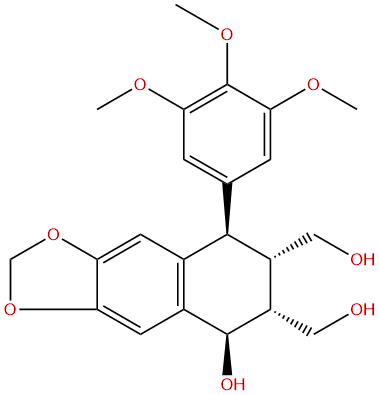
Picropodophyllol, CAS number 3811-15-2, is a natural triol derived from plants in the family Picropodophyllaceae. Due to its unique chemical structure and significant biological activity, especially in the field of anti-tumor, it has received widespread attention in recent years. As a natural compound with multi-target effects, bitter quinolones exhibit excellent activity in regulating cell apoptosis, inhibiting tumor cell proliferation and migration, involving multiple signaling pathways and key molecular targets. This article aims to systematically review the chemical structure, plant origin, pharmacological activity, mechanism of action, and pharmacological evaluation of Kudoufen, and explore its application prospects in the development of anti-tumor drugs, providing theoretical basis for subsequent basic research and clinical translation.
Chemical structure and physicochemical properties
Ku Gui Jiu Du Chun is a triol with a molecular formula of C22H26O8 and a molecular weight of 418.4420. Its chemical structure contains multiple hydroxyl groups, endowing it with high polarity and hydrophilicity. The TPSA (topological polar surface area) is 106.84 Å ², indicating its good polarity distribution, which is conducive to forming hydrogen bonds with biomolecules. The LogP value is 1.4828, indicating that it has moderate lipid solubility, with both water solubility (0.3406) and lipid solubility characteristics, which is beneficial for absorption and distribution in the body. The molecular structure of Ku Gui Jiu Du Chun is stable and does not exhibit hERG channel inhibitory activity, which is of great significance for reducing the risk of cardiac toxicity. In addition, the Ames test result was 0, indicating that the compound has no significant genotoxicity and has a good safety basis.
Structurally, Kudoufen belongs to the Kudoufen derivative class, which has a typical polycyclic aromatic skeleton and multiple hydroxyl modifications, endowing it with the potential to bind to various biological targets. The multi hydroxyl characteristic of its molecular structure not only increases its water solubility, but also provides multiple hydrogen bonding sites for its binding with protein targets, promoting its biological activity.
Plant sources and extraction methods
Kudoufen toxin mainly exists in plants of the Podophyllum genus, especially in the rhizomes and root tissues of species such as Podophyllum peltatum and Podophyllum hexandrum. The plants of the genus Ku Gui Jiu have been widely studied for their rich lignans, and Ku Gui Jiu Du Chun, as one of the important active ingredients, has significant pharmacological activity.
Traditional extraction methods usually use organic solvent extraction combined with column chromatography separation technology. The specific steps include:
- Raw material processing Collect fresh or dry roots and rhizomes of bitter ginseng and grind them into fine powder.
- Solvent extraction Multiple extractions are carried out using polar organic solvents such as methanol, ethanol, or ethyl acetate to extract lignin compounds.
- Crude extract concentration Concentrate the extract using a rotary evaporator to obtain a crude extract.
- Separation and purification The crude extract was separated using techniques such as silica gel column chromatography and reverse phase high performance liquid chromatography (RP-HPLC) to obtain high-purity Kudoufen alcohol.
In recent years, the application of new technologies such as ultrasound assisted extraction and supercritical fluid extraction has improved the extraction efficiency and purity of bitter gum toxin alcohol, reduced the use of organic solvents, and complied with the principles of green chemistry. In addition, plant cell culture technology has also been explored for the biosynthesis and large-scale production of coumarin, which has broad development potential.
Pharmacological activity research
The pharmacological activity research of Ku Gui Jiu Du Chun mainly focuses on its anti-tumor effect. A large number of in vitro cell experiments and animal model studies have shown that coumarin can significantly inhibit the proliferation of various tumor cells, promote apoptosis, block the cell cycle, and inhibit tumor cell migration and invasion.
Antitumor activity
Kupodophyllol showed inhibitory effects on a variety of tumor types, including breast cancer, lung cancer, colorectal cancer, liver cancer and leukemia. Its anti-tumor effect is mainly reflected through the following aspects:
- Cell proliferation inhibition Kudzu alcohol can interfere with DNA synthesis and cell cycle progression in tumor cells, leading to cell cycle arrest and reduced cell division.
- Inducing apoptosis Promote programmed cell death of tumor cells by activating endogenous and exogenous apoptotic pathways.
- Inhibit migration and invasion By regulating the expression of matrix metalloproteinases (such as MMP2), the invasive ability of tumor cells is reduced and the process of metastasis is blocked.
- Angiogenesis inhibition Inhibit angiogenic factors in the tumor microenvironment, such as HIF1A, and reduce tumor blood supply.
Other pharmacological activities
In addition to its anti-tumor effects, Kuguizhudu alcohol also exhibits certain anti-inflammatory and antioxidant activities, but related research is still in the preliminary stage and further in-depth exploration is needed.
Mechanism of action and molecular targets
The multi-target mechanism of action of Ku Gui Jiu Du Chun is the basis of its anti-tumor activity. By interacting with multiple key protein targets, bitter quinolones regulate the survival, proliferation, migration, and apoptosis of tumor cells.
Main molecular targets
- MCL1 and BCL2 These two anti apoptotic proteins play a crucial role in the survival of tumor cells. Ku Gui Jiu Du Chun promotes the activation of apoptotic signals and induces tumor cell death by downregulating the expression of MCL1 and BCL2.
- STAT3 As an important transcription factor, STAT3 is involved in regulating cell proliferation and immune escape. Ku Gui Jiu Du Chun can inhibit the phosphorylation and activation of STAT3, blocking its transcriptional regulatory function.
- MMP2 Matrix metalloproteinase-2 is involved in the degradation of extracellular matrix in tumor cells, promoting invasion and metastasis. Ku Gui Jiu Du Chun reduces the activity of MMP2 and inhibits tumor cell migration.
- TOP1 and TOP2A DNA topoisomerases I and II are key enzymes involved in DNA replication and transcription. Ku Gui Jiu Du Chun inhibits the activity of TOP1 and TOP2A, interferes with DNA metabolism, and prevents tumor cell proliferation.
- HIF1A Hypoxia inducible factor 1 alpha regulates the adaptive response of tumors in hypoxic environments. Ku Gui Jiu Du Chun inhibits HIF1A expression, blocks tumor angiogenesis and metabolic reprogramming.
- MAPK1 Mitogen activated protein kinase 1 is involved in multiple signaling pathways, regulating cell proliferation and survival. Kudoufen toxin regulates MAPK1 signaling and affects the fate of tumor cells.
- ESR1 and CYP19A1 Estrogen receptor alpha and aromatase are important targets for hormone dependent tumors such as breast cancer. Ku Gui Jiu Du Chun exerts anti hormone dependent tumor effects by regulating these two targets.
Summary of mechanism of action
Ku Gui Jiu Du Chun regulates the apoptosis, proliferation, migration, and microenvironment of tumor cells through multi-target and multi pathway synergistic effects, exhibiting broad-spectrum anti-tumor activity. Its mechanism of action involves multiple aspects such as signal transduction, gene expression regulation, and enzyme activity inhibition, reflecting the advantages of natural product multi-target drugs.
Evaluation of drug properties and pharmacokinetics
Ku Gui Jiu Du Chun has shown good potential in medicinal properties. Its molecular weight of 418.4420 meets the requirements of Lipinski's rule, and its LogP value of 1.4828 shows moderate lipid solubility, which is beneficial for oral absorption. The TPSA is 106.84 Å ², indicating that it has good cell membrane penetration ability. Although the water solubility is not high at 0.3406, it is sufficient to support in vivo distribution.
Blood-brain barrier penetrability
Ku Gui Jiu Du Chun exhibits high blood-brain barrier penetration ability, which provides the possibility for its application in central nervous system tumors or related diseases. However, the high penetrability of the blood-brain barrier also requires attention to its potential central nervous system toxicity, and no significant neurotoxicity has been found in current related research.
Toxicity and Safety
The hERG channel inhibition test showed a negative result, indicating a low risk of cardiac toxicity associated with bitter quinolones. The Ames test result is 0, indicating no significant mutagenicity and good genetic safety. In animal experiments, Ku Gui Jiu Du Chun has good tolerance and no obvious acute toxicity reactions were observed.
Pharmacokinetic characteristics
At present, there is limited systematic pharmacokinetic research on Kudoufen. Preliminary in vivo metabolic studies have shown that the compound is well absorbed and widely distributed after oral administration, with the liver as the main metabolic organ. The metabolic pathways mainly involve hydroxylation and glucuronic acid binding, with excretion mainly in bile and urine. In the future, further research on in vivo dynamics and metabolic kinetics is needed to clarify their bioavailability, half-life, and activity of metabolites.
Clinical application prospects and prospects
Ku Gui Jiu Du Chun, as a multi-target anti-tumor natural product, has broad clinical application prospects. Its significant anti-tumor activity and good safety provide a solid foundation for the development of new anti-cancer drugs.
Development of anti-tumor drugs
The multi-target mechanism of Ku Gui Jiu Du Chun gives it potential advantages in overcoming tumor drug resistance. In the future, its pharmacological and pharmacokinetic properties can be optimized through structural modification, and new drugs can be developed in oral or injectable form. At the same time, it can be combined with existing chemotherapy drugs or targeted drugs to exert synergistic effects and improve treatment efficacy.
Central nervous system diseases
The high blood-brain barrier penetration of Ku Gui Jiu Du Chun provides the possibility for its application in brain tumors and neurodegenerative diseases. Combining its anti-inflammatory and antioxidant activities, it is expected to develop treatment plans for diseases such as glioma and brain metastases.
Future research directions
- In depth mechanism research Using modern technologies such as genomics and proteomics, comprehensively analyze the network of action of Kudoufen toxin.
- Pharmacokinetic and Toxicological System Evaluation Conduct preclinical and clinical trials to clarify the safe dosage range and adverse reactions.
- Development of new dosage forms Explore new drug delivery systems such as nanocarriers and sustained-release formulations to improve bioavailability and targeting.
- Clinical translational research Design a reasonable clinical trial plan to verify its clinical efficacy and safety.
Conclusion
As a natural product with multi-target anti-tumor activity, Ku Gui Jiu Du Chun has shown great potential for drug development due to its unique chemical structure and excellent drug properties. Its multiple mechanisms of action in regulating tumor cell apoptosis, inhibiting proliferation and metastasis provide new ideas for anti-cancer therapy. In the future, with the in-depth study of its pharmacological mechanism and pharmacokinetics, Kudoufen is expected to become an important candidate molecule for the development of anti-tumor drugs, promoting the integration of natural product pharmacology and tumor therapy.