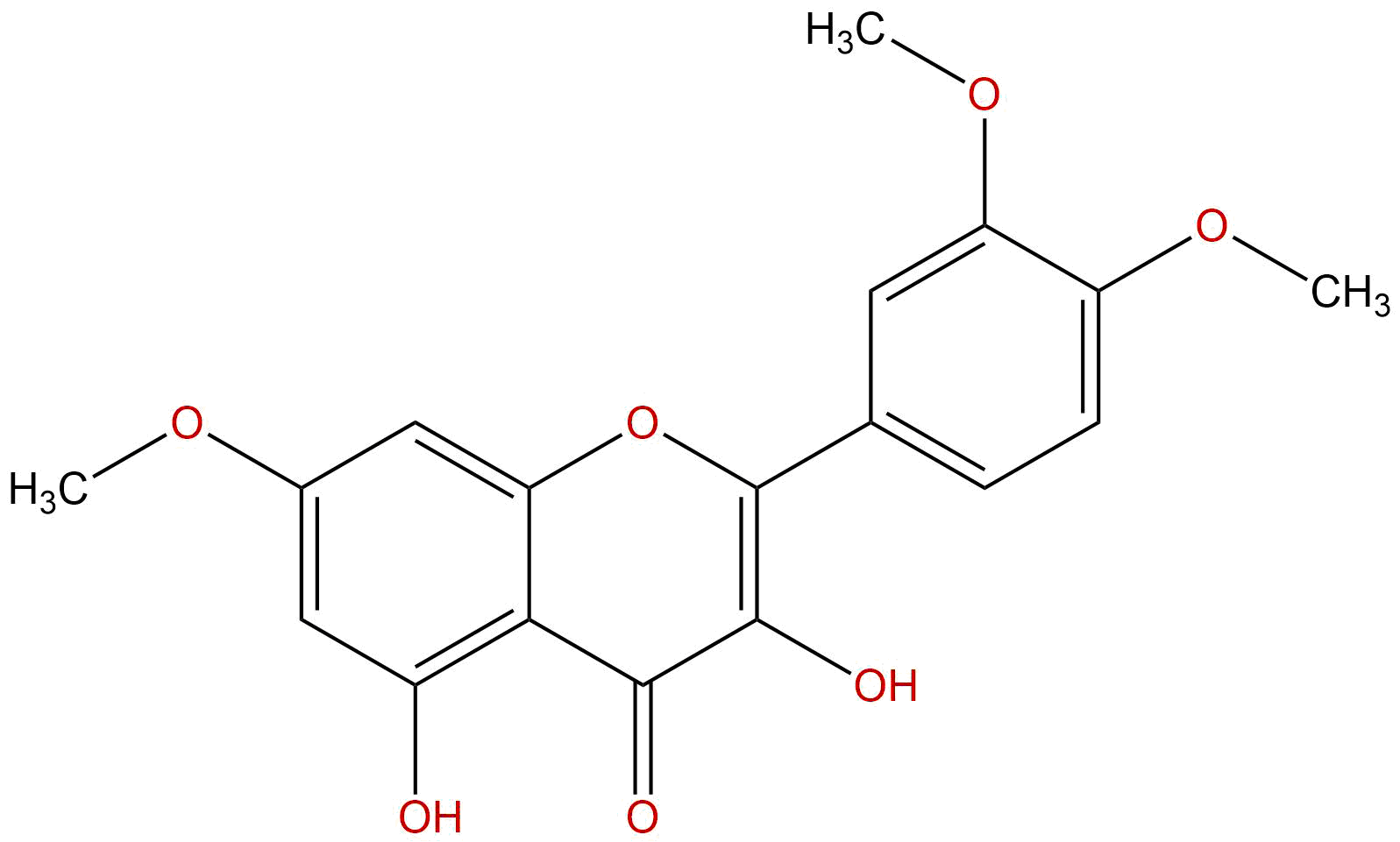


Product name: 3',4',7-Trimethoxyquercetin
Synonym name: Quercetin 3',4',7-trimethyl ether; Quercetin-7,3',4'-trimethyl ether
Catalogue No.: BP4390
Cas No.: 6068-80-0
Formula: C18H16O7
Mol Weight: 344.319
Botanical Source:
Type of Compound:
Purity: 95%~99%
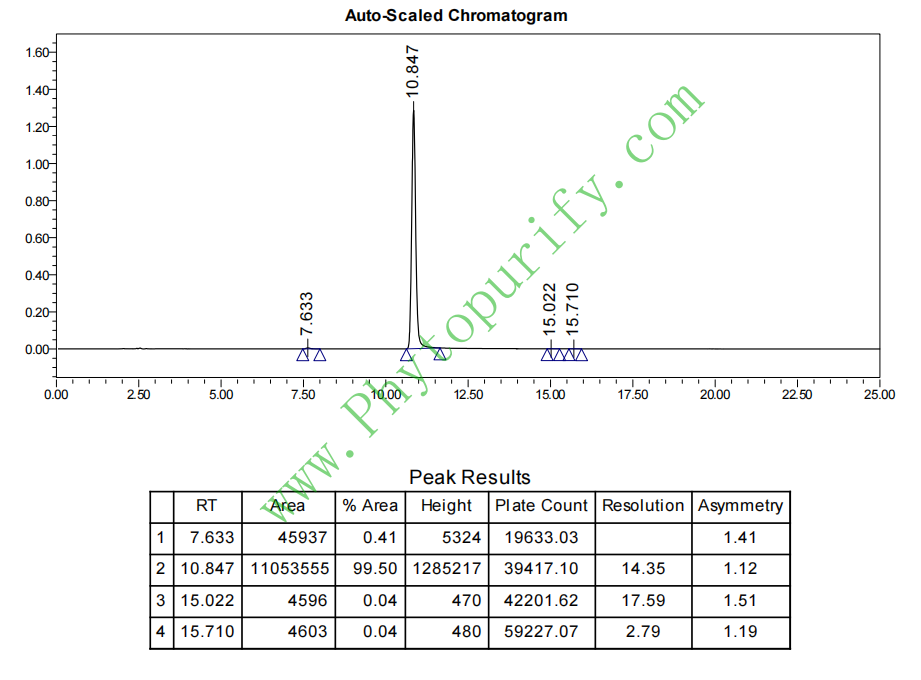
Analysis Method: HPLC-DAD or/and HPLC-ELSD
Identification Method: Mass, NMR
Packing: Brown vial or HDPE plastic bottle
Storage: Store in a well closed container, protected from air and light. Put into refrigerate or freeze for long term storage.
Whenever possible, you should prepare and use solutions on the same day. However, if you need to make up stock solutions in advance, we recommend that you store the solution as aliquots in tightly sealed vials at -20℃. Generally, these will be useable for up to two weeks.
The product could be supplied from milligrams to grams
Inquire for bulk scale.
For Reference Standard and R&D, Not for Human Use Directly.
HPLC of 3',4',7-Trimethoxyquercetin
Storage conditions:Short-term storage at 2~8℃, long-term storage at -20 ~ -80℃
98.3600
2.7113
2.5309
.0704
3.9489
25.0031
Low
89.8115
2.2714
Yes
No
Yes
No
Yes
No
0.6
No
No
Yes
No
3 ', 4', 7-Trimethoxyquercetin (CAS number: 6068-80-0) is an important bioactive trimethoxyflavonoid compound, belonging to the methyl ether derivative of quercetin. Quercetin, as a polyphenolic flavonoid widely present in the plant kingdom, has attracted much attention due to its diverse pharmacological activities and potential clinical application value. 3 ', 4', 7-trimethylquercetin exhibits unique pharmacological properties and biological activity through methylation modification of its molecular structure, particularly in the field of anti allergic effects, demonstrating significant potential.
This compound was first isolated and identified from the plant Euodia conga, and belongs to the group of 3 '- methoxy flavonoids, trimethoxy flavonoids, flavonols, and dihydroxy flavonoids. It contains methoxy substituents at positions 7, 3', and 4 'structurally. Its molecular weight is 344.3190 and LogP value is 2.7113, indicating moderate lipid solubility, low water solubility (0.0704), and low blood-brain barrier permeability. In recent years, with the development of natural product pharmacology and molecular biology techniques, research on the anti allergic, anti-inflammatory, and antioxidant effects of 3 ', 4', 7-trimethylquercetin has gradually deepened, revealing its mechanism of action and potential clinical application value.
This article provides a systematic review of the chemical structure and physicochemical properties, plant sources and extraction methods, pharmacological activity research, mechanism of action and molecular targets, pharmacological evaluation and pharmacokinetic characteristics of 3 ', 4', 7-trimethylquercetin, as well as its clinical application prospects and development trends. The aim is to provide a theoretical basis and reference for the in-depth research and drug development of this natural product.
The chemical name of 3 ', 4', 7-trimethylquercetin is 7,3 ', 4' - trimethoxyquercetin, which is a methylated derivative of quercetin. Its molecular formula is C18H16O7 and its molecular weight is 344.3190. Structurally, the compound introduces methoxy (- OCH3) substituents at the C-7, 3 ', and 4' positions of quercetin, forming a trimethoxyflavonoid structure.
The methylation modification of this structure significantly affects its physicochemical properties. The LogP value is 2.7113, indicating that it has moderate lipid solubility, which is beneficial for membrane penetration and in vivo distribution. The TPSA (topological polar surface area) is 98.36 Å ², indicating moderate polarity that may affect its binding ability to biological targets. Low water solubility (0.0704 mg/mL) suggests limited solubility in aqueous environments, which may affect oral absorption and bioavailability. Low blood-brain barrier permeability indicates limited distribution in the central nervous system, reducing potential central side effects. The hERG channel inhibition experiment showed a negative result, indicating a low risk of cardiac toxicity. The Ames test result is 0.6, indicating a low risk of genotoxicity and a good safety basis.
From a molecular structure perspective, methylation modification not only enhances the lipid solubility of the molecule, but may also increase its metabolic stability, reduce the oxidative metabolism of phenolic hydroxyl groups, and prolong the half-life in vivo. In addition, the introduction of methoxy groups may affect the binding mode of molecules with enzymes and receptors, thereby regulating their biological activity.
3 ', 4', 7-trimethylquercetin is mainly isolated from plants such as Euodia conga. Euodia conga belongs to the Rutaceae family and is widely distributed in some parts of Asia. It is traditionally used to treat various diseases. This plant contains abundant flavonoids, and 3 ', 4', 7-trimethylquercetin is one of its important secondary metabolites with significant biological activity.
The extraction method usually uses organic solvent extraction combined with chromatographic separation technology. Common extraction solvents include ethanol, methanol, and their aqueous solutions, which utilize their good solubility for flavonoids. The specific steps include:
In recent years, new technologies such as supercritical fluid extraction and microwave-assisted extraction have also been applied to improve extraction efficiency and purity, providing technical support for the industrial production of 3 ', 4', 7-trimethylquercetin.
3 ', 4', 7-trimethylquercetin has shown potential application value in various pharmacological activities, especially in the fields of anti allergy, anti-inflammatory, antioxidant, and immune regulation, where significant progress has been made.
3 ', 4', 7-trimethylquercetin has a significant inhibitory effect on allergic reactions. The pathogenesis of allergic diseases such as asthma, allergic rhinitis, atopic dermatitis, etc. mainly involves immune cell activation, inflammatory mediator release, and IgE mediated signaling pathways. Research has shown that this compound can inhibit degranulation of mast cells, reduce the release of inflammatory mediators such as histamine and leukotrienes, thereby alleviating allergic symptoms.
In vitro experiments have shown that 3 ', 4', 7-trimethylquercetin can significantly reduce the expression of allergy related cytokines such as IL-4, IL-5, and IL-13, and inhibit Th2 cell-mediated immune responses. In animal models, the compound reduces airway hyperresponsiveness and inflammatory cell infiltration, improves lung function indicators, and demonstrates good anti asthma potential.
This compound exerts anti-inflammatory effects by regulating various inflammatory signaling pathways. It can inhibit the activity of key transcription factors such as nuclear factor kappa B (NF - κ B) and signal transducer and activator of transcription 6 (STAT6), and reduce the production of pro-inflammatory cytokines. In addition, 3 ', 4', 7-trimethylquercetin regulates immune cell function, promotes immune homeostasis, and alleviates chronic inflammatory states.
As a flavonoid compound, 3 ', 4', 7-trimethylquercetin has strong free radical scavenging ability. It protects cells from oxidative damage by directly capturing reactive oxygen species (ROS) and reactive nitrogen species (RNS). Methylation modification enhances its antioxidant stability to a certain extent and delays metabolic degradation in vivo.
Preliminary studies have also found that 3 ', 4', 7-trimethylquercetin has certain potential in anti-tumor, neuroprotective, and cardiovascular protection, but the relevant mechanisms still need to be further explored.
The pharmacological effects of 3 ', 4', 7-trimethylquercetin are closely related to its regulation of multiple molecular targets, especially in the field of anti allergy. The main targets include:
Through multi-target synergistic regulation, 3 ', 4', 7-trimethylquercetin effectively inhibits allergy related immune inflammatory responses, demonstrating good therapeutic potential.
Based on Lipinski's rules and relevant drug design principles, 3 ', 4', 7-trimethylquercetin exhibits good pharmacological characteristics. Its molecular weight (344.3 Da) is below the upper limit of 500 Da, LogP (2.7113) is moderate, and TPSA (98.36 Å ²) meets the requirements for drug permeation through the cell membrane. Low water solubility may limit its oral absorption, but appropriate formulation techniques can improve bioavailability.
The hERG ion channel inhibition experiment was negative, indicating a low risk of cardiac toxicity. The Ames test results show that the risk of genotoxicity is relatively low and the safety is good. The blood-brain barrier has low permeability, reducing the possibility of central nervous system side effects.
At present, there are few systematic pharmacokinetic studies on 3 ', 4', 7-trimethylquercetin. However, based on its structural characteristics and related flavonoid compounds, it is speculated that its oral absorption may be limited by low water solubility and first pass effects. Methylation modification may enhance its metabolic stability, reduce glucuronidation and sulfation metabolism of phenolic hydroxyl groups, and prolong its half-life in vivo.
It is mainly metabolized in the body through the liver and may involve the cytochrome P450 enzyme system. The main excretion pathways are bile and urine. In the future, in vivo pharmacokinetic experiments are needed to clarify its absorption, distribution, metabolism, and excretion (ADME) characteristics, providing a basis for clinical development.
3 ', 4', 7-trimethylquercetin, as a natural source of trimethoxyflavone, has great potential for clinical development due to its significant anti allergic and anti-inflammatory activities. The high incidence rate and complex pathological mechanism of allergic diseases make the demand for new safe and efficient therapeutic drugs urgent. This compound provides a new therapeutic strategy by regulating the immune inflammatory response through multiple targets.
Future research should focus on the following aspects:
In summary, 3 ', 4', 7-trimethylquercetin, as a natural product with unique structure and multiple biological activities, is expected to become an important candidate drug in the field of anti allergic and related disease treatment in the future.
3 ', 4', 7-trimethylquercetin, as a trimethoxy derivative of quercetin, integrates various excellent properties of natural flavonoids and exhibits significant anti allergic, anti-inflammatory, and antioxidant activities. Its unique molecular structure endows it with excellent drug properties and safety foundation. Although research on its pharmacokinetics and clinical applications is still in its infancy, existing pharmacological evidence fully demonstrates its potential as a candidate molecule for novel natural medicines.
In the future, through in-depth mechanism research, pharmacokinetic optimization, and clinical validation, 3 ', 4', 7-trimethylquercetin is expected to play an important role in the treatment of allergic diseases and other immune inflammation related diseases, promoting progress in natural product pharmacology and drug development. The continuous exploration in this field not only enriches the pharmacological knowledge system of natural products, but also provides valuable resources for the development of innovative drugs.
