Introduction/Overview
Breast cancer is one of the most common and lethal malignant tumors among women in the world. Despite significant progress in comprehensive treatment methods such as surgery, radiotherapy, chemotherapy, endocrine therapy, and targeted therapy, tumor drug resistance, recurrence and metastasis, as well as the toxic side effects caused by treatment, remain serious challenges in clinical practice. Therefore, it is always an important direction for drug research and development to find new anti breast cancer lead compounds with high efficiency, low toxicity and multiple targets from natural products. (-) - Hydroxytiligone (CAS: 887501-28-2), as a natural compound isolated from traditional medicinal plants, has attracted much attention in recent years because of its significant anti breast cancer activity in vitro and in vivo models. Its unique chemical structure enables it to exert multiple pharmacological effects such as inhibiting proliferation, inducing apoptosis, and reversing multidrug resistance by regulating multiple key signaling pathways and targets such as AMPK, STAT3, BCL2, etc. The purpose of this paper is to systematically review the chemical characteristics, plant origin, pharmacological activity, mechanism of action and drug performance of (-) - hydroxyligone, and look forward to its development prospects as a candidate drug for breast cancer.
Chemical structure and physicochemical properties
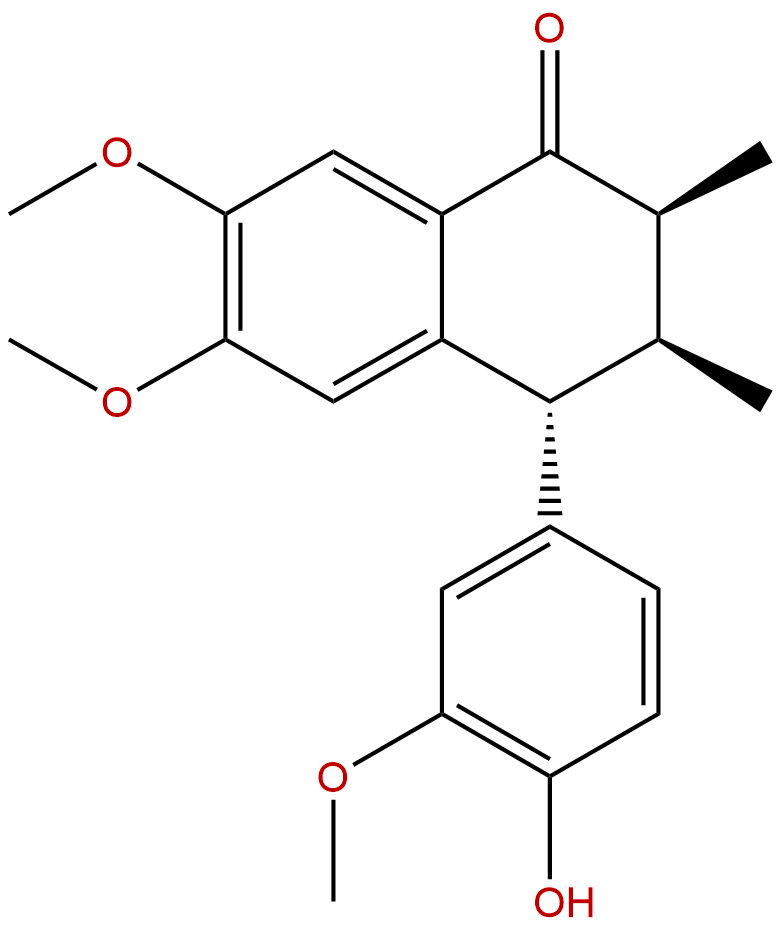
(-) - Holostyligone is a structurally novel natural product with a molecular formula of C21H24O5 and a molecular weight of 356.4180. From a chemical classification perspective, it belongs to the diphenylheptane class of compounds, but its specific skeleton connection method has uniqueness. Its structural core consists of a biphenyl unit and an oxygen-containing heterocyclic system, forming a three-dimensional configuration with a certain rigidity and chiral center. "(-)" indicates its left-handed optical activity. This complex stereochemical structure may be closely related to its biological activity and target selectivity.
From the analysis of physicochemical parameters related to drug properties, (-) - Holostyligone exhibits typical drug like molecular characteristics. The calculated lipid water partition coefficient (LogP) is 3.7804, indicating that the compound has moderate lipophilicity, which is beneficial for its penetration of cell membranes and binding to targets. The topological polar surface area (TPSA) is 64.99 Å ², which is within an acceptable range for oral absorption (typically<140 Å ²). However, its low water solubility parameter (0.0205 mg/mL) suggests that it may be necessary to improve its solubility and bioavailability through techniques such as salt formation, solid dispersion, or nanoformulation during the formulation development process. It is worth noting that the predicted permeability of the blood-brain barrier is "high". Although this may have potential advantages for the treatment of brain metastatic breast cancer, it also suggests that attention should be paid to the risk assessment of potential side effects of the central nervous system. In terms of early safety indicators, (-) - Holostyligone did not show hERG potassium channel inhibitory activity (low risk of QT interval prolongation) and Ames test mutagenicity (0.0), providing preliminary favorable data for its safety evaluation.
Plant sources and extraction methods
(-) - Holostyligone was originally derived from plants in the family Celastraceae Holostylis reniformis It was isolated and identified from the root bark. This genus of plants has been applied in traditional medicine in some regions, but systematic research on its chemical composition and pharmacological activity is relatively limited. The discovery of (-) - Holostyligone has enriched our understanding of the active ingredients in this genus of plants.
Its extraction and separation usually follow the conventional process of natural product chemistry. Firstly, the dried plant material (such as root bark) is crushed and subjected to cold soaking or heating reflux extraction with polar organic solvents such as methanol or ethanol to obtain the crude extract. Subsequently, the crude extract was subjected to preliminary fractionation using solvent partitioning method (such as extraction with petroleum ether, ethyl acetate, and n-butanol in sequence), and (-) - Holostyligone was mainly enriched in the moderately polar ethyl acetate fraction. Further purification relies on a combination of various chromatographic techniques: silica gel column chromatography is commonly used for initial separation, and different fractions are obtained by elution based on polarity differences; Then, it was refined by reversed-phase silica gel (such as C18) column chromatography and dextran gel (Sephadex LH-20) column chromatography; Finally, optically pure (-) - Holostyligone monomer compounds were obtained through high-performance liquid chromatography (HPLC), especially preparative chiral HPLC. Structural identification involves the comprehensive use of mass spectrometry (MS), nuclear magnetic resonance (NMR, including 1H, 13C, 2D-NMR such as COSY, HSQC, HMBC), and circular dichroism (CD) techniques to ultimately determine its planar structure and absolute configuration. At present, there are few reports on its total synthesis route, and the main source still relies on plant extraction, which to some extent limits its large-scale supply. In the future, chemical synthesis or biosynthetic research will be an important supplement.
Pharmacological activity research
A large number of in vitro and preliminary in vivo studies have confirmed that (-) - hydroxyligone has extensive and powerful anti-tumor activity against breast cancer cells.
1. Inhibit cell proliferation and colony formation: (-) - Hydroxytiligone can inhibit the activity of many breast cancer cell lines (such as MCF-7, MDA-MB-231, T47D, etc.) in a dose-dependent and time-dependent manner. Its half maximal inhibitory concentration (IC50) is usually at the micromolar or even sub micromolar level, showing strong cytotoxicity. In addition, it can significantly reduce the colony forming ability of breast cancer cells, indicating that it can inhibit the long-term proliferation and self-renewal potential of tumor cells.
2. Inducing cell cycle arrest: Flow cytometry analysis showed that (-) - hydroxyligone could block breast cancer cells at a specific cell cycle phase. Research has shown that it mainly causes G0/G1 phase or G2/M phase arrest, depending on cell type and drug concentration. Cycle arrest is associated with downregulation and inhibition of the expression of key cyclic proteins (such as Cyclin D1, Cyclin B1) and cyclin dependent kinases (CDKs).
3. Inducing cell apoptosis: One of the most significant effects of (-) - hydroxyligone is to trigger apoptosis of breast cancer cells. After treatment, typical apoptotic morphological changes were observed in the cells, and Annexin V/PI double staining showed a significant increase in the proportion of early and late apoptotic cells. The decrease in mitochondrial membrane potential, activation of caspase-3/9, and cleavage of PARP further confirm its role through the endogenous (mitochondrial) apoptosis pathway.
4. Inhibit invasion and metastasis: Metastasis is the main cause of death in breast cancer patients. (-) - Hydroxytiligone can effectively inhibit the migration and invasion of breast cancer cells. Transwell and chamber experiments showed that the ability of cells treated with drugs to pass through the matrix gel was significantly reduced. This is closely related to its downregulation of the expression and activity of matrix metalloproteinases such as MMP2.
5. Reversing multidrug resistance (MDR): Multidrug resistance is a key factor in chemotherapy failure. (-) - Hydroxytiligone showed a sensitization effect on drug resistant breast cancer cell lines overexpressing ABC transporters (such as P-glycoprotein/ABCB1, breast cancer drug resistant protein/ABCG2). It can partially inhibit the function of these efflux pumps, increase the accumulation of chemotherapy drugs (such as doxorubicin) in cells, and restore the sensitivity of drug-resistant cells to chemotherapy.
6. In vivo anti-tumor activity: In nude mouse transplant tumor models (such as MCF-7 or MDA-MB-231 cell transplant tumors), intraperitoneal injection or gavage of (-) - Holostyligone can significantly inhibit tumor growth in a dose-dependent manner. The reduction in tumor volume and weight is consistent with in vitro activity. Preliminary toxicity observations indicate that at effective doses, its toxicity to mouse body weight and major organs (heart, liver, kidney) is relatively low, suggesting that its therapeutic window may be wider.
Mechanism of action and molecular targets
(-) - Hydroxytiligone's anti breast cancer effect is not through a single target, but acts on a complex signal network, reflecting the advantages of natural products in multi target action. Its mechanism of action mainly revolves around the following core targets and pathways:
1. Activation of AMPK (PRKAA1) signaling pathway: AMP activated protein kinase (AMPK) is a core regulatory factor of cellular energy metabolism and an important tumor suppressor target. (-) - Holostyligone has been proven to be an effective activator of AMPK. It directly or indirectly promotes the phosphorylation (activation) of AMPK, thereby inhibiting its downstream mammalian rapamycin target protein (mTOR) pathway. Inhibition of the mTOR pathway leads to reduced protein synthesis, hindered cell growth, and promotes autophagy, collectively inhibiting tumor development.
2. Inhibition of STAT3 signaling pathway: Signal transducer and activator of transcription 3 (STAT3) is continuously activated in breast cancer to promote cell proliferation, survival, angiogenesis and immune escape. (-) - Holostyligone can effectively inhibit the phosphorylation (Tyr705 site) and nuclear translocation of STAT3, thereby downregulating the expression of its target genes (such as BCL2, Cyclin D1, MMP2). This is an important molecular basis for inducing apoptosis and inhibiting metastasis.
3. Regulation of apoptosis related target BCL2: B-cell lymphoma 2 (BCL2) is an important anti apoptotic protein. (-) - Holostyligone can significantly downregulate the expression of BCL2 and may upregulate the expression of pro apoptotic proteins such as BAX, alter the BCL2/BAX ratio, increase mitochondrial outer membrane permeability, release cytochrome C, and ultimately activate the caspase cascade reaction, leading to apoptosis.
4. Potential regulation of estrogen receptor beta (ESR2): Estrogen receptor signaling is essential in hormone receptor positive breast cancer. (-) - Holostyligone may interact with estrogen receptor beta (ER β). ER β is generally considered to have different, sometimes antagonistic, functions from ER α, and may play an anti-tumor role in breast cancer. The regulation of ER β by (-) - Holostyligone may be involved in its cell cycle arrest and growth inhibition effects.
5. Other related targets:
- Tyrosinase (TYR): Its inhibition may be related to metabolic intervention of specific subtypes of breast cancer or research related to melanoma, and its specific role in breast cancer remains to be clarified.
- Protein kinase C alpha (PRKCA): PKC α is involved in cell proliferation and migration signaling. (-) - Holostyligone may affect downstream signals by regulating PKC α activity.
- Microtubule associated protein Tau (MAPT): The excessive phosphorylation of Tau protein is associated with the stability of the cytoskeleton, which may indirectly affect the morphology and migration of cancer cells.
- Matrix metalloproteinase-2 (MMP2): As mentioned earlier, (-) - Holostyligone directly weakens the ability of cancer cells to invade and degrade extracellular matrix by inhibiting the expression and activity of MMP2.
To sum up, (-) - Hydroxytiligone forms a multi-target attack network through core mechanisms such as co activation of AMPK, inhibition of STAT3, and regulation of BCL2 family, which together lead to cell cycle arrest, apoptosis, decreased invasion and metastasis ability, and reversal of drug resistance in breast cancer.
Evaluation of drug properties and pharmacokinetics
Based on its physicochemical properties and preliminary biological data, (-) - Holostyligone has shown certain potential as a drug, but still faces challenges and requires systematic preclinical pharmacokinetic and toxicological studies.
Pharmacokinetic (ADME) prediction and challenges:
- Absorption: Moderate LogP and TPSA values suggest that it may have some potential for oral absorption. However, low water solubility is the main bottleneck limiting its oral bioavailability. Optimization of formulations, such as nanocrystals, liposomes, and cyclodextrin inclusion complexes, is key to improving their solubility and absorption.
- Distribution: A higher predictive blood-brain barrier permeability means that it may have a wide distribution in tissues throughout the body, including the central nervous system. This is a potential advantage for the treatment or prevention of brain metastasis of breast cancer, but it also requires careful evaluation of neurotoxicity.
- Metabolism: As a compound containing phenolic hydroxyl groups and other functional groups, (-) - Holostylone is likely to undergo extensive phase I (such as cytochrome P450 enzyme catalyzed oxidation) and phase II (such as glucuronidation and sulfation) metabolism in the liver. Clarifying its main metabolic enzymes, metabolites, and activities is the basis for understanding its in vivo fate and drug interactions.
- Excretion: It is speculated that its metabolites are mainly excreted through the kidneys or bile.
Optimization direction for drug properties:
1. Structural modification: Reasonably modify its structure while retaining its core pharmacophore, with the aim of improving its water solubility (such as introducing water-soluble groups), enhancing target selectivity, improving metabolic stability, or reducing potential toxicity.
2. New delivery system: Developing delivery systems based on nanotechnology, such as polymer nanoparticles, micelles, or albumin nanoparticles, can not only improve their solubility and stability, but also achieve tumor targeted delivery through enhanced permeation and retention (EPR) effects, improve efficacy, and reduce side effects caused by systemic exposure.
3. Preclinical PK/PD studies: Systematic pharmacokinetic studies need to be conducted in both rodent and non rodent animals to obtain key parameters such as absolute bioavailability, half-life, distribution volume, and clearance rate. A pharmacokinetic pharmacodynamic (PK/PD) correlation model should be established to provide a basis for drug administration design.
4. Comprehensive toxicological evaluation: Although the preliminary safety indicators (hERG, Ames) are good, it is still necessary to conduct standardized repeated dose toxicity tests (acute toxicity, long-term toxicity), comprehensive genetic toxicity tests, in-depth evaluation of reproductive toxicity and potential organ toxicity (especially liver, kidney, nervous system).
Clinical application prospects and prospects
(-) - Hydroxytiligone, as a multi target natural lead compound against breast cancer, has broad clinical application prospects, but the road to transformation is a long way to go.
Potential application directions:
1. Single therapy or combination therapy: In view of its multi target characteristics, (-) - hydroxyligone has the potential to be used as a single drug for the treatment of specific subtypes of breast cancer, especially those cases that are not sensitive to or resistant to existing targeted therapies. A more realistic strategy is to combine it with existing standard chemotherapy drugs (such as paclitaxel, doxorubicin) or targeted drugs, utilizing its ability to reverse drug resistance and synergistically enhance efficacy, reduce chemotherapy drug dosage, and alleviate toxic side effects.
2. Overcoming drug resistance: Regarding the multidrug resistance mediated by ABCB1/ABCG2, (-) - Holostyligone can be developed as a resistance reversal agent and used in combination with chemotherapy, providing a new solution to overcome clinical resistance challenges.
3. Prevent transfer: Its strong inhibitory activity on invasion and metastasis suggests that it may be used to prevent or delay the recurrence and metastasis of breast cancer in the adjuvant treatment stage.
Future research focus and challenges:
1. Deep analysis of the mechanism of action: It is necessary to use chemical biology methods such as affinity fishing, molecular docking, surface plasmon resonance SPR, co crystallization to directly verify its interaction sites and binding modes with key targets such as AMPK and STAT3, and clarify its direct target of action.
2. In vivo efficacy and improvement of PK/PD model: It is necessary to validate its efficacy in animal models that are closer to clinical practice, such as the human tumor xenograft PDX model, and complete systematic preclinical pharmacokinetic and toxicological studies to provide a complete data package for applying for clinical trials (IND).
3. Compound supply and optimization: To solve its source problem, large-scale preparation can be achieved through total synthesis or biosynthesis. At the same time, conducting systematic structure-activity relationship research and structural optimization to obtain derivatives with stronger activity and better drug properties.
4. Exploration of biomarkers: Finding biomarkers (such as specific gene mutations, protein expression profiles) that predict the efficacy of (-) - Holostyligone can help achieve precise personalized treatment in the future.
Conclusion
(-) - Hydroxytiligone is a diphenylheptane compound with significant anti breast cancer activity, which was excavated from the natural treasure house. It shows comprehensive advantages in inhibiting breast cancer cell proliferation, inducing apoptosis, resisting invasion and metastasis, and reversing multidrug resistance through its unique multi target mechanism of action, including activating AMPK, inhibiting STAT3 signaling pathway, downregulating anti apoptotic protein BCL2, and inhibiting MMP2. The preliminary pharmacological parameters and safety predictions provide a favorable basis for its further development. Although there are still challenges in solubility, metabolism in vivo, large-scale preparation and other aspects, with the in-depth application of modern pharmaceutical chemistry, pharmaceutics and pharmacology technology, through structural optimization, development of new delivery systems and preclinical research of systems, (-) - hydroxyligone is expected to be developed into a new, efficient, multi-target anti breast cancer candidate drug or its drug resistance reversal agent, bringing new treatment hope for breast cancer patients. The research process once again confirms the importance and enormous potential of finding innovative drug sources from natural products.