Introduction/Overview
In the field of natural product chemistry and pharmacology research, the metabolic transformation of dietary components by gut microbiota and the production of bioactive molecules are increasingly becoming a key bridge connecting nutrition, metabolism, and health. Ellagitannins are a class of polyphenolic compounds widely found in fruits and nuts such as pomegranate, strawberry, and walnut. Although their bioavailability is low, a series of urolithins produced by intestinal microbiota metabolism exhibit significant physiological activity, forming an important example of "diet microbiota host" interaction. Among them, urolithin B (UB), as one of the main metabolites, has received widespread attention in pharmacology and nutrition in recent years due to its outstanding effects in anti-inflammatory, antioxidant, metabolic regulation, especially in maintaining and enhancing skeletal muscle function.
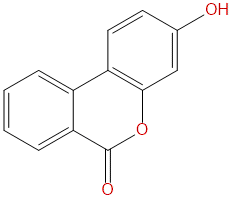
Urolithin B (CAS number: 1139-83-9) is a derivative of dibenzo [b, d] pyran-6-one. Compared with other homologs such as urolithin A, the chemical structural characteristics of urolithin B determine its unique physicochemical properties and biological activity spectrum. Early research mainly focused on its antioxidant capacity, but with the deepening of molecular biology techniques, its mechanism of action has gradually become clear. Research has shown that urolith B can exert its effects through multiple targets and pathways, including but not limited to inhibiting the nuclear factor kappa B (NF - κ B) inflammatory pathway, regulating mitogen activated protein kinase (MAPK) and protein kinase B (Akt) signaling, activating adenylate activated protein kinase (AMPK), and directly or indirectly affecting a series of key transcription factors related to mitochondrial biosynthesis, energy metabolism, and muscle fiber type conversion, such as peroxisome proliferator activated receptor gamma co activator 1 alpha (PGC1 alpha), peroxisome proliferator activated receptor gamma (PPAR gamma), etc.
With the aging of the global population, the incidence rate of sarcopenia and related metabolic diseases is rising. It is urgent to find an intervention strategy that can safely and effectively improve muscle quality and function. As an endogenous microbial metabolite, urolithin B has good biocompatibility and potential safety, providing broad application prospects in functional foods, dietary supplements, and even drug development. This article aims to systematically review the chemical properties, sources, pharmacological activities, molecular mechanisms of action, pharmacological characteristics, and clinical application potential of urolithin B, in order to provide comprehensive academic references for the in-depth research and development of this natural product.
Chemical structure and physicochemical properties
The chemical name of urolithin B is 3,7-dihydroxybenzo-chromen-1-one, with a molecular formula of C13H8O4 and a molecular weight of 212.2040 g/mol. Its core structure is a benzo [c] chromene-1-one skeleton, with one phenolic hydroxyl group substituted at positions 3 and 7 respectively. This dihydroxy substitution mode is the main chemical basis for its antioxidant activity. Phenolic hydroxyl groups can effectively scavenge free radicals and terminate free radical chain reactions by providing hydrogen atoms or electrons.
From the analysis of physical and chemical properties, the calculated value of the lipid water partition coefficient (LogP) of urolithin B is about 2.75, indicating its lipophilicity, which is beneficial for its transmembrane transport and intracellular distribution. Its topological polar surface area (TPSA) is 50.44 Å ², which is relatively small, further suggesting that its membrane permeability may be good. The water solubility data shows that its solubility is relatively low (about 0.0237 mg/mL), which to some extent limits its bioavailability in aqueous media, but can be improved through formulation methods such as forming cyclodextrin inclusion complexes, nanoemulsions, or solid dispersions. It is worth noting that the predictive model shows that urolith B has a high blood-brain barrier permeability, which provides the possibility for its potential central nervous system related applications, such as neuromuscular junction protection and adjuvant therapy for neurodegenerative diseases.
In terms of preliminary safety evaluation, the key cardiac toxicity risk indicator hERG channel inhibition experiment showed negative results, indicating a low risk of inducing QT interval prolongation in the heart. The Ames test results (with a response mutation rate of 1.8) are generally considered to be within the safe threshold, indicating a low risk of genetic toxicity. However, a complete preclinical toxicology assessment is still needed to confirm this. These preliminary pharmacological parameters have laid a favorable chemical and safety foundation for the further development of urolithin B.
Plant sources and extraction methods
Urolithin B is not directly present in plants, but is gradually metabolized and transformed from plant derived ellagitannins and ellagic acid by the gut microbiota (mainly specific strains of Firmicutes and Actinobacteria). Therefore, its "source" is natural food rich in tannic acid. Pomegranate (especially its skin and juice) is one of the most abundant sources of tannic acid. Other important sources include berries such as strawberries, raspberries, blackberries, nuts such as walnuts and walnuts, as well as certain oak aged wines.
After the human body consumes these foods, tannic acid remains relatively stable in the stomach and intestines, but is difficult to be directly absorbed. After reaching the colon, they become substrates for the gut microbiota. The microbial community converts it into different types of urolithins through a series of enzymatic reactions, including hydrolysis, dehydroxylation, lactonization, etc., mainly including urolithins A, B, C, D and their corresponding glycosidic forms. Urolithin B is one of the important intermediates or end products in this metabolic pathway. The significant differences in the composition of gut microbiota among individuals lead to significant variations in the metabolic capacity of tanning tannins and the resulting urolithin spectrum (i.e. "metabolic type"), which is considered the main reason for individual differences in the health effects of tanning tannins.
At present, there are two main ways to obtain urolith B for research:
1. Biotransformation method This is a method that is closer to its natural generation process. Using tannic acid or plant extracts rich in tannic acid tannins as substrates, utilizing selected specific microorganisms (such as...) Gordonibacter urolithinfaciens, Ellagibacter isourolithinifaciens)The directed biotransformation of human fecal microbiota in an in vitro fermentation system, followed by chromatographic separation and purification to obtain urolithin B. This method has mild conditions and clear three-dimensional structure of the product, but there are challenges in process optimization and large-scale production.
2. Chemical Synthesis Organic chemists have developed multiple routes for the full or semi synthesis of urolithin B to meet the research needs of large quantities and high purity. The common strategy is to use simple phenolic acids such as triphenylphenol or gallic acid as starting materials, and construct a benzochromenone skeleton through steps such as Friedel Crafts acylation, cyclization, selective protection, and deprotection. The chemical synthesis method has stable yield and controllable purity, and is currently the main means of obtaining standard samples and conducting structural modification research.
Regardless of the method used, the purification of urolithin B typically relies on preparative high-performance liquid chromatography (HPLC) or high-speed countercurrent chromatography (HSCCC), and its structure is confirmed by nuclear magnetic resonance (NMR), mass spectrometry (MS), and ultraviolet spectroscopy (UV).
Pharmacological activity research
The pharmacological activity research of urolithin B has expanded from the initial cellular antioxidant model to animal models and preliminary human experiments, confirming its protective effects in multiple physiological and pathological processes.
1. Anti inflammatory and antioxidant activity
Urolithin B is a potent antioxidant that can directly scavenge DPPH and ABTS free radicals, and enhance the intracellular antioxidant defense system, such as upregulating the activity of superoxide dismutase (SOD) and glutathione peroxidase (GPx). Its anti-inflammatory effect is particularly prominent. In the lipopolysaccharide (LPS) - induced macrophage (such as RAW264.7) inflammation model, urolithin B can dose dependently inhibit the production of key inflammatory mediators such as nitric oxide (NO), prostaglandin E2 (PGE2), tumor necrosis factor - α (TNF - α), interleukin-6 (IL-6), etc. In animal models, such as dextran sulfate sodium (DSS) - induced colitis in mice, treatment with urolithin B orally can significantly reduce colon tissue damage, decrease myeloperoxidase (MPO) activity, and pro-inflammatory cytokine levels, demonstrating a good alleviating effect on intestinal inflammation.
2. Regulating skeletal muscle function and preventing muscle atrophy
This is the pharmacological activity area of urolith B that has received the most attention. In the C2C12 mouse myoblast differentiation model, treatment with urolithin B promotes myotube fusion and enlargement, and upregulates the expression of myogenic differentiation markers such as myosin heavy chain (MyHC). In vivo, using aging mice, dexamethasone induced muscle atrophy mice, or tumor cachexia models, it was found that supplementing with urolith B can effectively increase the wet weight and muscle fiber cross-sectional area of skeletal muscles such as tibialis anterior muscle and soleus muscle, improve muscle grip strength and endurance. Its function is not limited to inhibiting muscle breakdown, but more importantly, it can activate muscle synthesis and quality regulation pathways.
3. Metabolic regulation effect
Urolithin B shows the potential to improve metabolic homeostasis. In insulin resistant cell models and diet induced obese mice, it can enhance insulin sensitivity, promote glucose uptake, and regulate lipid metabolism. These effects are closely related to their activation of AMPK, a cellular energy receptor. The activation of AMPK can inhibit fat production, promote fatty acid oxidation, and mitochondrial generation.
4. Other potential activities
Preliminary research also suggests that urolithin B may have value in other fields. For example, demonstrating certain neuroprotective potential in neural cell models; Possible promotion of osteogenic differentiation in osteoblasts, beneficial for bone health; Its anti-inflammatory properties may also have beneficial effects on chronic inflammation related cardiovascular diseases such as atherosclerosis. More research is needed to confirm these directions.
Mechanism of action and molecular targets
The molecular mechanism by which urolithin B exerts multiple pharmacological effects is complex, involving precise regulation of multiple signaling pathways. Its core can be summarized as "inhibiting inflammation and breakdown signals, activating synthesis and metabolism signals".
1. Inhibit the NF - κ B inflammatory pathway
NF - κ B is a core transcription factor that regulates inflammatory responses. In the classical pathway, the activation of the I κ B kinase (IKK) complex phosphorylates and degrades the I κ B alpha protein, causing nuclear translocation of NF - κ B (p65/p50 dimer) and initiating downstream gene transcription. Research has confirmed that urolithin B can effectively inhibit the phosphorylation and degradation of I κ B α induced by LPS and other stimuli, thereby preventing the nuclear translocation of NF - κ B p65 subunit and its binding activity with DNA. This directly explains its inhibitory effect on the expression of genes such as TNF - α, IL-6, inducible nitric oxide synthase (iNOS), and cyclooxygenase-2 (COX-2).
2. Regulating the MAPK and PI3K/Akt pathways
The MAPK family (such as JNK, ERK, p38) and the PI3K/Akt pathway are involved in cell proliferation, differentiation, stress response, and survival. Urolithin B has been shown to inhibit the phosphorylation activation of JNK and ERK, which is related to its anti-inflammatory and anti apoptotic effects. Meanwhile, its inhibition of Akt phosphorylation may play a role in specific contexts, such as tumor related signaling, but its synergistic effect with AMPK is more critical in muscle regulation.
3. Activate AMPK pathway
AMPK is the main switch for cellular energy metabolism. Urolithin B can significantly enhance the phosphorylation of AMPK (Thr172 site) and its downstream target acetyl CoA carboxylase (ACC). The activation of AMPK brings a series of metabolic benefits: promoting glucose transport, enhancing fatty acid oxidation, inhibiting synthetic metabolism (such as fat synthesis), and initiating mitochondrial biosynthesis.
4. Key factors for targeted regulation of muscle mass and function
The positive effect of urolith B on skeletal muscle is achieved through coordinated regulation of a core transcriptional regulatory network:
* PGC1αThe main co activators of mitochondrial biosynthesis and function. Urolithin B can upregulate the expression of PGC1 α, thereby driving mitochondrial production and improving the energy metabolism efficiency of muscle cells, which is the basis for enhancing muscle endurance and anti fatigue ability.
* PPARγAlthough highly expressed in adipose tissue, PPAR γ also participates in regulating lipid metabolism and insulin sensitivity in muscles. Urolithin B may affect PPAR γ activity directly or indirectly, promoting fatty acid utilization in muscles.
* MYOD1 The core members of the myogenic regulatory factor family determine the orientation and differentiation initiation of the myogenic lineage. Urolith B can promote the expression or activity of MYOD1, directly promoting the differentiation of myoblasts into myotubes.
* PRDM16 and UCP1 These two are usually associated with brown fat thermogenesis. In recent years, research has found that skeletal muscles (especially certain types of muscle fibers) also have a certain degree of plasticity and express these factors. Urolithin B may promote muscle energy expenditure or regulate the conversion of muscle fiber types to more fatigue resistant slow muscle/oxidative types by affecting the PRDM16/UCP1 axis, but its specific mechanism of action in muscles still needs to be further elucidated.
In summary, urolithin B exerts a network like effect through multiple targets and pathways, effectively inhibiting muscle catabolism (anti-inflammatory, suppressing specific catabolic signals) while strongly activating synthetic metabolism and energy metabolism (activating AMPK-PGC1 α axis, promoting myogenic differentiation), jointly maintaining and increasing skeletal muscle mass and function.
Evaluation of drug properties and pharmacokinetics
As a potential active molecule, its drug like and pharmacokinetic (PK) characteristics are the key factors determining its successful application.
Drugability assessment Based on the physical and chemical parameters mentioned earlier, urolithin B basically conforms to Lipinski's "Five Rules" (Ro5), indicating that it has good oral absorption potential. Its moderate LogP value is beneficial for transmembrane absorption, but low water solubility is a major limiting factor for oral bioavailability (BA). The high penetration prediction of the blood-brain barrier is its unique advantage. The negative hERG inhibition and low-risk Ames test provide preliminary positive signals for its safety. However, its metabolic stability, potential inhibition or induction of cytochrome P450 enzymes, and detailed acute and chronic toxicity data still need to be improved through systematic preclinical studies.
Pharmacokinetic study Existing studies (mainly based on animal experiments) have revealed the PK characteristics of urolithin B
* Absorption and bioavailability After oral administration, urolithin B is absorbed in the intestine, but its absolute bioavailability is constrained by multiple factors such as solubility, first pass metabolism, and individual gut microbiota status (as it is a metabolite of the microbiota, exogenous supplementation may be affected by endogenous metabolic competition). Formulation optimization is the core strategy to improve its BA.
* distribution After absorption, urolithin B can be widely distributed to multiple tissues. Due to its good lipid solubility and blood-brain barrier penetration, its presence can be detected in muscles, liver, adipose tissue, and even the brain, providing a basis for its systemic effects.
* Metabolism Urolithin B mainly undergoes phase II metabolic reactions in the body, which combines with glucuronic acid or sulfuric acid to form corresponding complexes (such as urolithin B glucuronide). These complexes are the main forms of their presence in peripheral blood circulation and their primary form of excretion from urine. The hepatic intestinal circulation may be involved in its metabolic processes.
* excretion It is mainly excreted in the form of glucuronic acid conjugates through the kidneys and urine, and some can also enter the feces through bile.
Overall, urolithin B exhibits preliminary acceptable characteristics for drug development, but its PK properties, particularly oral absorption and systemic exposure levels, require further optimization through advanced delivery systems such as nanomaterials, phospholipid complexes, and prodrug strategies to meet potential therapeutic needs.
Clinical application prospects and prospects
The diverse pharmacological activities of urolithin B depict broad prospects for its application in multiple health fields.
1. Sarcopenia and age-related muscle function decline
This is the most promising application direction. For high-risk groups of muscle loss such as the elderly, long-term bedridden patients, and cancer cachexia patients, urolith B can be used as a nutritional intervention or adjuvant therapy strategy through its unique dual mechanism of promoting muscle synthesis and inhibiting breakdown, to prevent and improve muscle loss, enhance quality of life, and improve physical function.
2. Auxiliary management of metabolic diseases
By activating AMPK and improving insulin sensitivity, urolithin B may be used as an auxiliary management tool for metabolic diseases such as type 2 diabetes, non-alcoholic fatty liver disease (NAFLD) and obesity to help regulate blood sugar and lipid metabolism.
3. Inflammatory related diseases
Based on its potent anti-inflammatory effect, urolithin B may be used as a dietary supplement or adjuvant therapy for chronic inflammatory diseases such as inflammatory bowel disease (IBD) and arthritis, reducing tissue inflammation damage.
4. Neurodegenerative diseases
Its blood-brain barrier penetration and potential neuroprotective and anti-inflammatory effects provide a theoretical basis for exploring its auxiliary protective effects in neurodegenerative diseases such as Alzheimer's disease and Parkinson's disease.
Outlook and Challenges:
Despite the bright prospects, the mature application of urolith B still faces challenges:
* Individual differences and bioavailability The production of urolithin B in the human body is completely dependent on the gut microbiota, and there is a huge difference between "producers" and "non producers". Even with exogenous supplementation, individual differences in absorption metabolism may still affect the final therapeutic effect. In the future, it is necessary to combine gut microbiota testing to develop personalized nutrition plans.
* Formulation and delivery technology Overcoming its poor water solubility and improving its bioavailability are the key technologies. The application of new nano drug delivery systems and cyclodextrin inclusion technologies will be the focus of research and development.
* Deep analysis of the mechanism of action Especially its precise regulatory mechanism on the action of PRDM16/UCP1 in muscles, as well as its synergistic or antagonistic effects with other uroliths such as urolithin A, require further research.
* Accumulation of clinical evidence Currently, most research is focused on the cellular and animal levels. It is urgent to design rigorous randomized controlled clinical trials (RCTs) to validate their safety, efficacy, and optimal dosage in humans, especially in the field of muscle health.
* Regulation and Product Development As a microbial metabolite, its development path can be between functional foods, dietary supplements, and pharmaceuticals. Clarifying its regulatory status and conducting corresponding safety and efficacy evaluations based on it is a prerequisite for the successful launch of the product.
Conclusion
Urolith B, as the intelligent crystallization of intestinal microbiota metabolism of natural dietary polyphenols, perfectly embodies the modern health concept that "symbiotic microorganisms are the second genome of the human body". From a chemical structure perspective, it is a simple dihydroxybenzophenone molecule; But from a biological perspective, it is a powerful multi-target signal regulator. It exhibits excellent anti-inflammatory, antioxidant, muscle synthesis promoting, and metabolic regulatory activities in cell and animal models by precisely inhibiting inflammatory pathways such as NF - κ B and activating synthetic and energy metabolism networks such as AMPK-PGC1 α.
The core role of maintaining skeletal muscle function has placed it in a highly attractive strategic position in addressing the challenges of muscle loss caused by global aging. Its excellent blood-brain barrier penetration and preliminary safety characteristics further broaden its application potential. However, pushing this promising molecule from the laboratory to clinical applications still requires the joint efforts of researchers, industry, and clinical doctors to address key issues such as individual response differences, bioavailability optimization, deep mechanism elucidation, and ultimately human efficacy verification.
In the future, with the development of precision nutrition and microbiology, we are expected to achieve personalized health management strategies based on individual gut microbiota characteristics and targeted supplementation of urolithin B. The research on urolithin B not only provides lead compounds for the development of new muscle health enhancers and metabolic regulators, but also opens up a new window for us to deeply understand the complex and intricate dialogue between diet, microbiota, and host health.