Introduction/Overview
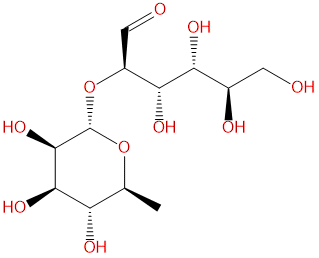
As an important treasure trove for drug discovery, natural products have long provided numerous lead compounds with novel structures and unique activities for human health. Among them, carbohydrate compounds are increasingly receiving attention from the pharmacology community due to their wide range of biological activities and important biological functions. Neohesperidose (CAS: 17074-02-1) is a disaccharide composed of α - L-rhamnose and β - D-glucose linked by α -1,2-glycosidic bonds. It is not only the key sugar moiety of various flavonoid glycosides (such as neohesperidin and naringin), endowing these glycoside compounds with special physicochemical properties (such as bitterness) and biological activity, but also exists as an independent metabolite in nature, especially isolated and identified in Typha plants. In recent years, with the deepening development of glycobiology and gastrointestinal pharmacology, the potential value of new tangerine peel sugar in regulating digestive system function has gradually emerged. Preliminary research suggests that it may intervene in digestive dysfunction by acting on multiple molecular targets closely related to digestive function, such as ion channels, transporters, and receptors. This article aims to systematically review the chemical properties, plant sources, pharmacological activities, mechanisms of action, and medicinal properties of new tangerine peel sugar, and to explore its application prospects in the treatment of digestive system diseases.
Chemical structure and physicochemical properties
The chemical system name of the new tangerine peel sugar is α - L-pyranose rhamnose - (1->2) - β - D-pyranose glucose. Its molecular formula is C ₁₂ H ₂₂ O ₁₁, and its molecular weight is 326.2980 g/mol. The core of the structure lies in its unique disaccharide linkage: an α - configured L-pyranose rhamnose (6-deoxy-Lmannose) forms a glycosidic bond at the C1 position with a β - configured D-pyranose glucose at the C2 position (α - L-Rha - (1 → 2) - β - D-Glc). This alpha-1,2 linkage is a key structural feature that distinguishes it from other common disaccharides (such as rutin, which has an alpha-1,6 linkage), and profoundly affects its spatial conformation and biological activity.
In terms of physicochemical properties, the new tangerine peel sugar molecule contains multiple hydroxyl groups, making it highly hydrophilic. The calculated lipid water partition coefficient (LogP) is -2.3589, indicating extremely low lipophilicity and a tendency to distribute in aqueous environments. Its topological polar surface area (TPSA) is as high as 177.14 Å ², further confirming its strong polarity characteristics. These properties determine that the new tangerine peel sugar has excellent water solubility, with a calculated value of approximately 211.69 mg/mL, which is beneficial for its formulation development and in vivo absorption in aqueous media. However, high polarity and large TPSA also mean that its ability to penetrate the lipid bilayer is limited, and its blood-brain barrier (BBB) permeability is predicted to be low, which to some extent limits its application in central nervous system diseases, but may also reduce the potential risk of central nervous system side effects. In addition, preliminary pharmacological screening data showed no inhibitory activity on hERG potassium channels (hERG inhibition: No), and the Ames test result was 0.0, suggesting that it may not have mutagenicity and significant cardiac toxicity risks, providing preliminary positive signals for its safety evaluation.
Plant sources and extraction methods
New tangerine peel sugar, as a free disaccharide, is not very common in nature, and its main known direct plant source is Typha plants. Typha angustifolia, also known as Typha latifolia, is a traditional medicinal plant commonly used in folk medicine for promoting diuresis, reducing swelling, and stopping bleeding. The separation of new tangerine peel sugar from cattails usually involves classic natural product extraction and purification processes.
The extraction method often uses solvent extraction. Firstly, the dried cattail whole plant or pollen is crushed and subjected to extraction or reflux extraction using polar solvents such as methanol, ethanol, or water to fully dissolve polar components including neotangerine peel sugar. Subsequently, crude extract was obtained by vacuum concentration. Due to the complex composition of the crude extract, which contains a large amount of monosaccharides, other oligosaccharides, flavonoids, phenolic acids, etc., further separation and purification are required. The commonly used techniques include:
1. Macroporous adsorption resin chromatography By utilizing resins such as D101 and AB-8 to adsorb carbohydrate substances and elute them with different concentrations of ethanol, carbohydrate components can be preliminarily enriched.
2. Silica gel column chromatography A mixed solvent system such as chloroform methanol water is commonly used for gradient elution, and separation is performed based on polarity differences.
3. Gel filtration chromatography (such as Sephadex LH-20)Separation based on molecular size is an effective method for purifying small molecule sugars such as disaccharides.
4. High performance liquid chromatography (HPLC)Especially for preparative HPLC, the use of amino columns or reverse phase C18 columns with acetonitrile water as the mobile phase is a key step in achieving high-purity preparation of new tangerine peel sugar. The structure of the final product was confirmed by nuclear magnetic resonance (NMR, including ¹ H NMR and ¹ ³ C NMR), mass spectrometry (MS), and comparison with standard samples.
It is worth noting that neohesperidin is more widely present in the flavonoid glycosides of many Rutaceae plants in the form of glycosidic bonds, such as neohesperidin in Fructus Aurantii, Chenpi, and Citrus peel. By acid hydrolysis or enzymatic hydrolysis of these flavonoid glycosides, new tangerine peel sugars can be released, which is also one of their potential sources of preparation. However, the possible influence of hydrolysis conditions on the disaccharide structure needs to be considered.
Pharmacological activity research
Although direct pharmacological research on free tangerine peel sugar is relatively limited, its pharmacological activity mainly focuses on regulating digestive system function, based on indirect evidence of its role as an active glycosylated moiety and preliminary target prediction studies.
Digestive dysfunction is a category that encompasses a wide range of symptoms, including indigestion, gastrointestinal motility abnormalities, secretion disorders, absorption disorders, etc. Predictive analysis based on network pharmacology and molecular docking suggests that the new tangerine peel sugar may interact with multiple key targets of the digestive system. These targets involve the regulation of gastrointestinal motility (such as muscarinic acetylcholine receptor M3, CHRM3; Large conductance calcium activated potassium channel (KCNMA1), gastric acid secretion (such as histamine H2 receptor, HRH2); H+/K+- ATPase (ATP4A), intestinal ion and water transport (such as cystic fibrosis transmembrane conductance regulator, CFTR); Epithelial sodium channel beta subunit, SCNN1B; Aquaporin 3 (AQP3), nutrient absorption (sodium/glucose cotransporter 1, SLC5A1), and gastrointestinal hormone signaling (such as cholecystokinin A receptor, CCKAR); Secretory hormone receptor, SCTR, etc. Therefore, it is speculated that the new tangerine peel sugar may have the potential to regulate digestive function through multiple targets and links, such as:
* Regulating gastrointestinal motility Possible bidirectional regulation of gastrointestinal smooth muscle contraction and relaxation by affecting the activity of CHRM3 (promoting contraction) and KCNMA1 (affecting smooth muscle cell hyperpolarization and relaxation), improving motility deficiency or hyperactivity.
* Affects the secretion of digestive juices It may regulate gastric acid secretion through targets such as HRH2 and ATP4A, or affect intestinal fluid secretion and water balance through CFTR and AQP3, thereby improving the digestive environment.
* Promote nutrient absorption The potential interaction with SLC5A1 suggests that it may affect the intestinal epithelial absorption process of nutrients such as glucose.
In addition, as a carbohydrate substance, new tangerine peel sugar may also indirectly affect intestinal health and digestive function by regulating the structure of gut microbiota (as a prebiotic or metabolic substrate). However, most of the above activity speculations still need to be confirmed through rigorous in vitro and in vivo pharmacological experiments.
Mechanism of action and molecular targets
The potential therapeutic effect of Xinchenpi sugar on digestive disorders stems from its hypothesized interaction with multiple key protein targets in the digestive system. The following is a discussion on its possible mechanism of action and molecular targets:
-
Acting on ion channels and transporters:
- CFTR and SCNN1B CFTR is a cAMP dependent chloride ion channel that plays a central role in the secretion of chloride ions and bicarbonate in intestinal epithelium; SCNN1B is a component of the epithelial sodium channel (ENaC) responsible for the reabsorption of sodium ions. New tangerine peel sugar may regulate the activity of both, affecting intestinal ion transport and water balance, and may be used to treat secretory or absorptive diarrhea.
- KCNMA1 This channel is crucial in regulating the excitability of smooth muscle cells in the gastrointestinal tract. Its activation leads to potassium efflux, cell membrane hyperpolarization, and inhibition of smooth muscle contraction. New tangerine peel sugar may affect the relaxation state of the gastrointestinal tract and regulate peristaltic rhythm by modulating KCNMA1.
- SLC5A1 (SGLT1)This is a transporter protein mainly responsible for the active absorption of glucose and galactose in the intestine. New tangerine peel sugar, as a disaccharide or its metabolite, may interact with this transporter, competitively or non competitively affecting its function, which may regulate postprandial blood glucose response or be used in research on certain absorption disorders.
-
Acting on G protein coupled receptors (GPCRs):
- CHRM3 Mediate smooth muscle contraction and glandular secretion effects of acetylcholine. Xinchenpi sugar may act as a regulator to affect the signal transduction of CHRM3, thereby regulating gastrointestinal motility and glandular secretion.
- HRH2 Located in the gastric wall cells, it mediates histamine stimulated gastric acid secretion. Intervention in HRH2 is a classic pathway for acid suppression. If the new tangerine peel sugar can interact with HRH2, it may provide a new idea for regulating gastric acid secretion.
- CCKAR and SCTR Mediating the effects of cholecystokinin and secretin respectively, participating in complex feedback regulation such as pancreatic enzyme secretion, gallbladder contraction, gastric acid inhibition, and intestinal fluid secretion. New tangerine peel sugar may integrate and regulate the digestive process by affecting these receptors.
-
Acting on enzymes and pumps:
- ATP4A The gastric proton pump (H+/K+- ATPase) is the final common pathway for gastric acid secretion. Directly inhibiting ATP4A is a potent acid suppressing strategy. It is worth exploring whether the new tangerine peel sugar has the ability to directly or indirectly regulate the activity of this pump.
-
Acting on aquaporins:
- AQP3 Exists in the colonic epithelium and participates in the transmembrane transport of water. Regulating AQP3 expression or function may affect the water content of feces.
The new tangerine peel sugar may bind to specific sugar recognition domains or hydrophilic pockets of the above-mentioned targets through its sugar based structure, similar to "sugar mimetics" or allosteric modulators, thereby affecting its function. This multi-target action characteristic, combined with the networked regulation of digestive system function, may give it an advantage in improving complex digestive dysfunction syndrome. However, all these interaction hypotheses urgently need to be validated and mechanisms elucidated through experimental techniques such as surface plasmon resonance (SPR), isothermal titration calorimetry (ITC), cell fluorescence imaging, electrophysiological recording, and gene knockout/overexpression.
Evaluation of drug properties and pharmacokinetics
Based on its physical and chemical properties and computational parameters, a preliminary pharmacological evaluation of Xinchenpi sugar is conducted
- absorb As a small molecule disaccharide (MW 326.3<500), its molecular size meets the requirements of drug likeness. However, its extremely high hydrophilicity (LogP-2.36) and polar surface area (TPSA 177) severely limit its ability to passively diffuse across the lipid membrane of intestinal epithelial cells. Its absorption may mainly rely on the active transport system (such as SGLT1) or bypass pathways on intestinal epithelial cells. The expected bioavailability is low. The predicted blood-brain barrier permeability is low, which is consistent with its physical and chemical properties.
- distribution Due to its high water solubility and low fat solubility, it is expected to have a small distribution volume and mainly distribute in tissues with abundant extracellular fluid and blood flow, making it difficult to enter adipose tissue or cross the blood-brain barrier.
- Metabolism As a disaccharide, it may face two main metabolic fates in the body: firstly, it is hydrolyzed by glycosidases in the brush edge of intestinal epithelial cells (such as lactase glycosidase, LPH) into monosaccharides (xylose and glucose), which are then absorbed and utilized; The second is absorbed in the form of intact disaccharides, but may be metabolized by glycosidases in serum or tissues after entering the systemic circulation. The metabolic rate and degree are the key factors determining its pharmacological effects in its prototype form.
- excretion Small molecules and highly water-soluble substances are usually easily excreted through glomerular filtration by the kidneys. If not reabsorbed, new tangerine peel sugar or its metabolites may be mainly excreted from urine.
- Preliminary Safety Prediction The computational model suggests no risk of hERG inhibition (potential good cardiac safety) and mutagenicity (Ames test negative), providing preliminary positive data for its safety. However, comprehensive preclinical toxicology studies are required, including acute toxicity, long-term toxicity, reproductive toxicity, etc.
Overall, the pharmaceutical challenges of New Chenpi Sugar mainly lie in its potential poor oral absorption and susceptibility to enzymatic metabolism. Future formulation strategies may need to consider: 1) developing prodrugs, such as making them into ester derivatives with higher lipid solubility to improve membrane permeability; 2) Co administration of enzyme inhibitors (such as glycosidase inhibitors) to protect them from premature hydrolysis; 3) Encapsulation with nano drug delivery systems (such as liposomes and polymer nanoparticles) enhances gastrointestinal stability and promotes absorption.
Clinical application prospects and prospects
The application prospects of Xinchenpi sugar in the field of digestive system diseases are based on its potential pharmacological activity of multi-target regulation of digestive function.
Potential application directions:
1. Functional dyspepsia (FD) and irritable bowel syndrome (IBS)Targeting multiple targets such as CHRM3, KCNMA1, and CCKAR, their regulatory effects may enable them to comprehensively improve symptoms such as abdominal pain, bloating, early satiety, and abnormal bowel habits in patients with FD and IBS, making them a novel multifunctional regulator.
2. Diarrhea type disease By potentially regulating targets such as CFTR, SCNN1B, AQP3, etc., reducing excessive intestinal secretion or promoting water absorption, it may be used to treat certain types of acute and chronic diarrhea.
3. Gastric acid related diseases If it has a regulatory effect on HRH2 or ATP4A, it may provide a new option for gastroesophageal reflux disease (GERD) and peptic ulcer with a mechanism of action different from proton pump inhibitors (PPIs), especially suitable for patients who need mild regulation of gastric acid.
4. Assisted nutrient absorption Through interaction with SLC5A1, it may regulate glucose absorption rate or be used as an adjuvant therapy for malabsorption states such as short bowel syndrome.
Challenges faced and future research directions:
1. mechanism verification The biggest bottleneck currently is the lack of direct experimental evidence. It is urgent to conduct a series of studies to verify whether the new tangerine peel sugar indeed binds to the predicted targets mentioned above, as well as the functional effects (activation, inhibition, or allosteric regulation) produced after binding.
2. Pharmacodynamic evaluation in vivo It is necessary to establish appropriate animal models (such as functional dyspepsia models, diarrhea models, etc.) to evaluate the overall efficacy of new tangerine peel sugar after oral or injection administration, and clarify its treatment window.
3. Pharmacokinetic study Systematically study its ADME process in different species of animals, clarify the exposure level, half-life, and main metabolic pathways of its prototype drug, and provide a basis for formulation design.
4. structural optimization Based on its active skeleton, structural modification is carried out to improve its pharmacokinetic properties, enhance oral bioavailability and metabolic stability while retaining its multi-target action characteristics.
5. Exploration of clinical translation Consider the feasibility of developing it as a dietary supplement or natural medicine ingredient, and explore its potential for combination therapy with existing digestive system drugs.
Conclusion
As a naturally occurring disaccharide compound, the unique chemical structure of Xinchenpi sugar endows it with potential, multi-target biological activity in regulating digestive system function. This substance can be isolated from plants such as cattails, and its physicochemical properties show high water solubility and good preliminary safety prediction. However, oral absorption and metabolic stability are the main challenges for its drug development. Although research on its direct pharmacological effects and molecular mechanisms is still in its infancy, mainly based on target prediction and indirect evidence, its action network covers multiple key links such as gastrointestinal motility, secretion, and absorption, providing attractive lead compounds for the development of new types of multi-target drugs for the treatment of complex digestive disorders. Future research should focus on experimentally verifying its interactions with key targets, elucidating its in vivo efficacy and pharmacokinetic characteristics, and overcoming its drug development shortcomings through rational medicinal chemistry and formulation strategies. With the deepening of research, the new tangerine peel sugar is expected to develop from a natural carbohydrate metabolite into a valuable research tool and even a candidate drug in the field of digestive system disease treatment, demonstrating the sustained vitality of natural products in modern drug discovery.