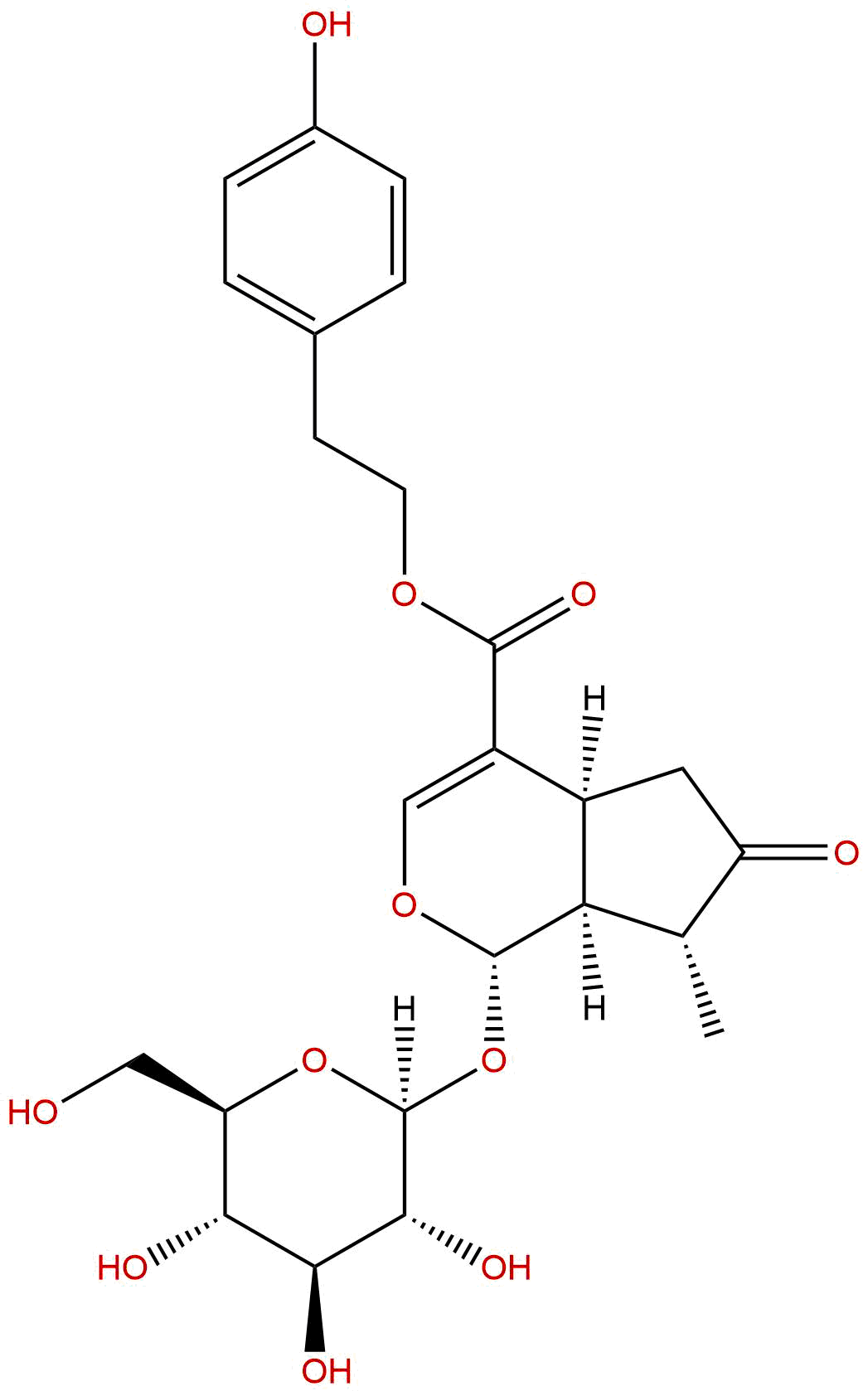


Product name: Syringopicroside
Synonym name:
Catalogue No.: BP2252
Cas No.: 29118-80-7
Formula: C24H30O11
Mol Weight: 494.493
Botanical Source:
Type of Compound: Iridoids
Purity: 95%~99%
Analysis Method: HPLC-DAD or/and HPLC-ELSD
Identification Method: Mass, NMR
Packing: Brown vial or HDPE plastic bottle
Storage: Store in a well closed container, protected from air and light. Put into refrigerate or freeze for long term storage.
Whenever possible, you should prepare and use solutions on the same day. However, if you need to make up stock solutions in advance, we recommend that you store the solution as aliquots in tightly sealed vials at -20℃. Generally, these will be useable for up to two weeks.
The product could be supplied from milligrams to grams
Inquire for bulk scale.
For Reference Standard and R&D, Not for Human Use Directly.
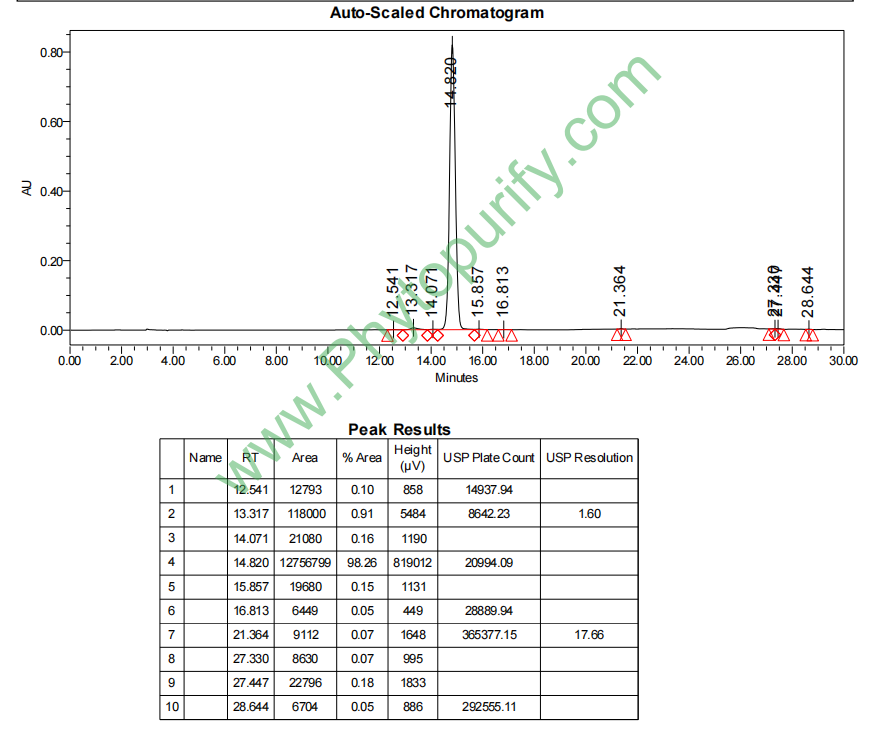
HPLC of Syringopicroside
Storage conditions:Short-term storage at 2~8℃, long-term storage at -20 ~ -80℃
172.2100
.0048
.0043
5.0338
.4944
.3579
Low
60.4480
4.5892
No
No
No
No
No
No
0.0
Yes
Yes
Yes
Yes
Natural products, as an important source of drug discovery, play an irreplaceable role in the history of human fight against diseases. One of the core paradigms in modern medicinal chemistry and pharmacology research is to isolate and identify active ingredients from traditional herbs, and elucidate their pharmacological mechanisms. Among the many plants with medicinal value, the Oleaceae family belongs to the genus Euonymus(Syringa)Plants, such as lilacs(Syringa oblata Lindl.), Not only is it widely known for its ornamental value, but it is also highly regarded for its long medicinal history. In the traditional medical system, the flowers, leaves, and bark of Syringa plants are often used to treat diseases such as fever, inflammation, diarrhea, and oral infections. Modern chemical and pharmacological research has revealed that these plants are rich in various bioactive compounds, including phenylethanoid glycosides, iridoid glycosides, flavonoids, and volatile oils. Among them, Syringomicroside, as a representative iridoid glycoside compound, has gradually become a research hotspot in the field of natural product pharmacology due to its unique chemical structure and significant biological activity, especially its inhibitory effect on oral pathogenic bacteria.
Lilac bitter glycoside (CAS number: 29118-80-7) was first isolated from lilac and named after its plant origin and bitter taste characteristics. Early research mainly focused on the identification of its chemical structure, but in the past decade, with the increasing attention to oral health issues and the worsening crisis of antibiotic resistance, the research value of syringin, as a potential naturally derived antibacterial lead compound, has been re evaluated and excavated. Oral diseases, such as caries, pulpitis, periapical periodontitis and periodontal disease, are one of the most common chronic infectious diseases worldwide. The core pathogenic factor of these diseases is the microbial imbalance caused by multiple pathogenic bacteria in the dental plaque. Among them, Streptococcus mutans(Streptococcus mutans)Long distance Streptococcus(Streptococcus sobrinus)Fusobacterium nucleatum(Fusobacterium nucleatum)Porphyromonas gingivalis(Porphyromonas gingivalis)And Candida albicans(Candida albicans)It is widely recognized as a key pathogen. Traditional antibacterial drugs, such as chlorhexidine, although effective, long-term use can lead to side effects such as tooth staining, taste changes, and dysbiosis. Therefore, the search for efficient, low toxicity, and resistant new antibacterial agents has become an urgent need in the field of oral medicine. The emergence of syringin has provided new possibilities for this field.
This article aims to provide a systematic professional review of syringin, covering its chemical structure and physicochemical properties, plant sources and extraction processes, pharmacological activity (especially anti oral pathogenic bacteria activity), mechanism of action and molecular targets, drug evaluation and pharmacokinetic characteristics. Based on this, it explores its clinical application prospects and future research directions. By integrating existing research results, this article aims to outline the complete research landscape of syringin from natural products to potential drug candidates, providing reference for subsequent basic research and translational applications.
Syringin belongs to the class of iridoid glycosides, and its chemical structure exhibits typical characteristics of this class of compounds. Iridoid aglycones are a class of monoterpene compounds composed of iridoid aglycones and glycosides (usually glucose) linked by glycosidic bonds. The structural core of syringin is a highly oxidized cyclopentane pyran ring system, which is the signature skeleton of iridoid compounds. Its molecular formula is C ₂∝ H ∝₄₁₂, and its molecular weight is 494.4930 Da. Structurally, the glycoside part of syringin contains multiple hydroxyl, carboxyl, or ester substituents, which endow the molecule with rich chemical activity and the potential to interact with biological targets. Its sugar moiety is usually D-glucose, which is connected to the C-1 position of the aglycone through a β - glycosidic bond. This glycosylation modification not only increases the water solubility of the molecule, but may also affect its binding to transporters or receptors.
From the perspective of physical and chemical properties, syringin exhibits typical hydrophilic characteristics. The calculated LogP value is 0.0048, which is a very low value, indicating that the compound is almost evenly distributed in the n-octanol/water two-phase system, and even slightly inclined towards the aqueous phase, with extremely low lipid solubility. This characteristic is closely related to the presence of multiple hydroxyl and sugar groups in its molecular structure. The highly polar functional groups give it good dispersibility in aqueous solutions. Its topological polar surface area (TPSA) is as high as 172.2100 Å ², which further confirms its strong polarity and hydrophilicity. According to the Lipinski Five Rules, molecules with TPSA greater than 140 Å ² typically have difficulty passively diffusing through the cell membrane, suggesting that the transmembrane transport of syringin may depend on specific transport proteins or endocytosis. The predicted value of its water solubility is 5.0338 mg/mL, which belongs to the medium to high water solubility range, providing favorable conditions for its dissolution and distribution in biological fluids such as saliva and blood.
In addition, the evaluation of pharmacological parameters shows that the blood-brain barrier (BBB) penetration ability of syringin is "low", which is consistent with its high polarity, high molecular weight, and high TPSA characteristics. Low BBB penetrability may be a favorable characteristic for the treatment of infectious diseases in peripheral tissues such as oral cavity, because it can reduce the risk of central nervous system toxicity. The prediction result of hERG inhibition is' no ', indicating a low risk of causing QT interval prolongation and arrhythmia in the heart. The Ames test predicted a value of 0.0, indicating a very low risk of genetic toxicity. These preliminary pharmacological evaluation results are encouraging, indicating that syringin has a good starting point to become a safe candidate drug. However, these parameters are mainly based on computational predictions and still require rigorous experimental validation.
The main plant source of syringin is the Syringa genus in the Oleaceae family, especially Syringa(Syringa oblata Lindl. has the most abundant content. In addition, in other species of the Syringa genus, such as European Syringa(Syringa vulgaris L.)、 Mao Dingxiang(Syringa pubescens Turcz. "and" Raging Lilac "(Syringa reticulata (Blume) H. Hara var. amurensis It has also been found in (Rupr.) J. S. Pringle, but the content may vary depending on the species, place of origin, harvest season, and plant part. Usually, syringin content is higher in the leaves, bark, and immature fruits of Syringa plants, while its content is relatively lower in the flowers. As a widely distributed ornamental and medicinal plant in China, lilac leaves and bark are ideal raw materials for obtaining syringin.
The traditional method for extracting syringin mainly relies on solvent extraction. Due to its good water solubility, water or ethanol water mixed solutions of different concentrations are commonly used extraction solvents. For example, by using reflux extraction method and extracting dried and crushed clove leaves or bark multiple times with 70% ethanol at 60-80 ℃, a crude extract rich in syringin can be obtained. In order to improve extraction efficiency and purity, modern extraction techniques are also widely used. Ultrasound assisted extraction (UAE) utilizes the cavitation effect of ultrasound to destroy plant cell walls, accelerate solvent penetration and solute dissolution, and achieve higher extraction rates in a shorter period of time. Microwave assisted extraction (MAE) utilizes the dielectric heating effect of microwaves to rapidly evaporate internal water in plants, creating a pressure difference and promoting the release of target components. These methods have the advantages of shorter time, less solvent usage, and higher extraction rate compared to traditional hot reflux.
After obtaining the crude extract, separation and purification are required to obtain high-purity syringin monomers. The classic separation process usually includes steps such as liquid-liquid extraction, column chromatography, and recrystallization. Firstly, the crude extract is concentrated and extracted with organic solvents of different polarities (such as petroleum ether, ethyl acetate, n-butanol) to remove lipid soluble impurities and some water-soluble impurities. Due to its high polarity, syringin is mainly enriched in the n-butanol extraction layer. Subsequently, the n-butanol extract was subjected to column chromatography separation. Common stationary phases include silica gel, reverse silica gel (such as C18), macroporous adsorption resin (such as D101, AB-8) and dextran gel (such as Sephadex LH-20). Macroporous adsorption resin is commonly used for preliminary separation due to its low cost, reusability, and large sample loading capacity. By using different concentrations of ethanol water gradient elution, syringin can be separated from other compounds with similar polarity, such as oleuropein and other iridoid glycosides. Further purification usually requires a combination of reverse phase high performance liquid chromatography (RP-HPLC), using a C18 column and acetonitrile water or methanol water as the mobile phase for isocratic or gradient elution, ultimately obtaining syringin monomers with a purity of over 98%. The entire extraction and purification process requires real-time monitoring using thin-layer chromatography (TLC) and HPLC-UV or HPLC-MS to ensure the purity and yield of the target product.
The pharmacological activity research of syringin, especially its antibacterial activity, is currently a hot topic in research. Early research revealed its broad-spectrum antibacterial potential, while recent studies have focused more on its specific effects on oral pathogens.
1. Anti oral pathogenic bacteria activity:
This is the pharmacological activity of syringin that has received the most attention. Multiple in vitro studies have shown that syringin has significant inhibitory effects on various key oral pathogens.
* Regarding Streptococcus mutans(S. mutans)Function: Streptococcus mutans is widely recognized as the main pathogenic bacterium of dental caries, and its cariogenic properties are mainly reflected in its ability to produce acid, resist acid, and synthesize extracellular polysaccharides (EPS) to form biofilms. Research has found that syringin can effectively inhibit the growth of Streptococcus mutans planktonic bacteria, with its minimum inhibitory concentration (MIC) and minimum bactericidal concentration (MBC) typically ranging from tens to hundreds of micrograms per milliliter. More importantly, syringin can significantly inhibit the formation of Streptococcus mutans biofilm and destroy mature biofilm at sub inhibitory concentrations. This role is crucial for controlling the progression of dental caries, as biofilms serve as a physical barrier for bacteria to resist host immunity and antibiotics.
* Porphyromonas gingivalis(P. gingivalis)Function: Porphyromonas gingivalis is the main pathogenic bacterium of chronic periodontitis. Research has shown that syringin can also inhibit the growth and biofilm formation of Porphyromonas gingivalis. In addition, it can also inhibit the activity of key virulence factors of the bacterium, such as gingival proteases, thereby weakening its ability to invade and damage periodontal tissue.
* Regarding Candida albicans(C. albicans)Function: Candida albicans is the main pathogen of oral candidiasis and often interacts with bacteria to exacerbate dental caries and periodontal disease. Lilac bitter glycoside also exhibits certain antifungal activity against Candida albicans and can inhibit its transition from yeast state to hyphal state, which is the main form of Candida invasion into tissues.
* Effects on other oral pathogenic bacteria: In addition to the main pathogens mentioned above, syringin has an effect on Fusobacterium nucleatum, Streptococcus sobrinus, and Actinomyces naesluchii(Actinomyces naeslundii)Various oral bacteria have also shown varying degrees of inhibitory effects, indicating their potential for broad-spectrum anti oral pathogenic bacteria.
2. Anti inflammatory activity:
Oral infections are often accompanied by local inflammatory reactions. Some studies have preliminarily explored the anti-inflammatory effects of syringin. In a macrophage model stimulated by lipopolysaccharide (LPS), syringin can reduce the release of pro-inflammatory cytokines such as tumor necrosis factor - α (TNF - α), interleukin-6 (IL-6), and interleukin-1 β (IL-1 β). This may be related to its inhibition of the nuclear factor kappa B (NF - κ B) signaling pathway. This anti-inflammatory activity has synergistic therapeutic significance in alleviating symptoms of inflammatory diseases such as periodontitis.
3. Other pharmacological activities:
In addition to its anti oral pathogenic bacteria and anti-inflammatory activities, there are sporadic reports in the literature on other activities of syringin, such as antioxidant activity (scavenging free radicals), hepatoprotective activity, etc. However, these studies are not yet in-depth and require more evidence to support them.
A deep understanding of the mechanism of action of syringin, especially its molecular targets against oral pathogens, is the key to developing it into a novel antibacterial drug. According to existing research, especially based on molecular docking and in vitro enzyme activity inhibition experiments, syringin may exert its antibacterial effects through multi-target and multi pathway pathways. The target list you provided (GYRA, DHFR, FOLA, GYRB, PBP2, ERG, GTFB, FTFA) provides important clues for understanding their mechanisms.
1. Inhibit nucleic acid synthesis:
* Target: DNA gyrase (GyrA/GyrB)DNA gyrase is an essential topoisomerase II for bacterial DNA replication, consisting of two subunits, GyrA and GyrB. This enzyme alleviates the twisting pressure during DNA replication by introducing negative supercoils. Quinolone antibiotics exert their bactericidal effect by targeting this enzyme. Molecular docking studies have shown that syringin may bind to the active sites of GyrA or GyrB, interfering with their binding to DNA or ATP hydrolysis function, thereby inhibiting bacterial DNA replication and leading to bacterial death. The GYRA and GYRB in the target list you provided correspond to these two subunits.
* Target: Dihydrofolate reductase (DHFR) and dihydrofolate synthase (FOLA)DHFR and FOLA are key enzymes in the bacterial folate metabolism pathway. Folic acid is an essential cofactor for the synthesis of purines, pyrimidines, and amino acids. Sulfonamide drugs and trimethoprim inhibit bacterial growth by blocking folate synthesis by inhibiting FOLA and DHFR, respectively. Lilac bitter glycoside may competitively inhibit its substrates (such as dihydrofolate or para aminobenzoic acid) by binding to DHFR or FOLA, thereby blocking the de novo synthesis pathway of folate, affecting the supply of nucleic acid precursors, and exerting antibacterial effects.
2. Inhibit cell wall synthesis:
* Target: Penicillin binding protein 2 (PBP2)PBP is a key enzyme in the synthesis of peptidoglycan in bacterial cell walls, responsible for catalyzing the cross-linking reaction of peptidoglycan chains. β - lactam antibiotics (such as penicillin) covalently bind to PBP, inhibiting cell wall synthesis and leading to bacterial lysis. Molecular docking suggests that syringin may bind to the active site of PBP2, interfering with its transpeptidase activity and thus disrupting the integrity of the cell wall. This may be another important mechanism of its bactericidal effect.
3. Inhibit biofilm formation and extracellular polysaccharide synthesis:
* Target: Glucosyltransferase B (GTFB)GTFB is a key enzyme in the synthesis of extracellular polysaccharides (especially water-insoluble glucans) by Streptococcus mutans and other oral streptococci. Water insoluble pectin is the main matrix component of dental plaque biofilm, which is crucial for bacterial adhesion and the stability of biofilm structure. Lilac bitter glycoside may inhibit its activity of converting sucrose into pectin by binding to GTFB, thereby weakening its ability to form biofilms. This explains the phenomenon that it can effectively inhibit biofilm formation at sub inhibitory concentrations.
* Target: Fructosyltransferase (FTFA)FTFA is another important extracellular polysaccharide synthase responsible for synthesizing fructooligosaccharides. Fructan is not only a part of the biofilm matrix, but also serves as a reserve carbon source for bacteria. Inhibiting FTFA also helps to disrupt the structure and function of biological membranes.
4. Destruction of cell membrane integrity:
* Target: Ergosterol (ERG)Ergosterol is a sterol component unique to fungal cell membranes and is crucial for maintaining membrane fluidity and integrity. Antifungal drugs such as azoles and amphotericin B exert their effects by targeting ergosterol or its synthetic pathway. The ERG in the target list you provided may refer to ergosterol itself or key enzymes in its synthesis pathway (such as C14 demethylase). Syringin may exert antifungal activity by binding with ergosterol, disrupting the structure of fungal cell membranes and causing leakage of cellular contents. This is consistent with its inhibitory effect on Candida albicans.
Summary mechanism: Syringin does not act through a single target, but simultaneously acts on multiple key metabolic pathways in bacteria and fungi, including nucleic acid synthesis, cell wall synthesis, biofilm formation, and cell membrane function. This multi-target mode of action is a potential reason for its broad-spectrum antibacterial activity and low susceptibility to drug resistance. However, it should be emphasized that these targets are mainly based on computer simulated molecular docking and preliminary enzyme activity experiments, and still need to be validated through more direct biochemical methods (such as surface plasmon resonance, isothermal titration calorimetry) and genetic methods (such as constructing target gene overexpression or knockout strains).
To push syringin from laboratory research to clinical application, a comprehensive evaluation of its pharmacological properties (Druglikeness) and pharmacokinetic (ADME) characteristics is necessary. As mentioned earlier, the pharmacological parameters predicted based on calculations are generally positive: moderate molecular weight (<500 Da), extremely low LogP (hydrophilic), good water solubility, no risk of hERG inhibition, and negative Ames test. These features meet most of the requirements in the Lipinski Five Rules (except that the number of hydrogen bond donors/acceptors may exceed), indicating their fundamental potential as oral drugs.
However, its high polarity and low LogP also pose challenges, mainly reflected in the following aspects:
1. Poor membrane permeability: High TPSA and low LogP mean that syringin is difficult to passively diffuse through intestinal epithelial cell membranes and bacterial cell membranes. This may result in low oral bioavailability. Its transmembrane transport may be highly dependent on specific transport proteins, such as glucose transporters (GLUTs) or organic anion transport peptides (OATPs), but this still needs experimental confirmation.
2. Metabolic stability: Cycloterpenoid glycosides are easily metabolized by gut microbiota or liver enzyme systems in the body. Glycoside bonds may be hydrolyzed by β - glucosidase, releasing aglycones, which may be further oxidized or bound. The activity, toxicity, and pharmacokinetic characteristics of metabolites are not yet clear.
3. Protein binding rate: Highly hydrophilic compounds typically have a low binding rate with plasma proteins such as albumin, which may result in high free drug concentrations, but at the same time, they may also be cleared by rapid glomerular filtration, leading to a short half-life.
At present, there are very few reports on the in vivo pharmacokinetic studies of syringin. Limited animal experimental data (if available) may indicate poor oral absorption and low bioavailability. Intravenous administration may be a more effective route of administration, but this limits its convenience as an oral medication. For local oral applications (such as mouthwash, gel, toothpaste), its low membrane permeability may instead become an advantage, because it can stay on the oral mucosa and tooth surface for a long time to play a local antibacterial effect, but is rarely absorbed by the whole body, thus reducing the risk of systemic side effects.
Therefore, future pharmacokinetic studies should focus on:
* Oral bioavailability: Measure the plasma drug concentration time curve and calculate the absolute bioavailability through oral administration experiments in rats or mice.
* Organizational distribution: Study its distribution and concentration in oral tissues (saliva, gums, periodontal pocket fluid) to evaluate the feasibility of local medication.
* Metabolic pathway: Identify its main metabolites in liver microsomes or gut microbiota.
* Excretion pathway: Clearly determine the ratio of excretion through urine and feces.
Based on the unique pharmacological activity and preliminary pharmacological characteristics of syringin, its clinical application prospects mainly focus on the field of oral health.
1. Oral care products:
This is the most direct and promising application direction. Lilac bitter glycoside can be developed as:
* Antibacterial mouthwash: Replace or partially replace chlorhexidine for daily oral hygiene, prevention of dental caries and periodontal disease. Its advantage is that it is less likely to cause tooth staining and taste changes, and may cause less damage to the normal oral microbiota.
* Anti caries toothpaste: As an active ingredient added to toothpaste, it effectively prevents dental caries by inhibiting the growth of Streptococcus mutans and biofilm formation.
* Periodontal disease treatment adjuvant: The local sustained-release gel or drug film is made and administered locally in the periodontal pocket for the basic treatment or auxiliary treatment of periodontitis and the inhibition of key pathogens such as Porphyromonas gingivalis.
* Denture cleaner: Used to inhibit the colonization of Candida albicans on the surface of dentures and prevent dental stomatitis.
2. Drug development:
Although oral bioavailability may not be high, it is still possible to develop systemic drugs through structural modifications or novel drug delivery systems.
* Pre drug design: Esterification or etherification modification of the hydroxyl group of syringin can improve its lipid solubility and membrane permeability, and release the original drug after enzymatic hydrolysis in vivo.
* Nanoformulations: Encapsulate syringin in liposomes, polymer nanoparticles, or solid lipid nanoparticles to enhance their stability, targeting, and bioavailability.
* Structural optimization: Using syringin as the lead compound, modify its aglycone or glycosyl portion through medicinal chemical methods to search for derivatives with stronger activity and better pharmacokinetic properties.
3. Challenges and Future Directions:
Despite the bright prospects, the clinical translation of syringin still faces many challenges:
* Lack of pharmacokinetic data: At present, there is almost no systematic in vivo pharmacokinetic research, which is the biggest bottleneck restricting its development.
* Insufficient verification of the mechanism of action: Molecular targets are mainly based on computational predictions, lacking direct biochemical and cellular biological evidence.
* Insufficient in vivo pharmacological research: It is necessary to establish reliable animal models of oral infections (such as rat dental caries models and mouse periodontitis models) to verify their in vivo efficacy.
* Incomplete toxicological evaluation: Although the initial prediction of toxicity is low, systematic experiments on acute and chronic toxicity, reproductive toxicity, and local irritation are still needed.
* Scale production and cost: The cost of extracting high-purity syringin from plants is relatively high, and more efficient and economical biosynthetic or chemical synthesis methods need to be developed.
Future research directions should focus on:
1. Elaborate on the mechanism of action: Using CRISPR-Cas9 gene editing technology, construct bacterial/fungal strains with target gene knockout or overexpression, and verify the target specificity of syringin.
2. Systematic pharmacokinetic studies: Establish a sensitive LC-MS/MS analysis method to comprehensively evaluate its ADME characteristics under different administration routes.
3. Optimize extraction process and structural modification: Explore green and efficient extraction methods, and conduct structure-activity relationship (SAR) studies to search for better derivatives.
4. Developing new formulations: Focus on the development of oral topical preparations, such as temperature sensitive gel, mucosal adhesive tablets, etc., to achieve long-term, targeted drug delivery.
5. Exploring combination therapy: Study the synergistic effect of syringin and traditional antibiotics such as fluconazole and metronidazole in order to reduce dosage and drug resistance.
Lilac bitter glycoside, a natural product of iridoid glycosides derived from the traditional medicinal plant lilac, has shown remarkable potential in the field of oral pathogen prevention and treatment due to its unique chemical structure and multi-target pharmacological mechanism. Its significant anti Streptococcus mutans, Porphyromonas gingivalis, and Candida albicans activities, especially its strong inhibitory effect on biofilm formation, make it an ideal lead compound for developing new, safe, and efficient anti oral infection drugs. The preliminary pharmacological evaluation also provides positive signals for its safety. However, research on syringin from natural products to clinical drugs is still in its early stages. The main challenges currently faced are the unclear pharmacokinetic properties, in-depth validation of the mechanism of action, and lack of in vivo pharmacological evidence. Future research requires the comprehensive use of multidisciplinary approaches such as medicinal chemistry, molecular biology, pharmacokinetics, and pharmacy to systematically address these key scientific issues. We have reason to believe that with the continuous deepening of research, syringin and its derivatives are expected to become an important part of oral care products and even therapeutic drugs in the future, contributing the wisdom from nature to improve human oral health and address the crisis of antibiotic resistance.
