Introduction/Overview
In the long river of natural product chemistry and drug discovery, terpenoids have always occupied a central position due to their structural diversity and extensive biological activity. Among them, β - Cyanic acid, as a natural organic acid with a unique sesquiterpene skeleton, is gradually emerging from numerous natural products, demonstrating its enormous potential in the field of antifungal drug development. With the continuous increase of the incidence rate of invasive fungal infections worldwide, and the severe challenges of drug resistance and toxic side effects of existing antifungal drugs (such as azoles, polyenes, echinocandins), the search for antifungal lead compounds with novel structures and unique mechanisms of action has become the forefront of pharmacological research. Phellinic acid, CAS number 1174388-31-8, is structurally derived from the oxidative modification of the Chamiglane sesquiterpene skeleton. This structural feature suggests that it may have a different mode of action than conventional drugs. In recent years, preliminary studies have revealed its inhibitory activity against various pathogenic fungi, and pointed to multiple key targets including ERG11/CYP51 and efflux pump proteins, making it a highly valuable candidate molecule for research. This article aims to systematically review the chemical structure, plant origin, pharmacological activity, mechanism of action, pharmacological properties, and clinical application prospects of ferulic acid, in order to provide comprehensive scientific references for the in-depth research of this compound and the development of future antifungal drugs.
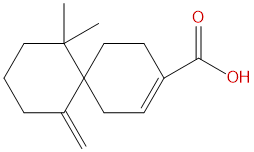
Chemical structure and physicochemical properties
The chemical structure of β - Chimerynic acid is based on a typical Chamiglane sesquiterpene skeleton. The skeleton is a bicyclic [3.1.1] heptane system with multiple chiral centers, compact structure, and strong rigidity. The characteristic of arachidonic acid is the substitution of a carboxylic acid group (- COOH) on its skeleton, which endows it with acidity and corresponding polarity, distinguishing it from many neutral or lipophilic sesquiterpenes. Its precise stereochemical configuration is crucial for its biological activity, and typically isolated from natural sources are single enantiomers with specific optical activity.
According to the provided pharmacological parameters, the molecular weight of ferulic acid is 234.3390, which belongs to the category of small molecule compounds. Its lipid water partition coefficient (LogP) is 3.7495, indicating that the compound has a moderately high lipophilicity, which facilitates its penetration of fungal cell membranes (mainly composed of lipids), but may also affect its dispersion in aqueous phase. The theoretical polar surface area (TPSA) is 37.3000 Å ², which is relatively low and mainly contributed by carboxylic acid groups. This further confirms that the molecule as a whole has a certain membrane permeability. The calculated water solubility is 0.1728 mg/mL, which belongs to the slightly soluble level. This suggests that solubilization strategies such as salt formation, cyclodextrin inclusion, or nanoformulation technology may need to be considered in formulation development.
Of particular note is that its blood-brain barrier (BBB) penetration is predicted to be "high". This characteristic has significant advantages for the development of drugs to treat fungal infections in the central nervous system, such as cryptococcal meningitis, as many existing drugs are difficult to effectively enter brain tissue. In addition, the preliminary toxicity screening results showed that it has no inhibitory activity on hERG potassium channels (hERG inhibition: no), which reduces its potential risk of inducing QT interval prolongation and apical torsion type ventricular tachycardia, and is a positive signal of drug cardiac safety. The Ames test result is 0.0, indicating that it has no mutagenicity, but it needs to be confirmed through more complete in vitro and in vivo genetic toxicity tests. These physicochemical and preliminary toxicological parameters together outline a lead compound with good potential for development.
Plant sources and extraction methods
Phellinic acid is mainly found in Cupressaceae and Taxodiaceae plants, especially in Cypress genus(Chamaecyparis spp.)、thuja(Thuja Spp.) and some algae and Marine sponge It has also been found in symbiotic microorganisms. These plants are often used in traditional medicine to treat skin infections and inflammatory diseases, and the antifungal activity of their extracts provides clues for the targeted isolation of ferulic acid. For example, Taiwan cypress(Chamaecyparis formosensis)Wood or branches and leaves are commonly used plant materials to obtain this compound.
The extraction and separation of ferulic acid from plant materials usually follow the standard process of natural product chemistry:
1. Extract Dry and crushed plant materials are first extracted using organic solvents. Due to the polarity (including carboxyl groups) of ferulic acid, medium polarity solvents or mixed solvent systems such as methanol, ethanol, ethyl acetate, or dichloromethane/methanol mixtures are often used to improve efficiency through impregnation, reflux, or ultrasound assisted extraction.
2. Rough classification After the crude extract is concentrated under reduced pressure, liquid-liquid extraction is often used for preliminary separation. According to its acidic properties, a key step is to use acid-base treatment: dissolve the crude extract in an organic solvent (such as ether), extract it with a dilute alkaline aqueous solution (such as sodium bicarbonate or sodium hydroxide solution), and the arachidonic acid enters the aqueous phase in the form of a salt; After separating the aqueous phase, acidification (such as using dilute hydrochloric acid) is carried out to re free and precipitate coumarinic acid or extract it with organic solvents, thereby obtaining a fraction enriched in acidic sesquiterpenes.
3. Separation and Purification Further purification relies on various chromatographic techniques. Normal phase silica gel column chromatography is commonly used, with petroleum ether ethyl acetate or chloroform methanol gradient elution, and separation is performed based on polarity differences. Subsequently, it may be necessary to use reverse phase high performance liquid chromatography (RP-HPLC, commonly C18 column, methanol water or acetonitrile water as mobile phase) or preparative thin layer chromatography (PTLC) for final purification to obtain high-purity ferulic acid monomers. Modern technologies such as high-speed countercurrent chromatography (HSCCC) have also been applied due to their efficient separation ability for acidic natural products.
4. appraisal The structure of pure compounds is determined by spectroscopic methods, including nuclear magnetic resonance (NMR, especially 1H NMR, 13C NMR, 2D NMR such as COSY, HSQC, HMBC), mass spectrometry (MS, such as ESI-MS, EI-MS), infrared spectroscopy (IR), and optical rotation determination. Its absolute configuration may be determined by X-ray single crystal diffraction or chiral chromatography compared with synthetic standards.
Pharmacological activity research
The most notable pharmacological activity of ferulic acid is its Broad spectrum antifungal activity Numerous in vitro studies have shown that it is effective against various clinically relevant pathogenic fungi, including Candida(Candida spp., Such as Candida albicans, Candida smooth, Candida krusei, Cryptococcus genus(Cryptococcus neoformans)Aspergillus genus(Aspergillus Both spp and dermatophytes (such as Trichophyton) exhibit varying degrees of inhibitory activity. Its minimum inhibitory concentration (MIC) value is usually in the micromolar (μ M) range, and for some strains, it even reaches sub micromolar levels, with activity comparable to or more advantageous than some first-line antifungal drugs.
The study further revealed the unique advantages of ferulic acid in antifungal activity:
* Fight against drug-resistant strains Of particular importance is that berberine still maintains activity against certain strains of Candida that are resistant to azole drugs such as fluconazole. This suggests that its mechanism of action may be different from or complement existing azole drugs, providing new ideas for overcoming clinical resistance issues.
* Inhibition of biofilm formation Fungal biofilm is an important cause of chronic, recurrent infections and drug tolerance. Studies have shown that sub inhibitory concentrations of ferulic acid can significantly interfere with the biofilm formation process of strains such as Candida albicans, reducing their adhesion ability and metabolic activity of mature biofilms, which is of great significance for the treatment of catheter-related infections.
* Synergistic effect When used in combination with existing antifungal drugs such as fluconazole and amphotericin B, coumaric acid exhibits synergistic or additive effects in certain strains, which can reduce the effective concentration of the combined drug and may help reduce the dosage and potential toxicity of a single drug.
In addition to its core antifungal activity, preliminary studies also suggest that coumaric acid may have anti-inflammatory and antioxidant Activity. The carboxyl and vinyl bonds in its structure may be involved in clearing free radicals or regulating inflammatory signaling pathways (such as NF - κ B), but these activities and their association with antifungal activity still need further exploration.
Mechanism of action and molecular targets
The antifungal mechanism of ferulic acid has not been fully elucidated, but existing research strongly suggests that it exerts its effects through multiple targets and pathways, which may be the basis for its resistance to drug-resistant strains. The identified or speculated potential molecular targets mainly involve the synthesis and function of fungal cell membranes and cell walls:
-
Ergosterol synthesis pathway (ERG11/CYP51A1)This is the classic target of azole drugs. The ERG11 gene encodes lanosterol 14 α - demethylase (CYP51A1), which is a key enzyme in the biosynthesis of ergosterol (a key sterol in fungal cell membranes). Research has shown that ferulic acid may directly or indirectly inhibit the activity of this enzyme, leading to the accumulation of toxic sterols and the depletion of ergosterol, thereby disrupting cell membrane integrity. Its action site may be different from that of azole drugs, so it is still effective against certain azole resistant strains (such as ERG11 gene point mutations).
-
Extracellular efflux pumps (CDR1, CDR2, MDR1)Fungi, especially Candida, actively efflux drugs by upregulating ATP binding cassette (ABC) transporters (such as CDR1, CDR2) or major transporter superfamily (MFS) transporters (such as MDR1), which is one of the main mechanisms for developing drug resistance. Phellinic acid itself may not be an ideal substrate for these efflux pumps, or it may be able to inhibit the function of these efflux pumps, thereby "blunting" the fungal resistance weapon and even restoring the sensitivity of resistant bacteria to existing drugs.
-
Cell wall synthesis related targets (FKS1, CHS3, ALS3):
- FKS1 Encoding the catalytic subunit of β -1,3-glucan synthase, it is a target of echinocandin drugs. Phellinic acid may interfere with the enzyme complex and affect the synthesis of glucan, a core component of the cell wall.
- CHS3 Encoding chitin synthase III, responsible for synthesizing chitin in the cell wall. Inhibiting CHS3 weakens the strength and morphology of the cell wall.
- ALS3 Encoding lectin like adhesion proteins, involved in hyphal growth and biofilm formation. The inhibitory effect of ferulic acid on biofilm may be related to its interference with the function or expression of ALS3.
-
Mitochondrial Function and Energy Metabolism (MLS1)MLS1 encodes malate synthase, which is involved in the glyoxylate cycle and energy metabolism. Targeting mitochondrial function can lead to energy depletion and accumulation of reactive oxygen species (ROS) in fungal cells, triggering programmed cell death.
In summary, berberine may form a "multi pronged" attack pattern by simultaneously or sequentially acting on multiple key nodes such as cell membrane sterol synthesis, cell wall construction, drug efflux defense system, and energy metabolism. This multi-target characteristic not only endows it with potent antifungal effects, but also greatly increases the difficulty of fungi developing complete resistance through a single mutation, which is its core advantage as a novel antifungal lead compound.
Evaluation of drug properties and pharmacokinetics
Based on calculations and preliminary experimental data, a preliminary evaluation of the pharmacological properties of ferulic acid is conducted
- Drug like properties and absorption Its molecular weight (234) and LogP (~3.75) meet the basic requirements of Lipinski's "Five Rules" for small molecule oral drugs. Moderate lipophilicity facilitates its passive diffusion across biological membranes. The low TPSA also supports its good membrane permeability. However, its slightly soluble properties may limit its dissolution and absorption in the gastrointestinal tract, and need to be improved through pharmaceutical methods.
- distribution The predicted high blood-brain barrier penetration is its outstanding pharmacokinetic advantage, opening the door for the treatment of central nervous system infections. Its lipophilicity also suggests that it may have a certain distribution in adipose tissue.
- Metabolism and excretion As a compound containing carboxylic acid and vinyl bonds, ferulic acid may undergo multiple metabolic pathways in the body. Carboxyl groups may undergo glucuronic acid binding reaction (II binding), generating more water-soluble metabolites that are excreted in urine. The ene bond portion may be oxidized by cytochrome P450 enzymes (CYP) (phase I metabolism). At present, there is a lack of detailed in vivo metabolic research data, and it is necessary to clarify the main metabolic enzymes, metabolites, and their activity/toxicity.
- Toxicity and Safety The preliminary hERG and Ames negative results are a good start. However, a comprehensive preclinical safety evaluation is still needed, including acute/subchronic toxicity testing, genotoxicity comprehensive testing, reproductive toxicity, and effects on liver and kidney function. Its acidity may stimulate the gastrointestinal tract, and salt formation (such as sodium salts) may be one solution.
- Pharmacokinetic (PK) gap At present, there is almost no research on the pharmacokinetics of ferulic acid in vivo. Future research must systematically evaluate its absorption, distribution, metabolism, and excretion (ADME) processes in different animal models (mice, rats), and determine key parameters such as oral bioavailability, half-life (t1/2), area under the blood concentration time curve (AUC), apparent volume of distribution (Vd), and clearance rate (CL). These data are the cornerstone for determining whether it can be used as a drug and designing a reasonable administration plan.
Clinical application prospects and prospects
As a natural antifungal lead compound with novel structure and unique mechanism, ferulic acid has broad clinical application prospects, but the road ahead is long and full of challenges.
Potential application directions:
1. Development of new antifungal drugs The structure optimization can be directly carried out using ferulic acid as the parent nucleus, aiming to improve its potency, water solubility, metabolic stability, and safety, and develop it into a new generation of systemic or local antifungal drugs.
2. Combination therapy strategies to overcome drug resistance By utilizing its multi-target properties and potential efflux pump inhibitory activity, a compound formulation is formed with existing antifungal drugs such as fluconazole and voriconazole. This strategy is expected to reduce individual doses, minimize toxic side effects, and effectively treat or prevent drug-resistant fungal infections.
3. Targeting specific refractory infections Its excellent BBB penetration makes it particularly suitable for the development of drugs for the treatment of central nervous system fungal infections such as cryptococcal meningitis and candidal meningitis. Its inhibition of biofilm activity is also applicable for the development of coatings or flushing solutions for the prevention and treatment of fungal biofilm infections related to medical devices such as central venous catheters and urinary catheters.
4. Agriculture and food preservation field Its natural source and antifungal properties can also be extended to agriculture as a plant-based fungicide or used for food preservation, but corresponding environmental and food safety assessments are required.
Challenges faced and future research directions:
1. In depth mechanism research It is necessary to use chemical biology methods such as photoaffinity labeling, proteomics, CRISPR-Cas9 gene editing to accurately identify its direct target proteins and elucidate the network relationships of its multi-target effects.
2. Optimization of drug properties of the system Conduct comprehensive structure-activity relationship (SAR) studies by modifying carboxyl and double bond sites through semi synthetic or total synthetic methods to optimize their physicochemical properties, pharmacological efficacy, and pharmacokinetic characteristics.
3. Complete preclinical development Complete pharmacological (efficacy in different animal models of infection), pharmacokinetic, and toxicological evaluations that meet the requirements of Good Clinical Practice (GLP) for drug non clinical research, providing solid data for its application for clinical trials.
4. Sustainable sources and synthesis Relying on plant extraction may be limited by resources, and efficient total synthesis or biosynthetic (such as microbial fermentation) routes need to be developed to meet the needs of future large-scale production.
Conclusion
β - Cyanic acid, as a unique sesquiterpene acid with a unique chemical structure gifted by nature, has become a rising star in the field of antifungal drug development due to its broad-spectrum and potent antifungal activity, innovative mechanism of acting on multiple targets such as ERG11/CYP51, efflux pumps, and cell wall synthesis, as well as good predictive blood-brain barrier penetration. Its potential to combat drug-resistant strains and inhibit biofilms directly points to the pain points in current clinical antifungal treatments. Although there are still many challenges on the road to clinical application, such as thoroughly elucidating the mechanism of action, systematically optimizing the drug properties, and conducting complete preclinical and clinical evaluations, existing research results have outlined a clear development blueprint for it. With the interdisciplinary integration and in-depth exploration of natural product chemistry, pharmacology, synthetic biology, and drug design, it is highly likely that coumaric acid will derive a novel class of antifungal drugs with novel mechanisms of action that can effectively address drug resistance issues, providing new solutions for the increasingly severe fungal infection prevention and control worldwide. The continuous and in-depth research on it not only has important scientific significance, but also contains enormous social value and market prospects.