Introduction/Overview
Natural products, as an important source of drug discovery, play an indispensable role in the long struggle between humans and diseases. From ancient plant medicines to modern targeted therapy drugs, the chemical diversity provided by nature offers endless treasures for pharmacological research. Among numerous natural products with biological activity, alkaloid compounds have attracted much attention due to their significant physiological activity. Octagonal maple alkaloid (± - Anabasine), as a structurally unique pyridine pyridine bicyclic alkaloid, was initially isolated and identified from plants. Its chemical structure determines its unique interaction mode with nicotinic acetylcholine receptors (nAChRs). Although its toxicity, especially teratogenicity, limits its direct application as a drug, star anise alkaloids and their derivatives have shown important scientific value and potential application prospects in understanding the neurotransmitter system, developing analgesic drugs, and exploring the field of insecticides. This article aims to comprehensively review the chemical properties, plant sources, pharmacological activities, mechanisms of action, pharmacological evaluation, and future research directions of star anise alkaloids, in order to provide systematic academic references for the in-depth research and rational development of this compound.
Chemical structure and physicochemical properties
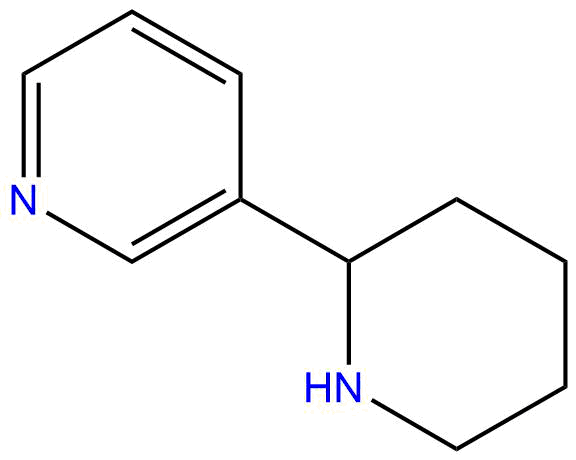
Octagonal maple alkaloid, chemical name 3- (piperidin-2-yl) pyridine, molecular formula C ₁₀ H ₁₄ N ₂, molecular weight 162.2360 g/mol. Its structure is composed of a pyridine ring and a pyridine ring connected by a carbon carbon single bond, with the connection site located at the 3rd position of the pyridine ring and the 2nd position of the pyridine ring. This dual ring structure endows octagonal maple alkaloids with unique stereochemical properties. Due to the chiral center of the carbon atom at position 2 of the pyridine ring, there exists a pair of enantiomers of octagonal alkaloid: (S) - anabasine and (R) - anabasine. The naturally occurring star anise alkaloids are usually racemic (± - Anabasine), but the enantiomer ratios may vary depending on plant sources or extraction conditions. This chiral feature is crucial for its interaction with biological targets, as isomers of different configurations may exhibit vastly different pharmacological activities.
In terms of physical and chemical properties, the oil-water partition coefficient (LogP) of star anise alkaloid is 1.0703, indicating that it has a certain lipophilicity and is conducive to penetrating biofilms. Its topological polar surface area (TPSA) is 24.92 Å ², far below the recommended upper limit of 140 Å ² for oral medications, which is consistent with its ability to efficiently cross the blood-brain barrier (BBB). The calculated water solubility is 125.91 mg/mL, indicating good water solubility, which is due to the easy protonation of two nitrogen atoms (nitrogen on the pyridine ring and pyridine ring) in its structure under physiological pH conditions, forming water-soluble salts. The pKa values of star anise alkaloids are approximately 8.0-9.0 (pyridine ring nitrogen) and 4.0-5.0 (pyridine ring nitrogen), making them mainly exist in cationic form at physiological pH, which is crucial for their binding with nAChRs. In addition, its UV absorption spectrum has a characteristic absorption peak at around 260 nm, which can be used for qualitative and quantitative analysis. These physicochemical properties collectively determine the absorption, distribution, metabolism, and excretion (ADME) process of star anise alkaloids in the body.
Plant sources and extraction methods
Octagonal maple alkaloid was initially isolated and discovered from plants in the Alangiaceae family, which is also the origin of its Chinese name. Octagonal Maple Genus(Alangium)Plants, especially Chinese star anise maple(Alangium chinense)Hetan Tree(Alangium salvifolium)It is the main natural source of star anise alkaloids. These plants are often used in traditional medicine to treat pain related diseases such as rheumatism, rheumatism, and traumatic injuries. In addition to the Octagonal Maple family, Octagonal Maple Alkaloids are also widely present in other plant families and genera, especially in Solanaceae plants. For example, tobacco(Nicotiana tabacum)In addition to nicotine, it also contains trace amounts of star anise alkaloids. In addition, in certain plants of the Chenopodiaceae family, such as the leaf free poisonous quinoa(Anabasis aphylla)In China, the content of star anise alkaloids is also quite abundant, and it is even named "Anabasine" because of this. This cross family and genus distribution suggests that star anise alkaloids may play an important ecological role in the plant kingdom, such as serving as defensive secondary metabolites to resist insect or herbivorous invasion.
The method of extracting star anise alkaloids from plant materials is mainly based on the chemical properties of their alkaloids. The classic extraction process usually includes the following steps: first, dry plant materials (such as roots, stems, and leaves) are crushed and soaked or percolated in acidic aqueous solutions (such as 0.5-2% hydrochloric acid or sulfuric acid) to dissolve alkaloids in salt form. Then, the acidic extraction solution is alkalized (usually adjusted to pH 9-10 with ammonia or sodium hydroxide) to allow free alkaloids to precipitate from the aqueous phase, followed by liquid-liquid extraction using organic solvents such as chloroform, dichloromethane, or ether. Combine the organic phases, dry with anhydrous sodium sulfate, and concentrate under reduced pressure to obtain the crude extract of total alkaloids. In order to obtain high-purity star anise alkaloids, further separation and purification steps are required. Common methods include column chromatography, such as using a silica gel column and gradient elution with chloroform methanol or ethyl acetate methanol systems in different ratios; Or use alumina columns. For alkaloid mixtures with similar structures, techniques such as high-performance liquid chromatography (HPLC) or high-speed countercurrent chromatography (HSCCC) can achieve more efficient separation. Modern analytical techniques, such as nuclear magnetic resonance (NMR) and mass spectrometry (MS), are used for final structural identification and purity confirmation. It is worth noting that due to the toxicity of star anise alkaloids, appropriate safety precautions need to be taken during extraction and operation.
Pharmacological activity research
The pharmacological activity research of star anise alkaloids mainly focuses on their effects on the nervous system, especially in the field related to pain regulation. One of its most notable activities is its analgesic effect. Early pharmacological experiments and folk medication experience have shown that star anise alkaloids have significant analgesic effects. Animal model studies, such as hot plate method, acetic acid writhing method, and formalin test, have all confirmed that octagonal maple alkaloids can dose dependently increase pain threshold, and their analgesic efficacy is even comparable to morphine in some models. However, its treatment window is relatively narrow, and significant toxic side effects such as salivation, muscle tremors, and respiratory depression can be observed near the effective analgesic dose, which severely limits its direct development as an analgesic.
In addition to its analgesic effect, star anise alkaloids also exhibit various other pharmacological activities. As an agonist of nAChRs, it has a significant impact on the cardiovascular system, causing an increase in blood pressure and heart rate (through the activation of nAChRs on sympathetic ganglia), followed by a potentially long-lasting hypotensive effect (possibly through the activation of parasympathetic ganglia or direct action on the vascular endothelium). In addition, star anise alkaloids also have a stimulating effect on the respiratory system. Low doses can excite the respiratory center, but high doses can cause respiratory paralysis, which is the main cause of its acute toxicity. In terms of the digestive system, it can promote gastrointestinal peristalsis and glandular secretion. It is worth noting that star anise alkaloid is a potent teratogen that can cause fetal developmental abnormalities, especially skeletal and central nervous system defects, when exposed during pregnancy. This characteristic has attracted much attention in tobacco related research, as smokers may produce trace amounts of star anise alkaloids through tobacco metabolism, but its teratogenic risk is much lower than that of nicotine. In addition, star anise alkaloids also have insecticidal activity and can act on nAChRs in insects, causing nerve excitation, spasms, and even death, making them a lead compound for developing new insecticides.
Mechanism of action and molecular targets
The pharmacological activity of star anise alkaloids, especially their analgesic and neurotoxic effects, mainly stems from their excitatory effects on nicotinic acetylcholine receptors (nAChRs). NAChRs are members of the ligand gated ion channel superfamily, widely distributed in the central and peripheral nervous systems. Octagonal maple alkaloids have a similar structure to acetylcholine (ACh) and can bind to the alpha subunits of nAChRs (especially subtypes such as α 4 β 2, α 3 β 4, and α 7), simulating the action of ACh. This leads to the opening of ion channels, causing Na ⁺, Ca ² ⁺ influx and K ⁺ efflux, thereby triggering depolarization of the cell membrane and generating excitatory signals. The selectivity and affinity of star anise alkaloids for different subtypes of nAChRs vary, which explains their complex pharmacological spectrum. For example, its high affinity for the α 4 β 2 subtype may be associated with its analgesic and addictive properties, while its excitatory effect on the autonomic ganglia (α 3 β 4) leads to cardiovascular and gastrointestinal effects.
In terms of analgesic mechanism, the effect of star anise alkaloids cannot be explained by a single target. In addition to directly stimulating central nAChRs (such as receptors located in the spinal cord and brainstem pain transmission pathways) to regulate pain signal transmission, increasing evidence suggests that their analgesic effects also involve the coordinated or indirect regulation of multiple other targets. The target list you provided (TRPV1, CNR1, OPRD1, PTGS1, TRPA1, PTGS2, SLC6A4, OPRM1, OPRK1, DRD2) reveals the complexity of its analgesic mechanism. For example, TRPV1 and TRPA1 are key ion channels involved in peripheral pain signal transduction, and camptothecin may indirectly regulate the activity of these channels by exciting nAChRs, or directly interact with them. CNR1 (cannabinoid receptor 1) and OPRM1/OPRK1/OPRD1 (opioid receptor) are classic analgesic targets, and octagonal alkaloids may synergistically enhance analgesic effects by activating endogenous opioid peptides or cannabinoid systems, or by conformational modulation with these receptors. PTGS1/PTGS2 (cyclooxygenase) are key enzymes involved in prostaglandin synthesis and are associated with inflammatory pain. Octagonal alkaloids may exert partial analgesic effects by affecting the inflammatory pathway. SLC6A4 (5-hydroxytryptamine transporter) and DRD2 (dopamine receptor D2) are involved in the descending pain suppression pathway and emotion regulation, and the regulation of the monoaminergic system by scopolamine may also be involved in its analgesic effect. Therefore, the analgesic effect of star anise alkaloids is the result of multi-target and multi pathway network regulation, with the core being the activation of nAChRs, but downstream effects are amplified and integrated through interactions with other pain related targets.
Evaluation of drug properties and pharmacokinetics
Based on the Lipinski's Rule of Five and the evaluation system for drug properties in modern drug development, an analysis was conducted on star anise alkaloids. Its molecular weight (162.24 Da) is much smaller than 500 Da, LogP (1.07) is less than 5, and the number of hydrogen bond donors (1, N-H on the pyridine ring) and hydrogen bond acceptors (2, 2 nitrogen atoms) meet the regulatory requirements (less than 5 and 10, respectively). These parameters indicate that star anise alkaloids have good oral absorption potential and permeability. The TPSA value (24.92 Å ²) also supports its ability to efficiently penetrate the blood-brain barrier, which is consistent with the predicted "blood-brain barrier: high" result. The Ames test result is 0.0, indicating that it has no direct mutagenicity in this standard test, but this is not contradictory to its known teratogenicity, as teratogenicity involves developmental toxicity and differs from genetic toxicity mechanisms. HERG inhibition is predicted as' no ', indicating a lower risk of causing QT interval prolongation and apical torsion type ventricular tachycardia in the heart. Overall, star anise alkaloids have shown certain potential as drugs in terms of physicochemical properties and preliminary safety screening, but their main development obstacles lie in their narrow therapeutic index and significant neurotoxicity.
In terms of pharmacokinetics, the process of star anise alkaloids in vivo is closely related to their physicochemical properties. Due to its high water solubility and lipophilicity, star anise alkaloids can be rapidly absorbed from the gastrointestinal tract after oral administration. After absorption, due to its high BBB penetration, it can quickly distribute to the central nervous system, which is consistent with its rapid onset of neurological effects. The metabolism of star anise alkaloids in the body is mainly carried out through the liver cytochrome P450 enzyme system (CYP450), and the main metabolic pathways include hydroxylation of pyridine and pyridine rings, N-oxidation, and subsequent glucuronic acid or sulfuric acid binding reactions. Its metabolites may retain some biological activity or toxicity. Octagonal maple alkaloids and their metabolites are mainly excreted through the kidneys. It is worth noting that its half-life varies greatly among different species and doses, but is usually short (several hours). Its pharmacokinetic characteristics, especially its rapid entry into the brain and short half-life, make it very useful as a tool for studying nAChRs function, but it also means that frequent administration is required to maintain therapeutic effects, which further increases the risk of toxic side effects. Therefore, structural modification of star anise alkaloids to improve their therapeutic index is a key direction for converting them into usable drugs.
Clinical application prospects and prospects
Although star anise alkaloids themselves have not been directly applied in clinical practice due to their toxicity, their unique pharmacological activity and clear molecular targets have shown important application prospects in multiple fields, especially in new drug discovery and tool drug research.
Firstly, in the field of analgesic drug development, star anise alkaloid is a highly valuable lead compound. By modifying its structure, the aim is to enhance selectivity towards specific subtypes of nAChRs (such as α 4 β 2) while reducing activity towards autonomous ganglion (α 3 β 4) and neuromuscular junction (α 1 β 1 γ δ) receptors, thereby separating analgesic effects from cardiovascular and respiratory side effects. For example, by introducing different substituents on the pyridine or pyridine ring of star anise alkaloids, or changing their chiral configuration, some analogues with higher selectivity and wider therapeutic window have been synthesized. These derivatives are expected to become novel non opioid analgesics for the treatment of chronic pain and neuropathic pain.
Secondly, as a tool drug for studying the structure and function of nAChRs, star anise alkaloids have irreplaceable value in basic neuroscience research. Its pharmacological properties, similar but different from nicotine, make it an ideal probe for studying mechanisms such as nicotine addiction, cognitive function, and neuroprotection. By comparing the differences in the effects of star anise alkaloids with nicotine and other nAChRs ligands, we can gain a deeper understanding of the specific roles of different receptor subtypes in physiological and pathological processes.
Thirdly, the insecticidal activity of star anise alkaloids gives them potential applications in the field of agricultural chemistry. Insecticides developed based on the structure of star anise alkaloids, such as the "neonicotinoid" insecticides (although their core structure is pyridine methylamine, star anise alkaloids are an important source of inspiration), have achieved great commercial success. In the future, by further optimizing the selectivity of star anise alkaloid derivatives towards insect nAChRs and reducing their toxicity to mammals, it is expected to develop safer and more environmentally friendly green pesticides.
Finally, the study of the teratogenicity of star anise alkaloids is of great significance for understanding the mechanisms of developmental biology and chemical teratogenicity. As a known potent teratogen, it can be used to establish animal teratogenic models, study the relationship between abnormal nAChRs signaling pathways and birth defects during embryonic development, and be used to screen and evaluate the developmental toxicity risks of other compounds.
Conclusion
Octagonal maple alkaloid, a simple bicyclic alkaloid derived from ancient plants, has become a classic example in the field of natural product research due to its unique chemical structure and complex pharmacological activity. It is not only an effective ingredient in traditional herbal medicine that exerts analgesic effects, but also an alarming teratogen in modern toxicology. Through in-depth analysis of its chemical, biological, and pharmacological properties, we not only revealed the core mechanism of its broad physiological effects through activation of nicotinic acetylcholine receptors, but also recognized the complex interaction of its action network involving multiple pain related targets such as TRPV1, opioid receptors, and cannabinoid receptors. Its pharmacological evaluation revealed its potential and challenges as a lead compound: good physicochemical properties and preliminary safety data, in stark contrast to narrow therapeutic indices and significant neurotoxicity. Looking ahead, the research focus of star anise alkaloids will be on structure based drug design to develop highly selective and low toxicity nAChRs ligands for pain treatment, neuroscience research, and even green pesticide creation. Meanwhile, in-depth research on its teratogenic mechanism will also provide valuable insights for developmental toxicology. The story of star anise alkaloids is far from over, and it will continue to serve as an important bridge connecting natural product chemistry, neuropharmacology, and drug discovery, inspiring scientists to draw wisdom from nature and make new contributions to human health and well-being.