Introduction/Overview
Diabetes and obesity have become major global public health challenges, in which type 2 diabetes (T2DM) and its complications seriously affect human health and quality of life. Although traditional hypoglycemic drugs are effective, they often come with side effects such as weight gain, hypoglycemia, or gastrointestinal reactions. Therefore, finding highly efficient and low toxicity new therapeutic drugs from natural products has always been an important direction for drug development. Flavonoids have attracted much attention due to their wide range of biological activities and good safety. Azaloatin, also known as 5-hydroxy-3,7,4 '- trimethoxyflavonol, is an O-methylated flavonol isolated from Rhododendron plants. Since its discovery, studies have revealed its significant DPP-IV inhibitory activity, laying a theoretical foundation for its application in the treatment of T2DM and obesity. In recent years, with the deepening of research, the pharmacological activities of rhododendron in anti-inflammatory, antioxidant, neuroprotective and other aspects have been successively revealed. Its mechanism of action involves the regulation of multiple key signaling pathways such as interleukin-6 (IL-6), signal transduction and transcription activator 3 (STAT3), nuclear factor kappa B (NF - κ B), etc. This article aims to systematically review the chemical structure, plant origin, pharmacological activity, mechanism of action, pharmacological evaluation, and clinical application prospects of rhododendron flavonoids, in order to provide comprehensive scientific references for the in-depth research and development of this natural product.
Chemical structure and physicochemical properties
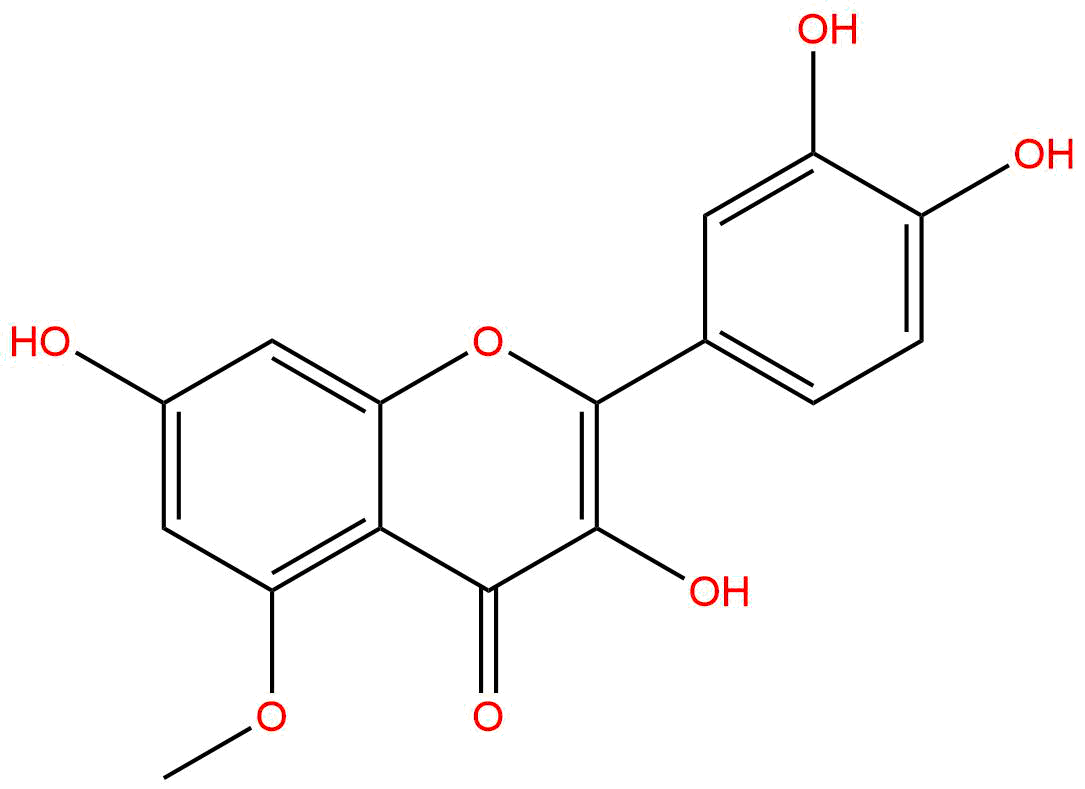
Rhododendron flavones (CAS number: 529-51-1) are a type of flavonol compound with a molecular formula of C17H14O7 and a molecular weight of 316.2650. Its basic chemical structure is the flavonol skeleton, which is the 2-phenylchromenone-3-ol structure. Its characteristic modification is that the 5th position of its A ring is a free hydroxyl group (- OH), while the 3rd, 7th, and 4th 'positions of its B ring are respectively replaced by methoxy groups (- OCH3), thus classified as O-methylated flavonols. This specific substitution pattern has a decisive impact on its physicochemical properties and biological activity.
From the analysis of physical and chemical properties, the lipid water partition coefficient (LogP) of rhododendron is 1.9742, indicating that it has a certain lipophilicity, but not highly hydrophobic, which is beneficial for its penetration and distribution in biofilms. Its topological polar surface area (TPSA) is 120.3600 Å ², reflecting the presence of multiple hydrogen bond acceptors (such as carbonyl, methoxy, and hydroxyl) in the molecule, which can affect its solubility and interaction with biomolecules. Its water solubility value is 0.0844 mg/mL, which belongs to the category of slightly soluble to poorly soluble. This suggests that in the development of formulations, it may be necessary to improve its solubility through strategies such as salt formation, micronization, or the use of solubilizers. The blood-brain barrier (BBB) permeability of rhododendron is predicted to be "low", indicating that it is not easily able to enter the central nervous system. This may help reduce central side effects for drugs that primarily target peripheral targets such as DPP-IV. In the preliminary safety evaluation, the risk of hERG inhibition is "no", indicating a low potential risk of inducing QT interval prolongation in the heart. The Ames test result is 0.6 (usually expressed as mutation rate, with a value close to 1 or lower than 2 indicating a preliminary negative result), which suggests that it has no significant genetic toxicity potential and provides safety support for its further development.
Plant sources and extraction methods
Rhododendron flavonoids are mainly found in various plants of the Rhododendron genus in the Ericaceae family. There are a wide variety of plant species in this genus, widely distributed in Asia, Europe, and North America, many of which are used in traditional medicine to treat diseases such as inflammation, pain, and rheumatism. In addition to the Rhododendron genus, in some reports, rhodoflavin is also sporadically found in other plant families and genera, but its main and most abundant source is still Rhododendron plants, such as Rhododendron dauricum and Rhododendron micranthum in Xing'an.
Extracting rhododendron from plant materials usually follows the conventional process of natural product chemistry. Firstly, crush the dried plant leaves, flowers, or whole grass. The extraction method often uses organic solvent extraction, and commonly used solvents include methanol, ethanol, acetone, or their mixed solutions with water. The principle of similar solubility is used to dissolve flavonoids from plant cells. In order to improve extraction efficiency, modern technologies such as ultrasound assisted extraction (UAE), microwave-assisted extraction (MAE), and supercritical fluid extraction (SFE) have also been applied, which can shorten extraction time, reduce solvent dosage, and improve the yield of target products.
After filtration and concentration, the crude extract needs to be systematically separated and purified to obtain high-purity rhododendron. The commonly used separation techniques include:
1. Liquid-liquid extraction Using solvents of different polarities (such as petroleum ether, ethyl acetate, n-butanol) to perform fractional extraction on the concentrate and preliminarily enrich the target components.
2. column chromatography This is the core purification step. Silica gel, polyamide, or macroporous adsorption resin are commonly used as stationary phases, and gradient elution is performed using solvent systems such as chloroform methanol and petroleum ether ethyl acetate in different ratios to separate each component based on polarity differences.
3. Preparation type high performance liquid chromatography (Prep HPLC)For the final stage of fine purification, reverse phase Prep HPLC (commonly using C18 column with methanol water or acetonitrile water as mobile phase) is an effective means to obtain high-purity rhododendron monomers.
The isolated compounds need to be structurally confirmed by methods such as nuclear magnetic resonance (NMR, including 1H-NMR and 13C-NMR), mass spectrometry (MS), ultraviolet spectroscopy (UV), and thin layer chromatography (TLC) or high-performance liquid chromatography (HPLC) compared to standard samples.
Pharmacological activity research
Rhododendron flavonoids exhibit diverse pharmacological activities, with research initially focused on metabolic diseases and later expanded to anti-inflammatory, antioxidant, and other fields.
-
Anti diabetes and anti obesity activity The most prominent activity of rhododendron is as a competitive inhibitor of dipeptidyl peptidase IV (DPP-IV). DPP-IV can rapidly degrade intestinal insulinotropic hormones (such as glucagon like peptide-1, GLP-1), and inhibiting DPP-IV can prolong the physiological activity of GLP-1, thereby promoting glucose dependent insulin secretion and inhibiting glucagon release, achieving the goal of lowering blood sugar. The in vitro enzyme activity inhibition experiment confirmed the effective inhibition of DPP-IV by rhodopsin. In diet induced obesity (DIO) mice or diabetes model animals, rhododendron administration can significantly improve glucose tolerance, reduce fasting blood glucose, increase insulin sensitivity, and with weight gain slowing down or fat tissue reduction, reflecting its potential of "killing two birds with one stone".
-
anti-inflammatory activity This is another core activity of rhododendron flavonoids that has been extensively studied. Rhododendron yellow pigment has shown significant anti-inflammatory effects in various in vitro inflammation models (such as macrophages stimulated by lipopolysaccharide LPS) and in vivo models (such as carrageenan induced paw swelling in mice and dextran sulfate sodium DSS induced colitis). It can inhibit the excessive production of pro-inflammatory mediators such as nitric oxide (NO) and prostaglandin E2 (PGE2), and downregulate the expression of various pro-inflammatory cytokines and chemokines.
-
antioxidant activity As a flavonoid compound, rhododendron has the ability to scavenge free radicals due to its phenolic hydroxyl structure. Research has shown that rhododendron yellow pigment can effectively scavenge DPPH and ABTS free radicals, and exhibits iron ion reduction antioxidant capacity. Its antioxidant effect helps to reduce oxidative stress, which is a key driver of complications of diabetes, neurodegenerative diseases and inflammatory processes.
-
Other potential activities Preliminary studies also suggest that rhododendron may have neuroprotective, anti nociceptive (analgesic), and anti-tumor activities, but research in these areas is still in its infancy and requires more evidence to support it.
Mechanism of action and molecular targets
The multiple pharmacological activities of rhododendron stem from its regulation of multiple key signaling pathways and molecular targets within cells. Its mechanism of action is complex and interrelated, especially in anti-inflammatory and metabolic regulation.
-
Core target: DPP-IV: The direct and specific inhibition of DPP-IV enzyme activity is the starting point of the anti diabetes effect of rhododendron. By protecting GLP-1 and activating downstream cAMP/PKA pathways, insulin secretion from pancreatic beta cells is promoted.
-
The core signaling network of anti-inflammatory effects The anti-inflammatory effect of rhododendron flavonoids is mainly achieved by regulating two core inflammatory pathways, NF - κ B and STAT3.
- NF - κ B pathway Rhododendron yellow pigment can inhibit the phosphorylation and degradation of I κ B α, thereby preventing the translocation of NF - κ B (p65/p50 dimer) to the nucleus. In the nucleus, it can also inhibit the binding activity between NF - κ B and DNA. This leads to widespread suppression of the expression of a series of pro-inflammatory genes downstream, including TNF-α、IL-6、NOS2 Inducible nitric oxide synthase (iNOS)PTGS2(Cyclooxygenase-2, COX-2), etc.
- STAT3 pathway STAT3, which is abnormally activated in inflammation and cancer, is another key target of rhodopsin. It can inhibit the phosphorylation (activation) process of STAT3, thereby blocking its mediated gene transcription and synergistically enhancing anti-inflammatory effects.
- Inflammatory bodies and pyroptosis Research shows that rhododendron yellow pigment can inhibit CASP1 Activation of cysteine protease-1. CASP1 is a downstream effector molecule of the NLRP3 inflammasome pathway, responsible for cleaving IL-1 β and IL-18 precursors into active forms and inducing cell pyroptosis. Inhibition of CASP1 suggests that rhododendron may intervene in the overactivation of inflammasomes.
- Other inflammation related targets Rhododendron flavonoids can also be down regulated PTGS1 The activity of COX-1 may be regulated by modulating transient receptor potential channels TRPV1 and TRPA1 To affect pain and neurogenic inflammation.
-
Multi target synergistic effect Chronic low-grade inflammation is an important bridge connecting obesity, insulin resistance, and T2DM in metabolic diseases. Rhododendron flavonoids not only directly improve blood glucose by inhibiting DPP-IV, but also alleviate inflammation in adipose tissue and liver by strongly inhibiting inflammatory factors such as IL-6 and TNF - α, improving insulin signaling (such as the IRS-1/PI3K/Akt pathway), thereby fundamentally alleviating insulin resistance. This dual impact on metabolic inflammation is an important mechanistic basis for its therapeutic potential.
Evaluation of drug properties and pharmacokinetics
Based on its physicochemical parameters and preliminary biological data, a preliminary evaluation of the pharmacological properties of rhododendron flavonoids was conducted.
-
Prediction and Challenges of Absorption, Distribution, Metabolism, and Excretion (ADME):
- absorb The moderate LogP value and large TPSA suggest that its oral absorption may be at a moderate level, but its low water solubility is the main bottleneck limiting its oral bioavailability. Developing suitable oral formulations (such as solid dispersions, nanocrystals, phospholipid complexes) is crucial.
- distribution The predicted blood-brain barrier permeability is low, indicating that it is mainly distributed in peripheral tissues and organs, which is beneficial for its treatment of peripheral inflammation and metabolic diseases.
- Metabolism As a flavonoid compound, rhododendron is likely to undergo extensive phase II metabolism in the body, such as glucuronidation and sulfation, as well as possible demethylation (catalyzed by cytochrome P450 enzymes). This may lead to a rapid decrease in the exposure of its prototype drug in the bloodstream. Studying its metabolites and their activities is an important direction for the future.
- excretion Metabolites are mainly excreted through the kidneys or bile.
-
Current status of pharmacokinetic research At present, there are relatively limited research reports on the pharmacokinetics of rhododendron system. Limited animal experimental data shows that after oral administration, the plasma concentration is lower, the peak time is faster, and the elimination half-life may be shorter, which is consistent with the predicted broad metabolism. In the future, it is necessary to establish sensitive and specific biological analysis methods (such as LC-MS/MS) to comprehensively study their pharmacokinetic characteristics in different species of animals.
-
Preliminary safety As mentioned earlier, its lack of hERG inhibition risk and negative Ames test results are positive early safety signals. However, a comprehensive preclinical safety evaluation is still needed, including repeated administration toxicity, reproductive toxicity, carcinogenicity testing, etc.
-
Considerations for formulation development To enhance its pharmacological properties, future formulation research can focus on: ① improving solubility and dissolution rate; ② Improve gastrointestinal stability; ③ Design targeted delivery systems (such as targeting adipose tissue or inflammatory sites); ④ Explore prodrug strategies to improve its metabolic stability.
Clinical application prospects and prospects
Rhododendron flavonoids, as a natural lead compound with multi-target effects, have shown broad clinical application prospects in the following fields:
-
Type 2 diabetes and its complications As a DPP-IV inhibitor, it can be directly developed into a novel hypoglycemic drug. Compared with existing DPP-IV inhibitors (such as Sigliptin), its unique anti-inflammatory properties may bring additional benefits, such as better protection of pancreatic beta cell function, improvement of inflammatory damage in diabetes nephropathy or retinopathy. Explore its potential as a monotherapy or in combination with drugs such as metformin.
-
Obesity and related metabolic syndrome By inhibiting DPP-IV and anti-inflammatory dual mechanisms, rhodopsin can not only control blood sugar, but also intervene in obesity related adipose tissue inflammation and systemic insulin resistance, and is expected to be used for the treatment of obesity and non-alcoholic fatty liver disease (NAFLD).
-
Inflammatory diseases Based on its powerful anti-inflammatory mechanism, rhododendron yellow pigment can be extended for research on other chronic inflammatory diseases, such as rheumatoid arthritis, inflammatory bowel disease (IBD), asthma, neuroinflammatory related diseases (such as Alzheimer's disease, Parkinson's disease), etc. Its multi-target characteristics may have more advantages than single target anti-inflammatory drugs.
-
Prospects for Drug Development Strategies:
- structural optimization Using it as the parent nucleus, medicinal chemical modifications are carried out with the aim of enhancing activity, improving pharmacokinetic properties (such as oral bioavailability and metabolic stability), and reducing potential toxicity.
- Compound preparation Consider combining rhododendron flavonoids with other natural products or drugs that have complementary effects to form a compound and exert synergistic effects.
- Nutritional supplements/functional foods In view of its natural source and multiple health functions, rhododendron extract with high purity can be used as a dietary supplement or functional food ingredient for the auxiliary prevention and management of diabetes and inflammation.
However, there are still many challenges to clinical application: deeper elucidation of pharmacological mechanisms, comprehensive preclinical ADME and safety evaluation, development of large-scale production processes that meet drug standards, and ultimately rigorous clinical trial validation. Future research should focus on filling these gaps.
Conclusion
Rhodoflavin, an O-methylated flavonol derived from Rhododendron plants, has become a highlight molecule in the pharmacological research of natural products due to its clear DPP-IV inhibitory activity and powerful multi-target anti-inflammatory effects. It not only shows unique multi mechanism synergy in the treatment of type 2 diabetes and obesity, but also covers key inflammatory pathways such as IL-6/STAT3, NF - κ B, CASP1, etc., providing a theoretical basis for its application in more extensive inflammatory diseases. Although it faces challenges in drug development such as low water solubility and potentially rapid metabolism, modern medicinal chemistry and pharmaceutical technology provide possibilities for addressing these issues. The road from natural lead compounds to candidate drugs is long and requires rigorous scientific exploration. Thoroughly conducting pharmacokinetic and toxicological studies on rhododendron, and based on this, conducting rational structural optimization and formulation innovation, will greatly promote its transition from laboratory to clinical application. The research case of rhododendron once again confirms the eternal value of natural products as a source of innovative drugs, and its multi-target mode of action provides useful insights for the development of new strategies for treating complex diseases such as metabolic inflammatory syndrome.