Introduction/Overview
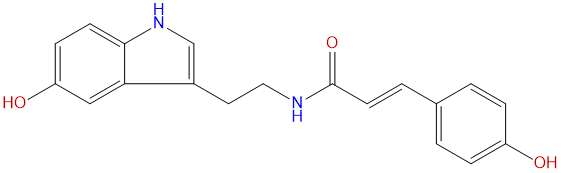
N - (p-coumaroyl) - Serotonin (NCS) is a naturally occurring amide natural product, structurally formed by the connection of serotonin and p-coumaroyl through amide bonds. As a composite molecule with both phenolic and amine structures, NCS has been found in various plants, especially in some traditional Chinese medicinal materials where its content is relatively abundant. In recent years, with the rapid development of natural product pharmacology, NCS has received widespread attention due to its significant biological activity, especially its potential therapeutic effects in neurological diseases.
Depression, as a prevalent mental disorder worldwide, seriously affects the quality of life and social functioning of patients. The current antidepressant drugs have problems such as delayed efficacy, diverse side effects, and drug resistance, and there is an urgent need to develop new safe and effective antidepressant drugs. NCS has shown good antidepressant potential in vitro and in vivo experiments, involving multiple neurotransmitter systems and signaling pathways, including key targets such as monoamine oxidase (MAO), serotonin transporter (SERT), GSK3 β, CREB-BDNF, suggesting that it may achieve antidepressant effects through multi-target synergistic regulation.
This article provides a systematic review of the chemical structure and physicochemical properties, plant sources, and extraction methods of NCS. It delves into its pharmacological activity and mechanism of action, evaluates its pharmacological properties and pharmacokinetic characteristics, and looks forward to its potential in clinical applications and future research directions.
Chemical structure and physicochemical properties
The molecular formula of N - (p-coumaroyl) - hydroxytryptamine is C18H18N2O4, with a molecular weight of 322.3640. Its structure is composed of serotonin (5-hydroxytryptamine) and p-coumaroyl (4-hydroxycinnamic acid derivative) connected by amide bonds, forming a complex molecule with phenolic hydroxyl and amino groups. This structure endows NCS with excellent antioxidant capacity and the potential to bind to multiple protein targets.
In terms of physical and chemical properties, the LogP of NCS is 2.6414, indicating that it has moderate lipid solubility and is conducive to cell membrane penetration. However, its polar surface area (TPSA) is 85.35 Å ², suggesting that it has certain polar groups that facilitate interaction with polar targets. Low water solubility (0.0645 mg/mL) may limit its oral bioavailability. The low penetration ability of the blood-brain barrier suggests limited exposure to the central nervous system, but this may also reduce the risk of central toxicity. The hERG channel inhibition experiment was negative, indicating a low risk of cardiac toxicity. The Ames mutagenicity test result is 0, indicating a low risk of genetic toxicity.
In summary, the physicochemical properties of NCS are suitable for further pharmacological research and drug development, but its water solubility and brain penetration need to be optimized through drug design or administration methods.
Plant sources and extraction methods
NCS mainly exists in various traditional medicinal plants, especially in mulberry plants (such as mulberry leaves), grass plants, and some traditional Chinese medicinal materials with higher content. It has abundant natural sources and usually exists in free or bound form in plants.
Common plant sources include:
- Mulberry leaves (Morus alba): As a traditional Chinese medicinal herb, mulberry leaves contain abundant phenolic and amine compounds, and NCS is one of their important active ingredients.
- NCS has also been detected in the seeds and rhizomes of other plants containing serotonin derivatives, such as certain grasses.
The extraction method mainly adopts organic solvent extraction combined with chromatographic separation technology:
- Extract Polar organic solvents such as methanol, ethanol, or ethyl acetate are commonly used to leach dry plant powders and extract complexes containing NCS.
- Separation and purification Purification of NCS is achieved through techniques such as silica gel column chromatography and reverse phase high performance liquid chromatography (RP-HPLC), combined with UV detection and mass spectrometry confirmation.
- Structural Identification Confirm its chemical structure through methods such as nuclear magnetic resonance (NMR), mass spectrometry (MS), and infrared spectroscopy (IR).
In recent years, the application of ultrasound assisted extraction and microwave-assisted extraction technologies has improved the extraction efficiency and purity of NCS, providing technical support for its large-scale separation.
Pharmacological activity research
The pharmacological activity of NCS mainly focuses on the nervous system, particularly exhibiting significant antidepressant potential. In addition, its antioxidant, anti-inflammatory, and neuroprotective effects also provide a basis for its multi-target pharmacological mechanism.
Antidepressant effect
Multiple in vitro and animal model studies have shown that NCS can significantly improve depression like behavior, manifested as prolonged activity time and reduced anxiety like behavior in forced swimming tests (FST) and tail suspension tests (TST). Its antidepressant effect is closely related to multi-target regulation:
- Inhibit the activity of MAO-A and MAO-B, reduce the metabolic degradation of monoamine neurotransmitters such as serotonin and norepinephrine, and increase their brain concentration.
- Regulating the function of serotonin transporter (SERT, SLC6A4) and enhancing the sustained action of 5-HT in synaptic cleft.
- Activate 5-HT1A receptor (HTR1A) to promote neurotransmitter signaling.
- Inhibit glycogen synthase kinase 3 β (GSK3B), regulate neuronal survival and plasticity.
- By activating the cAMP response element binding protein (CREB1) and brain-derived neurotrophic factor (BDNF) signaling pathways, it promotes neuronal growth and synaptic plasticity.
- Regulate the gamma aminobutyric acid A receptor subunit (GABRA1), enhance inhibitory nerve conduction, and alleviate symptoms of anxiety and depression.
- Affects the activity of catechol-O-methyltransferase (COMT) and regulates dopamine metabolism.
Antioxidant and anti-inflammatory effects
NCS contains polyphenolic hydroxyl structures with strong free radical scavenging ability, which can reduce oxidative stress damage to neurons. Its anti-inflammatory effect is achieved by inhibiting the expression of pro-inflammatory cytokines (such as TNF - α, IL-1 β) and the activity of the NF - κ B signaling pathway, reducing neuroinflammation, and synergistically promoting neuroprotection.
Neuroprotective effect
Through the above-mentioned antioxidant and anti-inflammatory mechanisms, NCS has shown the potential to protect neurons and promote nerve regeneration in various neural injury models, indicating its application value in neurodegenerative diseases.
Mechanism of action and molecular targets
The antidepressant and neuroprotective effects of NCS involve synergistic regulation of multiple targets and pathways, and the specific mechanisms are as follows:
Inhibition of monoamine oxidase (MAO)
MAO-A and MAO-B are key enzymes involved in the metabolism of monoamine neurotransmitters in the brain. NCS competitively inhibits MAO activity, reduces the degradation of serotonin and norepinephrine, increases neurotransmitter concentration, enhances neural signal transmission, and alleviates depressive symptoms.
Serotonin transporter (SERT) regulation
NCS can regulate the function of the serotonin transporter encoded by SLC6A4, inhibit its reuptake of 5-HT, prolong the action time of 5-HT in synaptic cleft, and enhance signal transmission between neurons.
5-HT1A receptor activation
5-HT1A receptors are important regulatory receptors in the serotonin system, involved in emotion regulation. NCS activates this receptor, promotes downstream signaling pathways, and improves depression related behaviors.
Inhibition of GSK3 β signaling pathway
GSK3 β is involved in neuronal apoptosis and neural plasticity regulation. NCS inhibits GSK3 β activity, which contributes to neuronal survival and functional recovery.
CREB-BDNF signaling axis activation
CREB is a key transcription factor in neurons that regulates BDNF expression. NCS enhances neural plasticity and repair ability by activating CREB, promoting the expression of BDNF.
GABA receptor regulation
NCS regulates GABRA1 subunits, enhances GABA mediated inhibitory nerve conduction, and alleviates anxiety and depression related symptoms.
COMT activity regulation
By regulating COMT, NCS affects dopamine metabolism, improves neurotransmitter balance, and assists in antidepressant effects.
In summary, NCS exerts a comprehensive antidepressant and neuroprotective effect by synergistically regulating neurotransmitter metabolism, receptor activity, and neural signal transduction through multiple targets and pathways.
Evaluation of drug properties and pharmacokinetics
The pharmacological evaluation of NCS shows that it has certain development potential, but there are still challenges.
Physicochemical properties
- The molecular weight is 322.36, which complies with Lipinski's rules and is conducive to oral absorption.
- LogP 2.64, Moderate lipid solubility, conducive to cell membrane penetration.
- TPSA 85.35, Moderate polarity is beneficial for target binding.
- Low water solubility (0.0645 mg/mL) may limit oral bioavailability.
Pharmacokinetic characteristics
Existing studies have shown that the blood-brain barrier penetration ability of NCS is relatively low, which may limit the direct action of the central nervous system, but this also reduces the risk of central toxicity. In the future, brain penetration can be enhanced through drug carriers or structural modifications.
toxicological evaluation
- The hERG channel inhibition experiment was negative, indicating a low risk of cardiac toxicity.
- The Ames mutagenicity test showed 0, indicating a low risk of genetic toxicity.
Drug Interactions and Metabolism
NCS may affect the metabolism of multiple neurotransmitters by inhibiting MAO and COMT, and potential drug interactions need to be considered. Its metabolic pathway has not been fully elucidated, and further research is needed on its in vivo metabolites and the role of metabolic enzymes.
Administration method and dosage form design
Given the low water solubility and poor brain penetration, future consideration could be given to designing nanocarriers, liposomes, or lipophilic precursor molecules to improve their pharmacokinetic properties.
Clinical application prospects and prospects
NCS, as a multi-target natural product, exhibits excellent antidepressant and neuroprotective potential and has the following clinical application prospects:
-
Development of antidepressant drugs NCS may become a lead compound for novel antidepressants by regulating multiple neurotransmitter pathways, especially suitable for treating patients who are resistant to traditional drugs or have significant side effects.
-
Adjuvant therapy for neurodegenerative diseases Its antioxidant and anti-inflammatory effects help slow down the progression of neurodegenerative diseases such as Alzheimer's disease and Parkinson's disease.
-
Anxiety and related mental disorders By regulating GABA receptors and serotonin system, NCS may alleviate anxiety symptoms and improve mental state.
-
Combination therapy strategy NCS can be used in combination with existing antidepressants to achieve synergistic effects, reducing dosage and side effects.
Future research directions
- In depth pharmacokinetic and metabolic research Clarify the in vivo absorption, distribution, metabolism, and excretion characteristics of NCS.
- Structural optimization and formulation development Enhance its bioavailability and brain penetration through chemical modification and nanotechnology.
- Preclinical safety evaluation Conduct long-term toxicology and safety studies on the system.
- Exploration of clinical trials Conduct early clinical trials to verify its safety and effectiveness.
- Analysis of multi-target mechanism Combining systems biology and molecular simulation to reveal its functional network in depth.
Conclusion
N - (p-coumaroyl) - hydroxytryptamine, as a structurally unique natural product, exhibits significant antidepressant and neuroprotective potential due to its ability to synergistically regulate neurotransmitter metabolism and signaling pathways through multiple targets. Its good safety and pharmacological characteristics provide strong support for the development of new drugs for the treatment of mental and neurological disorders. Although there are still pharmacokinetic limitations such as water solubility and brain penetration, NCS is expected to become an important candidate molecule for future antidepressant drug development through optimization of modern drug design and delivery technologies. The pharmacological mechanism research, pharmacokinetic analysis, and clinical validation of future systems will lay a solid foundation for their clinical translation and promote the innovative application of natural products in the treatment of mental and neurological disorders.