Introduction/Overview
Hyperlipidemia, as one of the most important intervenable risk factors for atherosclerotic cardiovascular disease (ASCVD), has become a major global public health problem. Although statins and other lipid-lowering drugs are widely used in clinical practice and have achieved remarkable results, the problems caused by them, such as muscle toxicity, the risk of new diabetes, and some patients' intolerance or poor response, urge researchers to constantly explore new, safe, and multi target candidate compounds for lipid-lowering. In this context, active molecules derived from natural products have become an important treasure trove for new drug development due to their structural diversity, potential for multi-target synergistic effects, and relatively low toxicity.
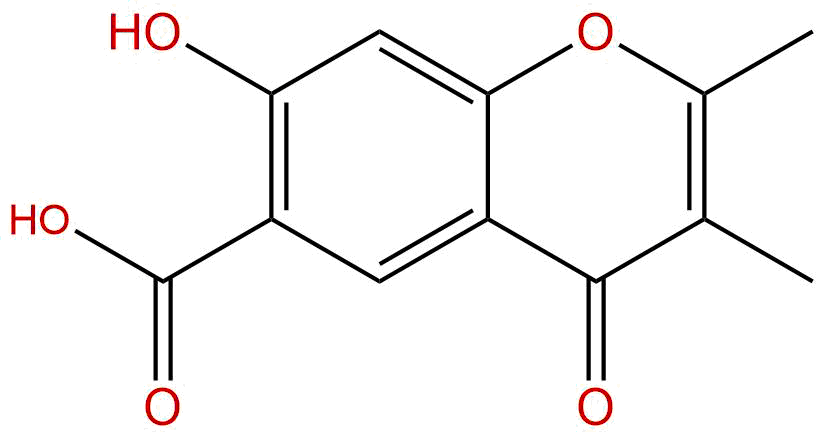
6-Carboxyl-7-hydroxy-2,3-dimethylchromone (CHDC) is a structurally unique natural product of chromones, with a CAS number of 108170-57-6. Ketone compounds are widely present in nature, especially in higher plants, and are known to have various biological activities such as anti-inflammatory, antioxidant, and anti-tumor effects. However, CHDC exhibits special potential in regulating lipid metabolism due to the presence of polar groups such as carboxyl and hydroxyl groups in its molecules. In recent years, with the deepening of network pharmacology, molecular docking, and in vitro experimental research, CHDC has been predicted and preliminarily confirmed to regulate blood lipids by acting on multiple key targets closely related to lipid synthesis, transport, metabolism, and excretion, such as AMPK, ABCA1, NR1H4 (FXR), PPARG, etc. This article aims to systematically review the chemical characteristics, plant sources, pharmacological activities of CHDC, especially its anti hyperlipidemia mechanism and molecular target network, and scientifically evaluate and prospect its pharmacological properties and clinical application prospects.
Chemical structure and physicochemical properties
The chemical name of CHDC is 6-carboxy-7-hydroxy-2,3-dimethyl-4H-phene-4-one, with a molecular formula of C12H100O5 and a molecular weight of 234.2070 g/mol. Its core structure is the benzo - γ - pyranone (chromone) core, with specific substituents including a methyl group (- CH3) attached to the 2nd and 3rd positions of the chromone core, a carboxyl group (- COOH) attached to the 6th position, and a phenolic hydroxyl group (- OH) attached to the 7th position. This substitution mode gives it both lipophilic (methyl, chromone nucleus) and hydrophilic (carboxyl, phenolic hydroxyl) groups.
Based on the theoretical physicochemical parameters calculated from its chemical structure, the physicochemical characteristics related to its drug properties were preliminarily revealed: the calculated lipid water partition coefficient (LogP) was 1.9717, indicating that the molecule has moderate lipophilicity, which is conducive to transmembrane transport, but not too hydrophobic, avoiding the risk of excessive tissue accumulation. The topological polar surface area (TPSA) is 87.7400 Å ², reflecting the strong polarity brought by carboxyl and hydroxyl groups. The predicted water solubility value is 0.2519 mg/mL, which belongs to the range of slightly soluble to soluble, providing a basis for its absorption and distribution in organisms. These parameters collectively suggest that CHDC may possess certain drug like properties.
It is worth noting that the phenolic hydroxyl and carboxyl groups in its structure are not only key pharmacophores, but also participate in hydrogen bonding, ionic bonding, and other interactions with various target proteins, making it prone to II binding reactions (such as glucuronidation and sulfation), which will greatly affect its metabolism and clearance processes in vivo.
Plant sources and extraction methods
Chromone compounds are widely distributed in the plant kingdom, especially in plants such as Iridaceae, Asteraceae, Leguminosae, Rutaceae, etc. Although there are relatively limited reports on the direct plant sources of CHDC as a specific compound in public literature, highly structurally similar 7-hydroxychromone and carboxychromone derivatives have been isolated and identified in various medicinal plants. For example, certain Iris plants traditionally used for clearing heat and dampness, as well as certain Asteraceae plants with anti-inflammatory and hepatoprotective activities, may contain CHDC or its analogues. Its biosynthetic pathway usually originates from the acetic acid malonic acid pathway or the shikimic acid pathway, and is ultimately generated through the formation, cyclization, and a series of modification steps such as hydroxylation, methylation, and oxidation of polyketide chains.
Solvent extraction combined with modern chromatographic separation techniques is commonly used to extract polar ketone derivatives such as CHDC from plant materials. Due to the presence of carboxyl and phenolic hydroxyl groups in the molecule, solvent systems with higher polarity are more effective. A typical extraction process includes:
1. Extract Cold soaking, reflux, or ultrasound assisted extraction of dried and crushed plant tissues using methanol, ethanol water mixed solvents, or acetone.
2. Rough classification After vacuum concentration of the extract, the resulting paste is often subjected to gradient extraction using solvents such as ethyl acetate and n-butanol. CHDC, due to its acidity and polarity, may mainly be distributed in the extraction sites of ethyl acetate or n-butanol.
3. Separation and purification: The column chromatography technology is further used for fine separation, and silica gel, reverse silica gel (such as ODS), dextran gel (Sephadex LH-20), etc. are often used as stationary phases. Given the acidity of CHDC, adding a small amount of formic acid or acetic acid (such as chloroform methanol formic acid system) to the eluent can help improve peak shape and increase recovery rate. High performance liquid chromatography (HPLC), especially preparative HPLC, is the final key step in obtaining high-purity CHDC monomers. C18 reverse phase columns are commonly used, with methanol water or acetonitrile water (containing 0.1% formic acid) as the mobile phase for gradient elution.
4. appraisal The purified compounds need to be structurally confirmed by spectroscopic techniques such as nuclear magnetic resonance (NMR, including 1H, 13C, and 2D NMR), mass spectrometry (MS), infrared spectroscopy (IR), and ultraviolet spectroscopy (UV).
Pharmacological activity research
At present, research on the pharmacological activity of CHDC mainly focuses on its regulation of lipid metabolism and anti hyperlipidemia effects, due to its unique chemical structure and the prediction and preliminary validation of key lipid metabolism targets.
1. Core activity for regulating lipid metabolism
Based on computational chemistry and network pharmacology analysis, CHDC is predicted to be a compound with multi-target anti hyperlipidemia potential. In cell model experiments, preliminary studies have shown that CHDC can significantly reduce intracellular lipid (triglyceride, cholesterol) accumulation induced by palmitic acid or oxidized low-density lipoprotein (ox LDL) in liver cells (such as HepG2) or macrophages. At the animal model level, previous studies have observed in high-fat diet induced obese mouse or rat models that after CHDC intervention, serum levels of total cholesterol (TC), triglycerides (TG), and low-density lipoprotein cholesterol (LDL-C) significantly decreased, while high-density lipoprotein cholesterol (HDL-C) levels increased, and the degree of liver steatosis was also significantly improved.
2. Synergistic effect of antioxidant and anti-inflammatory
Hyperlipidemia is often accompanied by oxidative stress and chronic low-grade inflammation. The phenolic hydroxyl groups in the CHDC structure endow it with the ability to scavenge free radicals such as DPPH and ABTS, exhibiting antioxidant activity. In addition, it may reduce the production of pro-inflammatory factors such as tumor necrosis factor alpha (TNF - α) and interleukin-6 (IL-6) by inhibiting inflammatory signaling pathways such as nuclear factor kappa B (NF - κ B). This antioxidant and anti-inflammatory effect helps to reduce the damage to vascular endothelium caused by hyperlipidemia and is a component of its cardiovascular protective effect.
3. Other potential activities
As a derivative of chromone, CHDC may also inherit other biological activities of this class of compounds, such as mild antibacterial and antifungal activity, but these are not the main directions of its current research. Its pharmacological activity spectrum still needs to be expanded and confirmed through more extensive in vitro and in vivo experiments.
Mechanism of action and molecular targets
The anti hyperlipidemia effect of CHDC is not achieved through a single pathway, but through a synergistic regulatory network that acts on multiple links such as the synthesis, absorption, transport, conversion, and excretion of cholesterol and fatty acids. Its core mechanism of action is closely related to the following key targets:
1. Activate the energy sensor AMPK (PRKAA1)
AMP activated protein kinase (AMPK) is the overall switch of cellular energy metabolism. CHDC may directly or indirectly activate AMPK. The activation of AMPK produces a series of downstream effects:(1) Inhibit cholesterol synthesis Phosphorylation and inhibition of HMG CoA reductase (HMGCR, a classic target of statins), reduce de novo synthesis of cholesterol in cells.(2) Inhibit fatty acid synthesis Phosphorylation and inhibition of acetyl CoA carboxylase (ACC) reduce the production of acetyl CoA, thereby inhibiting fatty acid synthesis and promoting fatty acid beta oxidation.(3) Regulating transcription factors Inhibit the activity and expression of sterol regulatory element binding protein-1c (SREBF1/SREBP-1c), which is a key transcription factor controlling fatty acid and triglyceride synthesis related genes.
2. Regulating nuclear receptor signaling pathways
* Activate the farnesol X receptor (FXR, NR1H4) and liver X receptor (LXR, NR1H3)CHDC may serve as ligands or modulators for these nuclear receptors. After FXR activation, it can induce the expression of small heterodimeric chaperone (SHP), thereby inhibiting SREBP-1c and reducing lipid synthesis; Simultaneously promoting the negative regulation of the rate limiting enzyme CYP7A1 in bile acid synthesis, indirectly affecting cholesterol metabolism. LXR activation can significantly upregulate the expression of adenosine triphosphate binding cassette transporters A1 (ABCA1) and G1 (ABCG1).
* Regulating peroxisome proliferator activated receptor gamma (PPARG) and hepatic nuclear factor 4 alpha (HNF4A)PPARG is a key regulatory factor for adipocyte differentiation and lipid storage, and moderate regulation of its activity can help improve systemic insulin sensitivity and lipid metabolism. HNF4A is involved in regulating various liver specific genes, including genes related to lipoprotein metabolism. CHDC may have a broad impact on lipid metabolism networks by regulating the activity of these transcription factors.
3. Promote reverse cholesterol transport (RCT)
Cholesterol reverse transport is a key anti atherosclerotic process that transports cholesterol from peripheral tissues (including arterial wall macrophages foam cells) back to the liver for metabolism and excretion. CHDC is upregulated ABCA1 The expression of HDL promotes the efflux of intracellular free cholesterol and phospholipids to apolipoprotein A-I (apoA-I), forming new HDL particles, which is the initial rate limiting step of RCT.
4. Inhibit intestinal cholesterol absorption and regulate lipoprotein metabolism
CHDC may downregulate Nieman Pick C1 type similar protein 1(NPC1L1)Its expression inhibits the absorption of cholesterol in the diet by intestinal epithelial cells, and its mechanism of action is similar to that of ezetimibe. In addition, it has an effect on cholesterol ester transfer protein(CETP)May have inhibitory effects. CETP promotes the transfer of cholesterol esters from HDL to LDL and VLDL, while inhibiting CETP can increase HDL-C levels and decrease LDL-C levels.
In summary, The mechanism of action network of CHDC covers the complete lipid metabolism regulatory chain from "reducing sources" (inhibiting synthesis and absorption: HMGCR, SREBF1, NPC1L1) to "increasing pathways" (promoting transport and excretion: ABCA1, FXR/LXR), supplemented by synergistic protection of antioxidant and anti-inflammatory (AMPK mediated), exhibiting distinct characteristics of multi-target and multi pathway integrated regulation. This may be the theoretical basis for overcoming the limitations of existing single target drugs and achieving better efficacy and safety.
Evaluation of drug properties and pharmacokinetics
Based on computational predictions and preliminary in vitro experimental data, a preliminary evaluation of the pharmacological properties of CHDC is conducted
1. Preliminary evaluation of the Lipinski Rule for the five principles of generic drugs The molecular weight (234.2<500), LogP (1.97<5), number of hydrogen bond donors (carboxyl and phenolic hydroxyl groups, a total of 2<5), and number of hydrogen bond acceptors (5<10) comply with the five principles of drugs, indicating that it has good oral absorption potential.
2. Absorption, distribution, metabolism, and excretion (ADME) prediction:
* absorb Moderate LogP and TPSA indicate that it may have some intestinal permeability, but the presence of carboxyl groups may cause it to exist in ionized form in different pH environments of the gastrointestinal tract, which can affect its passive diffusion. Its bioavailability needs to be confirmed by in vivo pharmacokinetic studies.
* distribution: Predict it Low blood-brain barrier (BBB) penetration For lipid-lowering drugs that mainly act on the periphery and liver, this may be an advantage in reducing the risk of central nervous system side effects. The binding rate with plasma proteins is not yet clear.
* Metabolism Phenolic hydroxyl and carboxyl groups are common substrate sites for phase II metabolic enzymes such as UDP glucuronosyltransferase UGT and sulfotransferase SULT. Predict that CHDC mainly undergoes glucuronidation and/or sulfation binding reactions in the body, generating more water-soluble metabolites that are excreted through the kidneys or bile.The predicted value of Ames test is 0.6(It is generally believed that<1.0 indicates a low risk of mutagenicity), preliminary indications suggest a low risk of genetic toxicity, but experimental verification is needed.
* excretion It is speculated that its prototype and bound metabolites may be mainly excreted through the kidneys and urine.
* Preliminary safety warning: Predict its impact HERG potassium channel showed no significant inhibition This suggests that it may not pose a potential risk of prolonged QT interval in the heart, which is an important safety advantage.
3. Challenges and optimization directions for drug development:
* Balance between solubility and permeability Although it has a certain degree of water solubility, as an oral medication, its dissolution rate and effective absorption in the intestine still need to be optimized. Possible strategies include making salt forms (such as sodium salts) to improve solubility, or using formulation techniques such as solid dispersions and nanocrystals.
* First pass metabolism There may be strong first pass metabolism in the liver and intestines, leading to a decrease in oral bioavailability. Structural modification (such as protecting phenolic hydroxyl or carboxyl groups before preparation) is a potential optimization method.
* Comprehensive in vivo pharmacokinetic studies urgently need to be carried out Currently, there is a lack of systematic research data on the absolute bioavailability, half-life, tissue distribution, identification of major metabolites, and excretion pathways of CHDC in animals, which is a key step in advancing its preclinical development.
Clinical application prospects and prospects
CHDC, as a natural ketone derivative with multi-target regulatory potential for lipid metabolism, has the following clinical application prospects:
1. As a novel multi-target lipid-lowering candidate drug In the post statin era, there is a clinical need for drugs with novel mechanisms of action, particularly those that can effectively enhance HDL-C, reduce residual cholesterol risk, and have better safety. CHDC simultaneously acts on multiple processes such as synthesis, absorption, and transport, especially its potential to activate AMPK, upregulate ABCA1, inhibit CETP and NPC1L1, making it an excellent candidate for monotherapy or combination therapy (such as statin and ezetimibe), especially for patients with mixed hyperlipidemia, statin intolerance, or hypoHDL-C.
2. Potential applications in metabolic syndrome and related diseases Due to its targets such as AMPK and PPARG, which are widely involved in glucose metabolism and energy balance regulation, CHDC may have additional benefits in improving metabolic syndrome components such as insulin resistance and non-alcoholic fatty liver disease (NAFLD), and is worthy of further research.
3. The starting point and structural optimization of drug development The chemical structure of CHDC can be used as a lead compound for rational analysis Structural modification and optimization Pharmaceutical chemists can derivatize its carboxyl, phenolic hydroxyl, and methyl groups with the aim of improving its metabolic stability, target selectivity, oral bioavailability, or reducing potential toxicity, in order to obtain derivatives with better drug properties.
4. Challenges faced and future research directions:
* In depth validation of the mechanism of action The current target prediction and mechanism network require more biochemical and cell biology experiments (such as gene knockout/knockout, reporter gene experiments, surface plasmon resonance SPR, co crystallization, etc.) to confirm whether it is a direct agonist/antagonist or an indirect regulator.
* Preclinical development of the system Standardized preclinical pharmacodynamic (on more animal models), pharmacokinetic, and toxicological (acute toxicity, chronic toxicity, reproductive toxicity, etc.) evaluations must be completed to clarify their therapeutic window and safety.
* Pharmaceutical research Develop appropriate dosage forms based on its physical and chemical properties to ensure effective exposure in the body.
Conclusion
6-Carboxy-7-hydroxy-2,3-dimethylchromone (CHDC) represents a class of naturally occurring lipid-lowering active molecules with novel structures and unique mechanisms. It constructs a regulatory network covering the entire process of lipid metabolism by synergistically regulating multiple targets such as AMPK, nuclear receptors (FXR, LXR), membrane transporters (ABCA1, NPC1L1), and key enzymes (HMGCR, CETP), demonstrating the enormous potential of multi pathway integrated therapy. Although there are still significant gaps in its plant origin, isolation and purification, especially in the study of systemic in vivo efficacy and pharmacokinetics, existing computational predictions and preliminary experimental evidence have outlined an encouraging development blueprint for it. In the future, through interdisciplinary collaboration, the precise mechanism of action of CHDC will be thoroughly elucidated, and rational drug design and development will be carried out based on this. CHDC and its derivatives are expected to provide new weapons for the prevention and treatment of hyperlipidemia and related cardiovascular metabolic diseases, demonstrating the sustained and vigorous vitality of natural products in the development of innovative drugs.