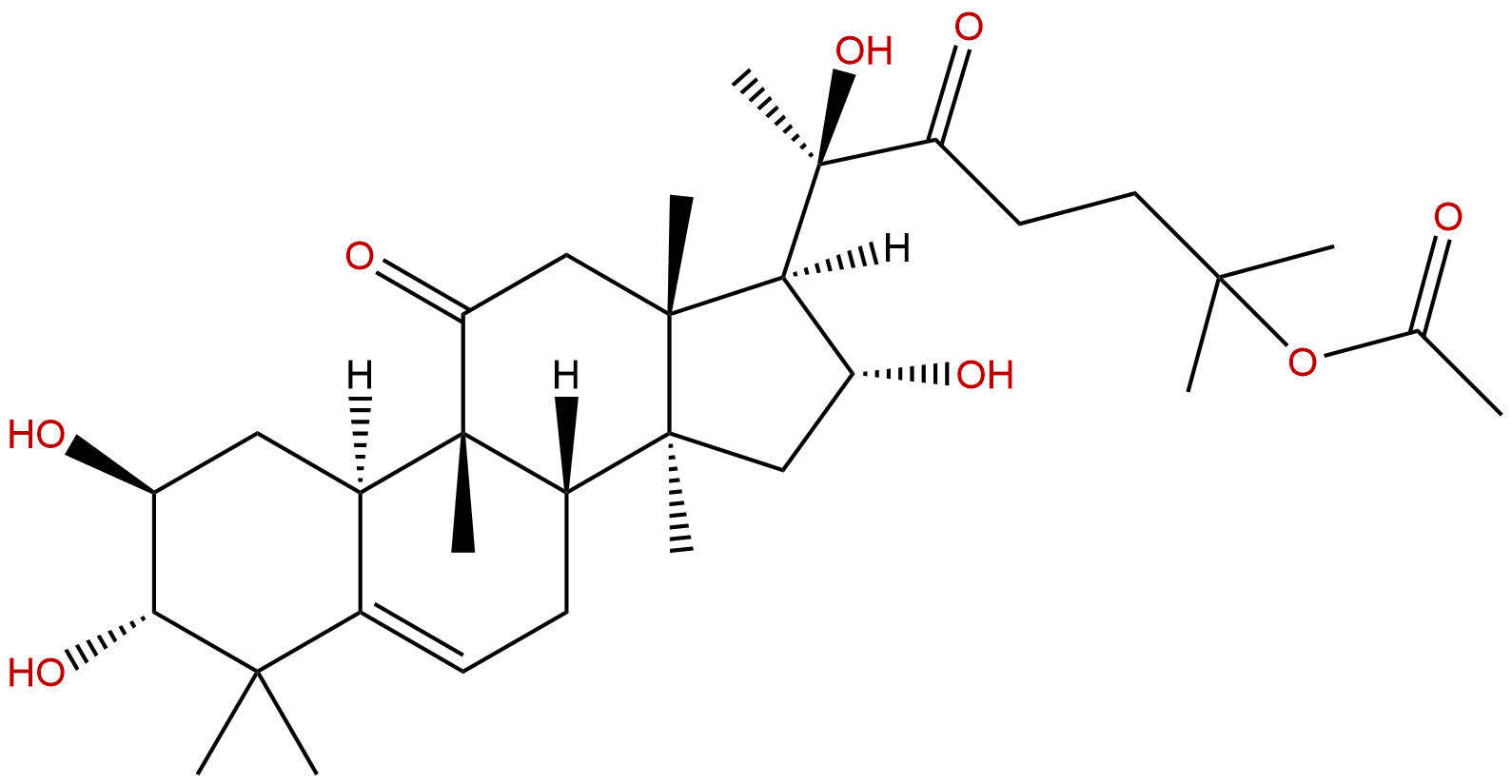


Synonym name: Cucurbitacin IIa
Catalogue No.: BP0718
Cas No.: 58546-34-2
Formula: C32H50O8
Mol Weight: 562.744
Botanical Source: Hemsleya graciliflora and Hemsleya pengxianensis. Component of Luo Guo Di and Peng Xian Xue Dan
Purity: 95%~99%
Analysis Method: HPLC-DAD or/and HPLC-ELSD
Identification Method: Mass, NMR
Packing: Brown vial or HDPE plastic bottle
Can be supplied from milligrams to grams.
For Reference Standard and R&D, Not for Human Use Directly.
Inquire for bulk scale.
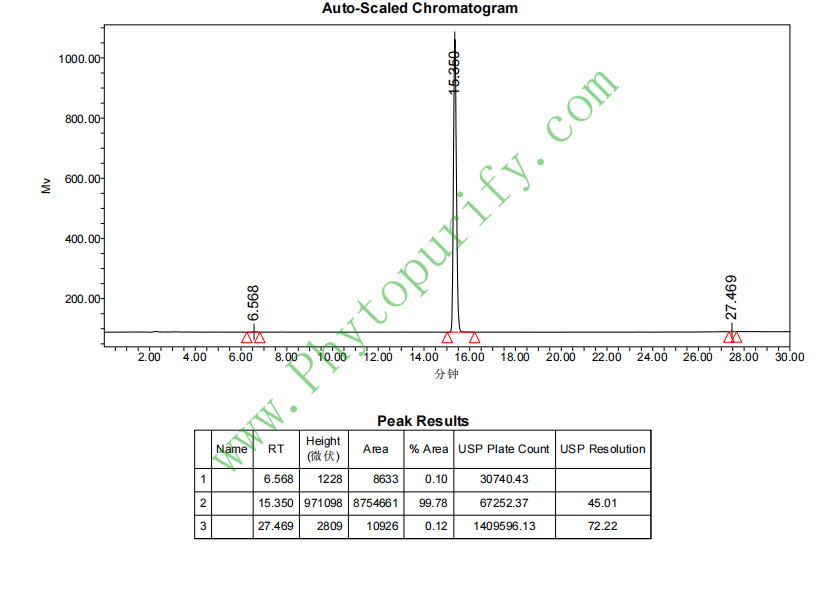
HPLC of Hemslecin A
Storage conditions:Short-term storage at 2~8℃, long-term storage at -20 ~ -80℃
Liver cancer, as one of the malignant tumors with high incidence and mortality rates worldwide, poses a serious threat to human health due to its difficulty in early diagnosis, limited treatment options, and tendency for recurrence and metastasis. In recent years, natural products have demonstrated unique advantages in the development of anti-tumor drugs, becoming an important research direction in liver cancer treatment. Hemslecin A (CAS No.: 58546-34-2) is a natural product derived from plants. Due to its remarkable antitumor activity and multi-target mechanism, it has gradually attracted widespread attention in pharmacology and medicinal chemistry. This paper aims to systematically review the chemical structure and physicochemical properties of xuebisolin A, plant origin and extraction methods, pharmacological activity and mechanism of action, druggability evaluation, and clinical application prospects, with the aim of providing theoretical basis and reference for subsequent research and drug development.
Hemslecin A has the molecular formula C_30H_38O_11 and a molecular weight of 562.7440, making it a complex natural product with polyhydroxyl and phenolic carboxyl groups. Its structural features include multiple aromatic rings and ester groups, reflecting high polarity and rich hydrogen bond donor/acceptor characteristics. The LogP value is 3.1195, indicating moderate lipophilicity, which facilitates cell membrane penetration without excessive hydrophobicity. The polar surface area (TPSA) is 141.3600, indicating that its molecules are highly polar, which may affect its oral absorption and bioavailability.
Low water solubility (0.0217 mg/mL) suggests limited solubility in the aqueous phase, suggesting that its bioavailability may be improved through formulation optimization. The low permeability of the blood-brain barrier indicates that its main target is concentrated in peripheral tissues, reducing the risk of toxic side effects in the central nervous system. The hERG channel inhibition test was negative, indicating that Snowcholine A has high electrophysiological safety for the heart and no significant risk of arrhythmia. The Ames mutagenic test result was 0.0, indicating very low genotoxicity risk and good safety.
Hemsleya mainly comes from the Ranunculaceae plant genus Hemsleya spp., with abundant content in species such as Hemsleya amabilis. Plants of this genus are widely distributed in southern China and Southeast Asia, and are commonly used in traditional Chinese medicine to treat tumors, inflammation, and immune-related diseases.
The extraction process typically uses organic solvent reflux extraction or ultrasonic-assisted extraction, with commonly used solvents including ethanol, methanol, and ethyl acetate. The extract undergoes liquid-liquid distribution, column chromatography (silica gel, C18 reversed phase column), and high-performance liquid chromatography (HPLC) purification, ultimately obtaining high-purity snowcholine A. In recent years, supercritical CO_2 extraction and membrane separation technologies have also been attempted for efficient extraction of this natural product, aiming to improve extraction efficiency and purity, reduce solvent residues, and environmental pollution.
Numerous in vitro cell experiments and in vivo animal model studies have shown that SycholinA has significant antitumor activity, especially showing good proliferation inhibition and apoptosis induction against liver cancer cell lines. Its half-inhibition concentration (IC_50) against liver cancer cells is mostly in the low micromolar range, demonstrating high efficacy.
Additionally, snowbilin A can inhibit the migration and invasion of tumor cells, reducing the potential risk of tumor metastasis. Its anti-inflammatory activity has also been confirmed, improving the tumor microenvironment by regulating inflammatory factor expression, and enhancing the immune system's ability to clear tumors. In animal experiments, xuecholysin A significantly extended survival in liver cancer model mice, reduced tumor burden, and showed no obvious toxic side effects, demonstrating good safety and therapeutic potential.
The antitumor mechanism of Acetobina involves multiple signaling pathways and key molecular targets, demonstrating its synergistic multi-target effect. The main targets include:
In summary, snowcholine A exerts its antitumor activity through multi-target and multi-pathway coordinated regulation, demonstrating its potential as a multifunctional natural anti-tumor product.
The druggability parameters of Acetobina indicate that it has promising potential for drug development. Although the molecular weight of 562.7440 is slightly high, it is still within an acceptable range. A LogP value of 3.1195 indicates moderate lipid solubility, which facilitates cell membrane penetration. TPSA is relatively high and may affect oral absorption, but this can be resolved through formulation improvements.
Low water solubility is a major challenge for drug development, requiring technologies such as nanocarriers, liposomes, or solid dispersions to improve solubility and bioavailability. The blood-brain barrier has low permeability, making it suitable for treating peripheral tumors such as liver cancer and reducing central nervous system toxicity.
The hERG channel was inhibited negatively and the Ames test showed no mutagenicity, indicating high safety and reduced risks of cardiotoxicity and genotoxicity. Preliminary pharmacokinetic studies indicate that snowcholine A is widely distributed in the body, has a moderate half-life, and is primarily metabolized by the liver, meeting the needs of targeted liver cancer therapy.
Based on the multi-target antitumor effect and good safety profile of acetobinoid in liver cancer, its clinical development prospects are broad. Future research should focus on:
In addition, the synergistic effects and resistance mechanisms of socalasterin A combined with existing liver cancer treatments (such as sorafenib, levatinib, etc.) are also worth in-depth exploration, potentially providing new treatment strategies for liver cancer patients.
As a natural product with multi-target anti-tumor activity, Xuebilin A demonstrates significant pharmacological potential in the field of liver cancer treatment. Its unique chemical structure, diverse target effects, and good safety profile provide valuable candidate molecules for the development of novel antitumor drugs. In the future, through systematic pharmacological mechanism research, druggability optimization, and clinical translational exploration, SulfosinA is expected to become an important drug for liver cancer treatment, bringing new hope to patients. With continuous advances in natural product pharmacology and modern drug development technologies, the research and application prospects of Snowbilin A are promising.
