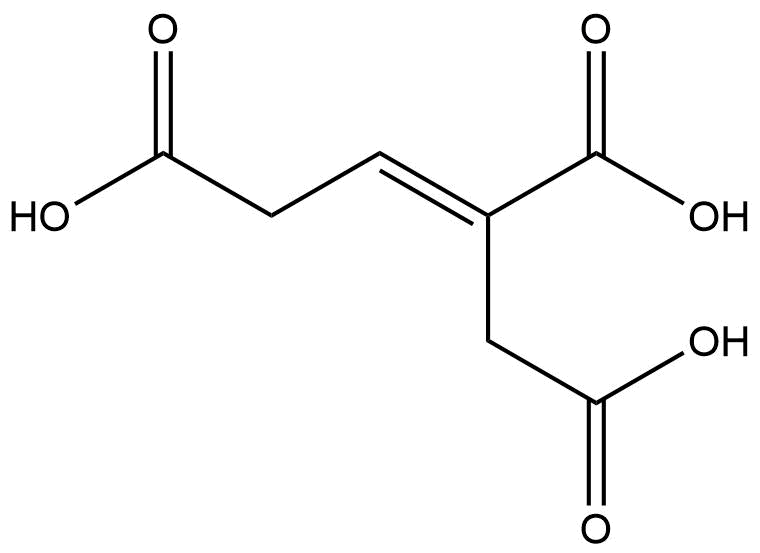


Product name: Triglochinic acid
Synonym name:
Catalogue No.: BP4123
Cas No.: 31795-12-7
Formula: C7H8O6
Mol Weight: 188.135
Botanical Source: Pinellia pedatisecta Schott
Type of Compound:
Purity: 95%~99%
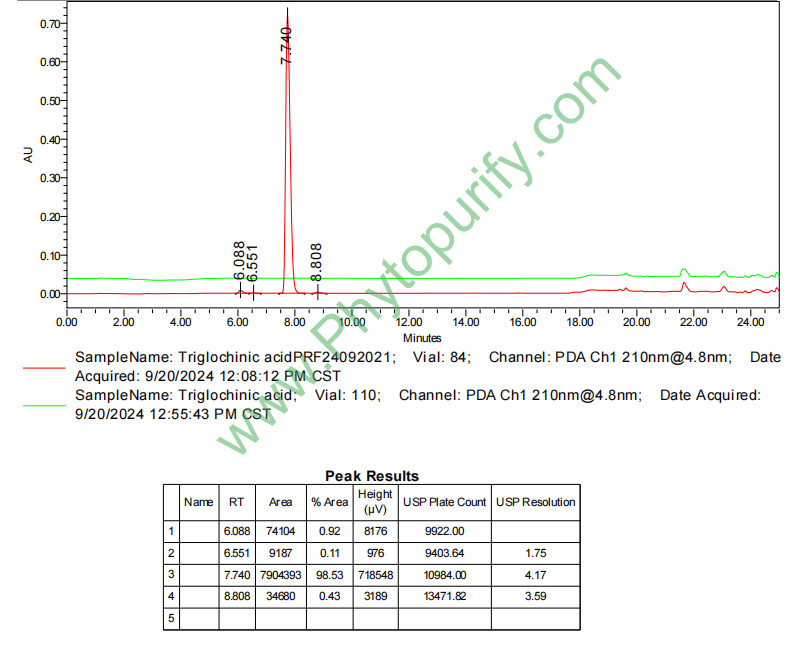
Analysis Method: HPLC-DAD or/and HPLC-ELSD
Identification Method: Mass, NMR
Packing: Brown vial or HDPE plastic bottle
Storage: Store in a well closed container, protected from air and light. Put into refrigerate or freeze for long term storage.
Whenever possible, you should prepare and use solutions on the same day. However, if you need to make up stock solutions in advance, we recommend that you store the solution as aliquots in tightly sealed vials at -20℃. Generally, these will be useable for up to two weeks.
The product could be supplied from milligrams to grams
Inquire for bulk scale.
Chengdu Biopurify Phytochemicals Ltd. is a leading company in the research, development, manufacture and marketing of High Quality Phytochemicals and Extracts(especially Active Ingredients from Traditional Chinese Medicine,TCM), Natural Active Pharmaceutical Ingredients worldwide.
The main services:
A. Supply active ingredients and reference standards of TCM, from mgs to kgs scale
B. Custom extraction and purification, target Herb Active Ingredients
C. Custom synthesis and semi-synthesis for Natural Active Ingredients
D. CR(contract research), CM(contract manufacture) and PD(process development) services from lab scale, pilot scale to commercial scale(GMP is also available)
E. TCM compounds library for drug screen,more than 3000 compounds available, many of them are rare and unique.
HPLC of Triglochinic acid
Storage conditions:Short-term storage at 2~8℃, long-term storage at -20 ~ -80℃
111.9000
-.2182
-1.9012
33.5917
.9422
1.4848
Low
56.1295
2.7646
Yes
Yes
No
No
No
No
0.0
Yes
Yes
Yes
Yes
Triglochinic acid (CAS number: 31795-12-7) is a monomeric natural product isolated from the tubers of traditional Chinese medicine Pinellia ternata. As an important object of pharmacological research on natural products, Ophiopogon acid has received widespread attention due to its significant anti-inflammatory activity. Inflammatory response, as a common pathological basis of various diseases, has a complex regulatory mechanism involving multiple signaling pathways and molecular targets. In recent years, the development of anti-inflammatory drugs based on natural products has become a research hotspot. Ophiopogon acid, due to its unique chemical structure and excellent biological activity, has become a potential candidate molecule for anti-inflammatory drugs.
This review will systematically summarize the chemical structure and physicochemical properties, plant sources, and extraction methods of Ophiopogon acid, with a focus on its pharmacological activity and mechanism of action. The molecular targets and signaling pathways of Ophiopogon acid will be explored in depth, and its pharmacokinetic characteristics will be analyzed based on its pharmacological parameters. Finally, the clinical application prospects and future research directions will be discussed, providing theoretical support and practical guidance for the development of natural anti-inflammatory drugs.
The molecular formula of salicylic acid is C9H12O4, with a molecular weight of 188.1350. Its chemical structural characteristics are characterized by the presence of multiple functional groups including carboxyl and hydroxyl groups, which endow it with strong polarity and water solubility. Specifically, the LogP value of Ophiopogon acid is -0.2182, indicating its strong hydrophilicity and a polar surface area (TPSA) of 111.9 Å ², further confirming its rich polar functional groups. These physicochemical properties have important impacts on its bioavailability and in vivo distribution.
The water solubility of water-soluble aspartic acid is 33.5917 mg/mL, indicating its good solubility in the aqueous phase, which is beneficial for the development of oral formulations. Meanwhile, the low permeability of the blood-brain barrier suggests limited distribution in the central nervous system, which may reduce central side effects. In addition, the hERG channel inhibition experiment showed a negative result, indicating that water-soluble aspartic acid has a high electrophysiological safety for the heart. The Ames mutagenicity test result was 0.0, indicating a low risk of genotoxicity and a good safety basis.
Ophiopogon acid was initially isolated from the tubers of Pinellia ternata. Pinellia ternata, a dried tuber of the Araceae plant Pinellia ternata, is widely used in traditional Chinese medicine, mainly for dispelling phlegm, stopping cough, drying dampness, and resolving phlegm. Pinellia ternata tubers contain a variety of bioactive components, including alkaloids, steroidal saponins, polysaccharides, and organic acids, among which aspartic acid is one of the organic acid components.
The common methods for extracting water-soluble aspartic acid include:
Solvent extraction method Ethanol or methanol aqueous solution is used for reflux extraction of Pinellia ternata tubers, and the extract is concentrated and then subjected to liquid-liquid distribution to remove fat soluble impurities.
Acid-base extraction method By utilizing the acidic properties of water-soluble aspartic acid and adjusting the pH value, selective extraction can be achieved to enhance purity.
Chromatographic separation technology Including silica gel column chromatography, reverse phase high performance liquid chromatography (RP-HPLC), etc., used for further purification and identification of Ophiopogon acid.
In recent years, with the development of separation and purification technology, green and efficient technologies such as ultrasound assisted extraction and microwave-assisted extraction have also been applied to the extraction of water-soluble aspartic acid, improving extraction efficiency and purity, reducing the use of organic solvents, and in line with the green environmental protection trend of modern natural product extraction.
The pharmacological activity research of Ophiopogon acid mainly focuses on its anti-inflammatory effect. Inflammation, as a defense response of the body against injury and infection, can lead to various chronic diseases such as rheumatoid arthritis, inflammatory bowel disease, cardiovascular disease, etc. if its regulation is imbalanced. Ophiopogon acid exhibits excellent anti-inflammatory potential by regulating inflammatory responses through multiple targets and pathways.
A large number of in vitro and in vivo experiments have shown that water-soluble aspartic acid can significantly inhibit the release of inflammatory mediators and the activation of inflammatory cells. Its specific manifestations are:
In addition to anti-inflammatory effects, preliminary studies have also found that aspartic acid has certain antioxidant activity, which can clear free radicals and reduce oxidative stress damage. In addition, water-soluble aspartic acid also has a regulatory effect on apoptosis related proteins such as CASP1 (cysteine protease-1), suggesting that it may play a role in regulating cell death and immune response.
The anti-inflammatory effect of Ophiopogon acid involves multiple signaling pathways and key molecular targets. Through molecular biology and cytological research, gradually reveal the complexity and diversity of its mechanism of action.
Ophiopogon acid can downregulate the mRNA and protein expression levels of pro-inflammatory cytokines such as TNF - α and IL-6. TNF - α and IL-6 are key mediators in the inflammatory response, regulating the activation of immune cells and the amplification of inflammatory signals. Ophiopogon acid alleviates the inflammatory response by inhibiting these factors.
NF - κ B is an important transcription factor that regulates the expression of various inflammatory genes. Ophiopogon acid can inhibit the phosphorylation and degradation of I κ B α, prevent the translocation of NF - κ B from the cytoplasm to the nucleus, reduce the transcription of inflammatory mediators, and exert anti-inflammatory effects.
STAT3 is an important transcription factor in cytokine signaling transduction, involved in inflammation and immune regulation. Ophiopogon acid inhibits the phosphorylation of STAT3, blocks its activation, reduces the expression of inflammatory genes, and alleviates inflammatory responses.
Ophiopogon acid significantly inhibits the activity of PTGS1 (COX-1) and PTGS2 (COX-2), reduces prostaglandin synthesis, and alleviates inflammation and pain. At the same time, inhibiting NOS2 reduces the excessive production of nitric oxide and alleviates tissue damage.
TRPV1 and TRPA1 are important ion channels in inflammation and pain perception. Ophiopogon acid reduces the occurrence of inflammatory pain and improves patients' symptoms by regulating the activity of these channels.
CASP1, as a key component of inflammasomes, participates in the maturation and release of inflammatory mediator IL-1 β. Ophiopogon acid exerts a protective effect by regulating the activity of CASP1, balancing cell apoptosis and inflammatory response.
In summary, the synergistic effect of water-soluble Ophiopogon Acid on multiple targets and pathways systematically regulates inflammatory responses, demonstrating its potential as a candidate molecule for anti-inflammatory drugs.
The pharmacological evaluation of water-soluble aspartic acid is based on its physicochemical properties, safety, and in vivo pharmacokinetic characteristics.
The molecular weight of water-soluble aspartic acid is moderate (188.1350), with a LogP value of -0.2182, indicating strong hydrophilicity. The TPSA is 111.9 Å ², which meets the requirements of drug hydrophilicity and polarity and is beneficial for oral absorption. Good water solubility (33.59 mg/mL), convenient for formulation development.
The hERG channel inhibition experiment showed a negative result, indicating a low risk of cardiac toxicity associated with water-soluble aspartic acid. The Ames test result is 0.0, indicating no significant mutagenicity and good safety.
At present, the pharmacokinetic studies of water-soluble aspartic acid in vivo are relatively limited. Preliminary data suggests that its blood-brain barrier permeability is low, which may limit the distribution of the central nervous system and reduce central side effects. Its strong hydrophilicity suggests that there may be rapid absorption and excretion after oral administration, but further research is needed on its specific bioavailability, metabolic pathways, and half-life.
Future research should combine internal and external models to systematically evaluate the absorption, distribution, metabolism, and excretion (ADME) characteristics of aspartic acid in water, providing a basis for clinical development.
Ophiopogon acid, as a natural product with multi-target anti-inflammatory activity, has good medicinal properties and safety, demonstrating broad clinical application prospects.
Chronic inflammatory diseases For conditions such as rheumatoid arthritis, inflammatory bowel disease, and skin inflammation, water-soluble aspartic acid has the potential to become an effective anti-inflammatory treatment drug by regulating various inflammatory mediators and signaling pathways.
pain management By acting on the TRPV1 and TRPA1 channels, water-soluble aspartic acid may alleviate inflammation related pain and improve patients' quality of life.
combination therapy Ophiopogon acid can be used in combination with existing anti-inflammatory drugs to achieve synergistic effects, reduce monotherapy doses, and minimize side effects.
Pharmacokinetic and toxicological studies of the system Clarify the in vivo behavior and long-term safety of water-soluble aspartic acid, laying the foundation for clinical trials.
Structural optimization and derivative development By chemical modification, its bioavailability and targeting can be improved, enhancing drug efficacy.
In depth analysis of the mechanism Using modern technologies such as genomics and proteomics, comprehensively reveal the network of action of water-soluble aspartic acid.
Clinical trial design Conduct multicenter, randomized controlled clinical trials to verify its efficacy and safety, and promote clinical translation.
As a natural organic acid derived from the tubers of Pinellia ternata, Ophiopogon acid has become a research hotspot in the field of natural product pharmacology due to its unique chemical structure and significant anti-inflammatory activity. The multi-target and multi pathway mechanism of action provides new ideas and strategies for the development of anti-inflammatory drugs. Combined with good pharmacological parameters and safety evaluation, Ophiopogon acid has high clinical development potential.
In the future, with the deepening of pharmacokinetics, structural optimization, and clinical research, Ophiopogon acid is expected to become an innovative drug for treating various inflammation related diseases, injecting new vitality into the development of natural anti-inflammatory drugs. Continuous basic and applied research will promote the transition of water-soluble aspartic acid from the laboratory to clinical practice, benefiting a wide range of patients.
