Introduction/Overview
Natural products have long been an important source of innovative drug discovery, and their structural diversity and wide range of biological activities provide valuable lead compounds for the treatment of various diseases. As an important family of natural products, stilbene compounds have attracted much attention due to their significant pharmacological activities such as antioxidant, anti-inflammatory, and anti-tumor effects. Blestrialene B (CAS number: 127211-03-4) is one of them, which is derived from the traditional Chinese medicinal herb Paeonia lactiflora(Bletilla striata A stilbene dimer with a unique phenanthrene skeleton was isolated from Lanke. The initial research revealed its anti mitotic activity by inhibiting microtubule protein polymerization, indicating its potential in the field of anti-tumor. However, with the deepening of research, the multi-target and multi pathway mechanisms of action of Bai and Lian Fei B in the field of anti-inflammatory have gradually been revealed, showing a broader pharmacological prospect. Inflammation is the fundamental pathological process in which the body responds to injury or infection, but uncontrolled chronic inflammation is the common pathological basis for various major diseases such as cancer, autoimmune diseases, neurodegenerative diseases, and metabolic syndrome. Therefore, the search for efficient and low toxicity new anti-inflammatory drugs has important clinical significance. The purpose of this article is to systematically review the chemical structure, plant origin, pharmacological activity, especially its anti-inflammatory effect and complex molecular mechanism of compound B, and to preliminarily evaluate its pharmacological properties, in order to provide comprehensive scientific references for the in-depth research and future development of this compound.
Chemical structure and physicochemical properties
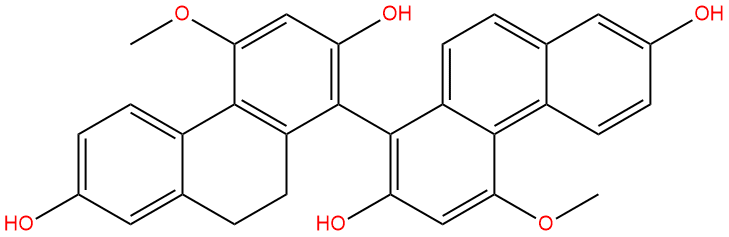
The chemical name of Bai and Lian Fei B is (-) - Brestriarene B, with a molecular formula of C28H24O8 and a molecular weight of 480.5160. This compound belongs to the dimer of stilbene, and its core structure consists of two stilbene units connected by specific carbon carbon bonds, forming a complex phenanthrene skeleton. This unique fused ring structure gives it significant planarity and rigidity, serving as the structural basis for its interactions with certain biomolecules such as microtubules. Its absolute configuration has been determined to be (-), indicating that it is a chiral molecule whose stereochemistry may have a critical impact on its biological activity and target selectivity.
From the analysis of physical and chemical properties, the lipid water partition coefficient (LogP) of Bai and Lian Fei B is 5.6997, indicating that the compound has high lipophilicity. Its topological polar surface area (TPSA) is 99.3800 Å ², which is relatively moderate. However, its predicted water solubility is extremely low, only 0.0021 mg/mL, mainly due to its larger molecular weight, rigid planar structure, and higher LogP value. These properties collectively determine that Bai and Lian Fei B have poor solubility in conventional aqueous media, which may be a major limiting factor for their oral bioavailability. Solubilization techniques such as cyclodextrin inclusion, nanocrystals, or liposome formulations need to be considered in formulation development. In addition, its ability to penetrate the blood-brain barrier (BBB) is predicted to be "low", suggesting that it may not be suitable for direct treatment of central nervous system diseases. In early safety screening, Bai and Lian Fei B did not show significant hERG potassium channel inhibitory activity (hERG inhibition: No), reducing their potential risk of inducing QT interval prolongation and apical torsion type ventricular tachycardia. The Ames test result is 0.6, indicating a low risk of mutagenicity, but further in vivo genetic toxicity studies are needed to confirm.
Plant sources and extraction methods
Bai and Lianfei B are mainly derived from the orchid plant Bai Ji(Bletilla striata Dry tubers of (Thunb.) Rchb.f. Baiji, as a traditional Chinese medicine, has the effects of converging, stopping bleeding, reducing swelling, and promoting muscle growth. It is commonly used to treat conditions such as hemoptysis, vomiting, traumatic bleeding, and ulcers. Modern plant chemistry research has isolated and identified various active ingredients from Paeonia lactiflora, including phenanthrene, dihydrophenanthrene, dibenzene, and polysaccharides. Among them, phenanthrene compounds are considered one of its characteristic and important active ingredients.
The extraction and separation of Bai and Lian Fei B usually follow the conventional process of natural product chemistry. Firstly, the dried rhizome of Paeonia lactiflora is crushed and subjected to cold soaking or heating reflux extraction using organic solvents such as methanol, ethanol, or acetone to obtain the crude extract. After vacuum concentration, the crude extract was subjected to gradient extraction using solvents such as petroleum ether, ethyl acetate, and n-butanol. White and phenanthrene B were mainly enriched in the ethyl acetate extraction site due to their equipolarity. Subsequently, a series of column chromatography techniques were used for preliminary separation, often using silica gel column chromatography with gradient elution in different ratios of petroleum ether ethyl acetate or chloroform methanol systems. After obtaining a fraction rich in the target component, it is further purified using preparative high-performance liquid chromatography (HPLC), typically on a reverse phase C18 column with methanol water or acetonitrile water as the mobile phase, to obtain high-purity white and phenanthrene B monomer compounds. Structural identification is accomplished through the comprehensive use of techniques such as ultraviolet spectroscopy (UV), infrared spectroscopy (IR), mass spectrometry (MS), one-dimensional and two-dimensional nuclear magnetic resonance spectra (1H-NMR, 13C-NMR, COSY, HSQC, HMBC), as well as circular dichroism (CD) or X-ray single crystal diffraction.
Pharmacological activity research
The pharmacological activity research of Bai and Lian Fei B presents various characteristics, among which anti-inflammatory activity is currently the focus of research. However, its initial activity discovery and potential anti-tumor effects cannot be ignored.
-
anti-inflammatory activity Numerous in vitro and in vivo studies have confirmed that Bai Ji Lian Fei B has strong anti-inflammatory effects. In the lipopolysaccharide (LPS) - induced inflammation model of macrophages (such as RAW264.7 cells), resveratrol B can dose dependently inhibit the excessive production of nitric oxide (NO) and prostaglandin E2 (PGE2). Meanwhile, it can significantly reduce the expression and secretion of various pro-inflammatory cytokines and chemokines, including tumor necrosis factor - α (TNF - α), interleukin-6 (IL-6), interleukin-1 β (IL-1 β), and monocyte chemoattractant protein-1 (MCP-1). In animal models, Bai and Lian Fei B showed good anti-inflammatory effects in carrageenan induced paw edema in mice, xylene induced ear swelling in mice, and dextran sulfate sodium (DSS) - induced colitis in mice, reducing tissue edema, inflammatory cell infiltration, and tissue damage.
-
Antitumor activity Its initial activity reports were related to anti-tumor effects. Baiji Lianfei B has been identified as a microtubule polymerization inhibitor. It can competitively bind to the colchicine binding site of microtubule proteins, preventing microtubule subunits from aggregating into microtubules, disrupting the normal formation of mitotic spindles in cells, leading to cell cycle arrest in the G2/M phase, and ultimately inducing tumor cell apoptosis. This mechanism has been validated in various cancer cell lines.
-
Other activities Some studies also suggest that Bai and Lian Fei B may have certain antioxidant activity, which can clear free radicals, but its strength is usually weaker than its anti-inflammatory activity. In addition, based on the traditional hemostatic and muscle generating effects of Baiji, research has begun to explore the potential value of Baiji Lianfei B in promoting wound healing, which may be related to its anti-inflammatory and growth factor regulation effects.
Mechanism of action and molecular targets
The anti-inflammatory effect of Bai and Lian Fei B is not achieved through a single pathway, but involves a complex, multi-target regulatory network, which is closely related to its effects on multiple inflammation related targets.
-
Inhibition of nuclear factor kappa B (NF - κ B) signaling pathway NF - κ B is the core transcription factor of inflammatory response. Baiji Lianfei B can effectively inhibit LPS induced phosphorylation and degradation of I κ B α protein, thereby preventing nuclear translocation of NF - κ B p65 subunit. In the nucleus, it can also inhibit the binding activity of p65 to DNA and its transcriptional activation function. This directly led to a decrease in the expression of a series of pro-inflammatory mediator genes downstream, such as TNF, IL-6, NOS2, PTGS2/COX-2. The target NFKB1 (p105/p50) is a key component of this pathway.
-
Regulating the STAT3 signaling pathway STAT3 is another important pathway related to inflammation and tumors. Bai and Lian Fei B can inhibit STAT3 tyrosine phosphorylation induced by cytokines such as IL-6, block its dimerization and nuclear translocation, thereby inhibiting STAT3 dependent gene transcription. This forms a feedback inhibition loop by reducing the production of cytokines such as IL-6.
-
Regulating inflammasome activity The activation of inflammasomes (such as NLRP3) leads to the cleavage and activation of caspase-1 (CASP1), which in turn promotes the maturation and secretion of IL-1 β and IL-18. Research has shown that Bai and Lian Fei B can inhibit the assembly and activation of NLRP3 inflammasomes, reduce the activation of caspase-1, and thus lower mature IL-1 β levels.
-
Affects cyclooxygenase (COX) and nitric oxide synthase (iNOS)Bai and Lian Fei B can downregulate the protein and mRNA expression of inducible cyclooxygenase (PTGS2/COX-2) and inducible nitric oxide synthase (NOS2/iNOS). COX-2 is a key enzyme in PGE2 synthesis, while iNOS is responsible for producing a large amount of NO, both of which are important inflammatory effector molecules.
-
Acting on transient receptor potential (TRP) channels Research suggests that Bai and Lian Fei B may have a regulatory effect on TRPV1 and TRPA1 channels. These channels are involved in the transmission of pain and neurogenic inflammation, and their inhibition may contribute to the anti-inflammatory and analgesic effects of Bai Ji Lian Fei B.
-
Microtubule targeting effect As a microtubule polymerization inhibitor, this mechanism is not only related to anti-tumor effects, but may also indirectly affect inflammatory signaling. The rearrangement of the cytoskeleton is involved in the activation of signaling pathways such as NF - κ B and the transport of inflammatory factors, and the disruption of microtubule stability may interfere with these processes.
In summary, Bai and Lian Fei B form a synergistic and multi-level anti-inflammatory network by simultaneously acting on multiple key nodes such as NF - κ B, STAT3, inflammasome, and affecting the expression of effector molecules such as COX-2 and iNOS. This may be the molecular basis for their highly efficient anti-inflammatory activity.
Evaluation of drug properties and pharmacokinetics
Based on its physicochemical properties and preliminary biological data, a preliminary evaluation of the pharmacological properties of Bai and Lianfei B is conducted
-
Advantage:
- Strong activity Effective anti-inflammatory concentrations ranging from nanomolar to micromolar levels were demonstrated in cell and animal models, with significant activity.
- Multi-target effect The multi-target characteristics targeting complex inflammatory diseases may lead to better therapeutic efficacy and lower drug resistance.
- Preliminary safety is good No hERG inhibition warning, Ames test negative, providing preliminary support for its safety development.
-
challenge:
- Solubility and permeability The extremely low water solubility (0.0021 mg/mL) and high LogP value are the main obstacles to its drug development, which may lead to poor oral absorption and low bioavailability.
- High molecular weight The molecular weight is close to 500, located at the boundary of the "five rules" of drug like properties, which may affect its membrane permeability and pharmacokinetic properties.
- Low blood-brain barrier penetration Restricted its direct application in central nervous system inflammatory diseases.
- Lack of systematic pharmacokinetic data At present, there is very limited research on the absorption, distribution, metabolism, and excretion (ADME) of Bai and Lian Fei B in public literature. The key parameters such as metabolic pathways, metabolites, plasma protein binding rate, half-life, and oral bioavailability are still unknown. The phenolic hydroxyl groups in its structure may be prone to undergo phase II metabolic binding reactions (such as glucuronidation and sulfation), leading to rapid clearance.
-
Development Strategy:
- Structural modification By chemical synthesis or semi synthesis methods, its molecules are modified with the aim of improving water solubility (such as introducing polar groups, preparing prodrugs) or optimizing pharmacokinetic properties, while retaining or enhancing its core pharmacological activity.
- Advanced formulation technology Develop nano formulations (such as polymer nanoparticles, solid lipid nanoparticles), liposomes, microemulsions, or cyclodextrin inclusion complexes to significantly improve their solubility and bioavailability.
- In depth research on pharmacokinetics and toxicology Comprehensive preclinical ADME research and systematic safety evaluations of acute, long-term, and reproductive toxicity must be conducted to lay the foundation for its clinical translation.
Clinical application prospects and prospects
As a natural compound with unique structure and multi-target anti-inflammatory activity, Bai Ji Lian Fei B has promising clinical application prospects, but the road ahead is long.
-
Potential therapeutic areas:
- Inflammatory bowel disease (IBD)Its effectiveness in DSS induced colitis models suggests that it may be used for the treatment of ulcerative colitis or Crohn's disease.
- Autoimmune diseases For example, rheumatoid arthritis, psoriasis, etc., their multi-target inhibition of pro-inflammatory factors and signaling pathways may have advantages.
- Inflammatory pain By inhibiting COX-2, iNOS, and possibly regulating TRP channels, it may be developed as a novel analgesic and anti-inflammatory drug.
- Tumor adjuvant therapy and chemoprevention The dual mechanism of anti-inflammatory and anti microtubule effects deserves attention. Chronic inflammation is the "fuel" for the occurrence and development of tumors, and its anti-inflammatory effect may be used for the prevention or adjuvant treatment of certain inflammation related cancers; And its direct anti mitotic activity points to the development of anti-tumor drugs.
-
Future research directions:
- Deep exploration of mechanisms Using chemical biology methods such as affinity fishing and molecular probes to more accurately identify its direct target proteins and elucidate their initial molecular events of action.
- Structure Activity Relationship (SAR) Study Systematically synthesize a series of derivatives or analogues, clarify their pharmacophores, and guide the optimization and design of better candidate drugs.
- Combination therapy research Exploring the synergistic effects of Bai and Lian Fei B with existing anti-inflammatory or anti-tumor drugs, which may reduce their respective doses, minimize side effects, and overcome drug resistance.
- Preclinical development Complete the complete transformation study from lead compounds to preclinical candidate drugs, including optimal formulation development, comprehensive pharmacokinetic, pharmacodynamic, and toxicological evaluations.
Conclusion
Bai Ji Lian Fei B is a natural product with significant research value discovered from the traditional Chinese medicine Bai Ji. It was initially discovered as a microtubule inhibitor, and now its extensive and powerful multi-target anti-inflammatory activity has gradually been revealed, demonstrating the complexity of natural product chemical structures and the diversity of pharmacological effects. It effectively inhibits the expression of various pro-inflammatory mediators by regulating key signaling pathways such as NF - κ B, STAT3, and inflammasomes, demonstrating good therapeutic effects in various inflammatory models. However, its inherent physical and chemical properties, especially its extremely low water solubility and unclear pharmacokinetic characteristics, are the core challenges that it must face and solve in the process of drug conversion. Future research should focus on improving its drug properties through rational structural modifications and advanced formulation strategies, and conducting systematic preclinical evaluations. The research on Bai and Lianfei B not only provides promising candidate molecules for the development of new anti-inflammatory drugs, but also contributes to a deeper understanding of the biological activity of stilbene compounds and their material basis association with the efficacy of traditional Chinese medicine. With the continuous deepening of interdisciplinary research, Bai and Lianfei B are expected to realize their potential value in the field of innovative drug development.