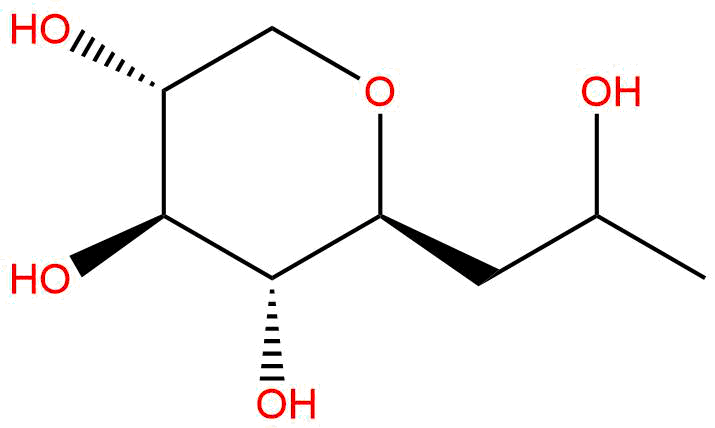
Introduction/Overview
Skin aging is a complex biological process driven by both endogenous factors (such as genetics and hormone levels) and exogenous factors (such as ultraviolet radiation and environmental pollution). Its core characteristics are manifested as an imbalance between the degradation and synthesis of extracellular matrix (ECM), specifically manifested as the loss of collagen (especially type I collagen) and elastin, accompanied by upregulation of matrix metalloproteinases (MMPs) activity, tyrosinase (TYR) - mediated pigmentation, and weakened skin barrier function. Therefore, the search for active ingredients that can effectively regulate ECM metabolism and delay the process of skin aging has always been a hot topic in cosmetic science and skin pharmacology research.
Hydroxypropyl tetrahydropyran triol, also known as bosein, is a sugar derivative with clear anti-aging effects. Since its discovery, it has become a star ingredient in the high-end skincare industry due to its unique ability to promote ECM synthesis and good skin tolerance. Compared with traditional functional ingredients such as retinol and vitamin C, Boseline has a mild mechanism of action and low irritation, providing a new choice for sensitive skin and long-term anti-aging care. This article aims to systematically review the chemical properties, plant sources, pharmacological activities, molecular mechanisms of action, medicinal properties, and clinical application prospects of bosetin, in order to provide comprehensive academic references for in-depth research and application development in this field.
Chemical structure and physicochemical properties
The chemical name of hydroxypropyl tetrahydropyran triol is (2S, 3R, 4S) -2- (hydroxymethyl) tetrahydro-4- (2-hydroxyethoxy) -3-pyran alcohol, and its CAS number is 439685-79-7. Structurally, it is a C-glycosidic analogue derived from xylose, with a core structure of a tetrahydropyran ring (sugar ring) connected by hydrophilic groups such as hydroxymethyl and hydroxyethyl.
Its molecular formula is C8H16O6 and its molecular weight is 192.2110. This structure endows Bose Einstein with excellent hydrophilic properties. The calculated lipid water partition coefficient (LogP) is -1.1051, indicating that it is a highly hydrophilic molecule. The topologically polar surface area (TPSA) is as high as 90.1500 Å ², further confirming its strong polarity. The theoretically calculated water solubility value is 162.2624 mg/L, indicating that it is highly soluble in water. These physical and chemical parameters determine that Bose Einstein is usually present in aqueous form in formulations, making it easy to penetrate hydrophilic areas of the skin but difficult to penetrate the blood-brain barrier (predicted as low permeability), which to some extent ensures its safety for topical use.
Plant sources and extraction methods
Bose Einstein is not a natural product directly extracted in large quantities from a single plant, and its initial discovery was based on in-depth research on xylose from oak trees. The beech tree, especially the European beech, contains abundant xylan in its wood. Xylose is a polysaccharide composed of xylose units and is the main component of hemicellulose.
The industrial production of Bose Einstein adopts a strategy that combines synthetic biology and chemical synthesis based on natural sources. Its preparation usually starts with xylose, which can be obtained from biomass resources such as beech wood pulp through hydrolysis and purification. Subsequently, through a series of stereoselective chemical reactions, including key steps such as protecting group manipulation, cyclization reaction, and hydroxyalkylation, xylose is converted into hydroxypropyl tetrahydropyran triol with a specific stereoconfiguration. Modern production processes emphasize the principles of green chemistry, striving to improve atomic economy, reduce by-products, and ensure high purity and optical purity of the final product, as its biological activity is closely related to specific (2S, 3R, 4S) stereoconfigurations. Therefore, Bose is a biologically active molecule that is "derived from nature and refined in synthesis". It retains the biocompatibility of natural sugars and achieves large-scale, high-purity stable production through synthetic processes.
Pharmacological activity research
A large number of in vitro experiments, ex vivo skin models, and human clinical studies have confirmed that Bose has various pharmacological activities in the skin, focusing on multiple key aspects of combating skin aging.
- Promote extracellular matrix (ECM) synthesis This is the core function of Bose Einstein. Research has shown that it can significantly upregulate the gene expression and protein synthesis of type I collagen (COL1A1) and types IV and VII collagen in human dermal fibroblasts. Meanwhile, Bose Einstein can also promote the synthesis of elastin (ELN) and enhance the expression of glycosaminoglycans (GAGs) related components such as decorin, thereby improving the structure and function of the dermal ECM from multiple dimensions, increasing skin thickness, elasticity, and firmness.
- Inhibit ECM degradation Bose can downregulate the overexpression of matrix metalloproteinases (such as MMP1, MMP3, MMP9) induced by ultraviolet (UV) or aging factors. In addition, it can upregulate the expression of matrix metalloproteinase tissue inhibitor-1 (TIMP1). Through this dual regulation of "one rise and one fall", the metabolic balance of ECM is effectively maintained, preventing excessive breakdown of collagen and elastin.
- Improving skin barrier and moisturizing Bose Einstein enhances the tight junction structure of the epidermal layer by promoting the expression of tight junction proteins (such as Claudin-1) in epidermal keratinocytes, thereby strengthening the physical barrier of the skin. Meanwhile, the synthesis of GAGs promoted by it can enhance the water storage capacity of the dermis layer, indirectly improving the hydration status of the skin.
- Anti glycation and antioxidant properties Research suggests that Bose Einstein may have a certain anti glycation effect, which helps reduce the damage of advanced glycation end products (AGEs) to collagen. Its carbohydrate structure may also directly or indirectly exert certain antioxidant effects, assisting in reducing oxidative stress damage to the skin.
- Inhibit melanin production Partial studies have shown that bossin has a mild inhibitory effect on tyrosinase (TYR) activity and can interfere with the transport of melanin from melanocytes to keratinocytes, thereby helping to improve skin tone and brighten the skin.
Mechanism of action and molecular targets
The mechanism of action of Bose Einstein is not through a single, high affinity receptor binding, but mainly based on its properties as a carbohydrate analogue, exerting biological effects by affecting cellular energy perception and signaling pathway networks.
- Core mechanism: Regulating TGF - β signaling pathway and ECM synthesis Transforming growth factor - β 1 (TGFB1) is a key signaling molecule that regulates the synthesis of ECM components such as collagen in fibroblasts. Research has shown that Bose Einstein can promote the secretion of TGFB1 and the activation of its downstream signaling pathways. Its structure is similar to the glycosaminoglycan chains in proteoglycans, which may enhance the binding or signaling efficiency of TGF - β and its receptors by simulating or stabilizing proteoglycans associated with TGF - β receptor complexes on the cell surface, thereby initiating the synthesis promoting gene program.
- Transcriptional regulation of key target genes:
- Promote the synthesis of targets Bose Einstein significantly upregulated COL1A1(Type I collagen alpha 1 chain)ELN(elastin)TIMP1 MRNA and protein levels of tissue inhibitor of metalloproteinase-1.
- Inhibit degradation targets It can effectively inhibit the stimulation induced by ultraviolet rays and other stimuli MMP1(Interstitial collagenase)MMP3 Overexpression of matrix metalloproteinase-1. Neutrophil elastase(ELANE)Indirect regulation may also help protect elastic fibers.
- Cellular energy and synthetic metabolism There is a hypothesis that Bose Einstein, as a sugar derivative, may guide the metabolic state of cells towards synthetic metabolism by affecting the cell's energy sensing system (such as the AMPK pathway) or hexosamine biosynthesis pathway, providing a material and energy basis for large-scale synthesis of ECM components.
- Mechanisms related to epidermal barrier In keratinocytes, Bose Einstein promotes the synthesis of tight junction proteins by activating signaling pathways such as ERK1/2 and PI3K/Akt, thereby enhancing barrier function.
In summary, Bose Einstein acts as a "signal amplifier" and "metabolic regulator" through the synergistic effect of multiple targets and pathways, integrating multiple anti-aging signals such as promoting ECM synthesis, anti degradation, and strong barriers, ultimately achieving overall rejuvenation of skin structure and function.
Evaluation of drug properties and pharmacokinetics
From the perspective of medicinal chemistry and drug properties, Bose Einstein, as a topical active ingredient, has distinct characteristics.
- Physicochemical and absorption properties Its high hydrophilicity (low LogP, high TPSA) determines that it mainly penetrates through hydrophilic channels in the stratum corneum, and its transdermal absorption rate may be lower than that of high lipid soluble molecules, but it can effectively accumulate and function in the epidermis and dermis. Formulation techniques, such as using penetration enhancers and preparing them as precursor derivatives, can optimize their transdermal delivery efficiency.
- safety evaluation Existing data indicates that Bose Einstein has extremely high skin safety.
- mutagenicity The Ames test result is negative (0.0), indicating no genetic toxicity risk.
- cardiotoxicity: No inhibitory effect was shown on hERG potassium channels, indicating no potential risk of cardiac QT interval prolongation, which is an important safety indicator for any components that may be systemically absorbed.
- Skin irritation/allergy Numerous clinical tests have confirmed that even at high concentrations (such as 30%), Bose Einstein has extremely low irritation to the skin, good tolerance, and is suitable for long-term use on various skin types, including sensitive skin.
- pharmacokinetics There is limited research data on the pharmacokinetics of the Bose Einstein system, which is related to its main positioning as an external ingredient. Based on its physicochemical properties, it is predicted that the systemic exposure after transdermal absorption is extremely low, and the blood-brain barrier permeability is poor, further reducing the risk of systemic adverse reactions. After local application, its distribution and residence in skin tissue are its main pharmacokinetic characteristics, and the research focus is on its skin bioavailability.
- Stability and compatibility Due to its relatively stable chemical properties, Bose can be stored for a long time in pH neutral water-based formulations. It has good compatibility with various commonly used ingredients in cosmetics, such as moisturizers, emulsifiers, and other antioxidants, but attention should be paid to its long-term stability when coexisting with strong acids, bases, or certain metal ions.
Clinical application prospects and prospects
Since its inception, Bose has gradually expanded from high-end skincare ingredients to a wider range of application areas, and its prospects are broad.
- Current Application:
- Anti aging skincare products: It is the main application field of Boseline, widely used in essence, face cream, eye cream and other products to improve wrinkles, relaxation, lack of elasticity and other signs of aging.
- Skin barrier repair By promoting the synthesis of tight junction proteins, it is used to repair damaged skin barriers and is suitable for sensitive skin, laser postoperative care, etc.
- Improve skin texture and complexion Used to improve skin smoothness, plumpness, and assist in brightening and even skin tone.
- Future research directions and potential applications:
- Deep exploration of mechanisms Further elucidating the specific molecular pathways through which it perceives cellular energy status and regulates epigenetics may lead to the discovery of new biological functions.
- Derivative development Develop Bose derivatives with higher transdermal efficiency, stronger biological activity, or new functions (such as targeting mitochondria) through structural modification.
- Combination therapy Conduct in-depth research on the synergistic effects of bosein with other active ingredients such as retinol, vitamin C, peptides, growth factors, etc., and develop a composite formula that combines efficacy and counteracts side effects.
- Medical beauty assistance Explore its application value in postoperative repair of medical beauty projects such as dot matrix laser, microneedle, and radiofrequency, by promoting collagen regeneration, enhancing and maintaining medical beauty effects.
- Expand indications Study its potential therapeutic effect in improving skin problems related to ECM defects, such as stretch marks and atrophic scars (such as acne scars).
- Exploration of Oral Beauty Although it is currently mainly used for external purposes, its good safety provides the possibility for the development of oral beauty products, and strict systematic pharmacokinetic and efficacy verification studies are needed.
Conclusion
Hydroxypropyl tetrahydropyran triol (bosetin), as a bioactive molecule successfully developed inspired by natural carbohydrate structures, has established its important position in the field of skin anti-aging. Its mechanism of action is unique, by simulating the function of glycosaminoglycans, it gently and effectively reprograms skin cells, promotes ECM synthesis and homeostasis, and has multiple benefits such as strengthening barriers and improving skin quality. Excellent skin safety and tolerability are the basis for its widespread application.
From beech xylose to high-purity Bose Einstein, it embodies the research and development concept of "natural inspiration, scientific creation". In the future, with deeper analysis of its molecular mechanism, development of new derivatives, and exploration of cross disciplinary joint applications, Bose Einstein and its related technologies are expected to continue to play a value in skin health, cosmetic repair, and even broader tissue regeneration fields, providing more accurate and efficient solutions to address the complex biological challenge of skin aging.