

Storage conditions:Short-term storage at 2~8℃, long-term storage at -20 ~ -80℃
350.2000
2.5000
2.1000
No
.8500
No
Negative
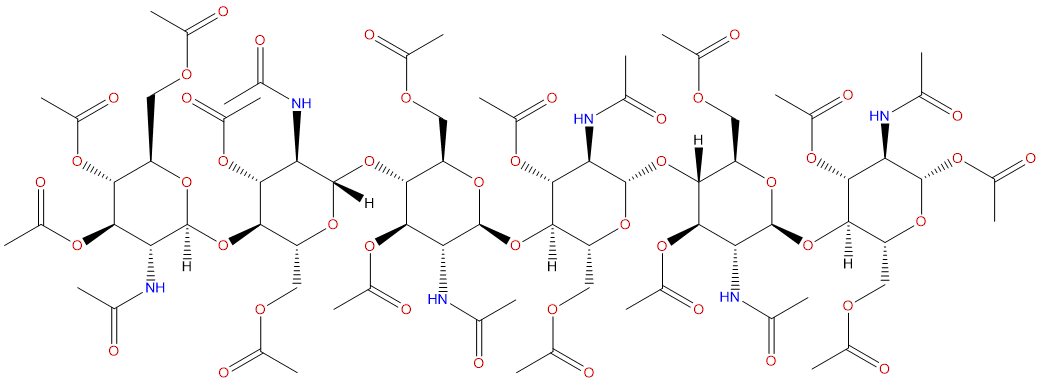
Chitohexaose Hexadecaacetate is a semi synthetic oligosaccharide compound derived from chitosan. Its parent structure, chitosan, is an oligomer composed of six β - (1 → 4) - linked D-glucosamine units obtained by enzymatic or chemical degradation of chitosan (deacetylated product of chitin). Fully acetylated chitosan is a derivative in which all free amino and hydroxyl groups in the chitosan molecule are replaced by acetyl groups. This chemical modification significantly changes its physicochemical properties and biological activity, transforming it from a water-soluble chitosan to a more lipophilic molecule, which may affect its bioavailability and target of action.
Chitosan and its oligosaccharide derivatives have long been highly regarded for their biocompatibility, degradability, and various biological activities, and are widely used in the fields of medicine, food, and cosmetics. The research background of fully acetylated chitosan, as one of the highly modified derivatives, mainly stems from the exploration of the changes in biological activity after acetylation modification of chitosan oligosaccharides. Preliminary studies suggest that an increase in acetylation may enhance its binding ability to specific protein receptors, particularly pattern recognition receptors related to inflammation and immune regulation (such as TLR4), thereby regulating downstream signaling pathways. At present, there is no publicly available CAS number, precise molecular formula, and molecular weight for this compound. It is an active molecule in the research stage, and the product number BP4313 identifies its identity in a specific research institution or supplier system. Existing studies have associated it with a variety of important diseases, including inflammatory bowel disease, diabetes, obesity, osteoarthritis and wound healing disorders, suggesting that it has potential application value in anti-inflammatory and metabolic regulation.
The chemical structure of fully acetylated chitosan is based on the chitosan backbone. Chitosan itself is a straight chain molecule composed of six D-glucosamine residues connected by β -1,4-glycosidic bonds. Each residue contains one free amino group (at the C2 position) and three free hydroxyl groups (at the C3, C6 positions, and in the non reducing end of the C4 position). In fully acetylated chitosan, theoretically all amino and hydroxyl groups on these six residues are replaced by acetyl groups (- COCH3). Therefore, if fully acetylated, each glucosamine residue will introduce 4 acetyl groups (1 on the amino group and 3 on the hydroxyl group), bringing the total number of acetyl groups introduced by the six residues to 24. However, it should be noted that the common term "complete acetylation" in sugar chemistry sometimes specifically refers to the complete acetylation of hydroxyl groups, while amino groups may exist in acetylation or other forms. According to its English name "Hexadecaacetate", it suggests that the molecule is linked to 16 acetyl groups. This may be due to different acetylation states at certain positions of the reducing and/or non reducing ends of chitosan, or the presence of amino groups in the form of hydrochloride salts. Therefore, its precise molecular structure requires confirmation from nuclear magnetic resonance (NMR) and mass spectrometry (MS) data.
Based on the inference of "hexadecyl acetate", its molecular weight can be roughly estimated. The molecular weight of chitosan (C36H66N6O24) is approximately 990.9 g/mol. The addition of each acetyl group (C2H2O) replaces an H atom, increasing the mass by 42 g/mol. Adding 16 acetyl groups will increase the molecular weight by approximately 672 g/mol, so the molecular weight of fully acetylated chitosan is expected to be around 1660 g/mol. This is a considerably large molecule, far exceeding conventional small molecule drugs (usually<500 Da).
Due to the lack of measured data, its physical and chemical properties need to be predicted based on structure. Introducing a large amount of hydrophobic acetyl groups inevitably leads to a significantly higher lipophilicity (LogP value) of the molecule compared to hydrophilic chitosan. The LogP value is expected to be positive and may be in a moderate range, which is beneficial for its penetration into the cell membrane, but excessively high molecular weight may become a limiting factor. Its topological polar surface area (TPSA) decreases due to acetylation of hydroxyl groups, but glycosidic bonds and carbonyl oxygen atoms still contribute some polarity. This compound is likely soluble in organic solvents such as dimethyl sulfoxide (DMSO), acetone, and ethyl acetate, and has extremely low solubility in water. These properties determine that its absorption, distribution, metabolism, and excretion (ADME) characteristics in the organism will be completely different from natural chitooligosaccharides, and may be more suitable for local administration or special formulation techniques before being used for systemic administration.
Fully acetylated chitosan is not directly derived from plants, but is a semi synthetic compound obtained from marine biological resources through chemical modification. Its most fundamental natural precursor is chitin.
The source of chitin Chitin is the second largest natural polysaccharide in nature after cellulose, widely found in the exoskeletons of arthropods such as shrimp, crabs, and insects, the cuticles of mollusks, and the cell walls of fungi. Among them, marine shrimp and crab shells are the main raw materials for industrial production of chitin. Therefore, the "source" of fully acetylated chitosan can be traced back to abundant marine fishery by-products, which have the advantages of renewable resources and relatively low cost.
Traditional application background Although fully acetylated chitosan itself is a product of modern chemical modification, its parent compounds - chitin and chitosan - have a long history in traditional Asian medicine and folk applications. For example:
* wound healing As early as ancient times, some regions had the practice of applying crab shell powder externally to stop bleeding and promote wound convergence, inadvertently utilizing the hemostatic and film-forming properties of chitin.
* Enhance immunity In traditional diets, consuming soup containing shrimp and crab shells is believed to have a "strengthening" effect, which modern science reveals may be related to the immunomodulatory activity of chitosan and its degradation products.
* Traditional Chinese Medicine Association Although there is no direct record in traditional Chinese medicine literature, some Chinese medicines that use marine organisms (such as cassia seed and corrugated seeds) as medicine also contain active ingredients such as calcium carbonate and chitin.
However, traditional application forms are rough, the active ingredients are unclear, and the bioavailability is low. Modern pharmaceutical research aims to obtain compounds with higher activity, more stable properties, and stronger targeting by deacetylating chitin to obtain chitosan, further degrading it into low molecular weight chitooligosaccharides, and chemically modifying it (such as acetylation). Fully acetylated chitosan is the product of this research approach, inheriting the advantages of good biocompatibility of natural chitin like substances. At the same time, through structural optimization, it may overcome the disadvantages of natural products such as strong water solubility, difficulty in passing through biological barriers, and susceptibility to enzymatic hydrolysis in vivo, thus discovering new pharmacological effects. Therefore, it represents a paradigm shift from traditional natural resources to modern precision drug development.
According to the provided target information, the action of fully acetylated chitosan mainly focuses on anti-inflammatory and Regulating metabolism The two core areas involve the regulation of multiple key signaling pathways through their mechanisms of action.
The seven targets of this compound (TLR4, TNF, NOS2, PTGS2, NFKB1, IL6) form a closely related classical pro-inflammatory network.
1. TLR4 (Toll like receptor 4)This is one of the possible starting points for the compound's action. TLR4 is an important receptor for recognizing pathogen associated molecular patterns (PAMPs) and damage associated molecular patterns (DAMPs). Natural chitooligosaccharides have been reported to act as regulators of TLR4. Full acetylation modification may alter its binding mode and affinity with TLR4. Research has shown that certain chitosan derivatives with specific degrees of polymerization and acetylation can Antagonistic TLR4 signaling pathway Inhibit its activation by lipopolysaccharides (LPS) and other substances.
2. NF - κ B (encoded by NFKB1) signaling pathway The downstream core pathway activated by TLR4 is the NF - κ B pathway. NF - κ B is a key transcription factor that regulates the expression of a large number of inflammation related genes. Fully acetylated chitosan may inhibit the activation of the I κ B kinase (IKK) complex by suppressing TLR4, preventing the degradation of I κ B protein and allowing NF - κ B dimers to remain in the cytoplasm, preventing them from entering the nucleus.
3. Inhibition of pro-inflammatory factors and enzyme expression The blockade of NF - κ B nuclear entry directly leads to a decrease in transcription and expression of a series of pro-inflammatory mediators downstream. This includes:
* TNF - α (tumor necrosis factor - α) and IL-6 (interleukin-6)They are key pro-inflammatory cytokines that play a central amplifying role in the inflammatory cascade.
* INOS (inducible nitric oxide synthase, encoded by NOS2)Catalytic production of a large amount of nitric oxide (NO), excessive NO reacts with superoxide anions to generate peroxynitrite, leading to tissue oxidative damage.
* COX-2 (cyclooxygenase-2, encoded by PTGS2)Catalyze arachidonic acid to produce pro-inflammatory mediators such as prostaglandin E2 (PGE2), causing pain, fever, and vasodilation.
Therefore, fully acetylated chitosan may exert strong anti-inflammatory effects through the TLR4/NF - κ B axis, blocking multiple pathways from upstream receptor inhibition to downstream inflammatory mediator production.
This compound has an effect on PPARG (Peroxisome proliferator activated receptor gamma) The regulatory effect extends its pharmacological activity to the field of metabolic diseases. PPAR γ is a member of the nuclear hormone receptor superfamily and a key regulatory factor for adipocyte differentiation and glucose homeostasis. It is the target of insulin sensitizer thiazolidinedione drugs (such as Rosiglitazone).
* Activate PPAR γIf fully acetylated chitosan can activate PPAR γ, it can promote the differentiation of adipocytes and store more free fatty acids in adipose tissue; Simultaneously enhancing insulin sensitivity in muscles and liver, improving glucose uptake and utilization, and lowering blood sugar.
* The intersection of anti-inflammatory and metabolic effects Chronic low-grade inflammation is the common pathological basis of metabolic diseases such as obesity and type 2 diabetes. Inflammatory factors such as TNF - α can interfere with insulin signaling, leading to insulin resistance. Therefore, fully acetylated chitosan inhibits TNF - α and other anti-inflammatory mechanisms, which itself helps to improve insulin resistance. Its anti-inflammatory (inhibiting NF - κ B) and pro metabolic (possibly activating PPAR γ) effects may form a virtuous cycle, synergistically improving metabolic status.
Based on the above mechanism, it can be reasonably inferred that there is a potential association between fully acetylated chitosan and the listed diseases:
* Inflammatory bowel disease (IBD)The characteristics of IBD (such as Crohn's disease and ulcerative colitis) are abnormal activation of the intestinal mucosal immune system and persistent inflammation. Inhibiting the TLR4/NF - κ B pathway and reducing the expression of TNF - α, IL-6, iNOS, and COX-2 can directly alleviate intestinal inflammatory damage and oxidative stress.
* Diabetes and obesity By potentially activating PPAR γ and inhibiting inflammation (TNF - α, IL-6), improving insulin sensitivity, promoting normalization of glucose and lipid metabolism, thereby combating insulin resistance and hyperglycemia, and possibly affecting fat accumulation.
* Osteoarthritis (OA)OA is not only a degenerative disease, but also contains significant inflammatory components. Synovial cells and chondrocytes can produce large amounts of IL-6, TNF - α, COX-2, and iNOS, exacerbating cartilage damage and pain. The anti-inflammatory effect of this compound may protect cartilage and alleviate symptoms.
* Wound healing disorders: Chronic wounds (such as diabetes foot ulcers) that are difficult to heal are often associated with persistent infection, excessive inflammation and oxidative stress. This compound can create a favorable healing microenvironment for wounds by exerting anti-inflammatory and antioxidant effects (inhibiting iNOS). In addition, chitosan substances themselves have film-forming, moisturizing, and slightly antibacterial properties, and may also promote granulation tissue growth and epithelialization.
Drug efficacy assessment aims to predict the likelihood of a compound becoming an oral medication. Although fully acetylated chitosan lacks complete pharmacological parameters such as TPSA, LogP, solubility, permeability, metabolic stability, and toxicity data, we can still combine its chemical structure and known information Lipinski's Rule of Five Conduct preliminary analysis based on the standards. The Lipinski Five Rules are empirical rules for evaluating drug properties, typically applicable to small molecules absorbed orally.
Conclusion Fully acetylated chitosan seriously violates the two key indicators of molecular weight and hydrogen bond acceptor number in the Lipinski Five Rules. Therefore, it is highly unlikely to have good oral absorption and typical 'drug like' properties. It is closer to a Precursors of macromolecules or biologics Instead of traditional small molecule chemical drugs.
Other considerations for medicinal properties:
* Biofilm permeability The high molecular weight and potential high polarity surface area (although acetylation reduces some polarity) severely hinder its passive transmembrane transport, making it difficult to be absorbed through intestinal epithelial cells and almost impossible to penetrate the blood-brain barrier (BBB penetration predicted to be extremely low).
* Metabolic stability As a carbohydrate derivative, it may be hydrolyzed by esterases in the body, deacetylated, and converted back into chitosan or its partially acetylated products, thereby altering its activity and distribution. Its glycosidic bonds may also be degraded by glycosidases in lysosomes. Metabolism is fast and complex.
* toxicity There is currently no data available. But chitosan and chitosan oligosaccharides are usually considered as low toxicity and biocompatible materials. The safety of acetylation products needs to be evaluated specifically, especially the potential impact of long-term use.
* route of administration Due to its poor oral absorption, possible routes of administration include:For external use only(Used for skin wounds, intra-articular injections or topical preparations for arthritis)Injection administration(However, solubility and in vivo stability issues need to be addressed) or developed as Colon targeted preparation(By utilizing its macromolecular properties, it is less likely to be absorbed in the upper gastrointestinal tract after oral administration, and can directly reach the colon to exert a therapeutic effect on IBD).
Research status:
At present, there is very limited public, systematic pharmacological and clinical research literature on the specific compound of "fully acetylated chitosan". It appears more as a representative molecule in the research system of chitosan acetylated derivatives. Most existing research focuses on:
1. Synthesis and Characterization Chemists are committed to developing efficient and selective methods for synthesizing chitosan derivatives with different degrees of polymerization, acetylation sites, and degrees, and conducting structural confirmation.
2. Preliminary activity screening Evaluate the anti-inflammatory (inhibition of NO, TNF - α, IL-6 release), antioxidant, and metabolic regulatory activities of these derivatives in cell models such as macrophages, adipocytes, and intestinal epithelial cells, and explore their interactions with targets such as TLR4 and PPAR γ.
3. Study on Structure Activity Relationship Compare the effects of different degrees of polymerization (such as tetrasaccharides, hexasaccharides, octasaccharides) and different acetylation modes (partial acetylation, total acetylation, specific site acetylation) on activity, and search for the optimal structure.
Overall, the compound is still in the Early stages of preclinical research The mechanism of action needs to be further elucidated, and there is a serious lack of in vivo pharmacological, pharmacokinetic, and safety evaluation data.
Application Prospects:
Despite facing challenges in drug development, fully acetylated chitosan still has unique application prospects:
1. As a novel anti-inflammatory lead compound Its characteristic of intervening in inflammatory pathways through multiple targets provides a new approach for the treatment of chronic inflammatory diseases such as IBD and OA. Future research can focus on improving its delivery efficiency through formulation technologies such as nanocapsules, liposomes, and prodrug design, or conjugating its active fragments with molecules with good pharmacokinetic properties.
2. Exploration of therapeutic agents for metabolic diseases: Its potential regulatory effect on PPAR γ, combined with its anti-inflammatory properties, makes it attractive in the development of drugs to treat type 2 diabetes, obesity and their complications (such as non-alcoholic fatty liver). It is necessary to clarify whether it is an agonist or modulator of PPAR γ, and how selective it is.
3. Local treatment and medical materials: In the fields of wound healing, local treatment of bone and joint diseases, oral mucositis and other fields, it can be developed as gel, spray, patch or injectable sustained-release preparations, which can directly act on the focus to avoid the absorption and distribution problems of systemic administration. It can also be added as a functional ingredient to biological dressings or tissue engineering scaffolds.
4. Tool molecules As a highly acetylated derivative of chitooligosaccharides with a clear structure, it can serve as a valuable tool molecule for studying sugar protein interactions (especially with TLR family, lectins, etc.), helping to reveal the fine mechanisms of sugars in immune recognition.
Future research directions:
* In depth mechanism research Using surface plasmon resonance (SPR), isothermal titration calorimetry (ITC), co crystallization and other techniques, directly verify its binding ability and mode with targets such as TLR4 and PPAR γ.
* Comprehensive preclinical evaluation: To verify its efficacy in vivo in appropriate animal disease models (such as DSS induced colitis mice, ob/ob diabetes mice), and systematically carry out pharmacokinetic and toxicological studies.
* structural optimization Based on structure-activity relationships, design and synthesize derivatives that retain active cores but have smaller molecular weights or specific carrier structures to improve drug efficacy.
* Development of a new delivery system Actively exploring nanotechnology, biological adhesion technology, etc., to find feasible drug delivery schemes for their clinical applications.
In summary, fully acetylated chitosan is a characteristic molecule derived from marine resources with multi-target anti-inflammatory and metabolic regulatory potential. Although its traditional oral drug properties are not satisfactory, by shifting its research and development focus to local treatment, novel delivery systems, or deep optimization as lead compounds, it still has the potential to occupy a place in the future pharmaceutical field, especially in the treatment of chronic inflammation and metabolic diseases. Its research also reflects the value of the classic drug development pathway of discovering active molecules with novel structures and unique mechanisms of action from natural products, and optimizing their properties through chemical modification.
Batch can search by a CAS number,one per line
