Introduction/Overview
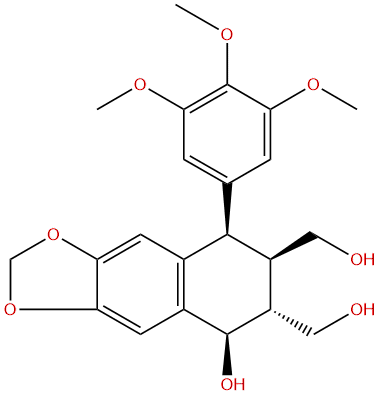
Podophyllol (CAS number: 78339-51-2), as an important derivative of Podophylloxin, has attracted much attention due to its significant anti-tumor activity. Podophyllotoxin and its derivatives have long held an important position in the field of natural product pharmacology, especially in the development of anti-tumor drugs. Guijiu toxin not only inherits the cytotoxic properties of the parent compound, but also exhibits better pharmacokinetic properties and lower toxic side effects, demonstrating good potential for drug development.
With the rise of the concept of molecular targeted therapy, the regulatory effects of podophyllotoxin on various tumor related molecular targets have gradually been revealed, including key proteins such as MCL1, BCL2, STAT3, MMP2, TOP1, TOP2A, HIF1A, MAPK1, ESR1, and CYP19A1. These targets play a central role in the proliferation, apoptosis, invasion, and metastasis of tumor cells, and podophyllotoxin achieves its anti-tumor effect through multi-target synergistic regulation, reflecting the advantages of natural product multi-target intervention in diseases.
This article will provide a systematic review of the chemical structure and physicochemical properties, plant sources and extraction methods, pharmacological activity and mechanism of action, pharmacological evaluation and pharmacokinetic characteristics of podophyllotoxin, and explore its clinical application prospects and development directions in combination with current research progress, in order to provide theoretical basis and research reference for the drug development of this natural product.
Chemical structure and physicochemical properties
The chemical structure of podophyllotoxin is based on the core skeleton of podophyllotoxin, and it is a lignan compound with a polycyclic aromatic structure. Its molecular formula is C22H22O8 and its molecular weight is 418.4420. The structure contains multiple phenolic hydroxyl and methoxy groups, endowing it with strong biological activity.
In terms of physicochemical properties, the LogP value of podophyllotoxin is 1.4796, indicating its moderate hydrophobicity, which is beneficial for cell membrane penetration and in vivo distribution. Its topological polar surface area (TPSA) is 106.84 Å ², indicating moderate polarity that facilitates binding with biomolecules. Low water solubility (0.3322 mg/mL) suggests limited solubility in aqueous phase and may require formulation optimization to improve bioavailability.
It is worth noting that podophyllotoxin has a high blood-brain barrier permeability, indicating its potential application value in the treatment of central nervous system diseases. Meanwhile, the hERG channel inhibition test result was negative, indicating a low risk of cardiac toxicity and good safety. The Ames test result is 0.0, indicating no significant genotoxicity risk.
Plant sources and extraction methods
Podophyllotoxin mainly comes from plants of the Podophyllum genus, especially Podophyllum peltatum and Podophyllum hexandrum. These plants are widely distributed in North America and some parts of Asia, traditionally used to treat tumors, verrucous lesions, and other diseases.
The process of extracting podophyllotoxin usually includes the following steps:
- Ingredient Preparation Collect plant roots and stems, dry and crush to increase surface area.
- Solvent extraction Extract lignin compounds using organic solvents such as methanol, ethanol, or ethyl acetate for extraction.
- Crude extract separation Separate the target components through liquid-liquid extraction, column chromatography (such as silica gel column, reverse phase C18 column), and other methods.
- purification Further purification using high-performance liquid chromatography (HPLC) or preparative thin layer chromatography (TLC) to obtain high-purity podophyllotoxin.
- Structural Identification Confirm the structure through techniques such as nuclear magnetic resonance (NMR), mass spectrometry (MS), and infrared spectroscopy (IR).
In recent years, the application of new technologies such as ultrasound assisted extraction, microwave-assisted extraction, and supercritical fluid extraction has improved the extraction efficiency and purity of podophyllotoxin, reduced solvent consumption, and promoted the feasibility of its industrial production.
Pharmacological activity research
The anti-tumor activity of podophyllotoxin is the core content of its research. A large number of in vitro cell experiments and in vivo animal model studies have shown that podophyllotoxin has a significant inhibitory effect on a variety of tumor cell lines (such as breast cancer, lung cancer, colorectal cancer, leukemia, etc.).
Cell proliferation inhibition
Guijiu toxin alcohol can effectively inhibit the proliferation of tumor cells, showing a dose-dependent effect. Its mechanism of action involves cell cycle arrest, especially in the G2/M phase, which prevents cells from entering the mitotic stage and thus inhibits cell division.
Inducing cell apoptosis
Research has shown that podophyllotoxin induces programmed cell death in tumor cells by regulating apoptosis related proteins, such as reducing the expression of anti apoptotic proteins BCL2 and MCL1, and activating the caspase family. In addition, its inhibitory effect on the STAT3 signaling pathway further promotes cell apoptosis.
Anti invasion and anti metastasis
Guijiu toxin alcohol inhibits the migration and invasion ability of tumor cells by downregulating the expression of matrix metalloproteinase MMP2, blocking matrix degradation during tumor metastasis, and demonstrating good anti metastatic potential.
Angiogenesis inhibition
Guijiu toxin alcohol can inhibit the expression of hypoxia inducible factor HIF1A, block angiogenesis signals in the tumor microenvironment, and limit the nutritional supply and growth of tumors.
Other pharmacological effects
In addition, podophyllotoxin has inhibitory effects on topoisomerases such as TOP1 and TOP2A, interfering with DNA replication and transcription processes, further enhancing its anti-tumor activity. Its regulation of MAPK1 and estrogen receptor ESR1 also provides a theoretical basis for its application in hormone dependent tumors.
Mechanism of action and molecular targets
The anti-tumor mechanism of Guijiudu alcohol is complex, involving the coordinated regulation of multiple signaling pathways and molecular targets.
Regulation of anti apoptotic proteins
MCL1 and BCL2 are key regulatory factors of cell apoptosis, and puerarin inhibits the expression of these two proteins, breaks down the anti apoptotic barrier of tumor cells, and promotes cell apoptosis. Related studies have shown that podophyllotoxin downregulates the mRNA and protein levels of MCL1 and BCL2, activating apoptotic signals in the mitochondrial pathway.
Intervention in signal transduction pathways
STAT3, as an important signaling molecule for tumor cell proliferation and immune escape, can be inhibited by podophyllotoxin to inhibit its phosphorylation activation and block the expression of downstream tumor promoting genes. The regulation of the MAPK1 (ERK2) signaling pathway affects cell proliferation and differentiation, while puerarin intervenes in the growth cycle of tumor cells by regulating MAPK1 activity.
Matrix degradation and transfer inhibition
MMP2, as an important matrix metalloproteinase, participates in the degradation and invasion of tumor cell matrix. Guijiu toxin significantly reduces the expression and activity of MMP2, blocking the migration and metastasis process of tumor cells.
Inhibition of DNA Topoisomerase
TOP1 and TOP2A are key enzymes in DNA replication and transcription processes, and by binding to them, podophyllotoxin inhibits their enzymatic activity, leading to the accumulation of DNA damage and cell death. This mechanism is similar to various clinical anti-tumor drugs, enhancing the anticancer efficacy of podophyllotoxin.
Other target regulation
The inhibitory effect of HIF1A reduces tumor hypoxia adaptation and decreases angiogenesis. The regulation of ESR1 and CYP19A1 provides the possibility for the treatment of hormone dependent tumors.
In summary, the synergistic effect of podophyllotoxin on tumor cells through multiple targets and pathways demonstrates the advantages of natural product multi-target therapy.
Evaluation of drug properties and pharmacokinetics
The pharmacological evaluation of Guijiudu alcohol shows that it has good potential for drug development.
Physical and chemical properties and drug compatibility
Moderate molecular weight and LogP value are beneficial for its in vivo absorption and distribution. Although the high TPSA and water solubility are limited, their bioavailability can be effectively improved through drug formulation technologies such as nanocarriers, liposomes, etc.
safety evaluation
The negative inhibition of hERG channel and no mutagenicity in Ames test indicate that the risk of cardiotoxicity and genotoxicity of podophyllotoxin is low, and its safety is good.
Pharmacokinetic characteristics
Guijiu toxin alcohol exhibits high blood-brain barrier permeability, indicating its good distribution in the central nervous system and potential application in diseases such as brain tumors. Further research is needed on the metabolic pathways in the body, but preliminary data indicates good metabolic stability and moderate half-life.
In vivo efficacy and toxicity
Animal experiments have shown that podophyllotoxin has no significant toxic side effects within the effective dosage range and has a good therapeutic index. The dose-dependent anti-tumor effect and safety indicators lay the foundation for its clinical development.
Clinical application prospects and prospects
As a derivative of podophyllotoxin, podophyllotoxin inherits and optimizes its anti-tumor activity, and has broad clinical application prospects.
tumor therapy
Given its multi-target anti-tumor mechanism, podophyllotoxin is suitable for the treatment of various solid tumors and hematological tumors. Especially in high incidence tumors such as breast cancer, lung cancer, colorectal cancer, podophyllotoxin is expected to become a new targeted drug or adjuvant chemotherapy drug.
Combination therapy strategy
Guijiu toxin alcohol can be used in combination with existing chemotherapy drugs, targeted drugs, or immunotherapy drugs to exert synergistic effects, reduce the risk of drug resistance, and improve patient prognosis.
Central nervous system diseases
Its excellent blood-brain barrier penetration provides new ideas for the treatment of brain tumors and neurological related diseases, and its application in malignant brain tumors such as glioblastoma can be explored in the future.
Drug development and formulation optimization
Future research should focus on the pharmacokinetic optimization, formulation development (such as nano formulations, long-acting sustained-release formulations), and toxicity mechanism analysis of podophyllotoxin, in order to promote its clinical translation.
Clinical trials and regulatory approvals
At present, in the initial stage of clinical research, there is an urgent need to carry out systematic clinical trials to verify its safety and effectiveness, and promote it as a new generation of anti-tumor drugs.
Conclusion
Guijiu toxin alcohol, as a natural plant derived lignan based anti-tumor active compound, has shown significant potential for drug development due to its multi-target and multi mechanism anticancer effects. Its moderate physicochemical properties, good safety, and high blood-brain barrier permeability provide new possibilities for the treatment of various tumors and central nervous system diseases.
In the future, with the optimization of extraction processes, in-depth analysis of the mechanism of action, and the advancement of clinical research, podophyllotoxin is expected to become an important member in the field of anti-tumor drugs. Through systematic pharmacokinetic research and formulation innovation, its clinical application value will be further enhanced, promoting the development and innovation of natural product pharmacology.
In summary, Guijiudu alcohol not only enriches the reservoir of natural anti-tumor drugs, but also provides strong support for precision medicine and multi-target treatment strategies, which deserves continuous attention and resources in basic research and clinical translation.