Introduction/Overview
Depression, as a common and serious mental disorder, continues to rise in its global prevalence, imposing a heavy burden on individuals, families, and society. Although existing antidepressants such as selective serotonin reuptake inhibitors (SSRIs) and monoamine oxidase inhibitors (MAOIs) have played important roles in clinical treatment, they generally have limitations such as slow onset, significant side effects (such as sexual dysfunction, weight gain, insomnia), and treatment resistance in some patients. Therefore, searching for novel antidepressant lead compounds with novel structures, unique mechanisms of action, and minimal side effects from traditional medicinal plants has become an important direction in natural product pharmacology research.
Gentiana genus(Gentiana)Plants have a long history of application in traditional medical systems, especially in Tibetan medicine and traditional Chinese medicine theory, often used to treat liver and gallbladder damp heat, inflammation, pain, and neurological diseases. Modern pharmacological studies have shown that Gentiana plants are rich in various active ingredients such as iridoid glycosides, iridoid glycosides, flavonoids, and ketones, exhibiting significant anti-inflammatory, hepatoprotective, antioxidant, and neuroprotective activities. In recent years, its antidepressant effect has gradually received attention. Gentiorunoside D (CAS number: 157722-21-9) is a type of gentian found in plants of the Gentiana genus, such as Gentiana asclepiadea)Natural iridoid glycosides isolated from the middle. Preliminary research suggests that this compound may exert potential antidepressant effects by regulating multiple targets closely related to the pathogenesis of depression. This article aims to provide a systematic review of the chemical structure, plant origin, pharmacological activity, mechanism of action, and pharmacological characteristics of Ulurungin D, in order to provide comprehensive scientific basis for the in-depth research and development of this compound.
Chemical structure and physicochemical properties
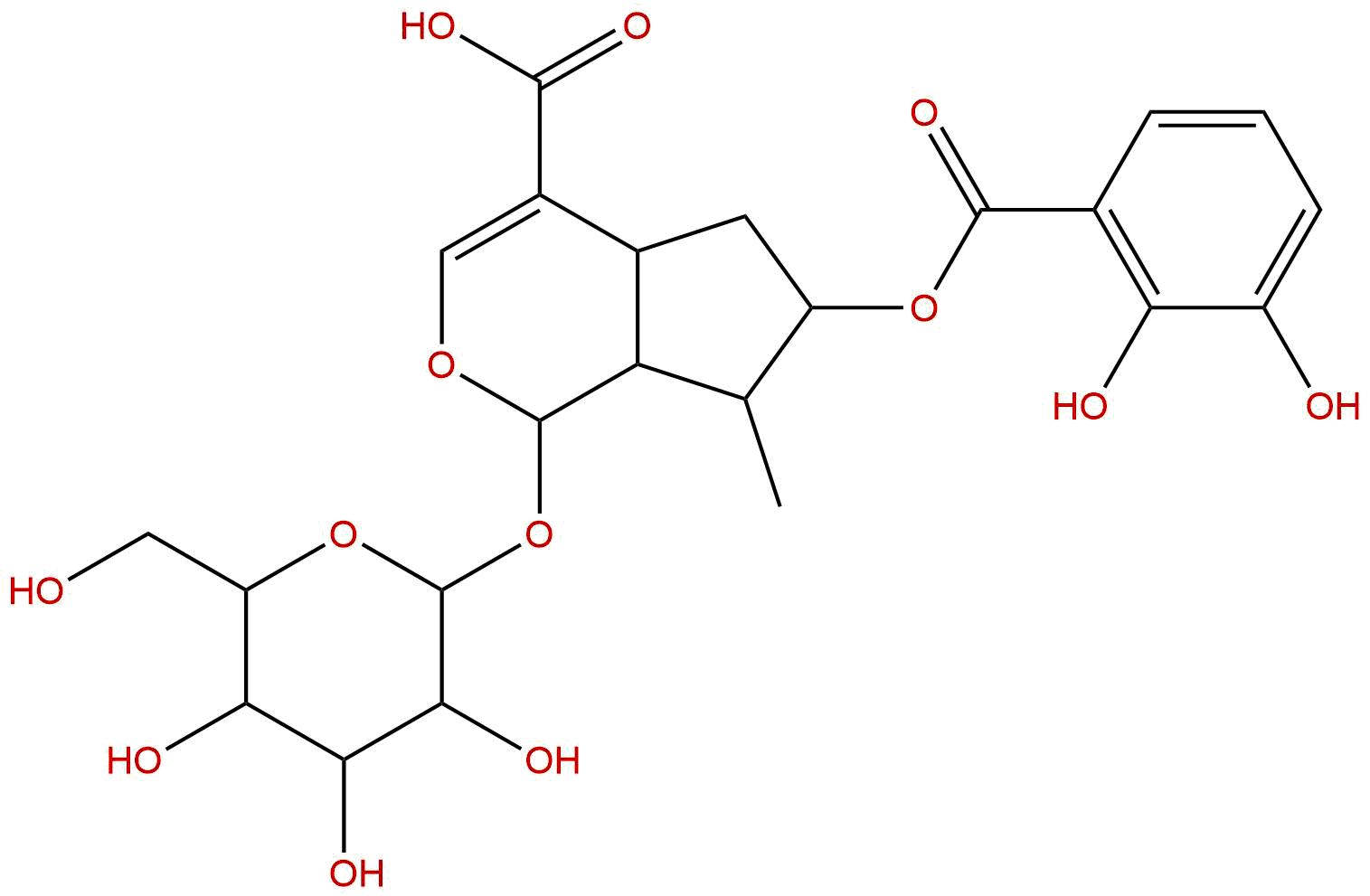
Ulurungin D belongs to the class of iridoid glycosides, with its core skeleton consisting of iridoid structures, typically composed of cyclopentane and pyran rings. This type of compound often exists in the form of glycosides in plants, and its glycosyl portion (usually glucose) is connected to the aglycone through oxygen glycosidic bonds. The specific chemical structural characteristics of Ulurungin D lie in the specific substituent patterns on its aglycone, including functional groups such as hydroxyl, carboxyl, or ester groups, which are crucial for its biological activity. Its precise molecular formula is C ₂∝ H ₂₈₁∝, with a molecular weight of 512.4640 Da, indicating that it has a medium molecular size and conforms to the basic characteristics of small molecule drugs.
From the perspective of physical and chemical properties, Ulurungin D exhibits significant water solubility characteristics. Its calculated water solubility (LogS) value is 7.0834, indicating good solubility in water. This property is closely related to the abundance of multiple hydroxyl (- OH) and sugar moieties in its molecular structure, which can form hydrogen bonds with water molecules, thereby promoting their dissolution in the aqueous phase. Its lipid water partition coefficient (LogP) is 0.0266, indicating that the compound has strong hydrophilicity and extremely low lipid solubility. A low LogP value typically indicates a weaker ability to penetrate biological membranes such as cell membranes and the blood-brain barrier. The polar surface area (TPSA) is 212.6700 Å ², which is much higher than the recommended threshold for oral medications (approximately 140 Å ²), further confirming its high polarity and low membrane permeability. Overall, the physicochemical properties of Wunulongdan D exhibit the characteristics of "high water solubility, low fat solubility, and high polarity", which poses a challenge to its absorption, distribution, metabolism, and excretion (ADME) processes in the body, especially whether it can effectively cross the blood-brain barrier to reach central nervous system targets. The prediction results of its low blood-brain barrier penetration (BBB low) are also consistent with this.
Plant sources and extraction methods
Wunulongdan D was originally derived from plants of the Gentiana genus Gentiana asclepiadea Isolation and identification of extracts from Gentiana lanceolata (also known as Gentiana lanceolata or Gentiana lanceolata).G. asclepiadea It is a perennial herbaceous plant widely distributed in the mountainous areas of central and southern Europe. Its rhizome has been used as a bitter stomach tonic and anti-inflammatory drug in traditional European folk medicine. In addition, the compound may also be present in other species of Gentiana, such as the commonly used Uluno Gentiana in Tibetan medicine(Gentiana urnula)Or thick stem gentian(Gentiana crassicaulis)However, further studies on the specific distribution spectrum of plant chemistry systems are needed to clarify.
The extraction of uridine D usually follows the classic process of natural product chemistry. Firstly, the dried plant material (usually whole grass or rhizomes) is crushed and extracted using a polar solvent. Given the high polarity and good water solubility of the compound, commonly used extraction solvents include methanol, ethanol, or their aqueous solutions (such as 70% methanol or ethanol). The extraction method can be cold soaking, percolation, or heating reflux extraction. In order to improve extraction efficiency and selectivity, ultrasound assisted extraction or microwave-assisted extraction techniques have also been commonly used in recent years. After the extraction solution is concentrated under reduced pressure, the total extract is obtained. Subsequently, the total extract was preliminarily separated using liquid-liquid extraction method, usually using solvents of different polarities such as petroleum ether, ethyl acetate, and n-butanol for sequential extraction. Due to its high polarity, uridine D was mainly enriched in the n-butanol extraction layer or water layer.
Further separation and purification mainly rely on various chromatographic techniques. Positive phase silica gel column chromatography is often used as the first step separation method, using solvent systems such as chloroform methanol water or ethyl acetate methanol water for gradient elution. Then, fine separation was carried out by combining reversed-phase silica gel column chromatography (such as ODS C18), dextran gel column chromatography (such as Sephadex LH-20) and preparative high-performance liquid chromatography (Pre HPLC). During the separation process, thin-layer chromatography (TLC) combined with ultraviolet detection or specific color reagents (such as vanillin sulfuric acid) are usually used for monitoring. The final pure compound was structurally identified using spectroscopic techniques such as nuclear magnetic resonance spectroscopy (NMR) and mass spectrometry (MS). It is worth noting that due to the potentially low content of uridine D in plants, its separation and purification process often requires multi-step chromatographic operations, and the yield is limited, which to some extent limits its large-scale preparation and subsequent research.
Pharmacological activity research
At present, there are relatively limited reports on the direct pharmacological activity of Ulurungin D, but there is ample evidence of its antidepressant activity in Gentiana plants and iridoid glycosides. Based on its chemical structure characteristics and preliminary target prediction, the antidepressant potential of Wunulongdan D is currently the core direction of research.
Antidepressant activity The pathological and physiological mechanisms of depression are complex, involving multiple aspects such as monoamine neurotransmitter system, dysfunction of hypothalamic pituitary adrenal (HPA) axis, impaired neuroplasticity, and neuroinflammation. Current research suggests that Wunulongdan D may exert antidepressant effects through multiple targets and pathways. Its potential activity is mainly reflected in the following aspects:
1. Regulating monoamine neurotransmitters The classic monoamine hypothesis of depression suggests that the decrease in levels of monoamine neurotransmitters such as serotonin (5-HT), norepinephrine (NE), and dopamine (DA) in the brain is the key to causing depressive symptoms. Unuronic acid D is predicted to inhibit the activity of monoamine oxidase A (MAOA) and monoamine oxidase B (MAOB). MAO is a key enzyme that degrades monoamine neurotransmitters. Inhibiting its activity can increase the concentration of monoamine neurotransmitters in synaptic cleft, thereby producing antidepressant effects. In addition, it may also act on the serotonin transporter (SLC6A4) by inhibiting its reuptake function, further increasing the level of 5-HT in the synaptic cleft. Meanwhile, the potential excitatory effect on the 5-HT1A receptor (HTR1A) may also directly enhance 5-HTergic neurotransmission.
2. Promote neural plasticity Depression is often accompanied by neuronal atrophy and reduced synaptic connections in brain regions such as the hippocampus and prefrontal cortex. Brain derived neurotrophic factor (BDNF) and its downstream signaling pathways, such as cAMP response element binding protein CREB, play a central role in the survival, differentiation, and synaptic plasticity of neurons. Unuronic acid D is predicted to upregulate the expression of BDNF and CREB. By activating CREB, it promotes the transcription and synthesis of BDNF, thereby protecting neurons from stress damage, promoting hippocampal neurogenesis, and reversing the neural structural changes caused by depression.
3. Regulating the GABAergic system Gamma aminobutyric acid (GABA) is the main inhibitory neurotransmitter in the central nervous system. Research has shown that patients with depression have reduced levels of GABA in their brains and impaired function of GABAergic neurons. Unuronic acid D may act on GABAA receptors (GABRA1), enhance the inhibitory effect of GABA, and thus exert anti anxiety and anti depression effects.
4. Inhibiting oxidative stress and neuroinflammation Oxidative stress and neuroinflammation are important pathological factors in depression. Cycloterpenoid glycosides generally exhibit antioxidant and anti-inflammatory activities. Unuronic acid D may alleviate neuroinflammatory reactions and protect nerve cells by clearing free radicals, inhibiting lipid peroxidation, and downregulating the expression of pro-inflammatory cytokines such as TNF - α and IL-6.
In addition, its inhibitory effect on catechol-O-methyltransferase (COMT) may also be involved in emotion regulation by affecting the metabolism of dopamine and norepinephrine. The potential regulation of glycogen synthase kinase-3 β (GSK3B) is associated with emotional stability and neuroprotection. The synergistic effect of these multiple targets enables Ulungungin D to exhibit unique advantages in antidepressant treatment, which may help overcome the limitations of traditional single target drugs.
Mechanism of action and molecular targets
The mechanism of antidepressant action of Wunulongdan D exhibits typical multi-target and multi pathway characteristics, with its core target network mainly revolving around the monoaminergic system, neurotrophic and plasticity pathways, and neurotransmitter receptor system.
1. Inhibition of monoamine oxidase (MAOA/MAOB)MAOA and MAOB are flavoenzymes located on the outer membrane of mitochondria, responsible for catalyzing the oxidative deamination of monoamine neurotransmitters. MAOA mainly metabolizes 5-HT, NE, and DA, while MAOB mainly metabolizes phenylethylamine and DA. The dual inhibitory effect of uridine D on MAOA and MAOB can effectively increase the levels of various monoamine neurotransmitters in the brain. This mechanism is similar to classical MAOIs antidepressants, but may have different selectivity and safety characteristics due to their structural specificity. Molecular docking studies may reveal the formation of hydrogen bonds or π - π stacking interactions between key amino acid residues (such as tyrosine and tryptophan near FAD cofactors) at the active site of MAO enzymes, which competitively inhibit substrate binding.
2. Regulation of 5-hydroxytryptamine transporter (SLC6A4) and 5-HT1A receptor (HTR1A)SLC6A4 is a transporter protein located on the presynaptic membrane, responsible for reuptake of 5-HT released into the synaptic cleft and retrieving it from neurons, thereby terminating its signal transmission. Inhibition of SLC6A4 is the core mechanism of SSRIs drugs. The inhibitory effect of uridine D on SLC6A4 can directly increase the concentration of 5-HT in the synaptic cleft. At the same time, its excitatory effect on the HTR1A receptor in the postsynaptic membrane can directly activate downstream signaling pathways (such as the Gi/o protein coupled adenylate cyclase inhibition pathway), generate inhibitory postsynaptic potentials, and regulate emotions. This "dual action" mode (increasing neurotransmitter concentration+directly activating receptors) may produce faster and stronger antidepressant effects.
3. Activation of BDNF/CREB signaling pathway BDNF is an important member of the neurotrophic factor family, and its expression is regulated by the transcription factor CREB. The levels of BDNF in the hippocampus and prefrontal cortex of patients with depression are significantly reduced. Unuronic acid D may promote phosphorylation of CREB (p-CREB) by activating various upstream signals such as cAMP/PKA, CaMK, MAPK/ERK pathways. Activated p-CREB binds to the cAMP response element (CRE) in the BDNF gene promoter region, initiating BDNF transcription. After binding to its high affinity receptor TrkB, BDNF further activates downstream PI3K/Akt and MAPK/ERK pathways, promoting neuronal survival, dendritic growth, and synaptic formation, thereby reversing neuroplastic damage caused by depression.
4. Regulation of GABAA receptor (GABRA1)GABRA1 is one of the main subunits that make up the GABAA receptor, which is a ligand gated chloride ion channel. Unuronic acid D may act as a positive allosteric modulator of GABAA receptors, enhancing the binding ability of GABA to receptors, increasing the frequency or duration of chloride channel opening, leading to neuronal membrane hyperpolarization, and inhibiting overexcitation. In depression, dysfunction of the GABAergic system is often associated with anxiety and stress response disorders. Enhancing GABAergic transmission can help restore the balance between excitation and inhibition, produce anti anxiety and sedative effects, and synergistically improve depressive symptoms.
5. Regulation of catechol-O-methyltransferase (COMT) and glycogen synthase kinase-3 β (GSK3B)COMT is a key enzyme that degrades dopamine and norepinephrine, particularly playing a dominant role in the prefrontal cortex. Inhibition of COMT can increase dopamine levels in the prefrontal cortex, improve cognitive function and mood. GSK3B is a multifunctional serine/threonine kinase, and its abnormal activity is associated with the onset of mood disorders, especially bipolar disorder. Inhibiting GSK3B activity (by increasing phosphorylation of its Ser9 site) has neuroprotective and emotional stabilizing effects. The regulation of these two targets by Wunulongdan D further enriches the molecular basis of its antidepressant effect.
In summary, Ulurungin D forms a complex and interconnected regulatory network by simultaneously acting on monoamine metabolizing enzymes (MAOA/B, COMT), monoamine transporters (SLC6A4), monoamine/amino acid receptors (HTR1A, GABRA1), and neurotrophic signaling pathways (BDNF/CREB). This multi-target synergistic mechanism is the core of its potential antidepressant advantage.
Evaluation of drug properties and pharmacokinetics
Based on the physicochemical properties and preliminary ADME prediction of Wunulongdan D, its pharmacological characteristics exhibit a clear duality, with both advantages as a natural lead compound and significant challenges.
Pharmaceutical advantages:
1. Good water solubility High water solubility (LogS 7.0834) is a significant advantage of Wunulongdan D. This is beneficial for its dissolution and dispersion in aqueous media such as gastrointestinal fluids and blood, avoiding bioavailability issues caused by poor solubility. For oral administration, good water solubility is a prerequisite for ensuring the dissolution and absorption of drugs from the dosage form.
2. Low toxicity potential The Ames test result is 0.0, indicating that the compound did not show mutagenicity in the bacterial recovery mutation test, suggesting a low risk of genetic toxicity. Meanwhile, hERG inhibition is predicted as' no ', indicating a lower risk of inducing QT interval prolongation and fatal arrhythmias (apical twisted ventricular tachycardia) in the heart. The good performance of these two security indicators provides important guarantees for subsequent development.
3. Multi-target effect As mentioned earlier, its multi-target mechanism of action may lead to better therapeutic efficacy and lower risk of drug resistance, which is an ideal feature pursued by modern drug development.
Drug Challenge:
1. Extremely low lipid solubility and membrane permeability The LogP value is only 0.0266, and the TPSA is as high as 212.67 Å ², which results in extremely poor lipid solubility and makes it difficult to passively diffuse through the lipid bilayer of the cell membrane. Predicting its blood-brain barrier penetration as' low 'is a huge obstacle for drugs that need to exert antidepressant effects in the central nervous system. Drugs must cross the blood-brain barrier to reach their targets of action (such as MAO, 5-HT transporters, BDNF, etc.). Low BBB penetration means that even if orally absorbed well, the drug is difficult to achieve effective therapeutic concentrations in the brain.
2. Oral absorption and bioavailability High polarity and high molecular weight (512 Da) are usually not conducive to oral absorption. Although it has good water solubility, its ability to transport across cells is poor, mainly relying on cell bypass pathways or carrier mediated transport. However, the tight junctions between intestinal epithelial cells limit cell bypass transport. Therefore, its oral bioavailability may be very low. In addition, as glycoside compounds, they may be hydrolyzed by glycosidases in the intestine, leading to the separation of aglycones from glycosides and altering their pharmacological properties.
3. Metabolic stability Cycloterpenoid glycosides are easily metabolized in the body. Its glycosidic bonds may be hydrolyzed by intestinal microbiota or hepatic glycosidase. The hydroxyl and carboxyl functional groups on the aglycone are also potential binding sites for phase II metabolic enzymes, such as glucuronosyltransferase and sulfotransferase, leading to their rapid binding and excretion from the body. Therefore, its metabolic stability may be poor and its half-life may be short.
Speculation on pharmacokinetic characteristics Based on the above analysis, the pharmacokinetic characteristics of Wunulongdan D may manifest as poor oral absorption and low bioavailability; Widely distributed in the body but difficult to enter the central nervous system; Metabolism is rapid, mainly through hydrolysis and binding reactions for biotransformation; Excretion may occur in its original form or as metabolites through urine and bile. Its low BBB penetration is the biggest bottleneck in achieving antidepressant effects.
Clinical application prospects and prospects
As a natural product from traditional medicinal plants, the unique chemical structure and multi-target antidepressant mechanism of Wunulongdan D endow it with certain development potential, but at the same time, it also faces severe challenges.
Potential application prospects:
1. New antidepressant lead compounds Despite the existence of drug-induced defects, the skeletal structure of Ulurungin D provides valuable lead compounds for medicinal chemists. By conducting a systematic structure-activity relationship (SAR) study on this structure, attempts can be made to modify its aglycones, such as introducing lipophilic groups (such as methyl, ethyl, halogen atoms) or altering the sugar moiety, to increase its LogP value, reduce TPSA, and enhance its lipophilicity and BBB penetration. Meanwhile, preserve or optimize its activity towards key targets such as MAO and SLC6A4.
2. Adjuvant therapy or combination therapy Due to its good water solubility and low toxicity, Ulungungin D or its derivatives may be developed as injectable forms for the treatment of acute or severe depression, bypassing the challenges of oral absorption and BBB penetration. Alternatively, it can be used as an adjuvant therapy drug in combination with existing SSRIs or SNRIs to enhance efficacy and reduce side effects through its unique GABAergic or BDNF regulatory mechanism.
3. Treat other central nervous system diseases Its multi-target mechanism, especially its regulation of GSK3B, suggests that it may also have potential value in neurodegenerative diseases such as bipolar disorder and Alzheimer's disease. The regulation of GABAA receptors also suggests that they may have anti anxiety, sedative, or anticonvulsant effects.
Future research directions:
1. In depth pharmacological research It is necessary to establish multiple classic animal models of depression (such as chronic unpredictable mild stress model, social frustration model, olfactory bulb removal model, etc.), and systematically evaluate the antidepressant effects of Ulungungin D and its derivatives. By conducting behavioral tests such as tail suspension experiment, forced swimming experiment, and sugar water preference experiment, as well as detecting neurobiochemical indicators, the in vivo efficacy of the drug is determined.
2. Pharmacokinetic optimization This is the key to determining whether the compound can be used as a medicine. Systematic pharmacokinetic studies should be conducted, including blood concentration time curves after oral and intravenous administration, tissue distribution (especially in cerebrospinal fluid and brain tissue), identification of metabolites, and excretion pathways. On this basis, strategies such as prodrug design, nano formulations (such as liposomes, polymer nanoparticles), or brain targeted delivery systems (such as transferrin receptor-mediated transport) can be used to improve its BBB penetration and bioavailability.
3. In depth analysis of the mechanism of action Using molecular biology techniques such as gene knockout/knockdown, RNA interference, CRISPR-Cas9, and modern pharmacological methods such as surface plasmon resonance and drug affinity response target stability techniques, confirm its direct binding and mode of action with targets such as MAO, SLC6A4, HTR1A, BDNF, etc. Elucidate the specific molecular events that regulate the BDNF/CREB signaling pathway.
4. toxicological evaluation Although the Ames test and hERG prediction results are good, systematic in vitro and in vivo toxicology studies are still needed, including acute toxicity, long-term toxicity, reproductive toxicity, and effects on liver and kidney function, to comprehensively evaluate its safety.
Conclusion
As a natural cyclohexene ether terpenoid glycoside derived from Gentiana plants, Wunulongdan D has demonstrated certain theoretical value and exploration potential in the field of antidepressant drug development due to its unique chemical structure and predicted multi-target antidepressant mechanism (involving MAO, SLC6A4, HTR1A, GABRA1, BDNF/CREB, etc.). Its good water solubility and preliminary low toxicity characteristics are its advantages. However, the extremely low lipid solubility, high polarity, and resulting low blood-brain barrier penetration and potential low oral bioavailability constitute the core bottlenecks in its drug development. Future research should focus on overcoming these obstacles through drug chemical modification and novel formulation technologies, while conducting in-depth pharmacological, pharmacokinetic, and toxicological studies. Although the road from natural products to clinical drugs is full of challenges, in-depth research on Ulungungin D not only helps to reveal the material basis of the traditional antidepressant effects of Gentiana plants, but also provides important lead molecules and research ideas for the development of novel structures and unique mechanisms of antidepressant drugs.