Introduction/Overview
Diabetes and its complications have become a major global public health challenge, while the side effects and limitations of traditional hypoglycemic drugs in the long-term application have prompted researchers to constantly explore new treatment strategies from natural products. Anthraquinone compounds, as a class of secondary metabolites widely present in various medicinal plants, have attracted much attention for their diverse biological activities, especially in the fields of anti-inflammatory, antibacterial, anti-tumor, and hypoglycemic effects, showing great potential. As a traditional Chinese medicine, Cassia seed is well-known for its effects of clearing heat, improving vision, moistening the intestines, and promoting bowel movements. Modern pharmacological research has revealed that its abundant anthraquinone components are the key material basis for its various pharmacological effects.
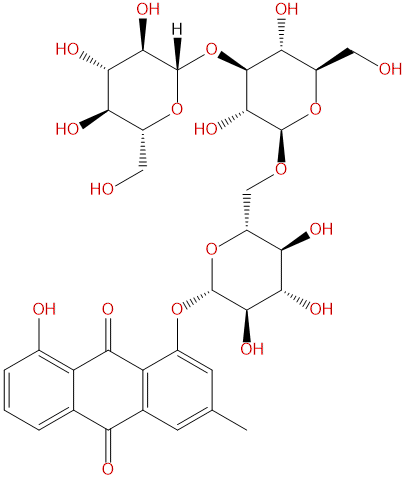
Chrysophanol triterpenide (CAS: 120181-07-9) is a representative anthraquinone glycoside compound isolated from Cassia seed. Compared with free anthraquinone (such as emodin), its glycosidic structure usually endows it with better water solubility and bioavailability, and may alter its target and activity profile. Recent studies have preliminarily revealed that this compound has significant inhibitory activity on two key enzymes in the treatment of diabetes, namely, protein tyrosine phosphatase 1B (PTP1B) and α - glucosidase, suggesting that it has dual potential in regulating insulin signaling pathway and delaying the absorption of carbohydrate, providing a novel lead structure for the development of new anti diabetes drugs. In addition, as one of the anthraquinone glycosides in Cassia seed, it is closely related to the traditional concept of diarrhea. Its mechanism of action involves the regulation of intestinal ion channels and aquaporins, reflecting the multi-target and multi pathway effects of natural products. This article aims to provide a systematic review of the chemical properties, plant sources, pharmacological activities, molecular mechanisms of action, and pharmacological potential of chrysophanol-1-O - β - glucoside, in order to provide comprehensive scientific references for the in-depth research and development of this compound.
Chemical structure and physicochemical properties
The chemical structure of chrysophanol-1-O - β - tri glucoside is composed of chrysophanol (1,8-dihydroxy-3-methylanthraquinone) as the aglycone. Its structural feature is that the hydroxyl group at position C-1 of the parent nucleus of emodin is connected to a trisaccharide chain through an O-glycosidic bond. The three sugar chains are β - configured glucose groups, and the specific connection sequence is: chrysophanol-1-O - β - D-glucose group - (1 →?) - β - D-glucose group - (1 →?) - β - D-glucoside (the specific sugar chain connection sites need to be determined based on more accurate spectral data). This connection method significantly increases its molecular weight, reaching 740.6640 Da.
Its physical and chemical properties are greatly influenced by its glycosidic structure:
1. solubility The introduction of three hydrophilic glucose groups greatly improved the lipid solubility of the parent nucleus emodin. The calculated lipid water partition coefficient (LogP) is -0.6225, indicating its hydrophilicity. The theoretical polar surface area (TPSA) is as high as 312.0500 Å ², further confirming its strong polarity. The predicted water solubility value is 10.8616 (usually measured in mg/mL or logS), indicating good water solubility, which facilitates its dissolution and absorption in aqueous media such as intestinal fluid.
2. Stability As an O-glycoside compound, it may undergo hydrolysis in acidic environments, breaking glycosidic bonds and releasing emodin glycosides and oligosaccharides. Under the influence of gut microbiota, this hydrolysis reaction is a common metabolic pathway that may affect its bioactive form.
3. spectral characteristics As an anthraquinone glycoside, it exhibits typical anthraquinone absorption peaks in the UV visible region (usually around 220-230 nm, 250-270 nm, 280-290 nm, and 430-450 nm). Infrared spectroscopy can display the characteristic absorption of hydroxyl, carbonyl (anthraquinone nucleus), and glycosidic bonds. Nuclear magnetic resonance hydrogen and carbon spectra can clearly distinguish aromatic protons, methyl protons, and a large number of aliphatic protons on glycosides, as well as corresponding carbon signals, which are key means of identifying their structures.
Plant sources and extraction methods
Rhubarb phenol-1-O - β - glucoside is mainly derived from the leguminous plant Cassia(Cassia obtusifolia L. Or Xiao Jueming(Cassia tora L. The dried and mature seeds of Chinese medicine, namely Cassia seed. Cassia seed is rich in anthraquinone components, including free type (such as emodin, emodin methyl ether, cassia extract, etc.) and bound type (mainly various glucosides). Rhubarb phenol-1-O - β - triterpenoid glycoside is one of the important bound anthraquinone components.
Its extraction and separation usually follow the following process:
1. Extract Solvent extraction method is often used. Due to the polarity of anthraquinone glycosides, methanol, ethanol, or ethanol water solutions of different concentrations are commonly used as extraction solvents to improve efficiency through heating reflux, ultrasound assisted, or microwave-assisted extraction. Sometimes low polarity solvents such as petroleum ether are used for degreasing, and then alcohol solvents are used to extract the target components.
2. Enrichment and Separation After vacuum concentration, the crude extract can be preliminarily enriched using the characteristics of anthraquinone components. For example, by utilizing its acidity, pH gradient extraction method can be used (such as sequentially extracting free anthraquinone with ether, then extracting anthraquinone glycosides with alkaline aqueous solution, and precipitating after acidification). Further purification is highly dependent on modern chromatographic techniques.
* column chromatography Large pore adsorption resin (such as D101, AB-8) column chromatography is commonly used, with water and different concentrations of ethanol gradient elution. Anthraquinone glycosides are usually enriched in the elution sites of medium and high concentrations of ethanol. Silica gel column chromatography is also a commonly used method, and the elution system is mostly a mixed solvent such as chloroform methanol water.
* High performance liquid chromatography Preparation type high-performance liquid chromatography (HPLC) is the final key step in obtaining high-purity monomers. Usually, a reverse phase C18 chromatography column is used, with methanol water or acetonitrile water (often containing a small amount of formic acid or acetic acid to adjust the pH) as the mobile phase for gradient elution, and collected based on the peak shape of the UV detector (detection wavelength is always around 254 nm or 280 nm).
3. appraisal The isolated monomeric compounds require final structural confirmation through mass spectrometry (MS, such as ESI-MS to determine molecular weight), nuclear magnetic resonance (NMR, including 1H-NMR, 13C-NMR, 2D-NMR such as HSQC, HMBC to determine detailed structure), and comparison with literature data.
Pharmacological activity research
The pharmacological activity research of chrysophanol-1-O - β - glucoside is currently in its early stages, but it has shown clear potential in metabolic diseases and gastrointestinal function regulation.
-
Antidiabetic activity This is the most promising direction of activity for the compound. Research shows that it has inhibitory effect on two key diabetes related target enzymes.
- PTP1B inhibition PTP1B is a key negative regulator of the insulin signaling pathway, and its overexpression can lead to insulin resistance. Rhubarb phenol-1-O - β - glucoside can inhibit PTP1B activity in a concentration dependent manner, with an IC50 value of 80.17 µ M. By inhibiting PTP1B, this compound is expected to enhance the phosphorylation level of insulin receptors, promote downstream signaling, and improve insulin sensitivity.
- α - glucosidase inhibition Alpha glucosidase is a key enzyme on the brush border of the small intestine responsible for breaking down oligosaccharides into monosaccharides. Inhibiting its activity can delay the digestion and absorption of carbohydrates and reduce postprandial blood glucose peak. The IC50 value of this compound for alpha glucosidase is 197.06 µ M, indicating moderate inhibitory ability. This dual inhibition mechanism (improving insulin sensitivity and controlling postprandial blood glucose) provides a theoretical basis for its use as a new lead compound against diabetes.
-
Diarrhea effect As an anthraquinone glycoside component in Cassia seed, its laxative activity is a modern scientific explanation of its traditional efficacy. Anthraquinone glycosides themselves are not absorbed by the upper gastrointestinal tract. After reaching the colon, they are hydrolyzed by the gut microbiota, releasing active aglycones (emodin). Glycosides stimulate the colonic mucosa and promote intestinal peristalsis and water secretion through complex mechanisms (see next section for details), resulting in a laxative effect. Its laxative effect is relatively mild and belongs to the category of stimulant laxatives.
-
Potential other activities Based on the known activity of its parent nucleus structure, chrysophanol, it is possible that chrysophanol-1-O - β - triglucoside also has antioxidant and anti-inflammatory activities, but these activities need to be confirmed by specialized research on this glycoside form. Glycosylation may alter its cellular permeability and target of action, resulting in a different biological activity profile than aglycones.
Mechanism of action and molecular targets
The pharmacological effects of emodin 1-O - β - glucoside involve a complex network of multiple targets and pathways.
-
Anti diabetes mechanism:
- Direct enzyme inhibition Its core mechanism is to act as a competitive or non competitive inhibitor, directly binding to the active center or conformational site of PTP1B enzyme, hindering its interaction with substrates such as phosphorylated insulin receptors. For alpha glucosidase, it may mimic oligosaccharide substrates, bind to the catalytic site of the enzyme, prevent true substrate entry, and thus delay carbohydrate hydrolysis.
- Signal pathway regulation By inhibiting PTP1B and relieving its inhibitory effect on the dephosphorylation of insulin receptor (IR) and insulin receptor substrate (IRS), the PI3K/Akt signaling pathway activity stimulated by insulin is enhanced, promoting the translocation of glucose transporter 4 (GLUT4) and increasing the uptake and utilization of glucose by skeletal muscle and adipocytes.
-
Diarrhea mechanism This effect is mainly attributed to the aglycone (emodin) produced after metabolism by colonic bacteria. Glycosides mediate secretion and peristalsis effects through the following targets:
- Ion channels and transporters:
- Inhibition of Na+/K+- ATPase and Na+/K+/2Cl - cotransporter (SLC12A2)Reduce the uptake of Na+and Cl - by the basal side of intestinal epithelial cells, lower intracellular ion concentration, and indirectly affect the absorption function of the apical membrane.
- Activate cystic fibrosis transmembrane conductance regulator (CFTR) chloride ion channel Promote the secretion of Cl - into the intestinal lumen, which is a key step in increasing intestinal fluid secretion.
- Regulating potassium ion channels Inhibiting inward rectifying potassium channels (KCNJ13) or activating high conductivity calcium activated potassium channels (KCNMA1) can affect epithelial cell membrane potential and provide driving force for Cl - secretion.
- Affects sodium ion channels Inhibiting epithelial sodium channels (ENaC, composed of subunits such as SCNN1B) and reducing Na+reabsorption.
- aquaporin Downregulate aquaporin 3 (AQP3) on the apical membrane of colonic epithelial cells, reduce intestinal reabsorption of water, and retain water in the intestinal lumen.
- Prostaglandins and the enteric nervous system Anthraquinone glycosides can also stimulate the synthesis and release of prostaglandins in the intestinal mucosa, and may locally stimulate the intestinal nerve plexus, enhance the contraction of colon smooth muscle (colonic band), and jointly lead to accelerated propulsion of intestinal contents and softening of feces.
These targets (SLC5A1, CFTR, AQP3, KCNJ13, SLC12A2, KCNMA1, SCNN1B) form a complex network that collectively regulates the balance of intestinal electrolytes and water, as well as motor function. Rhubarb phenol-1-O - β - glucoside, as a prodrug, exerts its laxative effect by acting on this network after being metabolized by the colonic microbiota.
Evaluation of drug properties and pharmacokinetics
Based on its calculated and predicted physicochemical parameters and preliminary in vitro toxicity data, its pharmacological properties can be preliminarily evaluated.
-
Preliminary analysis of drug properties:
- Molecular weight (740.66)This far exceeds the recommendation of the traditional Rule of Five for drugs with a molecular weight of less than 500 Da, mainly due to the large three sugar groups. This may affect its oral absorption and transmembrane transport.
- Fat solubility (LogP=-0.62)Good hydrophilicity is beneficial for its dissolution in the aqueous environment of the gastrointestinal tract, which is a favorable factor for oral absorption.
- Polar surface area (TPSA=312.05 Å ²)High levels of TPSA are often associated with poor cell membrane permeability, indicating that their oral bioavailability may be low and difficult to cross the blood-brain barrier (a prediction of "low" is reasonable).
- Water solubility The predicted good water solubility is one of its advantages as an oral medication.
-
Pharmacokinetic prediction:
- absorb Due to its high molecular weight and polarity, its complete glycoside form may mainly passively diffuse through paracellular pathways, resulting in limited absorption efficiency. A more likely approach is to use it as a "prodrug" that remains stable in the upper gastrointestinal tract after oral administration, and upon reaching the colon, is specifically hydrolyzed by gut microbiota, releasing glycosides (chrysophanol) with higher lipid solubility and smaller molecular weight that can be absorbed or exert local effects.
- distribution Predict low blood-brain barrier permeability, mainly distributed in peripheral tissues. Glycoside forms may have a wider distribution volume.
- Metabolism In addition to the hydrolytic metabolism of gut microbiota, it may undergo II binding reactions (such as glucuronidation and sulfation) in the liver. The metabolic pathway of aglycone emodin is relatively clear.
- excretion Its metabolites may be mainly excreted through the kidneys (water-soluble complexes) and bile.
-
Preliminary safety evaluation:
- HERG inhibition A prediction of 'no' suggests that it may not suppress the rapid delayed rectifier potassium current in the heart, resulting in a lower risk of cardiac toxicity, which is an important safety advantage.
- Genotoxicity The Ames test result is 0.6 (usually expressed as the ratio of the number of revertant mutant colonies to the control, less than 2 is considered negative), which suggests that it may not have direct mutagenicity, but requires more complete genetic toxicity testing verification.
- Potential toxicity Attention should be paid to the possibility of colon melanosis and potential damage to intestinal nerves caused by long-term use of anthraquinone laxatives. As a candidate for antidiabetic diabetes, its dose dependent hypoglycemia risk and long-term effects on liver and kidney need to be evaluated.
Clinical application prospects and prospects
As a natural product with clear dual target anti diabetes activity, chrysophanol -1- O - β - triglucoside has both prospect and challenge in clinical application.
-
Development prospects:
- New lead compounds of anti diabetes drugs Its unique dual inhibitory properties of PTP1B and α - glucosidase provide a novel chemical framework for the development of single molecule or multi-target drugs that can improve insulin resistance and control postprandial blood glucose. Through reasonable structural modifications (such as optimizing the sugar moiety and modifying the aglycone), it is expected to improve its activity, selectivity, and oral bioavailability.
- Functional food or health supplement additives Cassia seed itself is a medicinal and edible substance of the same origin. As one of its active ingredients, this compound can be used to develop functional foods or dietary supplements that assist in regulating blood sugar or moistening the intestines and promoting bowel movements, and has a high market acceptance.
- Quality markers of laxative drugs In the study of quality standards for Cassia seed and related laxative traditional Chinese medicines, this compound can be used as one of the characteristic components to control the quality of medicinal materials and preparations.
-
challenges faced:
- Activity intensity At present, the reported IC50 values are at the micromolar level. As a drug lead compound, its activity intensity needs to be improved to the nanomolar level through structural optimization.
- Optimization of drug properties The huge molecular weight and polarity are the main bottlenecks in its pharmaceutical properties. Future research needs to explore how to balance its water solubility and membrane permeability, such as developing prodrug strategies, finding the minimum sugar based structure necessary for activity, or exploring non oral administration routes.
- Depth of mechanism of action: The existing studies mostly focus on the level of enzyme inhibition in vitro, so it is urgent to verify its hypoglycemic effect in vivo in cell models and animal models (especially diabetes animal models), clarify the form (glycosides or aglycones) in which it plays a major role, and comprehensively evaluate the safety of its long-term administration and the impact on intestinal flora.
- Target selectivity Further evaluation is needed to determine whether its selectivity for PTP1B is superior to other protein tyrosine phosphatases (PTPs), in order to avoid off target effects.
-
Future research directions:
- Study on Structure Activity Relationship Systematically study the effects of sugar group quantity, connection mode, and glycoside modification on its activity, selectivity, and pharmacokinetic properties.
- Pharmacodynamic and pharmacokinetic studies in vivo To evaluate the effect of reducing blood sugar and improving insulin sensitivity in diabetes model animals, and clarify the process of absorption, distribution, metabolism and excretion in vivo.
- Combination therapy research Explore its synergistic effect with existing hypoglycemic drugs such as metformin and DPP-4 inhibitors.
- Mechanism of action network pharmacology research Using network pharmacology and molecular docking techniques, predict more potential targets and pathways of its action, and conduct experimental verification.
Conclusion
Rhubarb phenol-1-O - β - triglucoside is an anthraquinone glycoside compound with important research value discovered from traditional Chinese medicine Cassia seed. It not only plays the role of prodrug in the traditional purgative effect, and acts on the complex ion channel and water channel network through intestinal flora metabolism, but also shows the dual potential of intervening in diabetes by inhibiting PTP1B and α - glucosidase in modern pharmacological research. Although its large molecular structure and current activity intensity pose challenges for its direct drug development, its clear target action, good water solubility, and preliminary safety prediction lay the foundation for it as an excellent lead compound. In the future, through interdisciplinary in-depth research, including structural optimization of pharmaceutical chemistry, in-depth analysis of pharmacological mechanism of action, and delivery system innovation of pharmacy, chrysophanol -1- O - β - triglucoside is expected to provide an important scientific basis and material source for the development of anti diabetes drugs or functional products with a new mechanism of action, and also add new notes to explain the scientific connotation of cassia seed's "drug food homology".