Introduction/Overview
Natural products, as an important source of drug discovery and development, play an irreplaceable role in the history of human disease prevention and treatment. Among them, phenolic glycoside compounds have attracted much attention due to their extensive biological activity and low toxicity. Salicornin, as a representative phenolic glycoside isolated from willow plants, has gradually become a hot topic in pharmacological research in recent years. Its chemical structure can be regarded as a glycoside derivative of salicylic alcohol, and it has a genetic relationship with the famous antipyretic and analgesic drug salicylic acid (precursor of aspirin) in terms of origin, which suggests its potential anti-inflammatory and analgesic value. Early research focused on its ecological significance as a plant defense substance, while pharmacological studies in the past decade have systematically revealed its biological activities in various aspects such as anti-inflammatory, neuroprotective, bone metabolism regulation, and immune regulation. Especially its inhibitory effect through intervening in key signaling pathways such as JNK and NF - κ B provides a new candidate molecule for the treatment of osteoporosis, neurodegenerative diseases, and chronic inflammatory diseases. This article aims to provide a systematic review of the chemical properties, plant sources, pharmacological activities, mechanisms of action, and potential for medicinal properties of salidroside, in order to provide comprehensive academic references for the in-depth research and future development of this compound.
Chemical structure and physicochemical properties
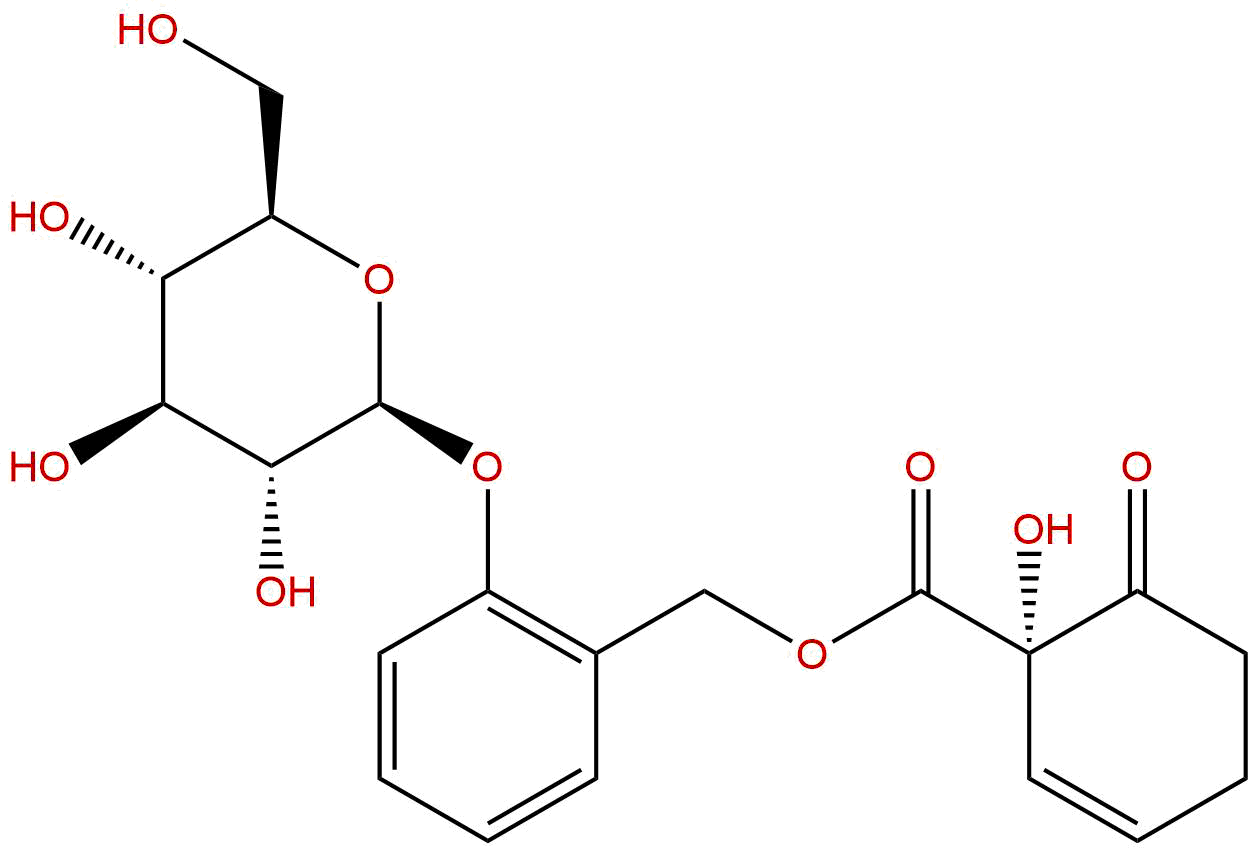
The chemical name of tretinoin is 2- [(6-benzoyl - β - D-glucopyranosyl) oxy] benzyl alcohol, and its CAS number is 1887055-63-1. Structurally, tri-n-butyl glucoside is composed of a salicylic alcohol (ortho hydroxyphenyl alcohol) aglycone connected to a glucose unit via a β - glycosidic bond, and undergoes esterification modification with a benzoyl group on the hydroxyl group at position 6 of glucose. This unique benzoyl glycosidic structure is a key characteristic that distinguishes it from other simple salicylate compounds, and profoundly affects its physicochemical properties and biological activity.
Its molecular formula is C20H22O10 and its molecular weight is 424.4020. The calculated lipid water partition coefficient (LogP) is approximately -0.2138, indicating that the compound has good hydrophilicity. The topologically polar surface area (TPSA) is as high as 162.98 Å ², mainly attributed to the presence of multiple hydrogen bond acceptors (oxygen atoms) in the molecule. The theoretically calculated water solubility value is 10.5119 mg/L, which belongs to the range of slightly soluble to soluble, consistent with its glycoside structure. These physicochemical parameters suggest that the distribution of tricarboxylic acid in organisms may be more inclined towards hydrophilic environments, and its transmembrane transport efficiency may be limited to some extent. Preliminary pharmacological predictions indicate that its ability to cross the blood-brain barrier is low, which challenges its potential to act on the central nervous system, but may also reduce related side effects. Preliminary screening of in vitro toxicity showed no significant hERG potassium channel inhibitory activity (low risk of arrhythmia), and the Ames test predicted a negative result (low risk of mutation), providing preliminary positive signals for its safety assessment.
Plant sources and extraction methods
Triyangin is a characteristic defensive secondary metabolite in Salicaceae plants, widely present in multiple genera of the family, with Salix spp. and Populus spp. being the most abundant. For example, the bark, leaves, and tender branches of Salix alba, Salix fragilis, and Populus euphratica in Europe are all traditional sources for extracting triterpenoid glycosides. There are significant differences in the content of salidroside among different species, tissue parts, and growth seasons, which are usually related to the defense needs of plants and environmental stress.
The extraction of salidroside from plant materials mainly uses solvent extraction method. Due to its high polarity as a phenolic glycoside, methanol, ethanol, or ethanol water mixed solutions are commonly used for extraction or reflux extraction. The crude extract is then subjected to a series of separation and purification steps, typically including: 1) preliminary enrichment using macroporous adsorption resins (such as D101, AB-8) to remove impurities such as sugars and proteins; 2) Multiple separations are performed using silica gel column chromatography and reverse phase silica gel column chromatography (such as ODS-C18), with commonly used elution systems being chloroform methanol or water methanol gradients; 3) Finally, high-purity monomer compounds were obtained through preparative high-performance liquid chromatography (HPLC) or recrystallization. Modern analytical techniques such as high-performance liquid chromatography-mass spectrometry (HPLC-MS) and nuclear magnetic resonance (NMR) are key means for identifying its structure and purity. In recent years, there have also been studies exploring green technologies such as ultrasound assisted extraction and microwave-assisted extraction to improve extraction efficiency.
Pharmacological activity research
A large number of in vitro and in vivo pharmacological studies have confirmed that salidroside has diverse biological activities, and its potential for application far exceeds its traditional understanding as a precursor of salicylic acid.
-
Anti inflammatory and analgesic activity This is one of the most essential pharmacological effects of tretinoin. In various acute (such as carrageenan induced rat foot swelling) and chronic inflammation models (such as Freund's complete adjuvant induced arthritis), tricarboxylic acid exhibits significant anti-inflammatory effects, effectively reducing tissue swelling and decreasing inflammatory cell infiltration. Its analgesic effect has been confirmed in acetic acid-induced twisting and hot plate experiments in mice, suggesting that it has both peripheral and central analgesic mechanisms.
-
Bone metabolism regulation activity (anti osteoporosis)This is the most distinctive research direction of tretinoin in recent years. Research has confirmed that tretinoin can effectively inhibit osteoclast differentiation and maturation induced by receptor activator of nuclear factor kappa B ligand (RANKL). In a rat model of osteoporosis induced by ovariectomy, administration of tretinoin can significantly increase bone density, improve bone microstructure, and enhance biomechanical strength. Its inhibitory effect on bone resorption is even better than some clinical bisphosphonates, and no significant cytotoxicity has been observed, showing good therapeutic prospects.
-
Neuroprotection and anti forgetting activity In Alzheimer's disease models and scopolamine induced memory impairment models, tretinoin can improve the learning and memory abilities of experimental animals. The mechanism may be related to reducing neuroinflammation, inhibiting acetylcholinesterase activity, reducing β - amyloid deposition, and combating oxidative stress.
-
Anti fat formation and metabolic regulation activity Research has found that tretinoin can inhibit the differentiation of 3T3-L1 preadipocytes, reduce lipid accumulation, and downregulate the expression of key adipogenic transcription factors such as peroxisome proliferator activated receptor gamma (PPAR gamma). This suggests that it may have value in preventing or treating obesity and related metabolic syndrome.
-
Immune regulatory activity Triptolide has a regulatory effect on immune cell function. It can inhibit the excessive activation of macrophages induced by lipopolysaccharide (LPS) and reduce the release of pro-inflammatory cytokines. Meanwhile, it may also have a regulatory effect on T lymphocyte proliferation, suggesting its potential application in autoimmune diseases.
Mechanism of action and molecular targets
The multiple pharmacological activities of Tripterygium wilfordii stem from its precise regulation of multiple key signaling pathways within cells. The existing research has preliminarily outlined its mechanism of action network, mainly focusing on the two core areas of anti-inflammatory and osteoclast inhibition.
1. Core signaling pathways for anti-inflammatory effects:
The anti-inflammatory effect of tretinoin is mainly achieved by inhibiting the NF - κ B and MAPK signaling pathways. When cells are stimulated by inflammation such as LPS and TNF - α, tretinoin can effectively block the activation of I κ B kinase (IKK, encoded by IKBKB), thereby inhibiting the phosphorylation and degradation of I κ B protein, causing NF - κ B dimers (such as p65/RELA) to be retained in the cytoplasm and unable to enter the nucleus to initiate the transcription of pro-inflammatory genes such as interleukin-6 (IL-6), tumor necrosis factor - α (TNF - α), and inducible nitric oxide synthase (NOS2). Meanwhile, it can also inhibit the phosphorylation of MAPK pathways such as JNK and p38. In addition, the study also found that salidroside can directly or indirectly inhibit the activation of key inflammasome component CASP1 (caspase-1), reduce the maturation and release of cytokines such as IL-1 β. In terms of pain regulation, its analgesic effect may be related to antagonizing the activity of transient receptor potential vanillic acid subtype 1 (TRPV1) and anchored protein subtype 1 (TRPA1) ion channels, which are important sensors mediating inflammatory pain and neuropathic pain.
2. Key mechanisms for inhibiting osteoclast differentiation:
The differentiation of osteoclasts is highly dependent on the RANKL/RANK signaling axis. The core of the intervention of Triptolide in this process lies in the simultaneous inhibition of NF - κ B and NFATc1 (activated T cell nuclear factor c1) signaling. On the one hand, it inhibits the classical NF - κ B pathway through the aforementioned mechanism; On the other hand, it can effectively inhibit the JNK signaling pathway activated by RANKL. The inhibition of JNK signaling, together with the inhibition of NF - κ B, strongly impedes the transcriptional activation of NFATc1. NFATc1 is the main regulator of osteoclast differentiation, and its downregulation directly leads to a decrease in the expression of osteoclast specific genes (such as protease K and tartrate resistant acid phosphatase), ultimately inhibiting osteoclastogenesis and bone resorption function.
3. Other potential targets:
Triptolide can also downregulate the phosphorylation of signal transducer and activator of transcription factor 3 (STAT3), which is another pathway for its potential anti-inflammatory and anti-tumor activities. The possible inhibitory effect on cyclooxygenase-1 (PTGS1/COX-1) is linked to the traditional antipyretic and analgesic mechanisms of salicylic acids.
In summary, tretinoin exerts pharmacological effects through multiple targets and pathways, with the core intersection of its action network being the NF - κ B and JNK signaling pathways.
Evaluation of drug properties and pharmacokinetics
Although tricarboxylic acid has shown encouraging activity in preclinical studies, its successful development as a drug highly depends on systematic drug efficacy evaluation and pharmacokinetic studies. At present, the data in this area is not complete, but based on its physical and chemical properties and preliminary research, the following analysis can be conducted:
Pharmacokinetic feature prediction and challenges:
The glycosidic structure of tretinoin determines that its pharmacokinetic behavior may be complex. The higher polarity and TPSA may result in lower oral bioavailability, due to reasons including: 1) limited gastrointestinal permeability; 2) Easily hydrolyzed by gut microbiota or glycosidases on the intestinal mucosa, releasing salicylate and benzoic acid derivatives, the latter of which may be further metabolized into salicylic acid. This prodrug characteristic is both an opportunity and a challenge: it may have weak activity itself, but its metabolites contribute the main activity; But it also makes it difficult to maintain the blood concentration of the prototype drug. Its low blood-brain barrier permeability limits its direct therapeutic effect on central nervous system diseases. The distribution in the body may be concentrated in the blood and extracellular fluid, and tissue permeability needs to be investigated. The metabolic pathway may involve II binding reactions such as hydrolysis, glucuronic acid binding, and sulfation. Renal excretion may be its main clearance pathway.
Optimization strategy for drug properties:
In order to improve its medicinal properties, the following strategies may need to be adopted in the future: 1)Structural modification By chemically modifying glycosides or sugar groups (such as preparing prodrugs, synthesizing derivatives with higher lipid solubility), membrane permeability and metabolic stability can be improved. 2)New drug delivery system Develop delivery systems such as liposomes, nanoparticles, and microemulsions to improve their oral absorption, targeting, and blood-brain barrier penetration ability. 3)In depth research on PK/PD A comprehensive in vivo pharmacokinetic pharmacodynamic correlation study must be conducted to clarify the true active form of its action (whether it is the prototype drug or a metabolite), providing a basis for dosage form design and administration regimen.
Clinical application prospects and prospects
Based on its unique pharmacological spectrum, tretinoin has broad clinical application prospects in multiple disease fields:
-
Treatment of osteoporosis Its potent and specific osteoclast inhibitory effect makes it promising to be developed into a new generation of anti bone resorption drugs. Compared with existing bisphosphonates, if they can gain advantages in long-term safety (such as avoiding the risk of jawbone necrosis and atypical femoral fractures) and ease of administration, they will have huge market potential. It can be developed for postmenopausal osteoporosis, glucocorticoid induced osteoporosis, and other conditions.
-
Inflammatory arthritis For diseases such as rheumatoid arthritis and osteoarthritis, tretinoin has multiple effects of anti-inflammatory, analgesic, and joint protection (inhibiting bone erosion), and may become a candidate for disease modifying anti rheumatic drugs (DMARD).
-
Neurodegenerative diseases Its multiple neuroprotective effects of anti-inflammatory, antioxidant, and acetylcholinesterase provide new ideas for the treatment of diseases such as Alzheimer's disease and Parkinson's disease. Although BBB penetration is a barrier, it is expected to be overcome through delivery systems or structural modifications.
-
Metabolic diseases Its anti fat formation activity suggests its potential value in the treatment of obesity and non-alcoholic fatty liver disease.
-
pain management Especially targeting TRPV1/TRPA1 mediated inflammatory and neuropathic pain, it can serve as a lead compound for novel analgesics.
The future research focus should include: 1) completing systematic preclinical safety evaluations (acute toxicity, chronic toxicity, reproductive toxicity, etc.); 2) Elucidate its metabolic fate and main active substances in the body; 3) Conduct standardized clinical trials targeting advantageous indications such as osteoporosis; 4) Explore its potential for combination therapy with other drugs. As a naturally occurring compound, tretinoin also has unique advantages in the development of "green drugs".
Conclusion
As a natural phenolic glycoside originating from the willow family plants, tricarboxylic acid has evolved from a phytochemical marker to a star lead compound with multi-target pharmacological activity. Its outstanding performance in anti-inflammatory, analgesic, bone protective, neuroprotective and other aspects, especially through precise regulation of core pathways such as NF - κ B and JNK/NFATc1 to inhibit osteoclast differentiation, provides a new molecular weapon for the treatment of major chronic diseases such as osteoporosis. Despite facing challenges in drug development such as oral bioavailability and metabolic stability, modern medicinal chemistry and pharmaceutical technology provide the possibility for breakthroughs in these bottlenecks. With a deeper understanding of its mechanism of action and a comprehensive elucidation of its pharmacokinetic properties, it is highly likely that tricarboxylic acid and its structurally optimized derivatives will enter the clinical development stage in the next decade, bringing new treatment options to numerous patients and continuing the glorious chapter of natural products in the history of drug discovery.