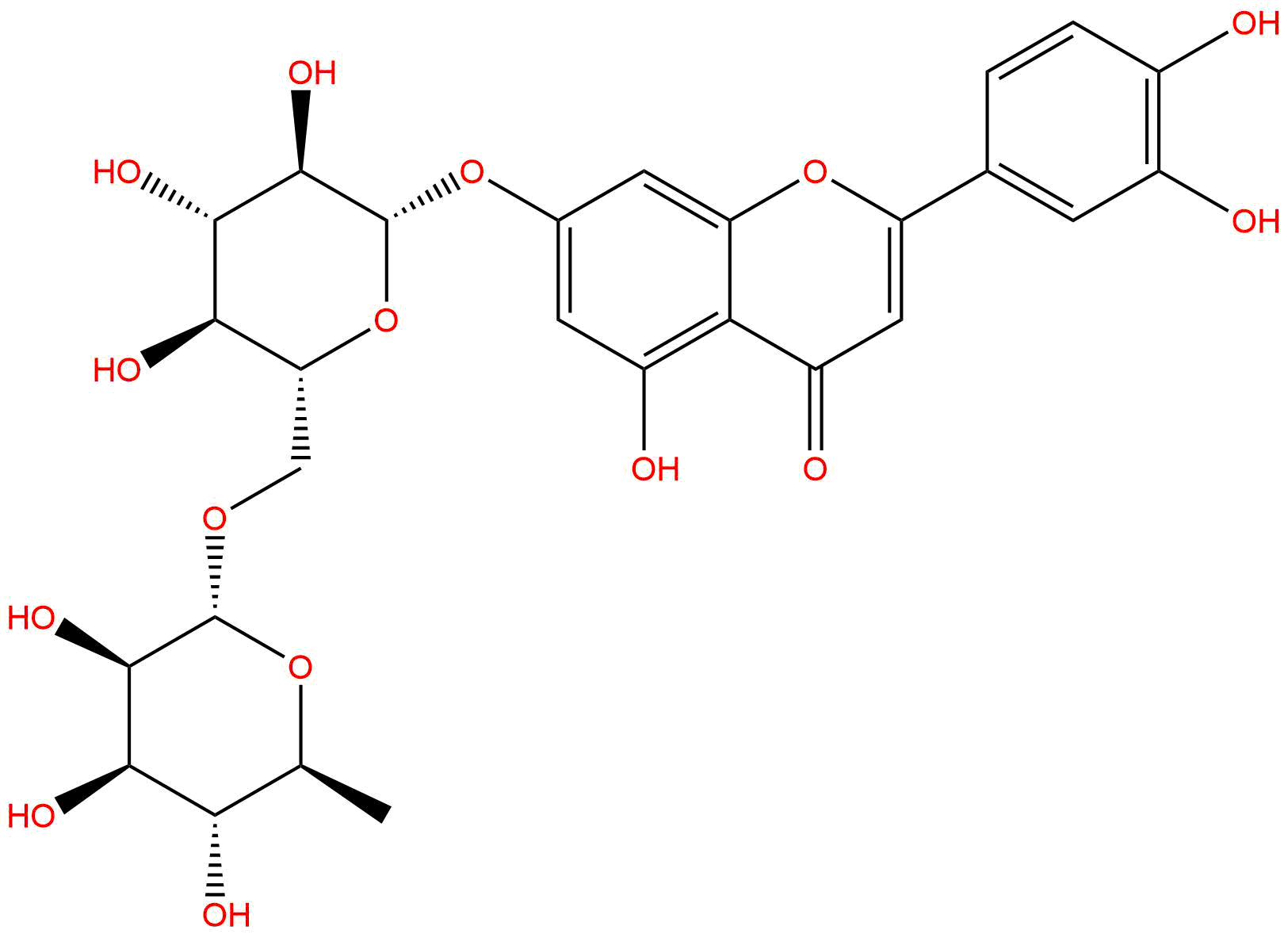


Product name: Luteolin 7-O-rutinoside
Synonym name: Scolimoside;Skolimoside;5,7,3',4'-Tetrahydroxyflavone 7-O-rutinoside
Catalogue No.: BP2165
Cas No.: 20633-84-5
Formula: C27H30O15
Mol Weight: 594.522
Botanical Source:
Type of Compound:
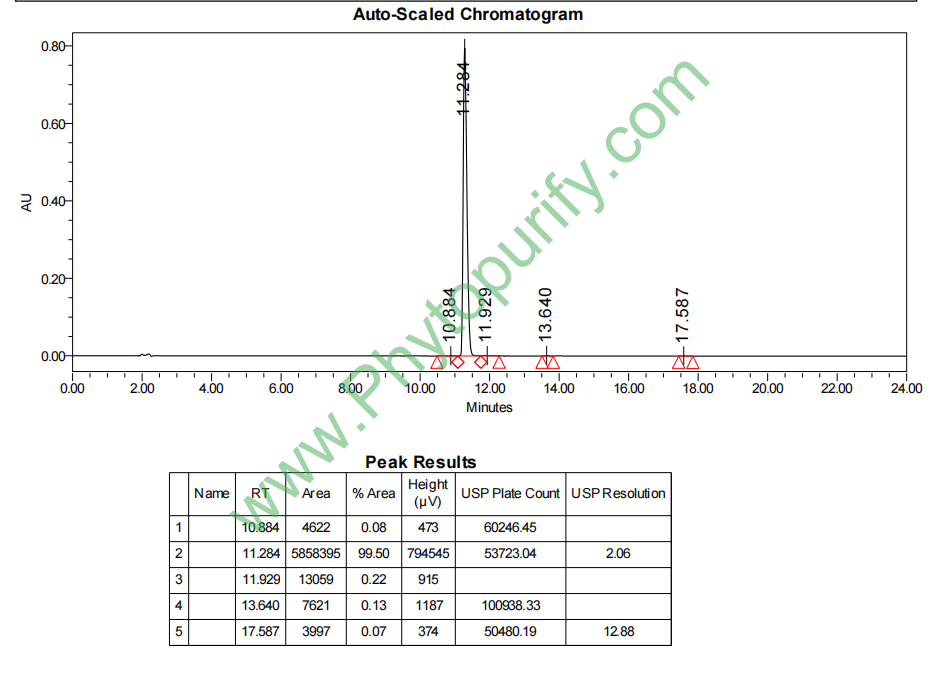
Purity: 95%~99%
Analysis Method: HPLC-DAD or/and HPLC-ELSD
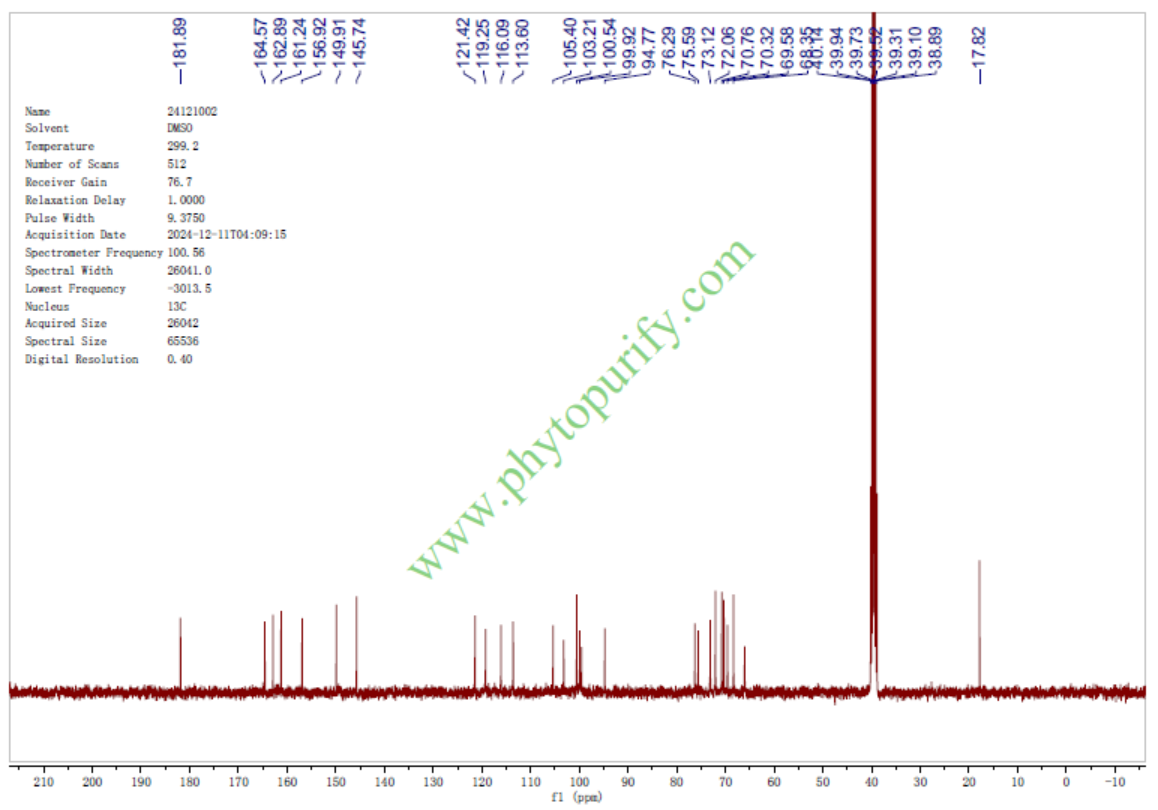
Identification Method: Mass, NMR
Packing: Brown vial or HDPE plastic bottle
Storage: Store in a well closed container, protected from air and light. Put into refrigerate or freeze for long term storage.
Whenever possible, you should prepare and use solutions on the same day. However, if you need to make up stock solutions in advance, we recommend that you store the solution as aliquots in tightly sealed vials at -20℃. Generally, these will be useable for up to two weeks.
The product could be supplied from milligrams to grams
Inquire for bulk scale.
For Reference Standard and R&D, Not for Human Use Directly.
HPLC of Luteolin 7-O-rutinoside
NMR of Luteolin 7-O-rutinoside
Storage conditions:Short-term storage at 2~8℃, long-term storage at -20 ~ -80℃
249.2000
-.1968
-.2233
2.8682
.5146
.1637
Low
77.4490
4.7112
Yes
No
No
No
Yes
No
0.6
Yes
No
Yes
No
Flavonoids, as one of the most widely distributed plant secondary metabolites in nature, have attracted much attention in pharmacological research due to their diverse biological activities. Luteolin-7-O-rutinoside (CAS: 20633-84-5) is an important member of flavonoid glycosides, formed by the binding of the aglycone luteolin with the disaccharide rutin (α - L-rhamnose - (1 → 6) - β - D-glucose) at the 7th hydroxyl group. In recent years, with the deepening of research on natural products, this compound has gradually emerged from numerous flavonoids due to its significant anti-inflammatory, anticancer, and potential cardiovascular protective activities. Preliminary studies have revealed that it can not only inhibit the proliferation of various cancer cells by inducing apoptosis and cell cycle arrest, but also suppress tumor metastasis and angiogenesis. Of particular note is its unique role as an inhibitor of nuclear factor E2 related factor 2 (Nrf2), providing a new perspective for regulating oxidative stress-related diseases. Especially in the pathological network of complex chronic diseases such as atherosclerosis, it may play a multi way intervention role by regulating LOX-1, AMPK, ABCA1 and other key targets. The purpose of this article is to systematically review the chemical properties, plant sources, pharmacological activities, molecular mechanisms of action, and medicinal properties of luteolin-7-O-glucoside, and to prospect its clinical application prospects, in order to provide comprehensive scientific references for the deep development and transformation research of this natural product.
The molecular formula of syringin-7-O-rutinoside is C ₂₇ H ∝₀ O ₁₅, with a molecular weight of 594.5220. Its core structure is the flavonoid nucleus (2-phenylchromenone), specifically 5,7,3 ', 4' - tetrahydroxyflavone (luteolin), in which the 7-hydroxyl group forms a glycosidic bond with Rutinose. Rutin is a disaccharide composed of one molecule of rhamnose and one molecule of glucose connected by an alpha-1,6 glycosidic bond. This glycosylation modification significantly altered the physicochemical properties of luteolin glycosides.
In terms of theoretical physicochemical parameters, its topological polar surface area (TPSA) is as high as 249.2000 Å ², mainly attributed to the abundant hydroxyl groups and oxygen atoms on the sugar ring in the molecule, indicating strong polarity. The calculated lipid water partition coefficient (LogP) is -0.1968, indicating that the compound has a hydrophilic tendency, which is consistent with the characteristics of the glycoside structure. The theoretical water solubility value is 2.8682 (usually measured in mg/mL or log mol/L depending on the model), further confirming its good water solubility, which is beneficial for its dissolution and distribution in living organisms. However, its high polarity and molecular weight also pose challenges to its ability to penetrate biological membranes, and it is predicted that its blood-brain barrier permeability will be lower. In early drug risk screening, the compound did not show significant hERG potassium channel inhibition risk (predicted as' no '), indicating its potential low cardiac toxicity. The Ames test predicted a value of 0.6 (usually<1 indicates a low risk of mutagenicity), suggesting that its genetic toxicity risk is controllable. These theoretical properties laid the foundation for its subsequent pharmacological research and development.
Osmolin-7-O-glucoside is widely present in various plants and is one of the active ingredients in many medicinal and edible plants. Common plant sources include olive trees(Olea europaea)The leaves, buds, and fruits are abundant in olive leaves. In addition, in perilla(Perilla frutescens)Honeysuckle flower(Lonicera japonica)It has also been detected in some Asteraceae plants. The widespread application of these traditional medicinal plants indirectly confirms the potential safety and biological activity value of this ingredient.
The classic solvent extraction method is often used to extract luteolin-7-O-glucoside from plant materials. Due to its high polarity, methanol, ethanol, ethanol water mixed solutions, or hot water are commonly used extraction solvents. In order to improve extraction efficiency and selectivity, modern extraction techniques such as ultrasound assisted extraction, microwave-assisted extraction, and pressurized liquid extraction have been successfully applied. These methods destroy plant cell walls through physical means, accelerate solvent penetration and component dissolution, and can achieve higher extraction rates in a shorter time and with less solvent.
The crude extract after extraction usually contains a large amount of impurities and requires further separation and purification. Macroporous adsorption resins (such as AB-8 and D101) are commonly used for initial enrichment, and their adsorption properties and different concentrations of ethanol elution can be utilized to separate flavonoid glycosides from impurities such as sugars and proteins. Subsequently, the use of preparative high-performance liquid chromatography (Prep-HPLC) with a C18 reverse phase column as the stationary phase and methanol water or acetonitrile water (often containing a small amount of formic acid or acetic acid to adjust pH) as the mobile phase for gradient elution is currently the most effective method for obtaining high-purity luteolin-7-O-glucoside monomers. The entire extraction and separation process requires tracking and detection using thin-layer chromatography (TLC) or high-performance liquid chromatography (HPLC) to ensure the yield and purity of the target compound.
Numerous in vitro and in vivo pharmacological studies have confirmed that luteolin-7-O-glucoside has multiple biological activities, with its core pharmacological effects focused on anti-inflammatory, anticancer, and cardiovascular protection.
1. Anti inflammatory activity: This compound exhibits significant anti-inflammatory effects. In the macrophage inflammation model induced by lipopolysaccharide (LPS), it can effectively inhibit the excessive production of key inflammatory mediators such as nitric oxide (NO), prostaglandin E2 (PGE2), tumor necrosis factor - α (TNF - α), interleukin-6 (IL-6), etc. Its anti-inflammatory effect is stronger than that of its aglycone luteolin in some models, suggesting that the glycoside structure may affect its cellular uptake or target affinity. Animal experiments have also shown that it can reduce tissue edema and inflammatory cell infiltration in both acute and chronic inflammation models.
2. Anti cancer activity: The anti-cancer effect is a research hotspot of luteolin-7-O-glucoside. Research shows that it has growth inhibitory activity on many human cancer cell lines, including non-small cell lung cancer (A549, H460, etc.), breast cancer, colon cancer, and liver cancer. Its anti-cancer mechanism is not a single cytotoxicity, but rather multiple pathways: ① Inducing cell apoptosis By upregulating pro apoptotic proteins (such as Bax) and downregulating anti apoptotic proteins (such as Bcl-2, Mcl-1), activating the Caspase cascade reaction, cancer cells undergo programmed cell death. ② Block cell cycle Mainly blocks cancer cells in the G2/M or S phase, inhibiting their mitotic process. ③ Inhibit metastasis and invasion By downregulating the expression of matrix metalloproteinases (MMPs) such as MMP-2 and MMP-9, the degradation and migration ability of cancer cells to the basement membrane are inhibited. ④ Angiogenesis inhibition It can inhibit the proliferation, migration, and tubular formation of human umbilical vein endothelial cells (HUVEC) in vitro, and may inhibit the generation of tumor neovascularization in vivo.
3. Cardiovascular protective activity (especially for atherosclerosis): Luteolin -7- O - rutin glycoside shows multi - link protective potential against atherosclerosis (AS), a complex pathological process. It can alleviate endothelial cell damage and inflammatory response induced by oxidized low-density lipoprotein (ox LDL). In AS animal models, it has been proven to reduce aortic plaque area, improve lipid profile, and its effects are closely related to regulating lipid metabolism, protecting endothelial function, and inhibiting vascular inflammation.
The pharmacological effects of luteolin-7-O-glucoside stem from its regulation of multiple intracellular signaling pathways and intervention in multiple key target proteins. Its mechanism network, especially in the context of atherosclerosis, has been initially revealed.
Core mechanism: Nrf2 signaling pathway inhibition
Unlike many flavonoids that exert antioxidant effects by activating Nrf2, syringin-7-O-rutinoside has been identified as a Effective Nrf2 inhibitors In cancer cells, sustained overactivation of Nrf2 is considered an important factor leading to chemotherapy resistance and tumor progression. This compound reduces the antioxidant defense ability of cancer cells by inhibiting the expression of Nrf2 and its downstream antioxidant response element (ARE) driver genes (such as HO-1, NQO1), making them more sensitive to apoptotic signals. This may be its unique mechanism for enhancing cancer cells' sensitivity to treatment.
Multi target action network in atherosclerosis:
Based on the provided target information, its role in AS can be summarized as follows:
* Inhibiting inflammation and oxidative stress, endothelial damage Lectin like oxidized low-density lipoprotein receptor-1 (LOX-1/OLR1) is the main receptor for endothelial cell uptake of ox LDL and a key molecule for AS initiation. Luteolin-7-O-rutinoside may reduce the internalization of ox LDL and the associated endothelial inflammation and oxidative stress by downregulating LOX-1 expression. Meanwhile, as an Nrf2 inhibitor, it may restore redox homeostasis in specific pathological environments (such as when Nrf2 is overactivated) by regulating the balance between Nrf2 and Keap1.
* Regulating lipid reverse transport and metabolism Adenosine activated protein kinase (AMPK/PRKAA1) is a core regulatory factor in cellular energy metabolism. Activating AMPK can promote the expression of ATP binding cassette transporter A1 (ABCA1), a key protein in cholesterol reversal, thus accelerating the cholesterol outflow from macrophages and inhibiting the formation of foam cells. This compound may exert anti AS effects by activating the AMPK-ABCA1 axis.
* Regulating the balance between cell apoptosis and survival Abnormal apoptosis and survival of cells within AS plaques are involved in plaque instability. This compound may promote moderate apoptosis of macrophages or smooth muscle cells, or clear diseased cells, by downregulating the expression of anti apoptotic proteins B cell lymphoma 2 (Bcl-2) and myeloid leukemia 1 (Mcl-1). RecQ helicase 1 (RECQ1) in the target is a DNA repair enzyme whose overexpression is associated with cancer, but its role in AS is not yet clear, and it is speculated to be related to the stability of the vascular cell genome.
* Epigenetic regulation Dyschromatin histone methyltransferase 2 (EHMT2/G9a) is responsible for catalyzing the dimethylation of histone H3 lysine 9 (H3K9me2), which is an epigenetic marker associated with gene transcription inhibition. Inhibition of EHMT2 can reactivate the expression of certain tumor suppressor genes or beneficial genes. Luteolin-7-O-rutinoside may regulate the gene network associated with inflammation and apoptosis at the epigenetic level by affecting EHMT2 activity.
Although luteolin-7-O-glucoside exhibits excellent biological activity in vitro, its drug like and pharmacokinetic (PK) properties in vivo are key factors determining its successful development as a drug.
Drug analysis:
Based on its theoretical parameters, this compound conforms to most of the Lipinski's Rule of Five (hydrogen bond donor<5, hydrogen bond acceptor<10, slightly beyond the boundary of molecular weight<500), but its high polarity (TPSA>140 Å ²) and hydrophilicity (LogP<0) are its main challenges for drug development. These characteristics lead to its Oral bioavailability may be low Good solubility in the gastrointestinal tract, but poor passive diffusion and absorption across intestinal epithelial cells; Meanwhile, as a glycoside compound, it is highly susceptible to hydrolysis by gut microbiota and glycosidases on the intestinal mucosa, removing the rutin glycosyl group and converting it into aglycone luteolin or its monoglycoside, which limits its entry into the bloodstream in its original form. The prediction of low blood-brain barrier permeability also limits its direct application in central nervous system diseases.
Pharmacokinetic studies:
The existing research on its PK is relatively limited, but speculation can be made based on the general rules of flavonoid glycosides. After oral administration, most of the prototype drugs are metabolized in the intestine. A small portion of absorbed prototype drugs and glycosides produced by intestinal hydrolysis undergo extensive II binding metabolism in the liver, such as glucuronidation and sulfation, forming more water-soluble metabolites, which are then rapidly excreted through bile or urine. Therefore, it The half-life in the body may be relatively short Frequent administration or dosage form modification is required to maintain effective blood drug concentration. The material basis for its systemic effects may be the comprehensive effects of its prototype, aglycones, and various metabolites. Future research needs to clarify its absolute bioavailability, major metabolites, distribution characteristics, and excretion pathways in different species.
Formulation improvement strategy:
In order to improve its pharmacological properties, dosage form engineering strategies are crucial. For example, by preparing phospholipid complexes, cyclodextrin inclusion complexes, or nanostructured lipid carriers, their lipid solubility and membrane permeability can be enhanced, protecting them from intestinal enzymatic hydrolysis, thereby improving oral absorption and bioavailability. Developing corresponding topical or inhaled formulations for local treatment (such as skin inflammation or pulmonary administration) is also a feasible direction.
The multi-target and multi pathway pharmacological properties of luteolin-7-O-glucoside provide broad prospects for its application in various disease fields, but also face many challenges.
Potential application directions:
1. As an anti-cancer adjuvant therapy drug Its ability to induce apoptosis, inhibit metastasis, and resist angiogenesis makes it promising for development as a novel anti-cancer drug or in combination with existing chemotherapy drugs to enhance efficacy and overcome drug resistance. Its Nrf2 inhibitory properties have potential value, especially for drug-resistant tumors with excessive Nrf2 activation.
2. Prevention and treatment of atherosclerosis and related cardiovascular diseases Its effects on multiple aspects of AS pathology (endothelial protection, lipid regulation, anti-inflammatory, and regulation of cell fate) make it a potential natural candidate drug for the prevention and treatment of AS. It can be considered for development as a functional food additive or preventive drug for high-risk populations of cardiovascular events.
3. Anti inflammatory treatment Can be used to treat chronic inflammatory diseases such as inflammatory bowel disease, arthritis, dermatitis, etc. Its relatively good security is its advantage.
Challenges and future research directions:
1. Systematic and in-depth preclinical research Currently, most research is still at the stage of cell and animal models. A more systematic toxicological evaluation (acute toxicity, chronic toxicity, reproductive toxicity, etc.) is needed, and its efficacy and safety need to be validated in animal models that are closer to human diseases, such as ApoE -/- mouse AS models.
2. Pharmacokinetic and Metabolomic Studies It is necessary to comprehensively elucidate its ADME (absorption, distribution, metabolism, excretion) process under different administration routes, and clarify its true in vivo active form (prototype, aglycone or metabolite), which is the basis for dose design and formulation development.
3. Accurate analysis of the mechanism of action Although some targets are known, direct evidence of their interactions with LOX-1, EHMT2, RECQ1 and other targets, binding sites, and details of downstream signaling networks still need to be further explored. The important direction is to use chemical biology methods such as affinity fishing, molecular docking, and kinetic simulation to search for its direct target proteins.
4. Structural optimization and derivative development Based on its pharmacological activity and pharmacological shortcomings, structural modifications can be made to it, such as modifying the sugar moiety or derivatizing the glycoside hydroxyl group, in order to obtain derivatives with higher activity, more stable metabolism, and better oral bioavailability.
5. Clinical translational research Ultimately, rigorous clinical trials need to be designed to validate its effectiveness, safety, and appropriate dosing regimen in humans.
As a naturally occurring flavonoid glycoside, luteolin-7-O-glucoside has become a highlight compound in natural product pharmacology research due to its extensive anti-inflammatory, anticancer, and cardiovascular protective activities. Its unique Nrf2 inhibitory activity and its ability to regulate multiple targets such as LOX-1, AMPK, ABCA1, and Bcl-2 families in the atherosclerotic pathological network reveal its potential to intervene in complex diseases in multiple ways and links. Although it faces challenges in terms of oral bioavailability and metabolic stability, these obstacles are expected to be overcome through modern pharmaceutical technologies and structural optimization strategies. In the future, by integrating systems pharmacology, chemical biology, and clinical medicine research, deeply analyzing its molecular action network, and promoting its clinical translation, luteolin-7-O-glucoside is expected to develop from a promising lead compound into a new type of drug or functional health product for tumor adjuvant therapy, cardiovascular disease prevention and treatment, contributing its natural value to human health.
