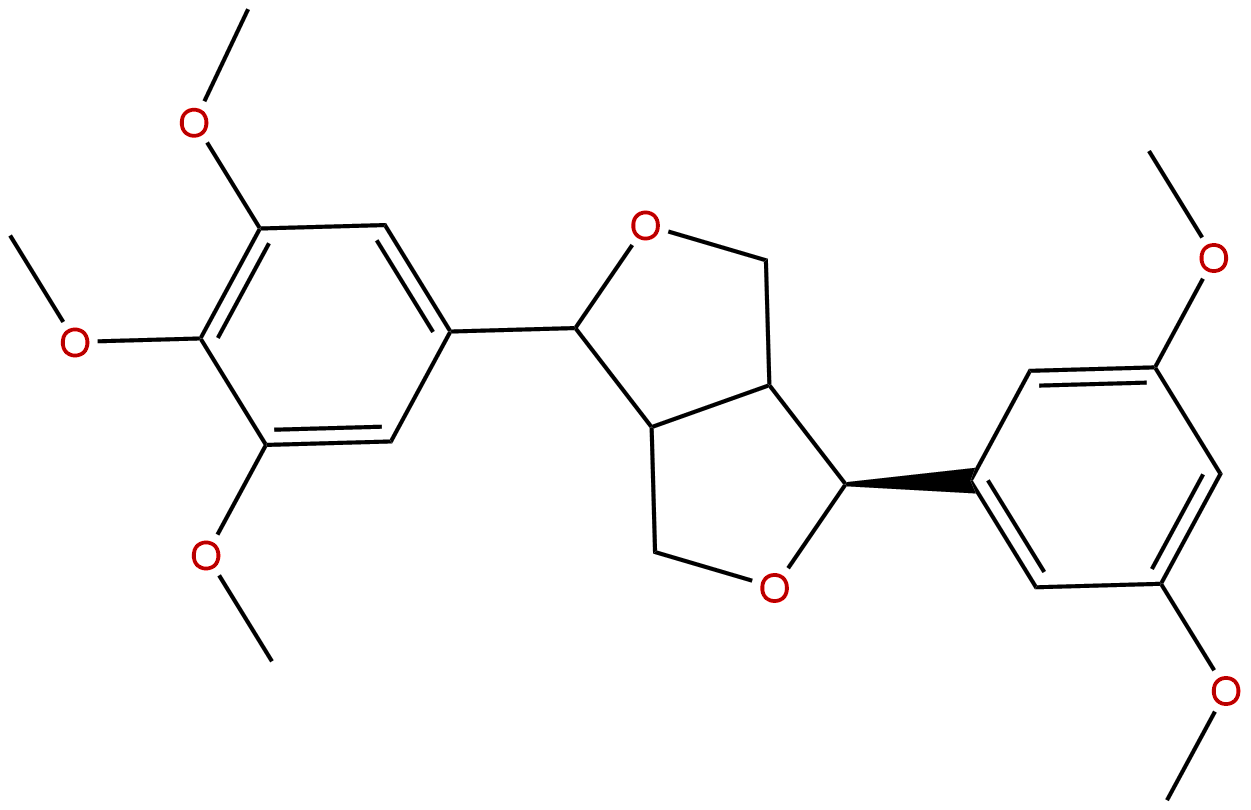


Product name: Epimagnolin B
Synonym name: CHEMBL480759
Catalogue No.: BP1775
Cas No.: 1134188-26-3
Formula: C23H28O7
Mol Weight: 416.47
Botanical Source: Flower of Magnolia liliiflora Desr.
Physical Description:
Type of Compound: Lignans
Purity: 95%~99%
Analysis Method: HPLC-DAD or/and HPLC-ELSD
Identification Method: Mass, NMR
Packing: Brown vial or HDPE plastic bottle
The product could be supplied from milligrams to grams. Inquire for bulk scale.
We provide solution to improve the water-solubility of compounds, thereby facilitating the variety of activity tests and clinic uses.
For Reference Standard and R&D, Not for Human Use Directly.
Description:
Epimagnolin B has anti-inflammatory activity, it can inhibit the production of NO and PGE(2) and the expression of respective enzyme iNOS and COX-2 through the suppression of I-kappaB-alpha degradation and nuclear translocation of p65 subunit of NF-kappaB. It also exhibits antiallergic effects without affecting the viability of bone marrow-derived mast cells.
References:
Bioorg Med Chem Lett. 2009 Feb 1;19(3):937-40.
In vitro anti-inflammatory activity of lignans isolated from Magnolia fargesii.
METHODS AND RESULTS:
The overproduction of nitric oxide (NO) and prostaglandin E(2) (PGE(2)) causes neurodegenerative diseases, such as Alzheimer's disease and Parkinson's disease. Four lignans, (+)-eudesmin (1), (+)-magnolin (2), (+)-yangambin (3) and a new structure named as Epimagnolin B (4) were isolated from Magnolia fargesii (Magnoliaceae) as the inhibitors of NO production in LPS-activated microglia.
CONCLUSIONS:
The most potent compound 4 inhibited the production of NO and PGE(2) and the expression of respective enzyme iNOS and COX-2 through the suppression of I-kappaB-alpha degradation and nuclear translocation of p65 subunit of NF-kappaB.
Rsc Advances, 2017, 7(54):34236-34243.
Bioassay-guided isolation of bisepoxylignans from the flower buds of Magnolia biondii Pamp and their antiallergic effects.
The dried flower buds of Magnolia biondii Pamp (herbal name, Xin-Yi) are a traditional Chinese medicine with a long history of clinical use in the treatment of allergic rhinitis and sinusitis. However, the constituents responsible for its antiallergic effects remain unidentified.
METHODS AND RESULTS:
In the present study, a novel bisepoxylignan, isoeudesmin (1), and eight known bisepoxylignans, pluviatilol (2), eudesmin (3), magnolin (4), lirioresinol-B dimethyl ether (5), Epimagnolin B (6), kobusin (7), aschantin (8), fargesin (9), were isolated from effective fractions through antiallergic bioassay-guided procedures using mouse bone marrow-derived mast cells (BMMCs) and IgE-induced passive cutaneous anaphylaxis mice. The compound structures were elucidated through nuclear magnetic resonance and mass spectrometry analyses. Compound 1 and compounds 2–6 and 9 exhibited antiallergic effects without affecting the viability of BMMCs. Compounds 2 and 9 showed the strongest effects with IC50 values of 52.18 and 93.03 μM, respectively.
CONCLUSIONS:
In this paper, the structure–activity relationship between these bisepoxylignans and their antiallergic effects is discussed. After evaluating the intensity of the antiallergic effects of the extracts, further separating the fractions, and isolating the purified compounds, we concluded that biosepoxylignans are the main constituents in Xin-Yi contributing to its anti-allergic efficacy.
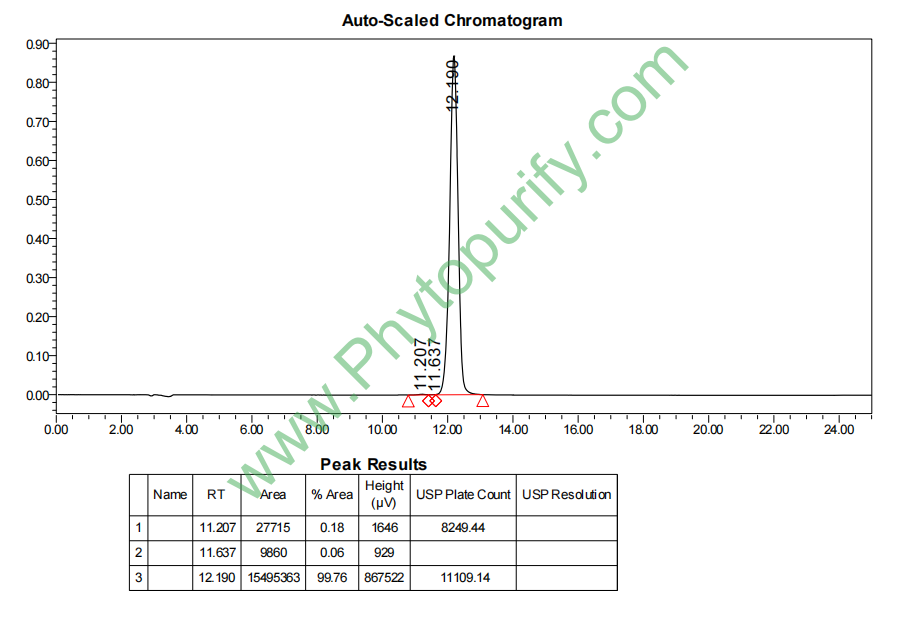
HPLC of Epimagnolin B
Storage conditions:Short-term storage at 2~8℃, long-term storage at -20 ~ -80℃
Epimagnolin B is a natural bicyclic lignin compound isolated from Magnoliaceae plants, which has received widespread attention in recent years due to its significant anti-inflammatory and anti allergic activities. As a natural product, magnolol B exhibits multi-target and multi mechanism pharmacological properties, especially in regulating immune responses and inflammatory processes, demonstrating unique biological functions. Its role in inhibiting the production of nitric oxide (NO) in microglia induced by lipopolysaccharide (LPS) provides a potential new approach for the treatment of neuroinflammatory related diseases. At the same time, the targeted regulation of epicranolin B in tumor diseases such as breast cancer has also led to in-depth research on its anti-tumor potential.
This article aims to systematically review the chemical structure and physicochemical properties, plant sources, and extraction methods of magnolol B, combined with the latest pharmacological activity research, to explore its mechanism of action and molecular targets, evaluate its pharmacological properties and pharmacokinetic characteristics, and prospect its potential and challenges in clinical applications, providing theoretical support and reference for scientific research and drug development in related fields.
The chemical structure of magnolol B belongs to the class of bicyclic lignin, with a molecular formula of C22H24O8 and a molecular weight of 416.47. Its structural features include the presence of two epoxy groups, and this unique double epoxy structure endows it with strong chemical stability and biological activity. According to calculations, its LogP value is 3.2512, indicating moderate lipid solubility, which is beneficial for membrane penetration and bioavailability. The polar surface area (TPSA) is 64.61 Å ², indicating that it has a certain polarity that may affect its binding ability to biological targets and pharmacokinetic behavior.
The low water solubility of magnolol B (0.0175 mg/mL) suggests its limited solubility in vivo and may require pharmacological measures to improve its bioavailability. It is worth noting that the compound has a high blood-brain barrier permeability, indicating its potential advantages in the treatment of central nervous system diseases. In addition, magnolol B did not exhibit hERG channel inhibitory activity, reducing the risk of cardiac toxicity, and the Ames mutagenicity test result was 0, indicating a low genetic toxicity risk and meeting the basic requirements for safe drug development.
Magnolia B is mainly isolated from plants in the Magnoliaceae family. Magnolia plants are widely used in traditional Chinese medicine and have the effects of clearing heat, detoxifying, promoting blood circulation, and removing blood stasis. The specific source plants include Magnolia officinalis and its related species, and the root bark and bark of these plants are the main enrichment sites of magnolol B.
During the extraction process, organic solvents such as methanol, ethanol, or ethyl acetate are often used for extraction, followed by liquid-liquid partitioning, column chromatography (such as silica gel column, reverse phase C18 column), and high-performance liquid chromatography (HPLC) for separation and purification. In recent years, the application of ultrasound assisted extraction and microwave-assisted extraction technologies has significantly improved extraction efficiency and purity. The purified paeoniflorin B was structurally identified by nuclear magnetic resonance (NMR), mass spectrometry (MS), and infrared spectroscopy (IR) to ensure its accuracy and purity.
Magnolia B was first discovered for its significant anti-inflammatory effects. In vitro experiments have shown that the compound can effectively inhibit the production of NO in LPS activated microglia, significantly reduce the expression of pro-inflammatory factors such as tumor necrosis factor alpha (TNF - α), interleukin-1 β (IL-1 β), and interleukin-6 (IL-6), and alleviate inflammatory responses. Its anti-inflammatory mechanism mainly involves inhibiting the activation of the nuclear factor kappa B (NF - κ B) signaling pathway, blocking the transcription of pro-inflammatory genes, thereby reducing neuroinflammation and tissue damage.
In the allergic reaction model, magnolol B exhibits the ability to inhibit degranulation of mast cells and histamine release, alleviating allergic inflammatory reactions. Related in vivo experiments have shown that this compound can reduce IgE mediated allergic reactions, alleviate asthma and skin allergy symptoms, and demonstrate good anti allergic potential.
In recent years, the anti-tumor effect of Epimagnolin B in tumor models such as breast cancer has attracted attention. It exhibits potential anti-cancer activity by regulating the proliferation, apoptosis, and drug resistance mechanisms of tumor cells through multiple targets. Research has shown that magnolol B can activate the AMPK signaling pathway, inhibit the transcriptional activity of STAT3, promote BCL2 mediated cell apoptosis, regulate the expression of estrogen receptor beta (ESR2), and affect the metabolism and survival of tumor cells. In addition, magnolol B can regulate drug efflux pumps ABCB1 and ABCG2, overcoming chemotherapy resistance in tumor cells.
The pharmacological effects of magnolol B involve multiple signaling pathways and key molecular targets, reflecting its multi-target drug properties.
AMPK(PRKAA1)As a key regulatory factor of cellular energy metabolism, the activation of AMPK helps to inhibit the proliferation of tumor cells and promote autophagy. Magnolia B regulates tumor cell metabolism and inhibits its growth by activating the AMPK pathway.
BCL2(BCL2)BCL2 family proteins are key regulatory factors of cell apoptosis. Magnolia B promotes programmed cell death of tumor cells and enhances anti-tumor efficacy by regulating the expression of BCL2.
STAT3(STAT3)STAT3 plays a promoting role in various tumors and inflammatory processes. Magnolia B inhibits the phosphorylation and nuclear translocation of STAT3, blocks its transcriptional activity, and weakens pro-inflammatory and pro tumor signals.
ESR2(ESR2)Estrogen receptor β plays an important role in the proliferation and differentiation of breast cancer cells. Magnolia B regulates ESR2 expression and affects hormone dependent tumor growth.
ABCB1 and ABCG2 These two ATP binding cassette transporters are important factors contributing to chemotherapy resistance in tumor cells. Inhibition of its expression or function by paeoniflorin B can help reverse drug resistance and improve the efficacy of chemotherapy drugs.
MAPT (microtubule associated protein Tau)Related to the stability of the cytoskeleton, magnolol B may affect cell morphology and migration by regulating MAPT.
TOP1 (Topoisomerase I)Involved in DNA replication and transcription, magnolol B may affect tumor cell proliferation by regulating TOP1 activity.
SIRT1 (silencing information regulatory factor 2 related enzyme 1)SIRT1 regulates cellular stress response and metabolism, and magnolol B activates SIRT1, which contributes to cell survival and anti-inflammatory effects.
RELA (NF - κ B p65 subunit)RELA is a key component of NF - κ B complex, and magnolol B reduces inflammatory response by inhibiting the activation of RELA.
In summary, magnolol B exhibits a wide range of pharmacological activities through multi-target synergistic effects, regulating cellular inflammatory response, apoptosis, metabolism, and drug resistance mechanisms.
The pharmacological parameters of magnolol B show that it has good potential for drug development. The molecular weight of 416.47 conforms to the ideal range of Lipinski rule, with a LogP of 3.25, which is in the moderate range of lipophilicity and conducive to cell membrane penetration. The TPSA is 64.61 Å ², which supports its good absorption and distribution in the body. Its low water solubility suggests the need for drug formulation optimization to improve bioavailability.
The high permeability of the blood-brain barrier gives it an advantage in the treatment of central nervous system diseases, especially in the fields of neuroinflammation and neurodegenerative diseases. The negative results of hERG channel inhibition and Ames test indicate its high safety, reducing the potential risks of cardiac toxicity and genetic toxicity.
At present, there is relatively limited research on the pharmacokinetics of paeoniflorin B. Preliminary data indicate that its half-life in vivo is moderate, it is widely distributed, and its metabolism is mainly carried out through the liver enzyme system. In the future, further systematic research is needed on its absorption, distribution, metabolism, and excretion (ADME) characteristics to guide clinical dosage form design and medication regimens.
Magnolia B, with its significant anti-inflammatory, anti allergic, and anti-tumor activities, has shown broad clinical application prospects. Its potential therapeutic value in neuroinflammatory diseases such as Alzheimer's disease, multiple sclerosis, and brain injury stems from its ability to inhibit microglial activation and release of inflammatory mediators. The high blood-brain barrier permeability provides favorable conditions for its entry into the central nervous system.
In the field of tumor therapy, epigallocatechin B has the potential to serve as an adjuvant chemotherapy drug or targeted therapy drug by regulating multiple signaling pathways and resistance related targets. Its multi-target mechanism on breast cancer cells provides a new strategy for overcoming tumor drug resistance and improving therapeutic effect.
However, the clinical translation of magnolol B still faces several challenges, including limited bioavailability due to low water solubility, lack of systematic preclinical toxicology and pharmacokinetic data, and ongoing clinical trial validation. Future research should focus on optimizing drug formulations, analyzing metabolic pathways in vivo, and evaluating safety, in order to promote its clinical application.
In addition, based on the structural characteristics of magnolol B, designing and synthesizing derivatives to improve pharmacokinetic properties and enhance biological activity is also an important direction for future research. By combining modern drug screening techniques and molecular simulation methods, it is expected to accelerate the development process of new drugs.
As a natural lignin compound with a unique double epoxy structure, magnolol B exhibits various pharmacological activities, especially in the fields of anti-inflammatory, anti allergic, and anti-tumor, and has important research value. Its multi-target and multi mechanism mode of action provides new perspectives and ideas for natural product pharmacology. Although the research on its pharmacokinetics and clinical application is still in its infancy, its good pharmacokinetic parameters and safety characteristics have laid a solid foundation for future drug development.
With the deepening of research, magnolol B is expected to become a potential drug for treating inflammatory diseases, allergic reactions, and tumors. In the future, we should strengthen the systematic explanation of its pharmacological mechanism, optimize formulation technology, conduct comprehensive preclinical and clinical research, promote its transition from laboratory to clinical application, and benefit patients.
