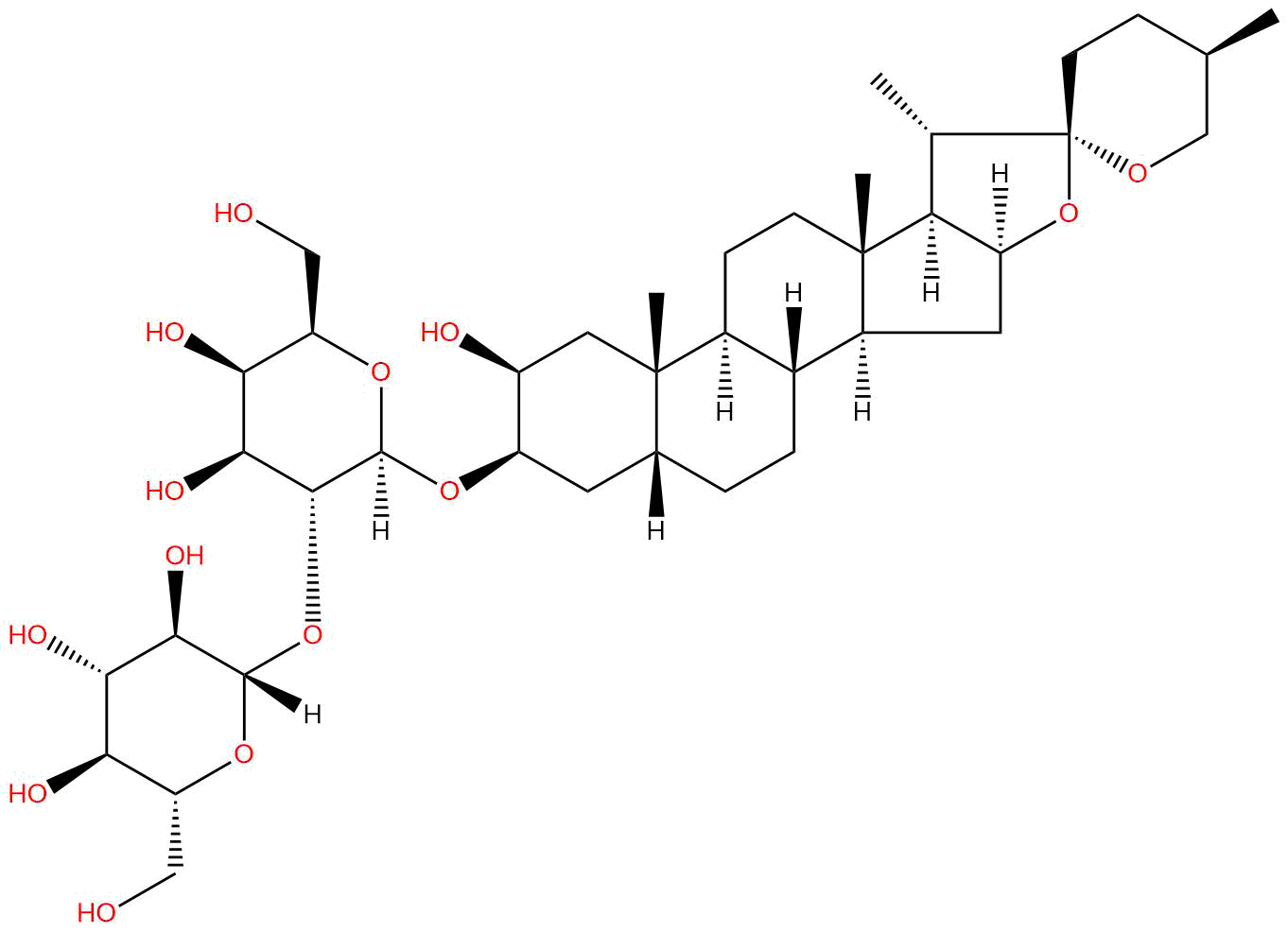


Product name: Anemarrhenasaponin A2
Synonym name: Schidigerasaponin F2;Timosaponin AII
Catalogue No.: BP4430
Cas No.: 117210-12-5
Formula: C39H64O14
Mol Weight: 756.927
Botanical Source:
Type of Compound:
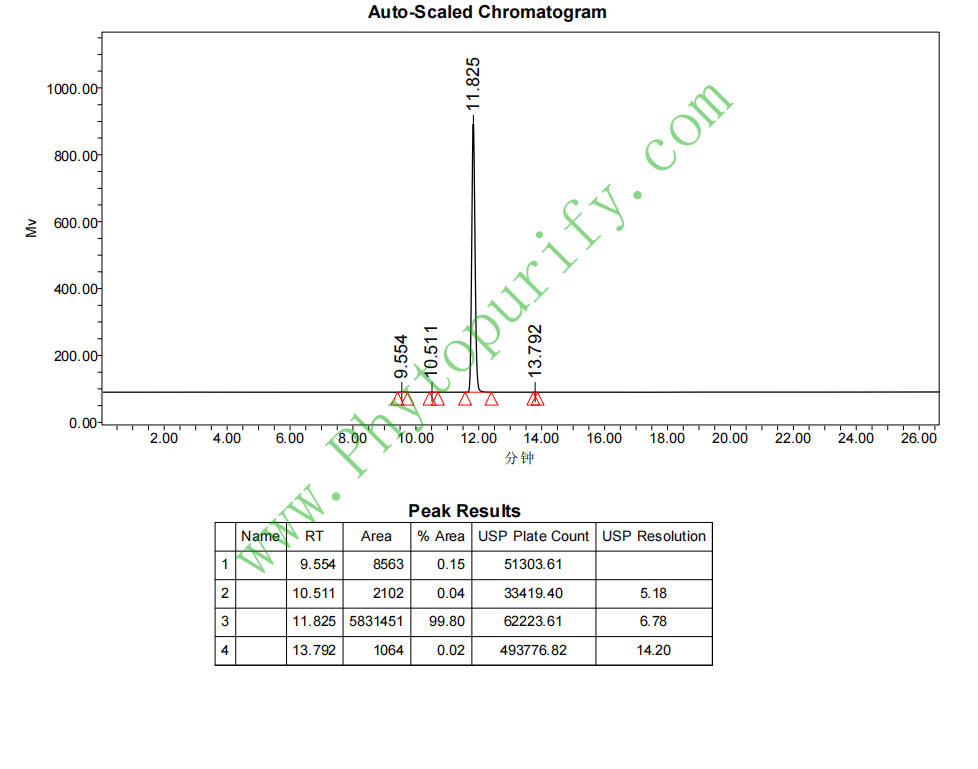
Purity: 95%~99%
Analysis Method: HPLC-DAD or/and HPLC-ELSD
Identification Method: Mass, NMR
Packing: Brown vial or HDPE plastic bottle
Storage: Store in a well closed container, protected from air and light. Put into refrigerate or freeze for long term storage.
Whenever possible, you should prepare and use solutions on the same day. However, if you need to make up stock solutions in advance, we recommend that you store the solution as aliquots in tightly sealed vials at -20℃. Generally, these will be useable for up to two weeks.
The product could be supplied from milligrams to grams
Inquire for bulk scale.
For Reference Standard and R&D, Not for Human Use Directly.
HPLC of Anemarrhenasaponin A2
Storage conditions:Short-term storage at 2~8℃, long-term storage at -20 ~ -80℃
217.2200
1.7105
1.7105
.0522
.6803
.3468
Low
62.8472
6.3298
No
No
No
No
No
No
0.0
Yes
No
No
No
Anemarrhenasaponin A2 (CAS number: 117210-12-5) is a steroid saponin isolated from the rhizome of the traditional Chinese medicine Anemarrhena asphodeloides Bunge. As one of the important active ingredients in Ganoderma lucidum, Ganoderma lucidum saponin A2 has received widespread attention due to its significant pharmacological activity. In recent years, with the advancement of natural product pharmacology and modern molecular biology technology, the potential effects of Zhimu saponin A2 in various aspects such as antiplatelet aggregation, anti-inflammatory, anti-tumor, and neuroprotection have gradually been revealed, showing good prospects for drug development.
The purpose of this review is to systematically summarize the chemical structure and physicochemical properties, plant sources, and extraction methods of saponins A2 from Anemarrhena chinensis, with a focus on their pharmacological activity and mechanism of action. The pharmacokinetic characteristics of saponins A2 are explored in combination with their pharmacological parameters. Finally, the clinical application potential and future research directions are discussed, providing reference for researchers in the field of natural product pharmacology.
Zhimu saponin A2 belongs to steroid saponins, with a molecular formula of C42H68O13 and a molecular weight of 756.9270. Its chemical structure consists of a steroid type triterpenoid core connected to multiple glycosides through glycosidic bonds, exhibiting typical amphiphilic characteristics. The LogP value of this compound is 1.7105, indicating moderate lipid solubility, which facilitates membrane penetration and bioavailability. The polar surface area (TPSA) is 217.22 Å ², indicating its high molecular polarity, which may affect its transmembrane transport and oral absorption.
Zhimu saponin A2 has low water solubility (0.0522 mg/mL), which to some extent limits its solubility and bioavailability in aqueous media. The low permeability of the blood-brain barrier suggests limited direct action in the central nervous system. The negative result of hERG channel inhibition experiment indicates a low risk of cardiac toxicity. The Ames mutagenicity test showed 0, indicating a low risk of genetic toxicity and a good safety basis.
Structurally, the specific conformation of the sugar chain and steroid skeleton of Zhimu saponin A2 has a decisive impact on its biological activity. The type, number, and connection mode of sugar groups are key factors in regulating their pharmacological activity. Through modern analytical techniques such as nuclear magnetic resonance (NMR) and mass spectrometry (MS), the structure of Zhimu saponin A2 has been analyzed in detail, providing a basis for the study of its structure-activity relationship.
Zhimu saponin A2 mainly comes from the dried rhizomes of Anemarrhena asphodeloides Bunge, a plant in the lily family. Zhimu, as a traditional Chinese medicine, is widely used in clinical formulas such as clearing heat and eliminating fire, moisturizing dryness and nourishing yin. Its rhizome contains various saponin compounds, among which the content of saponin A2 in Anemarrhena is relatively abundant.
The common methods for extracting saponins A2 from Anemarrhena include:
Solvent extraction
Ethanol or methanol aqueous solution (usually 70% -80%) is used for reflux extraction of dried rhizomes of Anemarrhena, and the extract is concentrated to obtain a crude saponin mixture.
Separation and purification
The crude extract was separated and purified using techniques such as liquid-liquid distribution, silica gel column chromatography, and reverse phase high performance liquid chromatography (RP-HPLC). Silica gel column chromatography often uses a chloroform methanol water system for gradient elution, combined with thin layer chromatography (TLC) to monitor component separation.
Structural Identification
The structure of purified Zhimu saponin A2 was confirmed by mass spectrometry (MS), nuclear magnetic resonance (NMR), and infrared spectroscopy (IR).
In recent years, green and efficient technologies such as ultrasound assisted extraction and microwave-assisted extraction have also been applied to the extraction of saponins A2 from Anemarrhena chinensis, significantly improving the extraction rate and purity, reducing solvent usage and extraction time, and in line with the environmental trend of modern natural product extraction.
The pharmacological activity research of Zhimu saponin A2 mainly focuses on its antiplatelet aggregation, anti-inflammatory, anti-tumor, and neuroprotective properties.
Zhimu saponin A2 can significantly inhibit ADP induced platelet aggregation and exhibits good anti thrombotic potential. Platelet aggregation is a key link in the occurrence and development of atherosclerosis and cardiovascular and cerebrovascular diseases. Inhibiting platelet overactivity is helpful to prevent thrombotic events. In vitro experiments have shown that saponins A2 from Anemarrhena can effectively inhibit platelet aggregation at low concentrations, and have low toxicity to platelets.
Inflammatory response is the pathological basis of various chronic diseases. Zhimu saponin A2 reduces inflammation by regulating the expression of inflammatory mediators, such as inhibiting the release of pro-inflammatory cytokines TNF - α, IL-1 β, and IL-6. In addition, it can inhibit the activation of the nuclear factor kappa B (NF - κ B) signaling pathway, reduce the transcription of inflammation related genes, and exert anti-inflammatory effects.
Partial studies have reported that saponins A2 from Anemarrhena chinensis have inhibitory effects on various tumor cell lines, inducing apoptosis and blocking cell cycle progression. Its mechanism of action involves activation of mitochondrial pathways, regulation of apoptosis related proteins, and changes in oxidative stress levels. Although there is currently limited in vivo research, its anti-tumor potential deserves further exploration.
The research on the neuroprotective effects of Zhimu saponin A2 is still in its infancy. Preliminary evidence suggests that it can alleviate neuronal damage through mechanisms such as antioxidant, anti-inflammatory, and modulation of neurotransmitter release, and has potential therapeutic value for neurodegenerative diseases.
The pharmacological mechanism of Zhimu saponin A2 mainly revolves around its regulation of platelet function, inhibition of inflammatory signaling pathways, and regulation of cell apoptosis.
Zhimu saponin A2 intervenes in the ADP receptor P2Y12 signaling pathway, inhibits the increase of calcium ion concentration in platelets, and blocks the cascade reaction of platelet activation. In addition, it may affect the integrin α IIb β 3 receptor on the platelet membrane, preventing fibrinogen binding and thus inhibiting platelet aggregation. Related studies suggest that Zhimu saponin A2 may also regulate the levels of cAMP and cGMP in platelets, enhancing platelet inhibitory signals.
Zhimu saponin A2 reduces the transcription and release of pro-inflammatory factors by inhibiting the NF - κ B and MAPK signaling pathways. It can also regulate the activity of macrophages and neutrophils, reduce the infiltration of inflammatory cells and the generation of inflammatory mediators. In addition, Zhimu saponin A2 has a regulatory effect on oxidative stress-related enzymes such as superoxide dismutase (SOD) and glutathione peroxidase (GPx), reducing oxidative damage.
Zhimu saponin A2 induces tumor cell apoptosis mainly by activating the mitochondrial pathway, promoting cytochrome C release, activating the caspase family, and ultimately leading to cell apoptosis. It can also exert antitumor effects by inhibiting signaling pathways related to tumor cell proliferation, such as PI3K/Akt and Wnt/β - catenin.
Some studies suggest that saponins A2 from Anemarrhena chinensis may affect calcium ion channels, protein kinase C (PKC), and other signaling molecules, but the specific targets and mechanisms of action still need to be further studied.
The pharmacological parameters of Zhimu saponin A2 indicate that it has certain potential for drug development, but there are also challenges.
At present, there is limited systematic pharmacokinetic research on saponins A2 from Anemarrhena asphodeloides. It is known that its blood-brain barrier permeability is low, indicating that its direct action in the central nervous system is limited. After oral administration, there may be lower bioavailability, partly due to its large molecular structure and high polarity. The metabolic pathway may involve hepatic glycoside hydrolysis and corresponding phase I and phase II metabolic reactions.
Zhimu saponin A2 does not inhibit hERG channels and reduces the risk of cardiac toxicity. The Ames test result is negative, indicating low genetic toxicity. Further improvement of in vivo toxicology data is needed to comprehensively evaluate its safety.
The high molecular weight and low water solubility of Zhimu saponin A2 are the main obstacles to its pharmacological development. Through advanced formulation technologies such as nanomedicine, liposome encapsulation, and solid dispersion, it is expected to improve its solubility and bioavailability. In addition, the development of structural modifications and semi synthetic derivatives is also an important strategy to improve their pharmacokinetic properties.
Zhimu saponin A2, as a natural product with multiple pharmacological activities, exhibits broad clinical application potential.
Its significant antiplatelet aggregation effect makes it a potential candidate for adjuvant treatment of cardiovascular and cerebrovascular diseases (such as atherosclerosis, myocardial infarction, stroke). In the future, clinical trials can be conducted to verify its safety and effectiveness, and promote its clinical translation.
Based on its anti-inflammatory mechanism, Zhimu saponin A2 is expected to be used for intervention in chronic inflammatory diseases such as rheumatoid arthritis and inflammatory bowel disease. Compared with existing anti-inflammatory drugs, its natural source and low toxicity advantages are obvious.
Although its anti-tumor activity is still in the basic research stage, the multi-target regulatory properties of Zhimu saponin A2 provide a theoretical basis for its use as an adjuvant therapy for tumors. In the future, it is necessary to conduct systematic in vivo tumor model research and preclinical safety assessment.
Given its neuroprotective potential, the application prospects of Zhimu saponin A2 in neurodegenerative diseases such as Alzheimer's disease and Parkinson's disease deserve attention. By optimizing drug delivery systems, it is possible to overcome the limitations of blood-brain barrier penetration.
Zhimu saponin A2, as an important active ingredient of Anemarrhena asphodeloides, has shown significant potential for drug development due to its unique steroid saponin structure and diverse pharmacological activities. Its mechanism of action in antiplatelet aggregation, anti-inflammatory, and anti-tumor aspects is gradually becoming clear, and drug evaluation shows that it has a good safety basis. Despite challenges such as poor water solubility and low bioavailability, modern pharmaceutical formulation technology and structural optimization have the potential to overcome these limitations.
In the future, combined with systematic pharmacological mechanism research, pharmacokinetic optimization, and preclinical studies, Zhimu saponin A2 is expected to become an important candidate in the development of natural product drugs, promoting the transformation of traditional Chinese medicine resources into modern drugs and providing new strategies and choices for the treatment of cardiovascular and cerebrovascular diseases and related chronic diseases.
