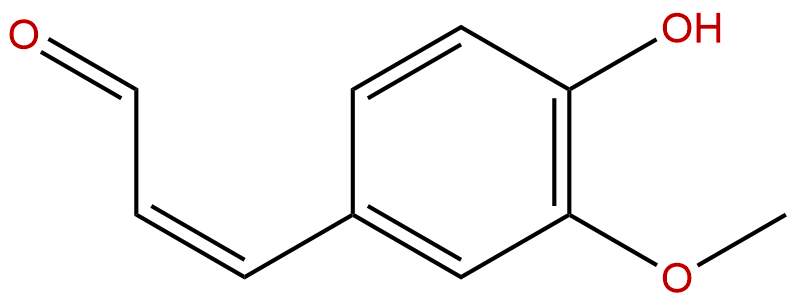


Product name: 4-Hydroxy-3-methoxycinnamaldehyde
Synonym name:
Catalogue No.: BP3028
Cas No.: 458-36-6
Formula: C10H10O3
Mol Weight: 178.187
Botanical Source:
Physical Description:
Type of Compound:
Purity: 95%~99%
Analysis Method: HPLC-DAD or/and HPLC-ELSD
Identification Method: Mass, NMR
Packing: Brown vial or HDPE plastic bottle
The product could be supplied from milligrams to grams. Inquire for bulk scale.
We provide solution to improve the water-solubility of compounds, thereby facilitating the variety of activity tests and clinic uses.
For Reference Standard and R&D, Not for Human Use Directly.
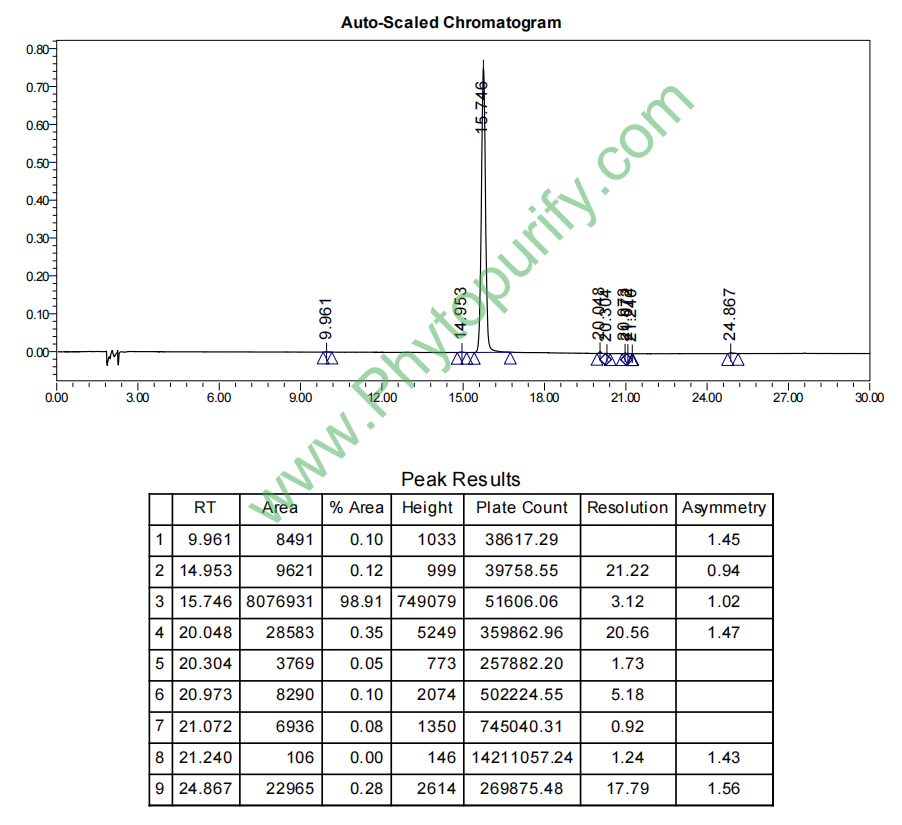
HPLC of 4-Hydroxy-3-methoxycinnamaldehyde
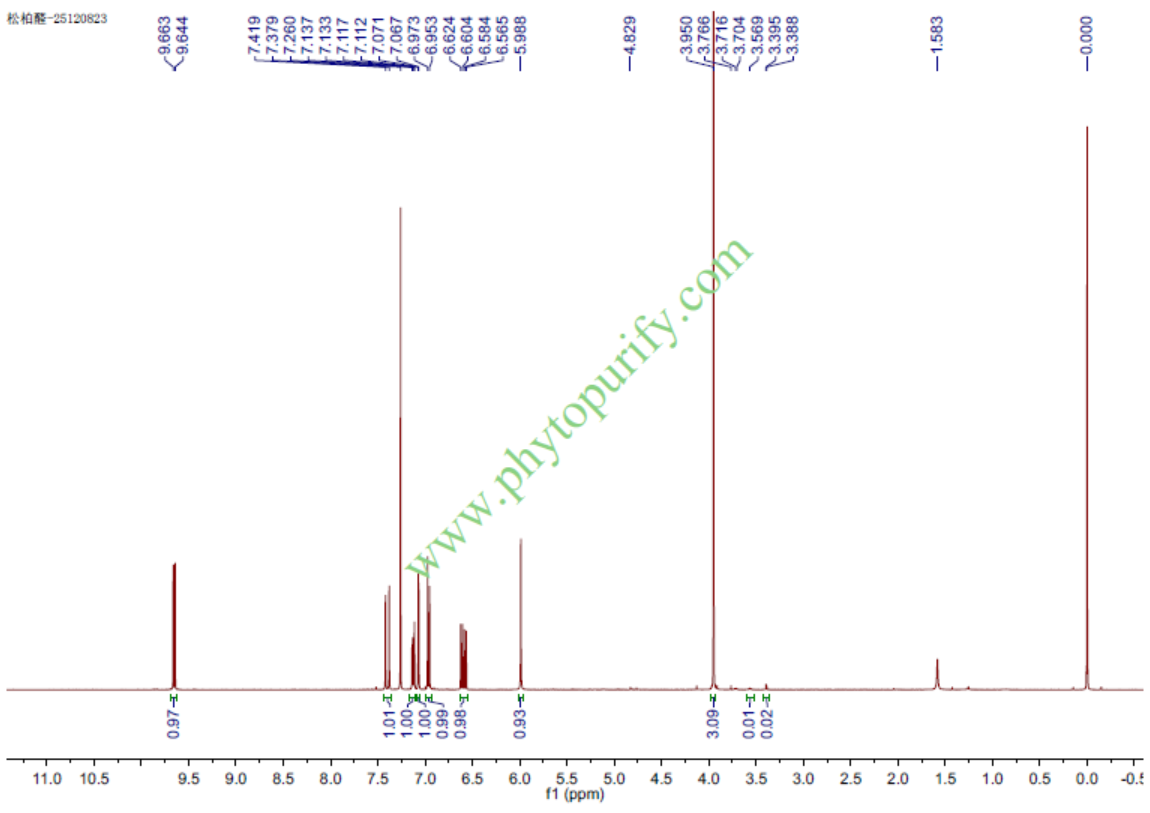
HNMR of 4-Hydroxy-3-methoxycinnamaldehyde
Storage conditions:Short-term storage at 2~8℃, long-term storage at -20 ~ -80℃
46.5300
1.8090
1.8008
.7574
8.3133
20.4224
High
77.6623
2.1973
Yes
Yes
Yes
No
Yes
No
0.6
No
Yes
Yes
Yes
Natural products, as an important source of drug discovery, play an irreplaceable role in human health maintenance and disease treatment. Among numerous natural compounds with biological activity, cinnamaldehyde derivatives have attracted much attention due to their structural diversity and extensive pharmacological activities. Coniferyl aldehyde (chemical name: 4-Hydroxy-3-methoxycinnamaldehyde, CAS number: 458-36-6), as an important member of the cinnamaldehyde family, is a naturally occurring phenylpropanoid compound widely present in various medicinal plants and daily diets. This compound serves as a key intermediate in lignin biosynthesis in plants and also plays an important role in plant defense responses.
The chemical structure of pine bark aldehyde is characterized by the substitution of hydroxyl at position 4 and methoxy at position 3 of its cinnamaldehyde skeleton. This unique substitution pattern endows it with special physicochemical properties and biological activity that distinguish it from other cinnamaldehyde compounds. In recent years, with the in-depth study of the pharmacological activity of natural products, the potential therapeutic value of pine bark aldehyde in multiple fields such as neurodegenerative diseases, inflammation, oxidative stress, metabolic diseases, etc. has gradually been revealed. Of particular note is the significant progress made in the research of pine bark aldehyde in the prevention and treatment of neurodegenerative diseases. Its targets involve multiple key molecules such as AMPK, BCL2, ABCA1, IDO1, APP, BACE1, TLR4, STAT3, and MAOA, demonstrating a complex mechanism of multi-target regulation.
This article will provide a systematic review of the research progress of pine bark aldehyde from the aspects of chemical structure and physicochemical properties, plant sources and extraction methods, pharmacological activity research, mechanism of action and molecular targets, drug evaluation and pharmacokinetics, and prospects for its clinical application prospects, in order to provide reference for the in-depth research and development of this natural product.
The chemical name of pine bark aldehyde is 4-hydroxy-3-methoxycinnamaldehyde, with a molecular formula of C ₁₀ H ₁₀ O3 and a molecular weight of 178.1870. Its structure consists of a benzene ring, an acrolein side chain, and hydroxyl and methoxy substituents on the benzene ring. Specifically, the C-4 position of the benzene ring is connected to a hydroxyl group (- OH), the C-3 position is connected to a methoxy group (- OCH ∝), and the C-1 position is extended through an acrolein side chain (- CH=CH-CHO). This structure gives it three important functional groups: phenolic hydroxyl, methoxy, and α -, β - unsaturated aldehyde. The presence of these groups directly determines its chemical reactivity and biological activity.
Pine bark aldehyde exists in cis trans isomers, and its natural form is mainly in the trans configuration (E-configuration), where the two hydrogen atoms on the double bond of acrolein are located on both sides of the double bond. The trans configuration is thermodynamically more stable and is also the most common form of existence in living organisms. From a structural classification perspective, pine bark aldehyde belongs to the guaiacol class compounds (because it contains guaiacol structural units), cinnamaldehyde class compounds (because it contains a cinnamaldehyde skeleton), and phenylpropanoid class compounds (because it originates from the phenylalanine metabolic pathway).
The physicochemical properties of pine bark aldehyde have a significant impact on its pharmacokinetic behavior and drug properties. According to computational chemistry and experimental measurement data, the main physicochemical properties of pine bark aldehyde are as follows:
Lipid water partition coefficient (LogP)The LogP value of pine bark aldehyde is 1.8090, indicating that the compound has moderate lipid solubility, which can be dissolved in organic solvents and has a certain degree of water solubility. This moderate lipid solubility is beneficial for its transmembrane transport and improved bioavailability.
Topological Polarity Surface Area (TPSA)The TPSA of pine bark aldehyde is 46.53 Å ², which is below the threshold of 60 Å ², indicating that the compound has good oral absorption potential and blood-brain barrier penetration ability. In fact, pine bark aldehyde has been evaluated to have high blood-brain barrier penetration, which is of great significance for its application in central nervous system diseases such as neurodegenerative diseases.
Water solubility The water solubility of pine bark aldehyde is 0.7574 mg/mL, which belongs to the category of moderately water-soluble compounds. Although its water solubility is not as good as strongly polar compounds, it is sufficient to meet the dissolution and absorption requirements after oral administration.
molecular weight The molecular weight of 178.1870 Da is much lower than the "Five Rules" threshold of 500 Da, which meets the basic requirements of small molecule drugs.
Security prediction HERG inhibition prediction is negative, indicating a lower risk of heart QT interval prolongation caused by pineal aldehyde. The Ames test result is 0.6, indicating a low risk of genetic toxicity, but further experimental verification is needed.
Pine bark aldehyde is widely distributed in nature and mainly exists in the secondary metabolites of higher plants. As a key intermediate in the biosynthesis pathway of lignin, pine bark aldehyde has been found in various plants, especially in plants with medicinal value where its content is relatively abundant.
The main sources of plants include:
Plants of the pine and cypress family Like European red pine(Pinus sylvestris)Spruce trees(Picea abies)The wood of coniferous trees is rich in content, which is also the origin of its name "pine bark aldehyde".
Umbelliferae plants Like Angelica sinensis(Angelica sinensis)Chuanxiong(Ligusticum chuanxiong)Traditional Chinese medicinal herbs all contain pine bark aldehyde.
Ginger family plants Like ginger(Zingiber officinale)It contains pine bark aldehyde, which is one of its active ingredients.
Lauraceae plants Like cinnamon(Cinnamomum cassia)The bark contains pine bark aldehyde, which is a natural source of cinnamaldehyde compounds.
Poaceae plants Like sugarcane(Saccharum officinarum)The stem also contains pine bark aldehyde.
Other plants Including grapes(Vitis vinifera)Tomatoes(Solanum lycopersicum)Fruits and vegetables also contain trace amounts of pine bark aldehyde.
The extraction method of pine bark aldehyde is mainly based on its physicochemical properties, and commonly used extraction techniques include:
1. Solvent extraction method Taking advantage of the good solubility of pine bark aldehyde in organic solvents, ethanol, methanol, or ethanol water mixed solvents are often used for extraction. Usually, plant materials are crushed and soaked in a 70% -95% ethanol solution at room temperature or heating conditions for extraction. The extract is concentrated to obtain a crude extract.
2. Steam distillation method Pine bark aldehyde has a certain degree of volatility and can be extracted from plant materials by steam distillation. This method is suitable for plant materials with high oil content, but the extraction efficiency is relatively low.
3. Supercritical fluid extraction Supercritical CO ₂ is used as the extraction solvent to selectively extract pine bark aldehyde by adjusting pressure and temperature. This method has the advantages of high extraction efficiency, no solvent residue, and environmental friendliness, but the equipment cost is relatively high.
4. Microwave assisted extraction Using microwave radiation to accelerate the rupture of plant cell walls and promote the release of pine bark aldehyde can significantly shorten extraction time and improve extraction efficiency.
5. Ultrasound assisted extraction By utilizing the cavitation effect of ultrasound to disrupt the structure of plant cells, the permeability of solvents and the dissolution rate of target compounds can be improved.
In terms of separation and purification, commonly used methods include silica gel column chromatography, high-performance liquid chromatography (HPLC), preparative thin-layer chromatography, etc. In recent years, high-speed countercurrent chromatography (HSCCC) and molecular imprinting techniques have also been applied to the efficient separation and purification of pine bark aldehyde.
Pine bark aldehyde has been extensively studied in the prevention and treatment of neurodegenerative diseases. Alzheimer's disease (AD) is the most common neurodegenerative disease, characterized by the deposition of beta amyloid protein (A β), excessive phosphorylation of tau protein, neuroinflammation, and oxidative stress. Research has shown that pine bark aldehyde can exert neuroprotective effects through multiple pathways:
Inhibition of A β aggregation and toxicity Pine bark aldehyde can directly bind to A β monomers, inhibiting their aggregation to form toxic oligomers and fibers, while promoting the depolymerization of already formed A β fibers. In addition, pine bark aldehyde can also reduce the production of A β by regulating the processing of APP (amyloid precursor protein).
Inhibition of BACE1 activity BACE1 (β - secretase 1) is a key rate limiting enzyme in the process of A β production. Research has found that pine bark aldehyde can inhibit the enzymatic activity of BACE1, thereby reducing the production of A β, which is one of the important mechanisms of its anti AD effect.
anti-oxidative stress The phenolic hydroxyl structure of pine bark aldehyde endows it with direct free radical scavenging ability, which can reduce reactive oxygen species (ROS) levels and alleviate oxidative stress damage to nerve cells.
Anti neuroinflammation Pine bark aldehyde can alleviate neuroinflammatory reactions by inhibiting the TLR4/NF - κ B signaling pathway, reducing excessive activation of microglia, and decreasing the release of pro-inflammatory factors such as TNF - α, IL-1 β, and IL-6.
Pine bark aldehyde has shown significant anti-inflammatory effects in various inflammatory models. In a macrophage model stimulated by lipopolysaccharide (LPS), pineal can inhibit the production of nitric oxide (NO) and prostaglandin E ₂ (PGE ₂), downregulate the expression of inducible nitric oxide synthase (iNOS) and cyclooxygenase-2 (COX-2). Its anti-inflammatory mechanism mainly involves the regulation of the STAT3 signaling pathway, which reduces the transcription of inflammation related genes by inhibiting STAT3 phosphorylation and nuclear translocation.
Pineal has cytotoxic effects on many tumor cell lines, including breast cancer, lung cancer, liver cancer and colon cancer cells. Its anti-tumor mechanism involves multiple aspects: inducing cell cycle arrest, promoting apoptosis, inhibiting angiogenesis, and reversing drug resistance. Of particular note is that pine bark aldehyde can promote mitochondrial apoptosis and enhance sensitivity to chemotherapy drugs by regulating the expression of BCL2 family proteins.
Pine bark aldehyde has also shown potential in the prevention and treatment of metabolic diseases. Research has shown that pine bark aldehyde can activate the AMPK (AMP activated protein kinase) signaling pathway, promote glucose uptake and fatty acid oxidation, and improve insulin sensitivity. In addition, conic aldehyde can also promote cholesterol efflux and play an anti atherosclerotic role by up regulating the expression of ABCA1 (ATP binding cassette transporter A1).
In addition to the above activities, pine bark aldehyde also has pharmacological effects such as antibacterial (especially antifungal), antiviral, hepatoprotective, antiplatelet aggregation, and promoting wound healing. Its antifungal activity is particularly outstanding, with inhibitory effects on various pathogenic fungi such as Candida albicans and Aspergillus, which is consistent with its function as a plant defense factor.
The pharmacological effects of pine bark aldehyde are not achieved through a single target, but through the regulation of multiple signaling pathways and molecular targets to exert a comprehensive effect. According to existing research, the main molecular targets of pine bark aldehyde and its role in diseases can be summarized as follows:
1. AMPK(PRKAA1)AMPK is a key regulatory factor in cellular energy metabolism. Pine bark aldehyde activates AMPK, promotes energy metabolism balance, improves insulin resistance, and exerts neuroprotective effects. In neurodegenerative diseases, activation of AMPK can promote autophagy and accelerate the clearance of abnormal proteins.
2. BCL2 BCL2 is a key protein that regulates cell apoptosis. Pine bark aldehyde can downregulate the expression of anti apoptotic protein BCL2 and upregulate the expression of pro apoptotic protein BAX, thereby promoting mitochondrial pathway cell apoptosis, which is of great significance in anti-tumor and neuroprotection.
3. ABCA1 ABCA1 is involved in cholesterol reverse transport. Pineal plays a protective role in atherosclerosis and Alzheimer's disease by up regulating the expression of ABCA1, promoting the outflow of cholesterol from cells, maintaining the balance of lipid metabolism.
4. IDO1 Indoleamine 2,3-dioxygenase 1 (IDO1) is a key enzyme involved in tryptophan metabolism and immune regulation. The regulation of IDO1 by pine bark aldehyde may affect the immune microenvironment and play a role in tumor immunity and neuroinflammation.
5. APP and BACE1 The processing of APP is closely related to the generation of A β. Pine bark aldehyde reduces the production of A β by regulating the expression of APP and inhibiting the activity of BACE1, which is an important mechanism for its anti Alzheimer's disease effect.
6. TLR4 Toll like receptor 4 (TLR4) is a key receptor in innate immunity. Pine bark aldehyde can inhibit the activation of TLR4, block downstream NF - κ B and MAPK signaling pathways, and alleviate inflammatory responses.
7. STAT3 Signal transducer and activator of transcription factor 3 (STAT3) is involved in the regulation of inflammation, proliferation, and apoptosis. Pine bark aldehyde reduces the expression of inflammatory factors and tumor cell proliferation by inhibiting the phosphorylation of STAT3.
8. MAOA Monoamine oxidase A (MAOA) is involved in the metabolism of neurotransmitters. The inhibitory effect of pine bark aldehyde on MAOA may affect neurotransmitter levels and play a role in emotion regulation and neuroprotection.
The mechanism of action of pine bark aldehyde can be summarized as the regulation of the following core signaling pathways:
There is extensive cross-talk between these signaling pathways, forming a complex regulatory network that allows pine bark aldehyde to act on multiple pathological processes simultaneously, exerting a comprehensive therapeutic effect.
According to Lipinski's "Five Rules for Drug Analogy", the molecular weight of pine bark aldehyde (178.19 Da) is less than 500 Da, the LogP (1.81) is less than 5, the number of hydrogen bond donors (1 phenolic hydroxyl group) is less than 5, and the number of hydrogen bond acceptors (3 oxygen atoms) is less than 10, fully meeting the requirements for drug likeness. In addition, its TPSA is 46.53 Å ², indicating good oral absorption potential.
Pine bark aldehyde has been evaluated to have high blood-brain barrier penetration, which is crucial for the treatment of central nervous system diseases. Its moderate lipid solubility and small molecular weight facilitate its passive diffusion across the blood-brain barrier. In addition, pineal may further increase its distribution in brain tissue through carrier mediated transport mechanisms.
Preliminary safety evaluation shows that the hERG inhibition risk of pine bark aldehyde is low (negative), with an Ames test result of 0.6, indicating a low risk of genetic toxicity. However, it should be noted that pine bark aldehyde contains alpha, beta unsaturated aldehyde groups, which may have certain reactivity and may produce cytotoxicity at high concentrations. Therefore, further in vitro and in vivo toxicological studies are needed to comprehensively evaluate its safety.
At present, there is insufficient systematic research on the pharmacokinetics of pine bark aldehyde. However, based on its physicochemical properties and preliminary research results, it can be inferred that its pharmacokinetic characteristics are as follows:
absorb Pine bark aldehyde has moderate lipid and water solubility, and should be absorbed through the gastrointestinal tract after oral administration. Its LogP value suggests that it may be mainly absorbed through passive diffusion.
distribution Due to its high blood-brain barrier penetration, pine bark aldehyde should have a good distribution in brain tissue. In addition, it may also have a high distribution in metabolic organs such as the liver and kidneys.
Metabolism The metabolism of pine bark aldehyde may involve multiple pathways, including glucuronidation and sulfation of phenolic hydroxyl groups, demethylation of methoxy groups, and redox reactions of α, β - unsaturated aldehyde groups. The cytochrome P450 enzyme system may be involved in its oxidative metabolism.
excretion Metabolites are mainly excreted through urine and bile. Due to their small molecular weight, some prototype drugs may also be excreted through renal filtration.
Based on the significant protective effect of pine bark aldehyde in Alzheimer's disease models and its good blood-brain barrier penetration, this compound has broad development prospects in the treatment of neurodegenerative diseases. Especially its multi-target action characteristics enable it to simultaneously act on multiple pathological processes such as A β generation, aggregation, neuroinflammation, and oxidative stress, which is in line with the current development concept of "multi-target drugs" for AD treatment.
Pineal shows potential therapeutic value in metabolic syndrome, type 2 diabetes, atherosclerosis and other diseases by activating AMPK and up regulating the expression of ABCA1. Its natural source and good safety make it suitable for development as a functional food ingredient or dietary supplement.
The anti-inflammatory activity of pine bark aldehyde makes it potentially useful in chronic inflammatory diseases such as rheumatoid arthritis and inflammatory bowel disease. Its regulatory effect on IDO1 also suggests that it may play a role in tumor immunotherapy.
Although pine bark aldehyde has multiple pharmacological activities and good medicinal properties, its development still faces the following challenges:
bioavailability Further research is needed on its oral bioavailability and to increase its in vivo exposure through structural modification or formulation techniques.
Metabolic stability The α, β - unsaturated aldehyde groups may facilitate their rapid metabolism in vivo, and it is necessary to evaluate their metabolic stability and explore structural optimization strategies.
safety Although the preliminary safety evaluation is good, systematic toxicological studies are still needed, especially long-term toxicity, reproductive toxicity, and carcinogenicity studies.
structure-activity relationship A systematic study of the structure activity relationship of pine bark aldehyde is needed to provide guidance for subsequent structural optimization.
Structural modification By utilizing strategies such as prodrug design and molecular hybridization, the bioavailability and targeting of pine bark aldehyde can be improved.
Formulation development Utilizing new delivery systems such as nanotechnology and liposomes to improve their pharmacokinetic characteristics.
combination therapy Explore the synergistic effect of pine bark aldehyde with existing drugs and develop a combination therapy plan.
clinical translation Conduct systematic preclinical research and clinical trials to promote their translation into clinical applications.
Pine bark aldehyde, as a naturally occurring phenylpropanoid compound, has attracted widespread attention for its unique chemical structure and diverse pharmacological activities. From a chemical perspective, the three functional groups of phenolic hydroxyl, methoxy, and α, β - unsaturated aldehyde in its molecule endow it with rich chemical reactivity and biological activity. From a pharmacological perspective, pine bark aldehyde exhibits significant activity in neuroprotection, anti-inflammatory, anti-tumor, and metabolic regulation by regulating multiple molecular targets such as AMPK, BCL2, ABCA1, IDO1, APP, BACE1, TLR4, STAT3, and MAOA.
It is particularly worth emphasizing that pine bark aldehyde has outstanding potential in the prevention and treatment of neurodegenerative diseases. Its high blood-brain barrier penetration, multi-target action characteristics, and good safety make it an ideal candidate compound for the development of therapeutic drugs for neurodegenerative diseases such as Alzheimer's disease. Meanwhile, its application in metabolic and inflammatory diseases also deserves further exploration.
However, there is still a huge gap between natural products and clinical drugs. The development of pine bark aldehyde requires overcoming challenges in terms of bioavailability, metabolic stability, and safety, and requires collaborative efforts from multiple disciplines such as chemistry, pharmacology, pharmacy, and toxicology. With the deepening of research and advances in technology, we have reason to believe that pine bark aldehyde and its derivatives have the potential to become an important source of drugs for treating neurodegenerative diseases and other chronic diseases in the future.
In summary, as a new star in the field of natural product pharmacology, the research value and application potential of pine bark aldehyde deserve continuous attention and in-depth exploration. Through systematic scientific research and technological innovation, this ancient natural compound is expected to shine with new vitality in the field of modern medicine.
