Introduction/Overview
9-epi-6-Methoxygeniposide acid (6-MGPA) is an emerging natural product belonging to the monoterpenoid glycoside class. Due to its unique structure and significant biological activity, it has attracted widespread attention in the field of natural product pharmacology in recent years. With the increasing incidence rate of neurodegenerative diseases, searching for natural compounds with neuroprotective effects has become a research hotspot. 6-MGPA has shown promising application prospects due to its regulatory potential on various neuroprotective targets.
This article aims to systematically review the chemical structure and physicochemical properties, plant sources and extraction methods, pharmacological activity, mechanism of action, pharmacological evaluation, and pharmacokinetic characteristics of 6-MGPA, and explore its clinical application prospects, in order to provide theoretical basis and reference for the in-depth research and development of this compound.
Chemical structure and physicochemical properties
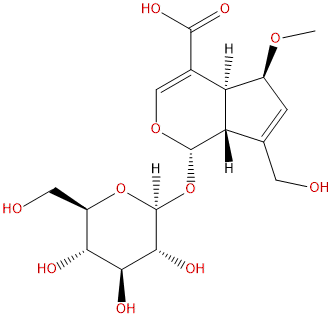
The molecular formula of 6-methoxygeniposide is C2H28O9, with a molecular weight of 404.3680. Its structure is based on the geniposide backbone and contains a 6-methoxy substituent, belonging to the monoterpenoid glycoside class. This compound has multiple hydroxyl and ether bonds, giving it high polarity and water solubility.
In terms of physical and chemical properties, the LogP value of 6-MGPA is -1.3758, indicating its strong hydrophilicity and water solubility of 48.5428 mg/mL, indicating its good solubility in aqueous phase. The topological polar surface area (TPSA) is 175.37 Å ², reflecting its high polarity and the number of hydrogen bond donors/acceptors, which has a positive impact on its binding to biomacromolecule targets. The blood-brain barrier (BBB) has a low penetration ability, indicating its limited ability to directly enter the central nervous system, but it may still exert neuroprotective effects through other mechanisms. The negative result of hERG channel inhibition experiment indicates a low risk of cardiac toxicity. The Ames mutagenicity test result is 0.0, indicating a low risk of genotoxicity and a good safety basis.
Plant sources and extraction methods
6-MGPA mainly exists in certain traditional Chinese medicine plants, especially in plants of the Rubiaceae family such as Genipa and related species. This type of plant is widely distributed in parts of Southeast Asia and South America, traditionally used for treating inflammation, neurological diseases, and immune regulation.
The common methods for extracting 6-MGPA include:
- Solvent extraction Using methanol, ethanol, or water alcohol mixed solvents for reflux or ultrasound assisted extraction of dried plant materials to improve extraction efficiency.
- Liquid liquid distribution By distributing organic solvents of different polarities, lipid soluble impurities are removed and polar glycosides are enriched.
- Column chromatography separation Using silica gel, C18 reverse phase column or resin column for separation and purification, combined with gradient elution technology, high-purity 6-MGPA can be obtained.
- High performance liquid chromatography (HPLC)Used for qualitative and quantitative analysis as well as purity testing to ensure the quality and stability of the extract.
In recent years, supercritical CO2 extraction and membrane separation technologies have also been attempted to be applied to the extraction of such compounds, aiming to improve extraction efficiency and environmental friendliness.
Pharmacological activity research
The pharmacological activity research of 6-MGPA mainly focuses on its neuroprotective effect, in addition to anti-inflammatory, antioxidant, and regulating cell apoptosis aspects.
Neuroprotective effect
Multiple in vitro and in vivo experiments have shown that 6-MGPA can significantly reduce neuronal damage, inhibit neuroinflammatory responses, and promote neuronal survival. Its main manifestations are:
- Inhibit the activity of β - amyloid precursor protein (APP) and β - secretase 1 (BACE1), and reduce the deposition of β - amyloid protein associated with Alzheimer's disease.
- Regulating the phosphorylation status of microtubule associated protein tau (MAPT) and reducing the formation of neurofibrillary tangles.
- Activate the longevity protein SIRT1 to promote intracellular antioxidant defense and mitochondrial function.
- Inhibit acetylcholinesterase (ACHE) activity and enhance cholinergic nerve conduction function.
- Reduce the activity of apoptosis related protein CASP3 and protect neurons from programmed cell death.
Anti inflammatory and antioxidant effects
6-MGPA can activate the nuclear factor erythroid 2-related factor 2 (NRF2) signaling pathway, enhance the expression of cell antioxidant enzymes, and reduce oxidative stress levels. At the same time, inhibiting the mitogen activated protein kinase 1 (MAPK1) pathway reduces the release of inflammatory mediators and alleviates neuroinflammation.
Other potential activities
Some studies suggest that 6-MGPA may have a regulatory effect on abnormal aggregation of alpha synuclein (SNCA), and may be used as an adjuvant therapy for neurodegenerative diseases such as Parkinson's disease.
Mechanism of action and molecular targets
6-MGPA achieves its neuroprotective effect through the synergistic action of multiple targets and pathways, and the specific mechanism is as follows:
-
Regulating the apoptotic signaling pathway
By upregulating the anti apoptotic protein BCL2 and inhibiting the activity of the apoptotic protein CASP3, 6-MGPA reduces neuronal apoptosis and maintains nervous system homeostasis.
-
Inhibition of β - amyloid protein production
By downregulating the expression of APP and BACE1, inhibiting the cleavage of β - amyloid precursor protein, reducing harmful protein deposition, and delaying the pathological progression of Alzheimer's disease.
-
Regulating tau protein abnormalities
Affects the phosphorylation status of MAPT, prevents abnormal aggregation of tau protein, and protects the structural integrity of nerve fibers.
-
Activate SIRT1 and NRF2 signals
SIRT1, as a deacetylase, regulates various cellular functions, promotes mitochondrial biosynthesis and antioxidant reactions; NRF2 activates downstream antioxidant enzymes, reducing oxidative stress damage to nerve cells.
-
Inhibit neuroinflammation
By inhibiting the MAPK1 signaling pathway, reducing the release of pro-inflammatory cytokines, and alleviating neuroinflammatory states.
-
Regulating neurotransmitter metabolism
Inhibit ACHE activity, prolong the action time of acetylcholine in synaptic cleft, and improve cognitive function.
-
Affects alpha synuclein aggregation
It may alleviate Parkinson's disease-related neurotoxicity by regulating SNCA expression and its aggregation status.
In summary, 6-MGPA exhibits broad-spectrum neuroprotective potential through multi-target and multi mechanism synergistic effects.
Evaluation of drug properties and pharmacokinetics
The pharmacological parameters of 6-MGPA show that it has certain advantages and challenges:
- Molecular weight (404.3680)Moderate, in line with the molecular weight range of most oral medications.
- The LogP value is -1.3758 It shows strong hydrophilicity, which is beneficial for distribution in the aqueous environment in vivo, but may limit its cell membrane permeability.
- High TPSA value (175.37 Å ²)It indicates that its polarity is high and may affect oral absorption and blood-brain barrier penetration.
- Good water solubility (48.54 mg/mL)It is beneficial for the development of formulations and the improvement of bioavailability.
- Low blood-brain barrier penetration ability It is suggested that its ability to directly enter the central nervous system is limited, and it may be necessary to enhance brain exposure through drug carriers or structural modifications.
- No hERG channel inhibition Reduce the risk of cardiac toxicity.
- Ames test negative It shows no significant genotoxicity.
At present, there is limited pharmacokinetic data on 6-MGPA, suggesting that its oral absorption may be limited by high polarity and large TPSA, and the metabolic pathway in vivo is not yet clear. In the future, systematic ADME (absorption, distribution, metabolism, excretion) research needs to be carried out to optimize dosing regimens and dosage form design.
Clinical application prospects and prospects
As the incidence rate of neurodegenerative diseases such as Alzheimer's disease and Parkinson's disease continues to rise, it is urgent to develop safe and effective neuroprotective drugs. 6-MGPA, as a natural product with multi-target effects, has the following clinical application potential:
-
Adjuvant therapy for Alzheimer's disease
By inhibiting β - amyloid deposition and tau protein abnormalities, cognitive function and neuronal survival are improved.
-
Neuroprotection of Parkinson's disease
Regulating the aggregation of alpha synuclein and slowing down the progression of neurodegeneration.
-
Neural injury repair
The anti-inflammatory and antioxidant effects contribute to nerve repair after stroke and traumatic brain injury.
-
Improvement of cognitive impairment
By regulating acetylcholine metabolism, the efficiency of nerve conduction is improved.
However, the low blood-brain barrier penetration of 6-MGPA and the lack of systematic preclinical and clinical research are the main bottlenecks for its translational application. Future research should focus on:
- Structural modification and nanocarrier technology enhance brain delivery efficiency.
- Pharmacokinetic and toxicological evaluation of the system.
- Multi center clinical trials have validated its safety and efficacy.
- Combination therapy strategy to achieve synergistic effects.
In addition, in-depth analysis of its molecular mechanism and action network can help discover more potential indications and broaden its clinical application scope.
Conclusion
6-methoxygeniposide, as a natural monoterpenoid glycoside with multi-target neuroprotective effects, exhibits good pharmacological activity and safety basis. It exerts multiple protective effects such as anti-inflammatory, antioxidant, and anti apoptotic effects by regulating key proteins and signaling pathways related to neurodegenerative diseases, and has broad clinical application prospects.
Despite its limited ability to penetrate the blood-brain barrier and incomplete pharmacokinetic data, 6-MGPA is expected to become an important candidate drug in the field of neuroprotection with the development of extraction and purification techniques, drug delivery systems, and structural optimization strategies. In the future, we should strengthen basic and translational research, promote its transition from laboratory to clinical use, and bring new treatment hope to patients with neurodegenerative diseases.