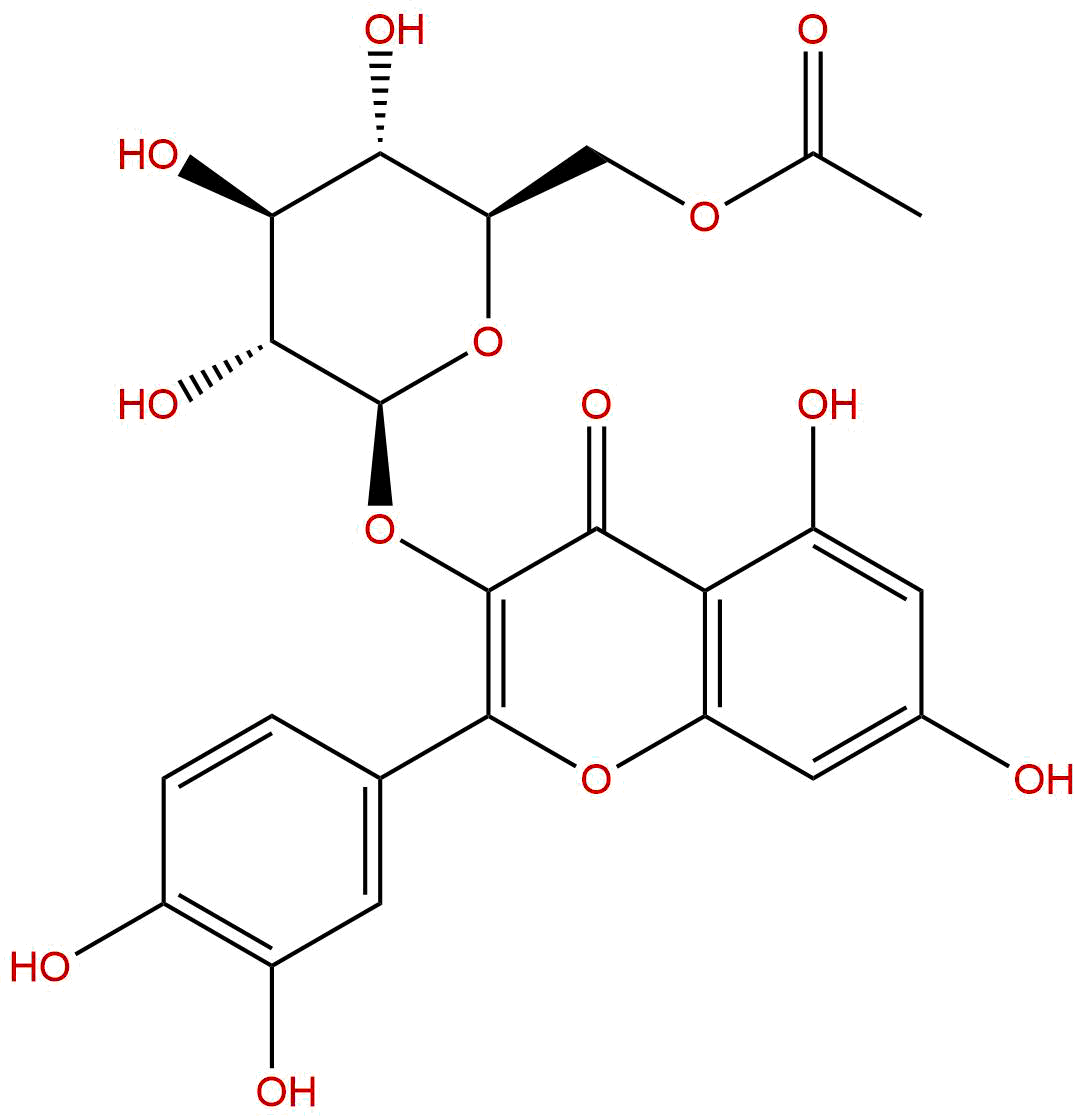


Product name: Quercetin-3-glucoside-6''-acetate
Synonym name:
Catalogue No.: BP3995
Cas No.: 54542-51-7
Formula: C23H22O13
Mol Weight: 506.416
Botanical Source:
Type of Compound:
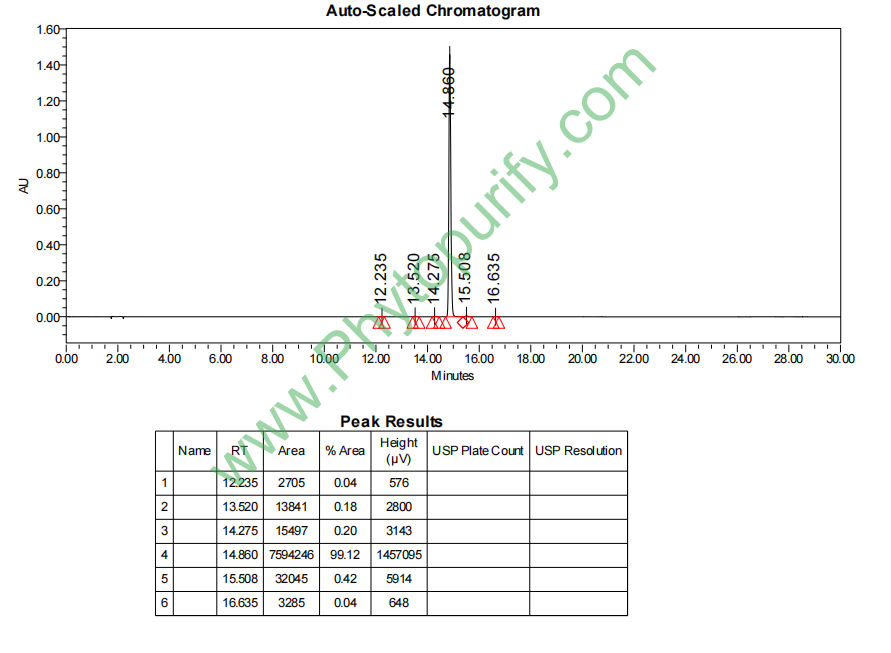
Purity: 95%~99%
Analysis Method: HPLC-DAD or/and HPLC-ELSD
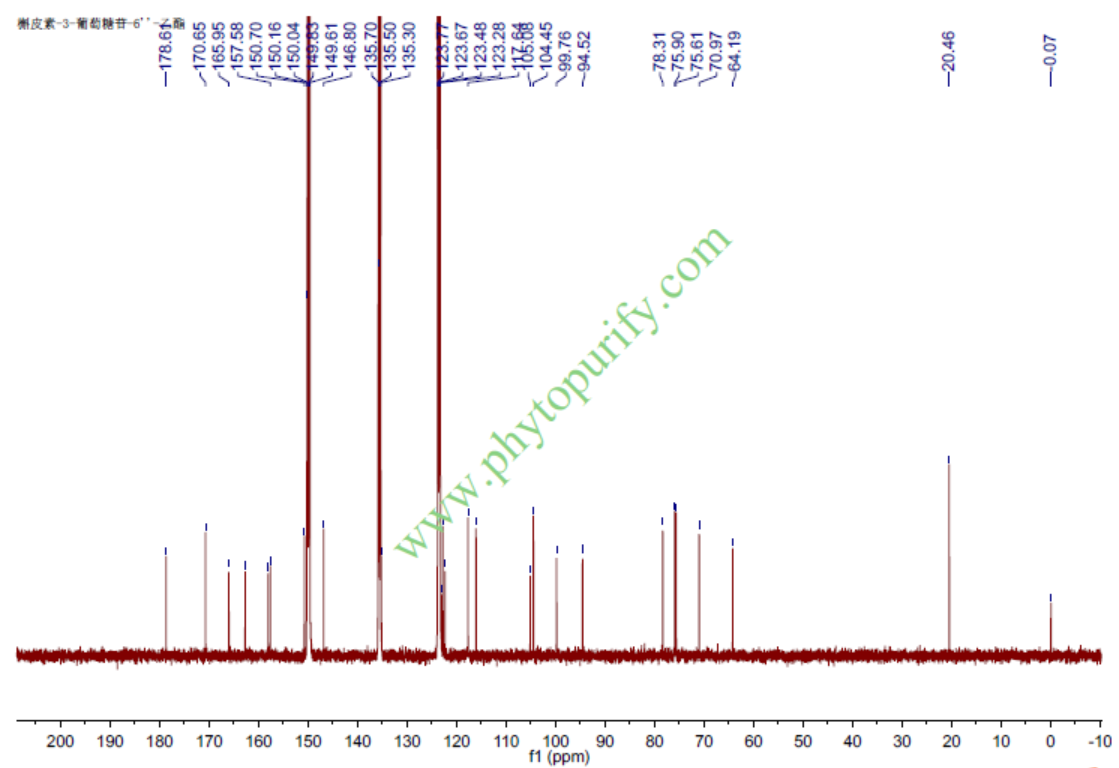
Identification Method: Mass, NMR
Packing: Brown vial or HDPE plastic bottle
Storage: Store in a well closed container, protected from air and light. Put into refrigerate or freeze for long term storage.
Whenever possible, you should prepare and use solutions on the same day. However, if you need to make up stock solutions in advance, we recommend that you store the solution as aliquots in tightly sealed vials at -20℃. Generally, these will be useable for up to two weeks.
The product could be supplied from milligrams to grams
Inquire for bulk scale.
For Reference Standard and R&D, Not for Human Use Directly.
HPLC of Quercetin-3-glucoside-6''-acetate
NMR of Quercetin-3-glucoside-6''-acetate
Storage conditions:Short-term storage at 2~8℃, long-term storage at -20 ~ -80℃
216.5800
.4002
.1750
1.5544
.5446
.2402
Low
77.8222
4.0789
Yes
No
Yes
No
Yes
No
0.6
Yes
No
Yes
Yes
Quercetin-3-glucoside-6 '' - ethyl ester (Quercetin-3-glucoside-6 '' - ethyl ester) is a flavonoid natural product glycoside that has attracted widespread attention in the field of natural product pharmacology in recent years due to its unique chemical structure and diverse biological activities. As a derivative of quercetin, quercetin-3-G-6 '' - ethyl ester not only retains the polyphenol skeleton of quercetin, but also endows it with superior physicochemical properties and biological activity through acetylation modification at the 6 '' position. This compound is present in various plants, especially abundant in certain medicinal and edible plants.
Inflammatory bowel disease (IBD) is a type of disease characterized by chronic intestinal inflammation, mainly including Crohn's disease and ulcerative colitis. The pathogenesis of IBD is complex, involving multiple factors such as immune dysfunction, abnormal inflammatory signaling pathways, and intestinal barrier dysfunction. The current drugs for treating IBD have problems such as significant side effects and limited efficacy, which has prompted researchers to continuously search for new safe and effective treatment candidate molecules. Quercetin-3-G-6 '' - ethyl ester has become a hot topic in IBD treatment research due to its potential role in regulating inflammatory response, immune regulation, and oxidative stress.
This article provides a systematic review of the chemical structure and physicochemical properties, plant sources and extraction methods, pharmacological activity and mechanism of action of Quercetin-3-G-6 '' - ethyl ester, with a focus on exploring its molecular targets and pharmacological evaluation in inflammatory bowel disease. The aim is to provide theoretical basis and research direction for the clinical application development of this compound.
The chemical structure of quercetin-3-glucoside-6 '' - ethyl ester is based on the flavonoid skeleton of quercetin (3,5,7,3 ', 4' - pentahydroxyflavone), where the 3-hydroxyl group forms a β - glycosidic bond with glucose, and the 6 '' hydroxyl group of glucose is replaced by an acetyl group to form a 6-O-acetyl - β - glucoside structure. The acetylation modification of this structure not only affects the polarity and spatial configuration of the molecule, but may also enhance its lipid solubility and cell membrane permeability.
In summary, quercetin 3-G-6 '' - ethyl ester has excellent physicochemical properties and safety indicators, laying the foundation for its use as a drug candidate molecule.
Quercetin and its glycoside derivatives are widely present in various plants, especially vegetables, fruits, tea, and medicinal plants. Quercetin-3-G-6 '' - ethyl ester, as an acetylated derivative of Quercetin-3-glucoside, is mainly detected in certain specific plant species, such as Ginkgo biloba leaves, Sophora japonica flowers, and some medicinal herbaceous plants.
The extraction of quercetin 3-G-6 '' - ethyl ester is generally carried out using polar solvents such as methanol, ethanol, or water ethanol mixed solvents, and the extraction efficiency is improved by ultrasound assisted extraction or reflux extraction. After concentration, the extraction solution is separated and purified using techniques such as liquid-liquid distribution, silica gel column chromatography, and reverse phase high performance liquid chromatography (RP-HPLC).
In addition, in recent years, research on enzymatic acetylation modification of quercetin-3-glucoside to synthesize quercetin-3-G-6 '' - ethyl ester has gradually emerged, providing new ideas for industrial production.
Quercetin-3-G-6 '' - ethyl ester, as a derivative of flavonoids, exhibits various pharmacological activities, especially outstanding in anti-inflammatory, antioxidant, immune regulation, and anti-tumor aspects. Its potential therapeutic value in chronic inflammatory diseases such as inflammatory bowel disease has become a research focus.
Multiple in vitro and in vivo experiments have shown that Quercetin-3-G-6 '' - ethyl ester can significantly inhibit the production and release of inflammatory mediators, reduce levels of pro-inflammatory cytokines, and alleviate tissue inflammatory responses. For example, in a mouse colitis model, the treatment group with quercetin-3-G-6 '' - ethyl ester significantly reduced intestinal inflammation and downregulated the expression of inflammatory factors such as IL-6 and TNF - α, indicating its good anti-inflammatory effect.
Quercetin-3-G-6 '' - ethyl ester effectively alleviates oxidative stress and protects cells from oxidative damage by scavenging free radicals and enhancing antioxidant enzyme activity (such as superoxide dismutase and glutathione peroxidase). Its acetylation modification improves the stability of the molecule and the permeability of the cell membrane, enhancing the antioxidant effect.
This compound can regulate immune cell function, inhibit overactivated immune responses, and promote immune homeostasis. Research has shown that quercetin 3-G-6 '' - ethyl ester can regulate the activity of macrophages and T cells, inhibit the secretion of inflammatory cytokines, and promote the expression of anti-inflammatory factors.
Quercetin-3-G-6 '' - ethyl ester also exhibits certain anti-tumor activity, exerting potential anti-cancer effects by inducing tumor cell apoptosis, inhibiting proliferation and migration. In addition, it has also shown certain protective effects on metabolic diseases, neurodegenerative diseases, etc., but related research is still in the preliminary stage.
The therapeutic effect of Quercetin-3-G-6 '' - ethyl ester in inflammatory bowel disease is mainly achieved by regulating multiple signaling pathways and key molecular targets. Its mechanism of action involves multiple aspects such as energy metabolism regulation, immune signaling, inflammatory factor expression, and cell cycle regulation.
AMPK (PRKAA1)
AMP activated protein kinase (AMPK) acts as a cellular energy sensor, regulating energy metabolism and inflammatory response. Quercetin-3-G-6 '' - ethyl ester activates the AMPK pathway, promotes cellular metabolic balance, inhibits the production of inflammatory mediators, and reduces intestinal inflammation.
NOTCH1
The NOTCH signaling pathway plays a crucial role in intestinal epithelial cell differentiation and immune regulation. Quercetin-3-G-6 '' - ethyl ester promotes intestinal barrier repair and inhibits abnormal immune responses by regulating NOTCH1 expression.
IDO1 (Indoleamine 2,3-dioxygenase 1)
IDO1 is involved in tryptophan metabolism, regulating immune tolerance and inflammatory response. Quercetin-3-G-6 '' - ethyl ester can regulate IDO1 activity, promote the establishment of an immunosuppressive microenvironment, and help alleviate intestinal inflammation.
CES1 and CES2 (carboxylesterase 1/2)
These two enzymes are involved in drug metabolism and endogenous lipid metabolism. Quercetin-3-G-6 '' - ethyl ester may exert anti-inflammatory effects by affecting CES1/2 to regulate inflammation related metabolites.
CDC25B
Cell cycle regulatory factors are involved in cell proliferation and repair. Quercetin-3-G-6 '' - ethyl ester regulates CDC25B and contributes to the regeneration and repair of intestinal epithelial cells.
TLR4 (Toll like receptor 4)
TLR4 is an important receptor of the innate immune system, mediating inflammatory signaling. Quercetin 3-G-6 '' - ethyl ester inhibits TLR4 mediated NF - κ B activation and reduces the release of pro-inflammatory cytokines.
IL-6 (interleukin-6)
IL-6 is a key pro-inflammatory cytokine involved in the inflammatory process of IBD. Quercetin-3-G-6 '' - ethyl ester significantly reduces the expression of IL-6 and alleviates inflammatory response.
PTPN1 (protein tyrosine phosphatase non receptor type 1)
PTPN1 regulates multiple signaling pathways, including insulin signaling and inflammatory signaling. Quercetin 3-G-6 '' - ethyl ester affects inflammation and metabolic balance by regulating PTPN1 activity.
STAT3 (Signal Transduction and Transcription Activation Factor 3)
STAT3 plays a central role in inflammation and immune regulation. Quercetin-3-G-6 '' - ethyl ester inhibits abnormal activation of STAT3, blocks inflammatory signaling, and promotes intestinal tissue repair.
Quercetin-3-G-6 '' - ethyl ester works synergistically through multiple targets and pathways to regulate the intestinal immune microenvironment, inhibit the release of inflammatory mediators, promote intestinal barrier repair, and ultimately achieve therapeutic effects on inflammatory bowel disease. This multi-target mechanism enhances the broad-spectrum and safety of its treatment.
The pharmacological evaluation of Quercetin-3-G-6 '' - ethyl ester includes physical and chemical properties, safety, in vivo behavior, and metabolic stability.
As mentioned earlier, Quercetin-3-G-6 '' - ethyl ester has moderate molecular weight and lipophilicity, good water solubility, and a high polar surface area, which is beneficial for oral absorption but limits its blood-brain barrier penetration and reduces the risk of central side effects. Its structure is stable, and acetyl modification enhances the stability of the molecule in vivo.
At present, there are few systematic pharmacokinetic studies on quercetin 3-G-6 '' - ethyl ester, but based on its structure and studies similar to flavonoid glycosides, it is speculated that:
In the future, systematic in vivo pharmacokinetic and metabolic studies are needed to clarify its in vivo behavior and dose optimization.
Inflammatory bowel disease, as a chronic and recurrent disease, urgently requires safe and effective new therapeutic drugs. Quercetin 3-G-6 '' - ethyl ester has shown promising therapeutic potential due to its multi-target anti-inflammatory, immunomodulatory, and antioxidant effects.
Quercetin-3-glucoside -6 '' - ethyl ester, as a natural flavonoid glycoside with unique structural modifications, has shown broad application prospects in the treatment of chronic inflammatory diseases such as inflammatory bowel disease due to its significant anti-inflammatory, antioxidant, and immune regulatory activities. Its multi-target mechanism of action and excellent pharmacological parameters provide a solid foundation for the development of new drugs. In the future, by combining modern medicinal chemistry, molecular biology, and pharmacokinetic techniques, the clinical value of Quercetin-3-G-6 '' - ethyl ester will be further explored, which is expected to promote it as a safe and effective natural product new drug and bring new treatment options for patients with inflammatory bowel disease.
