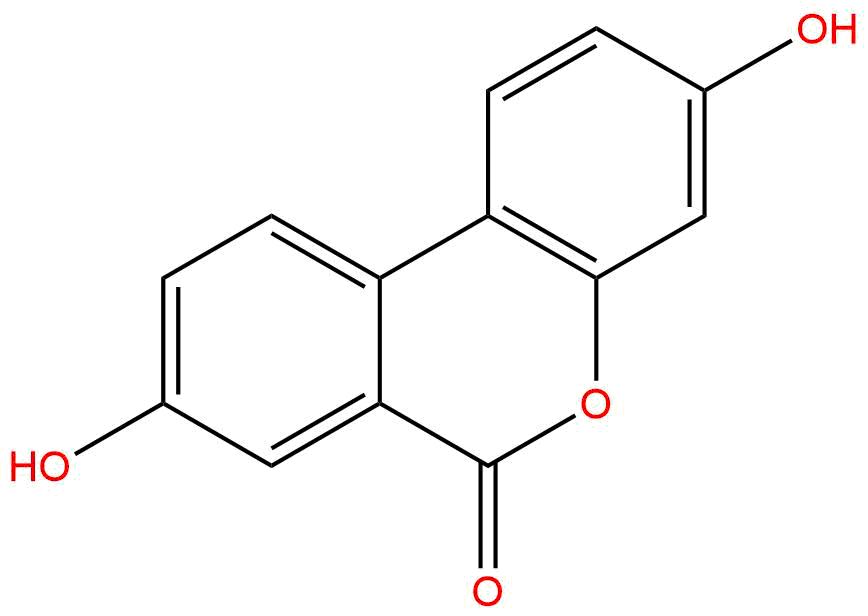


Product name: Urolithin A
Synonym name: 3,8-Dihydroxyurolithin
Catalogue No.: BP4544
Cas No.: 1143-70-0
Formula: C13H8O4
Mol Weight: 228.203
Botanical Source:
Type of Compound:
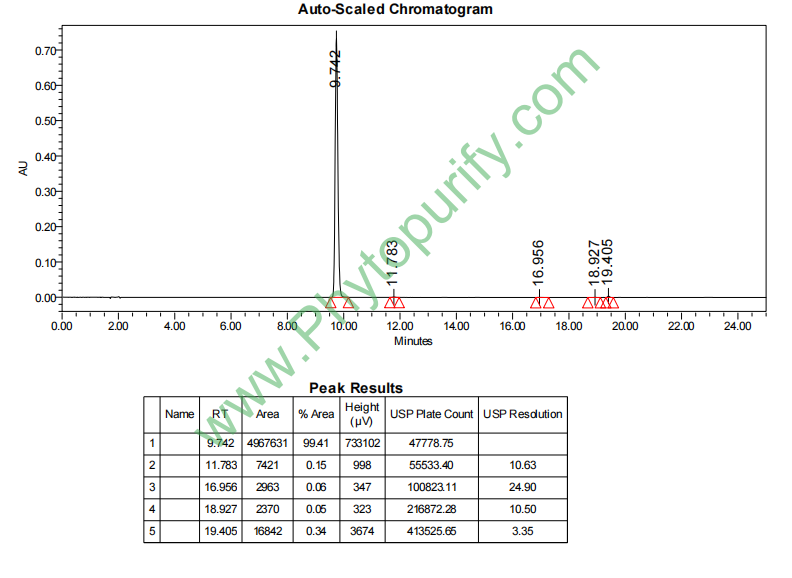
Purity: 95%~99%
Analysis Method: HPLC-DAD or/and HPLC-ELSD
Identification Method: Mass, NMR
Packing: Brown vial or HDPE plastic bottle
Storage: Store in a well closed container, protected from air and light. Put into refrigerate or freeze for long term storage.
Whenever possible, you should prepare and use solutions on the same day. However, if you need to make up stock solutions in advance, we recommend that you store the solution as aliquots in tightly sealed vials at -20℃. Generally, these will be useable for up to two weeks.
The product could be supplied from milligrams to grams
Inquire for bulk scale.
For Reference Standard and R&D, Not for Human Use Directly.
HPLC of Urolithin A
Storage conditions:Short-term storage at 2~8℃, long-term storage at -20 ~ -80℃
70.6700
2.3079
2.2685
.0360
1.8901
7.0916
Low
88.5453
2.1233
Yes
No
No
No
Yes
Yes
1.2
Yes
No
Yes
Yes
In the field of natural product chemistry and pharmacology research, the metabolic transformation of dietary components by gut microbiota is increasingly becoming the key to revealing the sources of complex bioactive molecules. Urolithin A (UA) is a star molecule in this field, which is a bioactive secondary metabolite produced by the intestinal microbiota metabolism of ellagic acid and its precursor ellagitannins. Since its discovery, UA has become a hot topic in the interdisciplinary research of pharmacology, nutrition, and geriatrics due to its extensive pharmacological activities, especially in anti-inflammatory, antioxidant, anti proliferative, and recently highly anticipated anti-aging and mitochondrial autophagy induction activities. Its CAS number is 1143-70-0.
Tannic acid is widely present in various nuts and berries such as pomegranate, strawberry, walnut, etc., but the human body cannot directly absorb these macromolecules. The "processing" of gut microbiota endows UA with higher bioavailability and unique biological effects. Research has shown that UA can effectively induce cellular autophagy (especially mitochondrial autophagy), promote cell apoptosis, inhibit cell cycle progression and DNA synthesis, thus demonstrating therapeutic potential in various chronic disease models. Its mechanism of action involves the regulation of multiple key signaling pathways closely related to energy metabolism, stress resistance, and aging, such as AMPK, SIRT1, NRF2, FOXO1, etc. This article aims to systematically review the chemical properties, sources, pharmacological activities, molecular mechanisms of action, pharmacological evaluation, and clinical application prospects of urolithin A, in order to provide comprehensive academic references for the deep development and translational application of this natural product.
The chemical name of urolithin A is 3,8-dihydroxy-6H-dibenzo [b, d] pyran-6-one, with a molecular formula of C13H8O4 and a molecular weight of 228.2030 g/mol. The core of its structure is a benzocoumarin skeleton, with one phenolic hydroxyl group at positions 3 and 8 respectively. This structure determines its basic physicochemical properties and biological activity.
From the perspective of drug related parameters, the lipid water partition coefficient (LogP) of UA is 2.3079, indicating that it has a certain lipophilicity, but not highly hydrophobic, which is conducive to its penetration of cell membranes. Its topological polar surface area (TPSA) is 70.6700 Å ², which is relatively moderate. However, its water solubility is poor, at around 0.0360 mg/mL, which may be one of the main challenges facing its oral bioavailability. The lower solubility limits its dissolution and absorption in gastrointestinal fluids.
In terms of preliminary safety evaluation, UA has a low risk of mutagenicity in Ames test (value of 1.2, generally considered as potential positive>1.5), indicating a low risk of genetic toxicity. In addition, existing data indicate that it has no significant inhibitory effect on hERG potassium channels, which means that its risk of inducing QT interval prolongation and apical torsion type ventricular tachycardia is low, and it is a positive pharmacological signal. However, its blood-brain barrier permeability is predicted to be 'low', which may limit its direct efficacy in central nervous system diseases, but may also reduce potential central side effects.
Urolithin A is not directly present in plants, but is a product of biotransformation of its precursor substances. Its direct precursor is tannic acid, which mainly comes from the hydrolysis of more complex tannic tannins in plants. Plants rich in ellagic tannins are UA's "dietary factories", mainly including:
1. pomegranate Especially pomegranate peel and juice, they are one of the most abundant sources of tannic acid.
2. Strawberries, raspberries, blackberries and other berries。
3. nut Such as walnuts and mountain walnuts.
4. Certain tropical fruits and medicinal plants Such as goji berries and certain oak varieties.
After the human body ingests these foods, tannic acid is partially hydrolyzed into tannic acid in the acidic environment of the stomach. After entering the intestine, tannic acid is further metabolized by specific types of intestinal microorganisms (such as certain strains of Streptococcus gordonii, Escherichia coli, and Bifidobacterium), and undergoes a series of reactions such as ring opening, decarboxylation, and dehydroxylation, ultimately producing urolithin A and its homologs (such as urolithin B, C, D, etc.). It is worth noting that the composition of individual gut microbiota varies greatly, leading to the existence of "UA producers" and "non producers" in the population, which directly affects the extent to which individuals benefit from their diet.
There are two main ways to obtain UA in laboratory and industrial production:
1. Chemistry/biosynthesis and extraction Due to the absence of directly extractable UA in plants, it is currently mainly prepared through chemical total synthesis or semi synthesis methods to meet the needs of research and large-scale applications. There are also studies utilizing microbial fermentation engineering to co culture tannic acid or tannic acid substrates with specific strains for directed biotransformation to produce UA. This method has mild conditions and greater potential for green chemistry.
2. Separate from metabolites In early studies, UA could be extracted and isolated from the urine or feces of animals (such as rabbits) that consumed feed rich in ellagic tannins, but this method was inefficient and not suitable for large-scale production.
Numerous preclinical studies have confirmed that urolithin A has multifaceted pharmacological activities, with its core being the regulation of cellular homeostasis, clearance of damaged components, and inhibition of abnormal proliferation.
Anti inflammatory and antioxidant activity UA can significantly inhibit the production of pro-inflammatory cytokines (such as TNF - α, IL-6, IL-1 β) and nitric oxide (NO) in macrophages induced by lipopolysaccharides (LPS). Its antioxidant effect is not only reflected in directly clearing free radicals, but also in activating the cell's own antioxidant defense system (such as the NRF2 pathway), upregulating the expression of antioxidant enzymes such as superoxide dismutase (SOD1), catalase (CAT), and heme oxygenase-1 (HMOX1), thereby enhancing the cell's resistance to oxidative stress.
Anti proliferative and pro apoptotic activity UA has growth inhibition and apoptosis promoting effects on many cancer cell lines (such as prostate cancer, breast cancer, colon cancer and lung cancer). Its mechanism includes inducing cell cycle arrest (usually in G1 or G2/M phase), inhibiting key enzymes involved in DNA synthesis, and activating apoptotic signals in the mitochondrial pathway and death receptor pathway. This selective toxicity (having a stronger effect on cancer cells than normal cells) makes it potentially valuable for anti-cancer applications.
Induced autophagy and mitochondrial autophagy This is one of the most popular features of UA. UA can effectively activate cellular autophagy, especially mitochondrial autophagy that selectively clears dysfunctional mitochondria. By "updating" the cellular energy factory, UA improves the metabolic health of cells and reduces excessive reactive oxygen species produced by damaged mitochondria, which is crucial for aging and degenerative diseases.
Anti aging and prolonging healthy lifespan Based on the functions of clearing damaged components, enhancing stress resistance, and improving metabolism mentioned above, UA has demonstrated the ability to prolong healthy lifespan and improve aging related phenotypes in various model organisms such as nematodes and mice. It can improve muscle function in elderly animals (anti sarcopenia), enhance exercise endurance, reduce age-related inflammation (inflammatory aging), and improve cognitive function.
Cardiovascular and Metabolic Protection In animal models, UA has shown the role of improving endothelial function, alleviating atherosclerotic plaque, reducing blood sugar and improving insulin sensitivity, suggesting its potential in the prevention and treatment of metabolic syndrome and cardiovascular disease.
The multiple pharmacological activities of urolithin A stem from its systematic regulation of cellular signaling networks, and its core mechanism of action is closely related to energy perception, stress response, and aging regulation pathways.
Activate AMPK/SIRT1 axis UA has been proven to be an effective activator of AMP activated protein kinase (AMPK) and deacetylase SIRT1. AMPK is a cellular energy receptor that is activated when energy is insufficient; SIRT1 relies on NAD+and participates in the regulation of metabolism and stress resistance. UA may indirectly increase the AMP/ATP ratio and NAD+levels by affecting mitochondrial function, thereby activating AMPK and SIRT1. The activation of this axis is the core mechanism of UA induced autophagy (through ULK1 phosphorylation, etc.), promotion of fatty acid oxidation, inhibition of inflammation (such as inhibition of NF - κ B), and enhancement of antioxidant defense (through activation of downstream FOXO1, PGC-1 α).
Regulating the NRF2/ARE antioxidant pathway UA can promote the translocation of nuclear factor E2 related factor 2 (NRF2) from the cytoplasm to the nucleus, bind to antioxidant response elements (ARE), and drive the transcriptional expression of a series of phase II detoxifying enzymes and antioxidant proteins, including SOD1, CAT, and HMOX1. This is the key molecular basis for enhancing cellular oxidative stress resistance.
Affects cell cycle and apoptosis related proteins UA upregulates proteins such as cyclin dependent kinase inhibitor p21 (encoded by CDKN1A gene), leading to cell cycle arrest. At the same time, it can regulate the balance of Bcl-2 family proteins (upregulation of pro apoptotic protein Bax/Bak and downregulation of anti apoptotic protein Bcl-2), and may activate the caspase cascade through p53 (TP53) dependent or non dependent pathways, inducing cell apoptosis.
Potential role of telomere maintenance There are studies suggesting that UA may have indirect positive effects on telomerase (TERT) activity or telomere stability through activation of SIRT1 and other pathways, but more direct evidence is still needed in this regard.
Inducing mitochondrial autophagy UA induced mitochondrial autophagy is believed to be partially dependent on the activation of AMPK and the involvement of classical mitochondrial autophagy pathways such as PINK1/Parkin. By clearing dysfunctional mitochondria, UA fundamentally improves the metabolic health and survival ability of cells.
In summary, UA forms a synergistic network by acting on key targets such as AMPK, SIRT1, NRF2, FOXO1, TP53, CDKN1A, etc., jointly promoting autophagic clearance, energy balance, antioxidant defense, and genome stability of cells, thereby combating aging and related diseases.
Although urolithin A has shown great potential in preclinical studies, its pharmacological development still faces some challenges, and pharmacokinetic characteristics are issues that must be clarified for its translational application.
Pharmacokinetic characteristics:
- absorb UA is mainly absorbed in the small intestine and colon after oral administration. Due to the fact that its precursor (tannic acid/tannic acid) needs to be metabolized by gut microbiota, its absorption rate and degree are significantly influenced by individual gut microbiota composition, with significant individual differences. Its lower water solubility may also limit dissolution and absorption.
- distribution Animal studies have shown that UA can be widely distributed in multiple tissues after oral administration, including muscle, heart, liver, kidney, and adipose tissue. But its blood-brain barrier permeability is low and its concentration in the brain is limited.
- Metabolism UA mainly undergoes II binding reactions in the body, such as glucuronidation and sulfation, to form corresponding complexes. These complexes are the main forms present in its plasma and urine.
- excretion UA and its metabolites are mainly excreted from the body through urine and feces, and the elimination half-life varies by species and dosage form, lasting several hours in rodents.
Challenges and Strategies in Drug Development:
1. Solubility and bioavailability Low water solubility is the main bottleneck limiting the oral bioavailability of UA. The current research strategies include:Pharmaceutical methods For example, preparing nanocrystals, liposomes, micelles, cyclodextrin inclusion complexes, etc. to improve their solubility and intestinal permeability;Prodrug strategy Design derivatives with better water solubility; and Combined administration Used together with excipients that promote absorption, such as piperine.
2. Source and production stability The transformation of individual gut microbiota is uncontrollable. Developing standardized and high-purity chemical/biosynthetic processes, or directly using UA formulations, is an inevitable choice to ensure drug efficacy consistency.
3. individual differences For the "non producer" population, directly supplementing UA may be more effective and reliable than supplementing pomegranate extract.
At present, high-purity UA preparations (such as Mitopure) have been used in human clinical trials ®), Preliminary confirmation of its safety in the human body and improvement of muscle mitochondrial health has laid the foundation for its further development.
The clinical application prospects of urolithin A are broad, mainly focusing on chronic diseases related to aging and cellular function decline.
Future research directions should include:
- In depth mechanism exploration Search for more direct molecular targets and elucidate their tissue-specific effects.
- Advanced formulation development Innovative formulation research focused on bioavailability and targeted delivery.
- Large scale clinical validation Conduct multicenter, randomized controlled phase II/III clinical trials to confirm its efficacy and long-term safety in specific indications, such as sarcopenia.
- Personalized application Combining gut microbiota testing to achieve precise nutrition or medication.
Urolithin A, as a magical molecule produced by the interaction between gut microbiota and dietary components, perfectly embodies the importance of "microbiome host co metabolism" in health maintenance. Starting from common foods such as pomegranate, through the biotransformation of gut microbiota, active substances that can profoundly affect cellular energy metabolism, autophagy, and aging pathways are ultimately generated. This process itself is full of natural wisdom. Its multi-target and networked regulatory characteristics give it unique advantages in combating multifactorial complex diseases such as aging and related degenerative diseases. Despite facing challenges such as solubility and bioavailability in terms of drug properties, these obstacles are gradually being overcome with the development of formulation technology and synthetic biology. The current clinical research on the human body has shown positive signals. Looking ahead to the future, urolithin A is expected to grow from a highly anticipated research molecule to a new intervention method for improving human health and lifespan, preventing and treating chronic diseases, and providing a model for the modernization and translational medicine of natural products.
