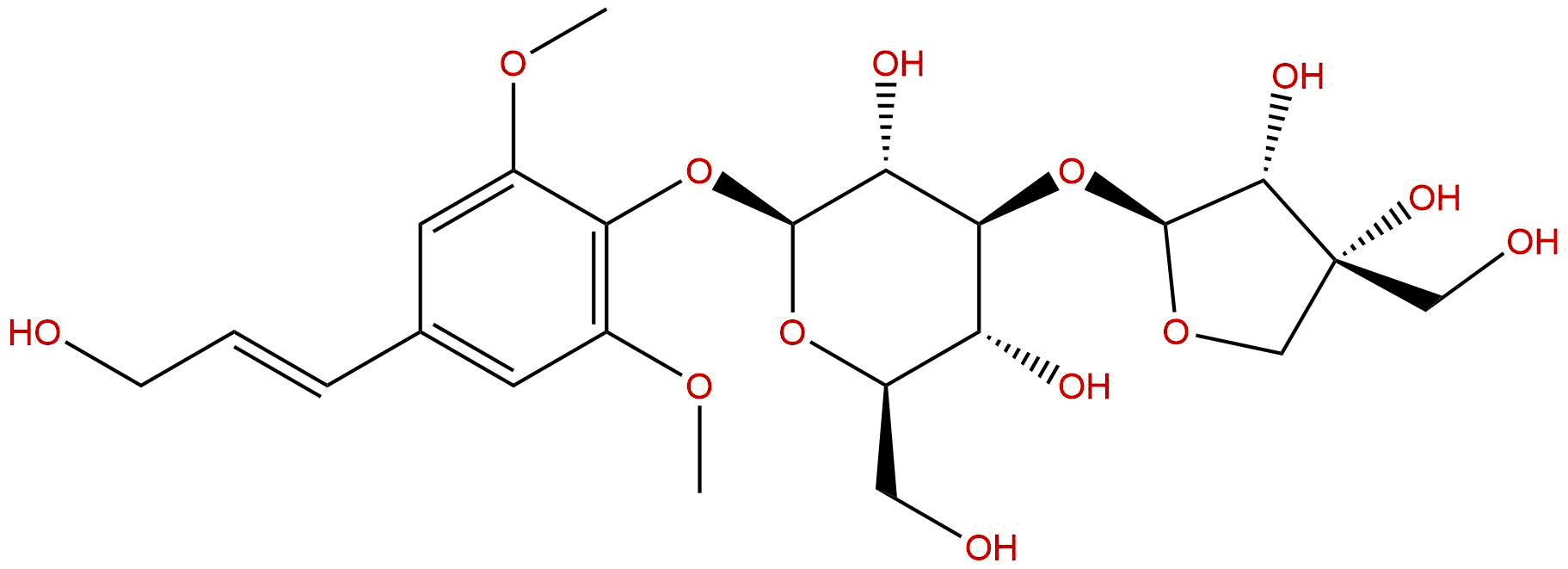


Product name: Cordifolioside A
Synonym name: Tinosinen
Catalogue No.: BP2358
Cas No.: 155179-20-7
Formula: C22H32O13
Mol Weight: 504.485
Botanical Source:
Type of Compound:
Purity: 95%~99%
Analysis Method: HPLC-DAD or/and HPLC-ELSD
Identification Method: Mass, NMR
Packing: Brown vial or HDPE plastic bottle
Storage: Store in a well closed container, protected from air and light. Put into refrigerate or freeze for long term storage.
Whenever possible, you should prepare and use solutions on the same day. However, if you need to make up stock solutions in advance, we recommend that you store the solution as aliquots in tightly sealed vials at -20℃. Generally, these will be useable for up to two weeks.
The product could be supplied from milligrams to grams
Inquire for bulk scale.
For Reference Standard and R&D, Not for Human Use Directly.
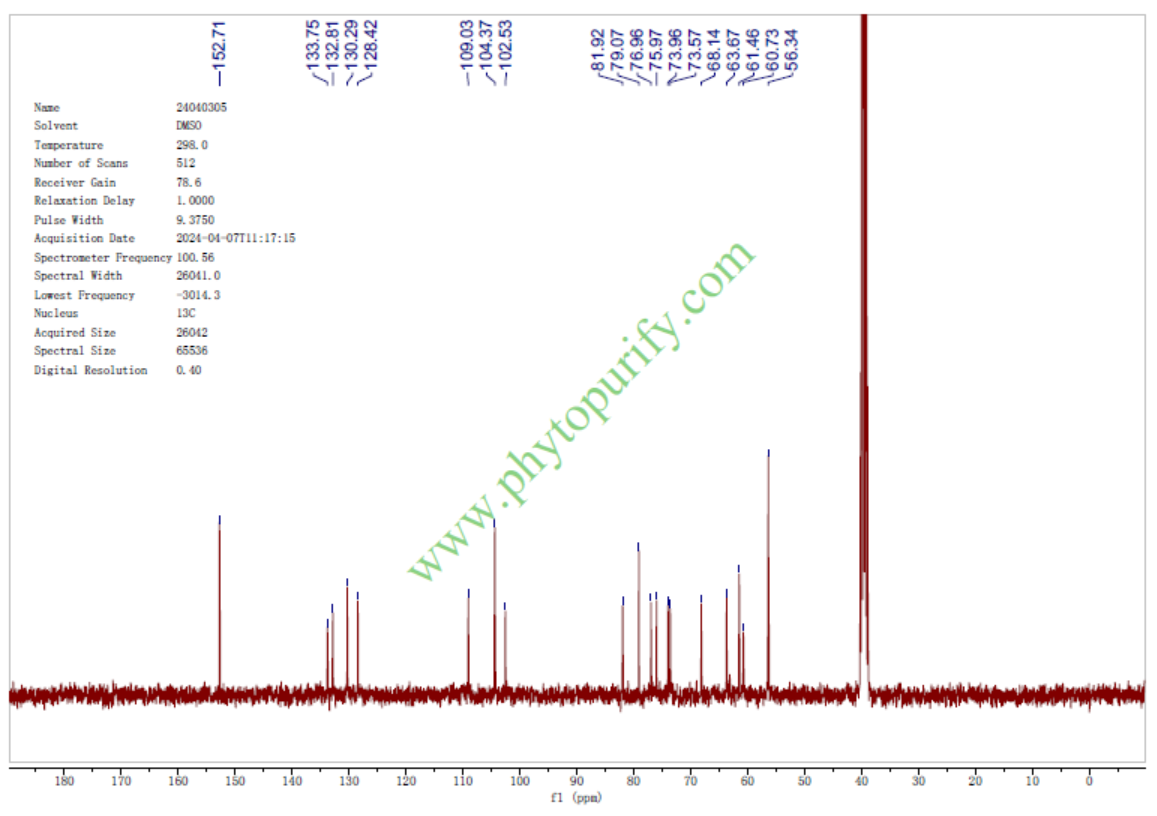
NMR of Cordifolioside A
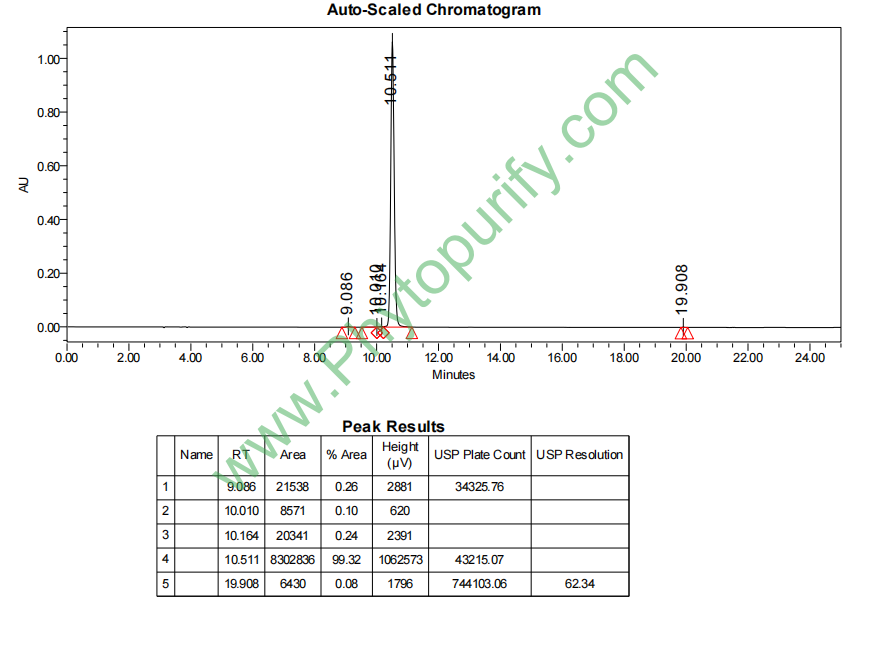
HPLC of Cordifolioside A
Storage conditions:Short-term storage at 2~8℃, long-term storage at -20 ~ -80℃
196.9900
-.9526
-.9523
14.1701
.5284
.1780
Low
52.6373
4.5748
Yes
No
No
No
No
No
0.0
Yes
Yes
Yes
Yes
Natural products, as an important source of drug discovery, play an irreplaceable role in the long history of human fight against diseases. Especially secondary metabolites derived from medicinal plants, due to their structural diversity and unique biological activity, have always been a hot topic in the development of new drugs. Among numerous natural products, phenylpropanoid glycosides have attracted much attention due to their wide range of pharmacological activities, such as antioxidant, anti-inflammatory, anti-tumor, immune regulatory, etc. Cordifolioside A, As a natural phenylpropionate glycoside isolated from traditional medicinal plants, it has gradually entered the field of vision of researchers in recent years, showing its potential application value in immune regulation and anti-tumor, especially in breast cancer.
Cordifolioside A (CAS number: 155179-20-7) was originally derived from the plant Cynoglossus chinensis in the family Menispermaceae(Tinospora cordifolia)Separation and identification in the middle. The heart leaf cowgall is called "Guduchi" or "Amrita" in the Ayurvedic medical system of India. It is a kind of "elixir" with a long history and wide application. It is often used to treat fever, diabetes, arthritis, skin diseases and enhance the immunity of the body. Modern pharmacological research has confirmed that this plant is rich in various active ingredients, including alkaloids, terpenes, steroids, and phenylpropanoid glycosides, among which Cordifolide A is considered one of its important active ingredients.
Breast cancer is one of the malignant tumors with the highest incidence rate among women in the world. Its pathogenesis is complex, involving abnormal regulation of multiple signal pathways. Despite significant progress in surgery, radiotherapy, chemotherapy, endocrine therapy, and targeted therapy, drug resistance, recurrence, metastasis, and treatment-related side effects remain major challenges in clinical practice. Therefore, the search for efficient and low toxicity new therapeutic drugs or adjuvant therapy strategies has important clinical significance. Cordifolioside A's immunomodulatory activity and its potential regulatory effect on breast cancer related targets (such as AMPK, MCL1, BCL2, NOTCH1, STAT3, etc.) make it a candidate molecule worthy of in-depth study. This article will provide a systematic review of the research progress of Cordifoliide A from the aspects of chemical structure, plant origin, pharmacological activity, mechanism of action, medicinal properties, and clinical application prospects, in order to provide reference for the further development and utilization of this compound.
Cordifoliide A belongs to the phenylpropanoid glycoside class of compounds, and its chemical structure exhibits typical characteristics of this class of compounds. Structurally, it usually consists of a phenylpropanoic acid unit (such as caffeic acid, ferulic acid, etc.) connected to a sugar group (usually glucose or xylose) through an ester bond, and sometimes further substituents are attached to the sugar group. The specific structure of Cordifoliide A is that its glycoside moiety is a phenylpropanoid derivative, the sugar moiety may be glucose pyranose, and some hydroxyl groups of the sugar moiety may be methylated or acetylated. This structure endows the molecule with both hydrophilic glycosyl and lipophilic phenylpropanoid moieties, exhibiting amphiphilic characteristics, which is of great significance for its interaction with biological membranes and transmembrane transport.
The molecular formula of this compound is C ₂∝ H ₂₈₁₂, with a molecular weight of 504.4850 g/mol. Its physical and chemical properties are key indicators for evaluating its medicinal properties. The lipid water partition coefficient (LogP) of Cordifoliide A is -0.9526, indicating that its hydrophilicity is much stronger than its lipophilicity, and its solubility in water is relatively high (water solubility parameter is 14.1701 mg/mL). This high water solubility is beneficial for its absorption and distribution in the body, but it may also limit its ability to penetrate lipid bilayers. Its polar surface area (TPSA) is as high as 196.9900 Å ², which is much higher than the recommended upper limit of 140 Å ² for oral drugs. This usually indicates that the compound has poor ability to pass through cell membranes through passive diffusion, and its oral bioavailability may be low. In addition, high TPSA also explains its lower ability to cross the blood-brain barrier (BBB) (with a blood-brain barrier parameter of "low"), indicating limited potential for Cordifoliide A in the treatment of central nervous system diseases, but also implies a lower risk of central nervous system toxicity. In terms of early safety assessment, the hERG inhibition prediction result was "no", and the Ames test result was 0.0, indicating a low potential risk of inducing cardiac toxicity (QT interval prolongation) and gene mutations, which provides a favorable safety basis for its further development.
The main plant source of Cordifoliide A is the heart leaf green cowhide of the family Menispermaceae, which belongs to the genus Gallbladder(Tinospora cordifolia). This plant is widely distributed in South Asia and Southeast Asia, including India, Sri Lanka, Myanmar, and also in Yunnan, China. Xinye Qingniu Gallbladder is a large deciduous vine plant, whose stems, roots, and leaves can all be used as medicine and are widely used in Ayurvedic medicine. Other plants belonging to the same genus, such as Xinye Qingniu Gallbladder Tinospora sinensis(Chinese green cow bile) and others may also contain Cordifolide A, but the content is usually low.
Extracting and purifying Cordifolide A from plant materials typically involves the following steps:
The optimization of extraction process is crucial for improving the yield and purity of Cordifoliide A. In recent years, some new extraction techniques, such as ultrasound assisted extraction, microwave-assisted extraction, and enzyme assisted extraction, have also been attempted to be applied to the extraction of active ingredients from Xinyeqing cattle bile. These methods have the advantages of short extraction time, high efficiency, and low solvent consumption, and are expected to be widely used in the future.
The pharmacological activity research of Cordifoliide A is still in its early stages, but existing studies have revealed its potential in immune regulation and anti-tumor effects.
1. Immune regulatory activity
This is one of the most highly anticipated pharmacological activities of Cordifoliide A. Multiple studies have shown that Cordifoliide A can significantly regulate the immune function of the body.
- The impact on macrophages In vitro experiments have found that Cordifolide A can activate macrophages, promote their phagocytic function, and upregulate the expression of pro-inflammatory cytokines such as tumor necrosis factor - α (TNF - α), interleukin-1 β (IL-1 β), and interleukin-6 (IL-6). This suggests that it may enhance the body's defense against pathogenic microorganisms by activating the innate immune system.
- Effects on lymphocytes Cordifoliide A can also promote the proliferation of T lymphocytes and B lymphocytes, and enhance the activity of natural killer (NK) cells. It may play a role in anti infection and anti-tumor immunity by regulating the balance of helper T cells (Th), such as promoting Th1 type immune responses.
- Dual regulation of anti-inflammatory and immunosuppressive effects It is worth noting that in certain inflammatory models, Cordifoliide A also exhibits anti-inflammatory activity. For example, it can inhibit the production of nitric oxide (NO) and prostaglandin E2 (PGE2) in macrophages stimulated by lipopolysaccharide (LPS), and downregulate the expression of inducible nitric oxide synthase (iNOS) and cyclooxygenase-2 (COX-2). The bidirectional nature of this immune regulation, which can enhance immunity while suppressing excessive inflammatory reactions, gives it a unique advantage in treating immune related diseases.
2. Antitumor activity
The anti-tumor activity of Cordifolioside A, especially for breast cancer, is another important research direction.
- Inhibition of breast cancer cell proliferation In vitro experiments show that Cordifolioside A can inhibit the proliferation of many breast cancer cell lines (such as MCF-7, MDA-MB-231) in a dose and time-dependent manner. Its mechanism of action is related to inducing cell cycle arrest and apoptosis.
- Inducing cell apoptosis: It was found that Cordifolioside A could up regulate the expression of apoptosis promoting protein Bax and down regulate the expression of anti apoptotic protein Bcl-2 and Mcl-1 after treating breast cancer cells, leading to the decrease of mitochondrial membrane potential and the release of cytochrome c, thus activating Caspase-9 and Caspase-3, and finally inducing apoptosis of cells. This is highly consistent with MCL1 and BCL2 in the target information you provided.
- Reverse multidrug resistance The resistance of breast cancer cells to chemotherapy drugs is one of the main reasons for treatment failure. Cordifolioside A has been proved to be able to reverse the drug resistance of breast cancer cells to doxorubicin and other chemotherapy drugs. The mechanism may be related to the inhibition of the expression and function of ABC transporters (such as ABCB1/P-gp and ABCG2/BCRP), thereby increasing the concentration of chemotherapy drugs in cells and restoring the sensitivity of drug-resistant cells to drugs. This is consistent with ABCB1 and ABCG2 in the target information you provided.
- Inhibit cell migration and invasion In metastatic breast cancer cells, Cordifolioside A showed the ability to inhibit cell migration and invasion. This may be related to its regulation of epithelial mesenchymal transition (EMT) - related protein expression, such as upregulation of E-cadherin, downregulation of N-cadherin and vimentin.
The pharmacological activity of Cordifoliide A is achieved by regulating multiple molecular targets and signaling pathways, reflecting the multi-target and multi pathway nature of natural products. Based on existing research and the target information you provided, its main mechanism of action can be summarized as follows:
1. Regulating apoptosis and survival signaling pathways
2. Intervention in development and differentiation signaling pathways
3. Reverse multidrug resistance
4. Regulating estrogen signaling
5. Inhibit tyrosinase activity
In summary, Cordifoliide A exerts its immunomodulatory and anti-tumor activities through multi-target and multi pathway synergistic effects. It can directly induce apoptosis, inhibit proliferation and metastasis of tumor cells, reverse drug resistance, and regulate the immune microenvironment of the body, demonstrating its potential as a multi-target anti-tumor candidate drug.
The evaluation of drug properties is a crucial step in determining whether natural products can be transported from the laboratory to clinical practice. The physicochemical properties of Cordifoliide A, such as high water solubility, low LogP, and high TPSA, present both opportunities and challenges for its drug development.
Advantage:
- Good water solubility High water solubility (14.17 mg/mL) is beneficial for making it into injectable or oral liquid formulations, and also avoids bioavailability issues caused by poor solubility.
- Low toxicity risk Early toxicological predictions showed no hERG inhibition and Ames mutagenicity, indicating low risks of cardiac and genetic toxicity, and a potentially broad safety window.
- Multi-target activity: It acts on multiple targets closely related to the occurrence and development of breast cancer, in line with the concept of "multi target treatment" in modern drug research and development, and may have better efficacy and lower probability of drug resistance.
challenge:
- Low oral bioavailability The TPSA is as high as 196.99 Å ², far exceeding the "rule" upper limit of oral medication, indicating poor ability to passively diffuse through intestinal epithelial cells. In addition, its molecular weight (504 Da) is slightly higher than the recommendation of molecular weight less than 500 in the Lipinski Five Rules. Therefore, the oral bioavailability of Cordifoliide A may be very low, which will be the main obstacle to its development as an oral drug.
- Metabolic stability As a glycoside compound, Cordifoliide A may be hydrolyzed by gut microbiota or digestive enzymes in the gastrointestinal tract, leading to structural disruption and reduced activity. The metabolic pathways and activity of metabolites in its body are still unclear.
- Poor blood-brain barrier penetration Low BBB penetration limits its application in brain diseases such as brain metastases, but this is not a major issue for peripheral tumors and immune system diseases.
Pharmacokinetic characteristics:
At present, there are very limited reports on the in vivo pharmacokinetic studies of Cordifoliide A. Based on its physical and chemical properties, it can be inferred that:
- absorb Poor oral absorption may mainly rely on transporters on intestinal epithelial cells (such as glucose transporters) for active transport, but the efficiency is limited. Intravenous injection may be a more effective route of administration.
- distribution Due to its hydrophilicity, it is mainly distributed in extracellular fluid and blood, and the tissue distribution volume may be relatively small. The binding rate with plasma proteins needs to be studied.
- Metabolism Mainly metabolized in the liver and intestines. The sugar moiety may be hydrolyzed, and the phenylpropanoid moiety may undergo phase II metabolism (such as glucuronidation and sulfation).
- excretion Due to its high polarity, the prototype drug and its metabolites may be mainly excreted through the kidneys and urine.
In order to improve its medicinal properties, future research should focus on:
1. Formulation design Develop new drug delivery systems, such as liposomes, nanoparticles, phospholipid complexes, etc., to improve their oral bioavailability and targeting.
2. Prodrug strategy Modify the hydroxyl groups in its structure to prepare prodrugs, improve its lipid solubility and membrane permeability, and then convert them into active forms in vivo.
3. structural optimization Simplify or modify the structure of Cordifolide A while maintaining its activity, and search for derivatives with better pharmacokinetic properties.
Although the research on Cordifoliide A is still in the preclinical stage, its unique pharmacological activity and relatively low safety risks bring hope for its clinical application prospects in the following fields.
1. Adjuvant treatment of breast cancer
The most promising application direction of Cordifolioside A is as an adjuvant drug for chemotherapy or targeted therapy of breast cancer. Its multi-target mechanism of action, especially the synergistic effect of inducing apoptosis, reversing drug resistance, and immune regulation, makes it promising:
- Improve chemotherapy efficacy Combined with traditional chemotherapy drugs such as doxorubicin and paclitaxel, it reverses multidrug resistance (inhibits ABCB1/ABCG2) and enhances apoptosis signaling, overcomes drug resistance, and increases tumor cell sensitivity to chemotherapy drugs.
- Reduce the side effects of chemotherapy Through its immunomodulatory activity, it may help restore chemotherapy-induced bone marrow suppression and immune dysfunction, improving the quality of life of patients.
- Prevent recurrence and metastasis It may inhibit the activity of breast cancer stem cells and tumor metastasis potential by inhibiting NOTCH1 signal and EMT process.
2. Immune modulators
Given its clear immunomodulatory activity, Cordifoliide A or its derivatives have the potential to be developed as a novel immunomodulatory agent for the treatment of immune dysfunction related diseases, such as:
- infectious diseases As an immune enhancer, it is used as an adjuvant therapy for chronic infections or as a vaccine adjuvant.
- Autoimmune diseases By utilizing its bidirectional regulatory effect, it can suppress overactive immune responses under specific conditions, such as rheumatoid arthritis and inflammatory bowel disease.
3. Synergistic effects with other natural products
In addition to Cordifolide A, Heart Leaf Green Bull Gallbladder also contains various other active ingredients, such as Cordifolide B and Tinocordiside. There may be synergistic effects between these components. Future research can explore the combined application of Cordifolide A with these homologous compounds or with other known anti-tumor natural products such as curcumin and resveratrol, in order to achieve better therapeutic effects.
Future research directions:
Cordifolioside A, as a natural phenylpropionic acid glycoside derived from the traditional medicinal plant Cynanchum cordifolioside A, has become a molecule worthy of attention in the field of natural product drug research and development due to its unique chemical structure and various pharmacological activities, especially the potential of immune regulation and anti breast cancer. The existing studies have revealed the complex mechanism of its anti-tumor and immunomodulatory effects by regulating AMPK, MCL1, BCL2, STAT3, NOTCH1, ABCB1 and other targets closely related to the occurrence, development and drug resistance of breast cancer. Its good water solubility and low early toxicity risk are its advantages, but the low oral bioavailability caused by high polarity is the main challenge facing its drug development.
Although Cordifoliide A still has a long way to go before it can be truly applied in clinical settings, its potential as a lead compound or adjuvant therapy drug is beyond doubt. Future research needs to focus on addressing its pharmacokinetic deficiencies based on a deep understanding of its mechanism of action, and transform it into candidate drugs with practical clinical application value through dosage form innovation or structural optimization. The in-depth study of Cordifolioside A not only helps to reveal the scientific connotation of the traditional medicine, but also may provide new ideas and strategies for the treatment of complex diseases such as breast cancer. With the continuous deepening of research, we have reason to expect Cordifoliide A to play a more important role in the future pharmaceutical stage.
