Introduction/Overview
Monoamine oxidase A (MAO-A) is a key mitochondrial outer membrane enzyme in the central nervous system, responsible for catalyzing the oxidative deamination metabolism of monoamine neurotransmitters such as serotonin and norepinephrine. Its abnormal activity is closely related to various neurological and psychiatric disorders such as depression and anxiety. Therefore, MAO-A inhibitors are one of the important directions for the development of psychiatric and neurological drugs. However, classic MAO inhibitors such as phenylhydrazine and trans phenylpropanolamine often suffer from serious adverse reactions such as the "cheese effect", prompting researchers to continuously search for new inhibitors with higher selectivity and better safety from natural products. Juemingzi(Cassia obtusifolia L. Or Cassia tora L. As a traditional Chinese medicine, it has the effects of clearing the liver, improving vision, moistening the intestines, and promoting bowel movements. Its chemical composition is complex and rich in structural types such as anthraquinone and naphthopyranone. In recent years, Rubrofusarin triterpenide (CAS: 245724-07-6) isolated from Cassia seed has attracted the attention of pharmacological researchers due to its inhibitory activity against hMAO-A (IC50=85.5 μ M). In addition, preliminary bioinformatics analysis suggests that it may have a broader spectrum of biological activity, particularly antiviral potential. This article aims to provide a systematic review of the chemical structure, plant origin, pharmacological activity, potential mechanism of action, pharmacological characteristics, and clinical application prospects of red sickle mold glucoside, in order to provide comprehensive scientific references for the in-depth research and development of this natural product.
Chemical structure and physicochemical properties
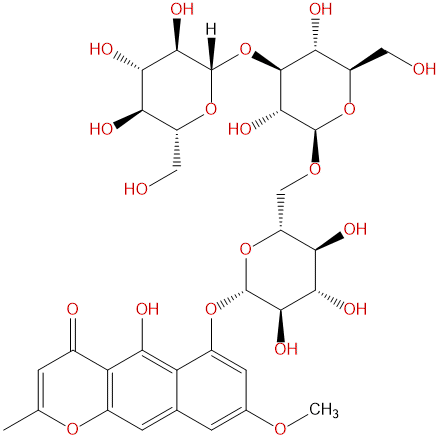
Red sickle mold glycoside is a naphthopyranone glycoside compound. Its parent nucleus structure is Rubrofusarin, which is 6-methoxy-7-hydroxy-5-methyl-1-benzopyran-4-one, a derivative of dihydrochalcone. The characteristic of this compound is that a trisaccharide chain is connected to the 7-hydroxyl position of its parent nucleus. Based on its molecular weight (758.6790) and common glycosylation patterns, it is speculated that the three sugar chains are usually composed of glucose units. The specific glycosidic bond connection positions and configurations need to be further confirmed by spectroscopic techniques such as nuclear magnetic resonance (NMR) and mass spectrometry (MS).
From the analysis of parameters related to drug properties, this compound exhibits typical polar glycoside molecular characteristics:
1. Molecular weight and polarity The molecular weight is approximately 758.7, belonging to the category of medium to large molecules. Its topological polar surface area (TPSA) is as high as 317.35 Å ², mainly attributed to the large number of hydroxyl and ether oxygen atoms contributed by multiple sugar units in the molecule, indicating its strong hydrophilicity.
2. Fat water partition coefficient The calculated LogP value is -0.8419, further confirming that its hydrophilicity is stronger than its lipophilicity and it belongs to a compound with good water solubility. The experimental or predicted water solubility value (5.7849, usually in mg/mL or log mol/L, depending on the context, usually indicating good solubility) is consistent with its structural characteristics.
3. Prediction of membrane permeability The extremely high TPSA and negative LogP values jointly indicate its weak transmembrane diffusion ability. Therefore, it is predicted that its blood-brain barrier (BBB) permeability is "low". This is a key pharmaceutical challenge that needs to be overcome for its use as an inhibitor of central nervous system targets such as MAO-A. However, certain polar molecules can enter the brain through specific transporters.
4. Preliminary safety indicators The data shows that the risk of hERG inhibition is "no", indicating a low potential risk of causing QT interval prolongation in the heart. The Ames test result is 0.9 (usually a result close to 1 indicates no mutagenicity, but specific test conditions and judgment criteria need to be clarified), indicating that it may not have a significant genetic toxicity risk, but further in vitro and in vivo experiments are still needed for verification.
Plant sources and extraction methods
Red Fusarium oxysporum Triphosphamide is mainly derived from the legume plant Cassia seed in the Cassia genus(Cassia obtusifolia or Cassia tora)Separated from dry and mature seeds. Cassia seed is abundant in resources in China and many Asian countries, and is a commonly used raw material for traditional Chinese medicine and health tea.
Its extraction and separation usually follow the conventional process of natural product chemistry:
1. Extract Organic solvents such as methanol, ethanol, or aqueous ethanol are commonly used for reflux extraction or ultrasound assisted extraction of crushed Cassia seed. The alcohol extraction method can effectively dissolve moderately polar components, including naphthopyranose glycosides.
2. Rough classification The extract obtained by vacuum concentration of the extract is subjected to gradient extraction using solvents such as petroleum ether, ethyl acetate, n-butanol, etc. Due to its strong hydrophilicity, red sickle cell mycin glucoside is mainly enriched in the n-butanol extraction site or water layer.
3. Separation and purification The n-butanol fraction is further separated and purified using various chromatographic techniques. Macroporous adsorption resin column chromatography (such as D101) is often used for sugar removal and preliminary enrichment, and then silica gel column chromatography, reverse phase silica gel column chromatography (such as ODS, C18 packing), dextran gel column chromatography (such as Sephadex LH-20), and high performance liquid chromatography (HPLC) are used for reverse separation to finally obtain high-purity compounds. The separation process is usually monitored by thin layer chromatography (TLC) or high-performance liquid chromatography, and the structure is identified by techniques such as nuclear magnetic resonance and mass spectrometry.
It is worth noting that the chemical composition of Cassia seed is complex, and the content of red sickle mold triterpenoid glycosides is relatively low. The optimization of its extraction and separation process (such as solvent selection, chromatographic conditions, etc.) is crucial for improving the yield.
Pharmacological activity research
At present, the pharmacological activity research of red sickle cell mycin three glucoside is still in the preliminary stage, and the reported and potential activities mainly focus on the nervous system and antiviral directions.
-
Inhibition activity of monoamine oxidase A This is currently the most clear pharmacological activity of the compound. In vitro enzyme inhibition experiments have shown that erythromycin glucoside can inhibit human recombinant MAO-A, with a half maximal inhibitory concentration (IC50) of 85.5 μ M. Although its activity intensity is weaker than some classical MAO-A inhibitors (such as chloroquine with IC50 at the nanomolar level), it originates from natural products and has a novel structure, providing a new chemical framework for optimizing the lead compounds of MAO inhibitors. Its glycoside structure may affect the binding efficiency with the enzyme active center, and in the future, it may be considered to modify its aglycone (erythromycin) or glycosylation to evaluate changes in activity.
-
Potential antiviral activity According to the provided target information, red sickle cell mycin glucoside may exert broad-spectrum antiviral potential by acting on multiple virus lifecycle related targets. These targets include:
- Herpesvirus target Such as UL42 (DNA polymerase subunit), UL54 (ICP27, transcription regulator), TK (thymidine kinase), and gD (envelope glycoprotein D) of herpes simplex virus (HSV). It suggests that it may interfere with HSV DNA replication, gene expression, or viral invasion.
- Human immunodeficiency virus (HIV) targets Such as HIV1-PR (HIV-1 protease), INT (integrase), and host co receptors CCR5 and CXCR4. This suggests that it may exert anti HIV effects by inhibiting viral enzyme function or blocking virus entry into host cells.
- Other targets MPO (myeloperoxidase) is an enzyme in neutrophils that is associated with inflammatory responses, and certain viral infections can activate the MPO pathway.
It should be emphasized that These target associations are likely based on computer simulation predictions or preliminary screening results, and there is currently no publicly available literature reporting in detail the exact antiviral experimental data of Fusarium oxysporum trinucleotide on specific viruses such as HSV and HIV in cell or animal models. Therefore, this constitutes a highly promising research direction that requires strict experimental verification.
Mechanism of action and molecular targets
The mechanism of action of red sickle mold glycoside is still under exploration, and its multi-target potential is beginning to emerge.
-
Inhibition mechanism of MAO-A As a competitive or non competitive inhibitor, its specific mode of action needs to be elucidated. Molecular docking simulations may reveal the interaction between the glycosidic portion and the polar region at the entrance of the MAO-A enzyme active cavity, while the naphthopyranone core may be embedded in the hydrophobic substrate binding pocket, undergoing π - π stacking or hydrophobic interactions with key aromatic amino acid residues (such as near the FAD cofactor), thereby hindering the binding and catalysis of substrates (such as serotonin). The presence of sugar chains may increase the steric hindrance and polarity of the molecule, which may be the structural reason for its relatively high IC50 value.
-
Multi target network with potential antiviral effects If subsequent experiments confirm its antiviral activity, its mechanism may be very complex, involving multiple stages of the virus lifecycle:
- Inhibition of viral enzymes Directly inhibiting HIV-1 protease (HIV1-PR) or integrase (INT), preventing viral polyprotein processing or viral DNA integration into the host genome; Inhibit the TK or DNA polymerase associated protein (UL42) of HSV and interfere with viral DNA synthesis.
- Block virus invasion As a small molecule antagonist or allosteric modulator of CCR5 or CXCR4, it prevents HIV from utilizing these co receptors to enter host cells.
- Regulating host response By affecting host factors such as MPO, regulating the excessive inflammatory response caused by viral infection may be an indirect antiviral or adjuvant therapy strategy.
- Interference with viral gene expression Interacting with regulatory proteins such as HSV ICP27, it affects the expression and splicing of late viral genes.
This multi-target action characteristic is consistent with the properties of many natural products and may help reduce the risk of virus developing single target resistance, but it also makes mechanism research more complex. It is necessary to use surface plasmon resonance (SPR), isothermal titration calorimetry (ITC), cell thermal shift analysis (CETSA), and gene knockout/overexpression techniques to verify their direct interactions and functional consequences with the predicted targets one by one.
Evaluation of drug properties and pharmacokinetics
Based on its physical and chemical properties, a preliminary evaluation of the pharmacological properties of Fusarium oxysporum Triphosphamide was conducted
-
Absorption and oral bioavailability The compound has high polarity, high molecular weight, and extremely high TPSA, which are not conducive to its penetration of gastrointestinal epithelial cell membranes through passive diffusion. Therefore, it is predicted that its oral absorption may be poor and its bioavailability may be low. Glycoside compounds may also be hydrolyzed by gut microbiota or glycosidases on the intestinal mucosa to produce aglycones (erythromycin) and glycosides. The pharmacological effects and pharmacokinetic behavior of their metabolites may be significantly different from those of the prototype drug, and need to be studied separately.
-
distribution As mentioned earlier, its blood-brain barrier permeability is predicted to be "low", which poses a significant challenge for its ability to exert central MAO-A inhibition. Structural modifications (such as prodrug preparation, glycosylation modification to utilize transporters) or special administration methods (such as intranasal administration) may be required to increase brain exposure. In vivo distribution research needs to focus on whether it can achieve effective concentrations in target organs such as the brain and immune organs.
-
Metabolism and excretion As a glycoside, it is likely to undergo extensive hydrolytic metabolism in the body. Glucosyltransferase in the liver may also undergo II binding reactions with its glycosides. The prototype drug and its metabolites are mainly excreted from urine through the kidneys due to their good water solubility. Detailed identification of metabolites and major metabolic enzymes is necessary.
-
Preliminary evaluation of safety HERG inhibition negative is a favorable safety signal. The preliminary results of Ames test suggest a low risk of mutagenicity, but a complete genetic toxicity test combination (such as micronucleus test and chromosome aberration test) still needs to be completed. In addition, it is necessary to evaluate its acute toxicity, subchronic toxicity, and functional effects on major organs (liver, kidney). Given its MAO-A inhibitory activity, even if the activity is not strong, caution should be exercised against the risk of serotonin syndrome or hypertensive crisis that may occur when combined with other monoamine drugs (such as antidepressants and vasopressors).
At present, there are no public reports on the pharmacokinetic studies of this compound system, such as drug time curves, absolute bioavailability, tissue distribution, etc. in rats or mice. This is a data gap that must be filled for its development.
Clinical application prospects and prospects
The clinical application prospects of erythromycin tri glucoside depend on the results of its subsequent in-depth research. Currently, opportunities and challenges coexist.
Potential application directions:
1. Assistive therapy or lead compounds for neurological and psychiatric disorders As a moderately active MAO-A inhibitor, it may be developed as a plant drug candidate for mild depression/anxiety, especially for patients with poor tolerance to synthetic drugs. More importantly, its unique naphthopyranose glycoside structure provides valuable lead compounds for designing novel MAO-A inhibitors. Through medicinal chemical methods such as simplifying sugar chains, modifying parent nuclei, synthesizing glycoside derivatives, etc., it is expected to obtain optimized molecules with stronger activity, higher selectivity, and the ability to cross the blood-brain barrier.
2. Development of antiviral drugs If its broad-spectrum antiviral activity can be confirmed through in vitro and in vivo experiments, especially showing advantages in resisting drug-resistant HSV or HIV, it will become a highly valuable antiviral candidate. Its possible multi-target mechanism of action can help address viral drug resistance. It can be explored for local treatment (such as HSV skin and mucosal infections) to avoid the absorption and distribution difficulties that may be faced by its systemic administration.
3. Multi target modulators Natural products often have multiple effects. In addition to MAO-A and antiviral targets, future research may discover their activities in antioxidant and anti-inflammatory aspects, expanding their potential applications in metabolic diseases or chronic inflammation related diseases.
Challenges and future research directions:
1. Activity optimization The inhibitory activity against MAO-A needs to be significantly improved (to the micromolar or even nanomolar level). A systematic study of the structure-activity relationship is required.
2. Drug modification Addressing the core deficiencies of poor oral absorption and weak blood-brain barrier penetration ability. Precursor strategies, nano formulations (such as liposomes, polymer micelles), or eutectic technologies may help improve their solubility and bioavailability.
3. Deep analysis of mechanism It is necessary to verify its predicted antiviral targets through rigorous experiments and clarify whether its exact mechanism of action is "multi-target synergy" or "clear prioritization".
4. Systematic pharmacodynamic and pharmacokinetic evaluation Conduct pharmacological evaluations of cell models and animal disease models (such as depression models and viral infection models), and complete comprehensive preclinical pharmacokinetic and safety evaluations.
5. Natural sources and synthesis The content of this component in Cassia seed is low, and it is uneconomical to extract a large amount from plants. In the future, it is necessary to develop its fully synthetic or biosynthetic routes to ensure the supply of raw materials.
Conclusion
Red sickle mold glycoside is a structurally novel naphthopyranose glycoside discovered from traditional Chinese medicine Cassia seed. At present, preliminary research has revealed its activity as a human MAO-A inhibitor, and based on bioinformatics analysis, it suggests its potential broad-spectrum antiviral application prospects. Despite facing challenges such as high polarity and poor membrane permeability in drug development, its unique chemical structure provides a clear starting point for optimizing drug chemistry. Future research should focus on enhancing its activity and membrane permeability through structural modification; Using modern pharmacological techniques to demonstrate its antiviral activity and elucidate its multi-target mechanism of action; Complete the preclinical efficacy, pharmacokinetics, and safety evaluation of the system. With the deepening of research, it is expected that rifamycin triglucoside will develop from a simple natural product molecule into a new drug lead compound for the treatment of neuropsychiatric diseases or viral infectious diseases, fully reflecting the value of seeking modern innovative drug sources from traditional medicinal plants.