| Catalog No | Package | Original Price | Price | Inventory | Quantity | Operating |
|---|---|---|---|---|---|---|
| BP4350-100mg | 100mg | $20.00 | Sign in |
|


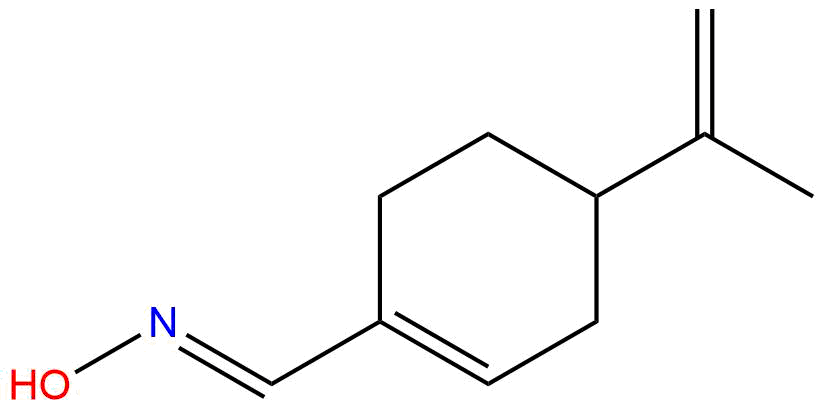
Product name: Perillartine
Synonym name: (±)-Perillartine; DL-Perillartine
Catalogue No.: BP4350
Cas No.: 30950-27-7
Formula: C10H15NO
Mol Weight: 165.236
Botanical Source:
Type of Compound:
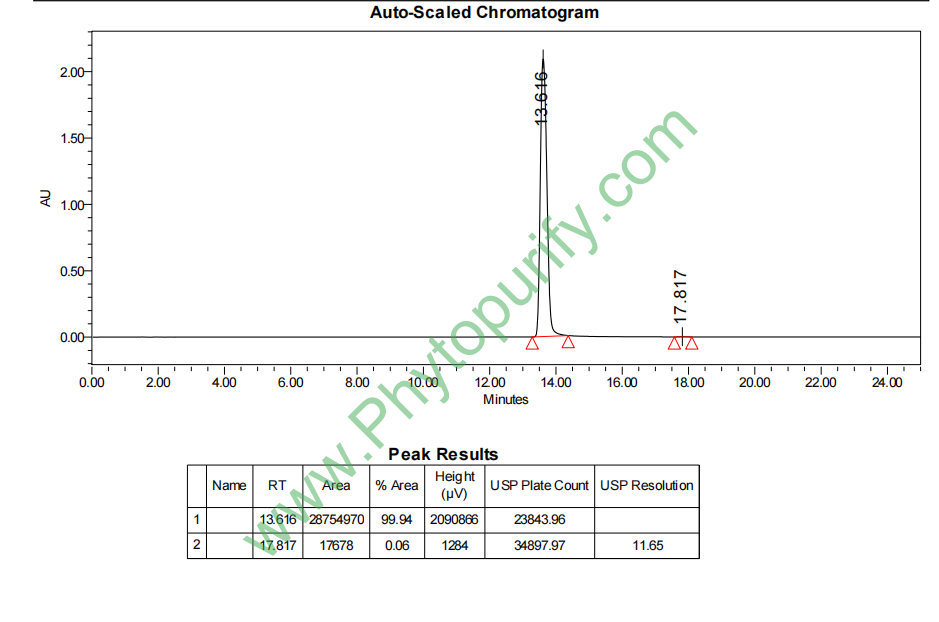
Purity: 95%~99%
Analysis Method: HPLC-DAD or/and HPLC-ELSD
Identification Method: Mass, NMR
Packing: Brown vial or HDPE plastic bottle
Storage: Store in a well closed container, protected from air and light. Put into refrigerate or freeze for long term storage.
Whenever possible, you should prepare and use solutions on the same day. However, if you need to make up stock solutions in advance, we recommend that you store the solution as aliquots in tightly sealed vials at -20℃. Generally, these will be useable for up to two weeks.
The product could be supplied from milligrams to grams
Inquire for bulk scale.
For Reference Standard and R&D, Not for Human Use Directly.
HPLC of Perillartine
Storage conditions:Short-term storage at 2~8℃, long-term storage at -20 ~ -80℃
32.5900
2.7551
2.7552
.3704
4.6213
7.0489
High
83.8802
3.9031
No
Yes
No
No
No
No
0.0
No
Yes
Yes
Yes
As an important treasure trove for drug discovery, natural products continue to provide modern medicine with lead compounds with novel structures and diverse activities. Among them, sweet substances derived from plants are not only widely used as food additives, but their unique chemical structures are also often associated with specific biological activities, thus demonstrating potential beyond their original uses in the field of pharmacology. Perillartine, chemical name (E) -2- (4-methoxyphenyl) -3-furanocarbonitrile, CAS number 30950-27-7, is a typical representative of this. It was initially discovered as a high sweetness sweetener due to its characteristic of being about 2000 times sweeter than sucrose. However, as research deepens, especially after its properties as an agonist of taste receptor type 1 member 2 (TAS1R2) have been elucidated, researchers have begun to pay attention to the downstream physiological and pharmacological effects that may be triggered by its activation of this receptor. In recent years, increasing evidence has shown that Perilla frutescens and its related structural analogues exhibit remarkable activity in the fields of immune regulation and anti allergy. The pathogenesis of allergic diseases is complex, involving histamine receptors, various interleukins, immunoglobulin E (IgE) and its high affinity receptors, as well as downstream signaling molecules such as splenic tyrosine kinase (SYK) and multiple key targets. As a small molecule compound, the potential interaction between Perilla frutescens and these target networks provides new ideas for the development of novel anti allergic drugs. This article aims to systematically review the chemical characteristics, plant sources, pharmacological activities, molecular mechanisms of action, medicinal properties, and application prospects of Perilla frutescens in the treatment of allergic diseases, in order to provide comprehensive academic references for the in-depth research and potential drug development of this compound.
The molecular formula of Perilla frutescens is C12H11NO2, with a molecular weight of 165.2360 g/mol. Its core structure is a furan ring, with methoxyphenyl and cyano groups connected at positions 2 and 3, respectively, and the double bond between the phenyl and furan rings is in the E-configuration. This unique α, β - unsaturated nitrile structure is the chemical basis for its sweet taste production and possible nucleophilic addition reactions (such as Michael addition), which may be related to certain biological activities.
In terms of physical and chemical properties, Perilla frutescens exhibits typical hydrophobic characteristics. The calculated lipid water partition coefficient (LogP) is 2.7551, indicating that the compound has good lipid solubility and is easy to penetrate cell membranes. The topological polar surface area (TPSA) is 32.5900 Å ², which is relatively small and further supports its good membrane permeability. The water solubility parameter is 0.3704 (usually referring to logS or related indicators), indicating that its solubility in water is limited and it belongs to insoluble compounds. These properties collectively determine the distribution characteristics of Perilla frutescens in organisms: its high lipid solubility indicates good oral absorption potential, but it may also bring challenges in formulation. It is worth noting that its blood-brain barrier permeability is predicted to be "high", indicating that the compound may enter the central nervous system, which may bring about central related pharmacological effects (such as acting on opioid receptor OPRM1), as well as potential risks of neurological side effects, requiring close attention in drug development. In addition, preliminary drug safety screening showed that Perilla frutescens had no inhibitory activity on hERG potassium channels (hERG inhibition: no), and the Ames test result was 0.0, indicating that it may not have mutagenicity. These provide preliminary positive signals for its safety as a potential drug candidate.
Perillaldehyde is not directly abundant in plants, but rather an oximation derivative of its natural precursor Perillaldehyde. Perilla frutescens (L. Britt.) is the main monoterpenoid component in the volatile oil of Perilla frutescens plants in the family Lamiaceae, especially abundant in Perilla leaves. Perilla frutescens has a long history of medicinal and edible use in East Asia. Its leaves, stems, and seeds can all be used as medicine, and it has the effects of relieving external coldness, promoting qi circulation, and improving the stomach.
The preparation of perilla stalk is mainly achieved through chemical synthesis of naturally extracted perilla aldehyde. The classic extraction and synthesis pathway is as follows: Firstly, perilla essential oil is obtained from dried perilla leaves by steam distillation or supercritical CO2 extraction. Then, isolate and purify perilla aldehyde from the essential oil. Finally, perilla aldehyde undergoes an oximation reaction with hydroxylamine hydrochloride to produce perilla aldehyde oxime, which is further dehydrated and cyclized under acidic conditions (such as concentrated sulfuric acid) to ultimately form the target compound perilla stalk. This synthetic route is relatively simple and has a high yield, making it the main method for achieving large-scale preparation of perilla stems. In recent years, there have also been studies exploring greener and more efficient catalytic synthesis methods to improve atomic economy and reduce environmental pollution. Although perilla stem itself is a semi synthetic product, its roots are still deeply rooted in the natural product perilla aldehyde, reflecting the importance of structural modification of natural products in obtaining new active compounds.
The pharmacological activity research of Perilla frutescens has expanded from its initial sweet taste characteristics to a wider range of biomedical fields, especially accumulating important experimental evidence in anti-inflammatory and anti allergic aspects.
1. Anti allergic activity:
This is currently the most promising pharmacological research direction for Perilla frutescens. Multiple in vitro and in vivo studies have shown that Perilla frutescens can significantly inhibit type I hypersensitivity reactions. In a passive skin allergic reaction (PCA) mouse model, perilla stem pretreatment can dose dependently inhibit the increase in vascular permeability and pigment exudation mediated by IgE antibodies. In a mouse model of allergic asthma induced by ovalbumin (OVA), administration of Perilla frutescens can effectively reduce airway hyperresponsiveness, decrease eosinophil infiltration in bronchoalveolar lavage fluid (BALF), and reduce the aggregation of inflammatory cells in the lungs. These effects suggest that Perilla frutescens can intervene in key stages of allergic reactions.
2. Anti inflammatory activity:
In addition to specific allergic reactions, Perilla frutescens also exhibits a wide range of anti-inflammatory effects. In the rat paw swelling model induced by carrageenan or histamine, Perilla frutescens exhibited significant inhibitory effects. Its anti-inflammatory mechanism may be related to the inhibition of the production of pro-inflammatory cytokines (such as TNF - α, IL-1 β) and the release of inflammatory mediators.
3. Other potential activities:
As an agonist of TAS1R2 receptors, Perilla frutescens may regulate metabolic or immune signaling pathways through the characteristic of "sweet taste receptors" expressed in the intestine, pancreas, and even immune cells. In addition, the unsaturated bonds in its structure may allow it to interact with thiol containing proteins (such as Keap1) as an electrophilic group, thereby activating the Nrf2/ARE antioxidant pathway. This provides a theoretical possibility for its antioxidant stress activation, but further experimental confirmation is needed.
The anti allergic mechanism of Perilla frutescens is complex, involving direct or indirect regulation of multiple key targets in the cascade of allergic reactions, forming a multi-target intervention network.
1. Core activation point: TAS1R2 receptor activation
Perilla stalk is a highly effective agonist of TAS1R2/TAS1R3 heterodimeric sweet taste receptors. In recent years, research has found that sweet taste receptors are not only expressed on taste buds, but also widely present on the surfaces of intestinal endocrine cells, respiratory smooth muscle cells, and immune cells (such as mast cells and T cells). Perilla frutescens activates TAS1R2 on these cells, possibly through the G protein coupled signaling pathway, affecting the intracellular cyclic adenosine monophosphate (cAMP) and calcium ion (Ca2+) concentrations, thereby regulating cellular function. For example, on mast cells, activation of TAS1R2 may interfere with signal transduction triggered by Fc ε RI cross-linking, thereby inhibiting degranulation.
2. Regulation of allergy core targets
Research suggests that the anti allergic effect of Perilla frutescens is closely related to its intervention in the following target pathways:
* Inhibition of mast cell/basophil activation: Allergens crosslink with IgE (encoded by the IGHE gene) bound to the surface of mast cells, initiating downstream signals through their high affinity receptor Fc ε RI (encoded by the FCER1A gene). Perilla frutescens has been shown to inhibit key signaling molecules involved in this process Spleen tyrosine kinase (SYK) Phosphorylation activation. Inhibition of SYK will block its downstream Phospholipase C β (PLCB) Activation reduces the production of inositol triphosphate (IP3) and diacylglycerol (DAG), ultimately leading to a decrease in intracellular calcium pool release and inhibition of protein kinase C (PKC) activation, effectively inhibiting the release of mediators such as histamine and leukotrienes.
* Antagonistic allergen receptor: Perilla frutescens or its metabolites may have antagonistic effects on the released allergen receptors. Research shows that it has an impact on Histamine H1 receptor (HRH1) and Cysteine leukotriene receptor 1 (CYSLTR1) It has a certain antagonistic activity, which can directly neutralize the effects of histamine and leukotriene C4/D4/E4 induced bronchoconstriction, increased vascular permeability, etc.
* Regulating Th2 type immune response: The characteristic of allergic diseases is the dominance of Th2 immune response, accompanied by Interleukin-4 (IL-4) and Interleukin-13 (IL-13) Excessive production. Perilla frutescens can reduce the levels of IL-4 and IL-13 in asthma models, and its mechanism may be achieved by regulating T cell differentiation or affecting the function of cells that produce these cytokines, such as mast cells and eosinophils.
* Affects epithelial cell alarm factors: Thymic stromal lymphopoietin (TSLP) It is a key alarm hormone released by respiratory and skin epithelial cells when damaged or stimulated, and is an upstream switch for initiating Th2 type allergic reactions. Preliminary studies suggest that Perilla frutescens may inhibit the production or release of TSLP, thereby suppressing the allergic process at an earlier stage.
* Potential central regulation: Given its high blood-brain barrier permeability, Perilla frutescens may act on the central nervous systemμ - opioid receptor (OPRM1)Although its direct binding affinity remains to be confirmed, the opioid system is involved in immune regulation and itch perception, which may be another potential pathway for it to exert systemic anti allergic, especially anti itch effects.
In summary, Perilla frutescens may exert anti allergic effects through a "multi-target, multi link" approach: it not only inhibits the IgE/Fc ε RI/SYK signaling axis and TSLP production upstream, but also regulates the balance of Th2 cytokines in the middle link, while antagonizing the released mediators (histamine, leukotrienes) downstream.
Based on its physicochemical parameters and preliminary biological data, the medicinal properties of Perilla frutescens exhibit both opportunities and challenges.
Advantages:
1. Small molecular weight and simple structure: The molecular weight is 165.2360, which meets the requirements of the "Five Rules" for generic drugs and is easy to chemically synthesize and modify.
2. Good membrane permeability: Moderate LogP values and lower TPSA indicate good intestinal absorption and cell membrane penetration abilities, with high potential for oral bioavailability.
3. Preliminary safety is good: The absence of hERG inhibition suggests a low risk of cardiac toxicity, and a negative Ames test indicates no genetic toxicity concerns, laying the foundation for its preclinical development.
4. Multi target effect: The multi-target characteristics targeting complex diseases such as allergies may lead to better therapeutic efficacy and lower drug resistance.
Challenges and unknowns:
1. Poor water solubility: Low water solubility is its main drawback, which may affect the development of its formulations, dissolution and absorption in vivo. Improvements need to be made through formulation techniques such as making cyclodextrin inclusion complexes, nanocrystals, solid dispersions, or by modifying prodrugs.
2. High blood-brain barrier permeability: For the main treatment of peripheral allergic diseases, entering the central nervous system may be unnecessary and may even cause central side effects such as drowsiness and dizziness (although its HRH1 antagonistic activity itself may also cause drowsiness). In the future, it may be necessary to reduce its BBB permeability through structural optimization.
3. Lack of pharmacokinetic data: Currently, there is very limited publicly available data on the systematic pharmacokinetics of Perilla frutescens, including absorption, distribution, metabolism, and excretion. The key parameters such as metabolic pathways, major metabolites, half-life, and protein binding rate are still unknown. The cyanide and furan rings in its structure are metabolic sites that require attention and may be involved in the metabolism of the cytochrome P450 enzyme system.
4. Potential toxicity: The presence of cyanide groups contributes to its sweetness and reactivity, but also raises concerns about its potential toxicity. Although the Ames test is negative, a comprehensive subacute and chronic toxicological evaluation is still needed, especially regarding the effects on the nervous and metabolic systems.
The transformation of Perilla frutescens from a high potency sweetener to a potential anti allergic lead compound provides a novel approach for drug development. Its clinical application prospects mainly revolve around allergic diseases, but may also be expanded to other fields.
1. Main application directions:
* Allergic asthma: With its multiple effects of inhibiting airway inflammation, reducing Th2 cytokines, and antagonizing leukotriene receptors, Perilla frutescens is expected to be developed as an oral or inhaled asthma control drug, especially for patients who do not respond well to existing drugs such as glucocorticoids and leukotriene receptor antagonists.
* Allergic rhinitis and atopic dermatitis: Allergic rhinitis and atopic dermatitis can be treated by local (nasal spray, skin topical preparation) or systemic administration with its antihistamine, anti-inflammatory and potential anti pruritus (possibly involving OPRM1) effects.
* Food allergies and urticaria: As a preventive or therapeutic medication, used to control symptoms of acute allergic reactions mediated by IgE.
2. Future research prospects:
* In depth mechanism research: It is necessary to use techniques such as gene knockout animals and cell specific knockout to clarify the contribution of TAS1R2 receptor activation in its anti allergic effect, and whether its direct interaction with other targets (HRH1, CYSLTR1, SYK) is a primary or secondary effect.
* Structural optimization and modification: Conduct a systematic structure-activity relationship study using Perilla frutescens as the lead compound. Optimization directions include: a) improving water solubility; b) Reduce BBB permeability to minimize central side effects; c) Enhance selectivity and efficacy towards specific targets such as SYK and CYSLTR1; d) Improve metabolic stability.
* Comprehensive pharmacokinetic and toxicological evaluation: Conduct standardized preclinical pharmacokinetic and toxicological studies, clarify their in vivo fate and safety window, and provide data support for clinical trial applications.
* Exploring new indications: Study its potential to regulate intestinal hormone secretion and affect glucose metabolism through TAS1R2, or exert antioxidant effects through the Nrf2 pathway, and explore its application in metabolic diseases or oxidative stress-related diseases.
* Potential for combination therapy: Consider combining Perilla frutescens with existing anti allergic drugs (such as antihistamines and low-dose hormones), utilizing its unique multi-target mechanism to achieve synergistic effects, reduce single drug doses, and minimize side effects.
As a structural modification molecule derived from the natural product perilla aldehyde, the development process of perilla stalk perfectly embodies the interdisciplinary scientific exploration from "sweet taste on the tongue" to "pharmacology inside cells". It is not only an efficient sweetener, but also a lead compound with unique multi-target anti allergic activity. Its mechanism of action involves a wide network from IgE/Fc ε RI signaling initiation inhibition, Th2 cytokine regulation to allergen receptor antagonism, demonstrating the potential to address the pathological network of complex allergic diseases. Despite facing challenges such as poor water solubility and unclear pharmacokinetics in drug development, its clear preliminary safety and modifiable chemical structure leave ample room for further development. In the future, through in-depth mechanism elucidation, rational structural optimization, and systematic preclinical research, Perilla frutescens is expected to transform from an interesting pharmacological tool molecule into an innovative drug candidate for treating allergic diseases, bringing new treatment options to billions of allergic patients worldwide. This process will also continue to highlight the irreplaceable value of natural products and their derivatives in modern drug discovery.
